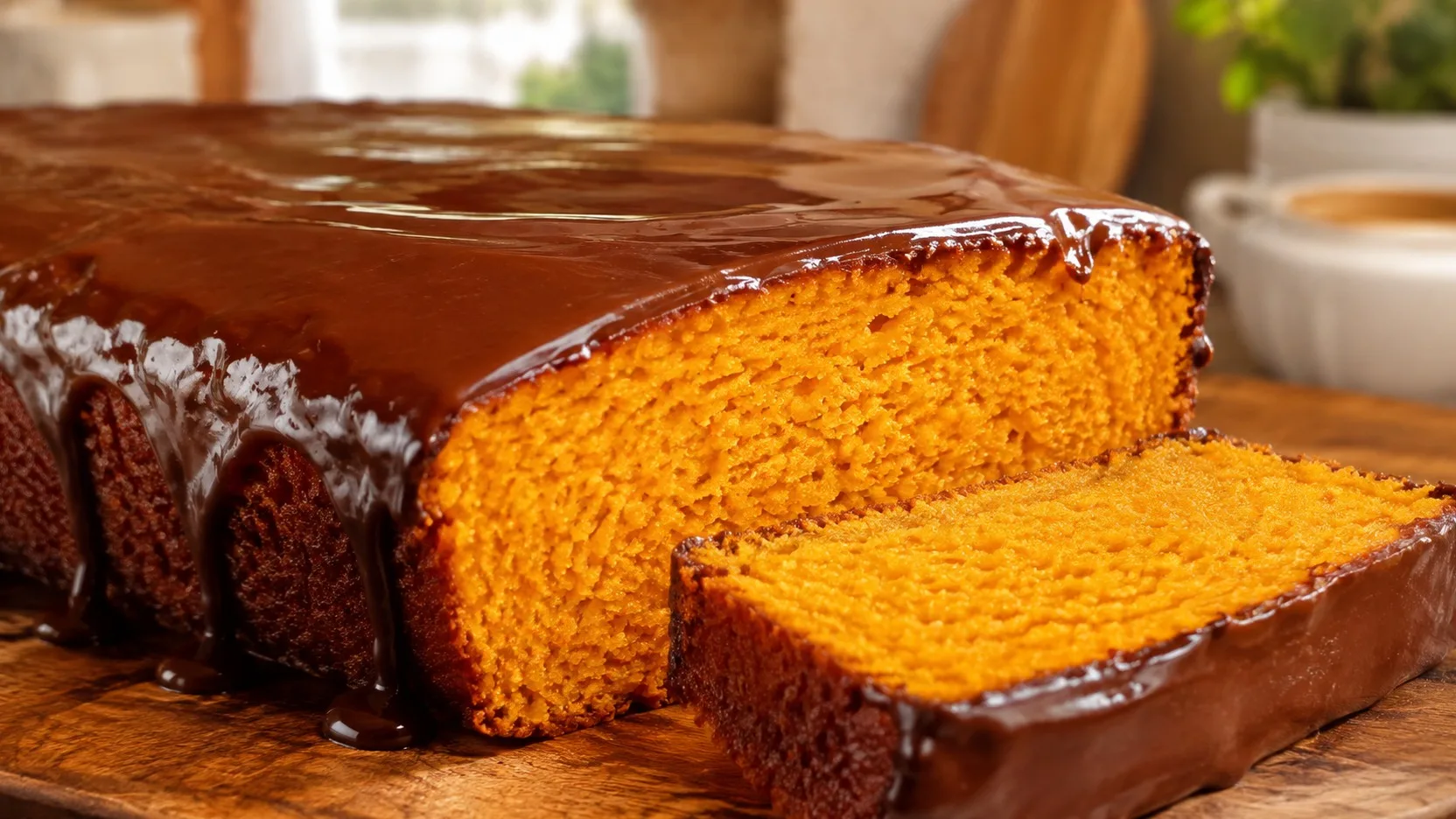
This cake was formulated to control the points that weigh the dough the most: quantity of carrots, oil, area of the pan and mixture after the flour. The reference is a rectangular pan measuring 28 x 18 cm, with an approximate area of 504 cm², in which the raw dough is approximately 2 to 2.5 cm high before going into the oven.
Ingredients
For the dough
• 250 g peeled and trimmed carrots
• 3 large eggs, approximately 150 g without shell, at room temperature
• 150 ml neutral-flavored oil, such as canola, corn or soy
• 250 g of refined sugar
• 240 g of wheat flour
• 12 g of chemical yeast powder
• 2 g of salt
• 10 g of butter to grease the mold
• 10 g of wheat flour for dusting the pan
For the chocolate topping
• 150 g chopped semi-sweet chocolate
• 100 g of cream
• 10 g unsalted butter
Preparation method
1. Prepare the pan and heat the oven
Place a rack in the center of the oven and preheat to 180°C. Grease a rectangular pan measuring 28 x 18 cm and approximately 5 cm high with butter and sprinkle with flour, removing excess. Allow the oven to heat for at least 15 minutes before baking.
2. Weigh and cut the carrot
Weigh the 250 g only after peeling and trimming the ends. Cut the carrot into thin slices or small cubes so that the blender can grind it completely, without leaving fragments that concentrate moisture in the dough.
3. Beat the liquid foundation
Place the carrot, eggs, oil and sugar in a blender. Beat for 2 to 3 minutes, stopping once to scrape the sides if necessary, until you obtain a smooth and uniform cream, with no visible pieces of carrot.
4. Mix the dry ingredients
In a large bowl, whisk together the flour, baking powder and salt. Break up any lumps with a whisk to distribute the yeast evenly.
5. Incorporate without prolonging the mixture
Pour the blender mixture over the dry ingredients. Stir with a wire whisk or spatula for about 30 to 45 seconds, scraping the bottom and sides, just until there are no spots of dry flour left. The dough must be homogeneous; stop moving as soon as this happens.
6. Check the height of the dough in the pan
Transfer the dough to the pan and level the surface. In this 28 x 18 cm pan, the raw layer should be around 2 to 2.5 cm high and well below the edge. If the pan is much smaller, the layer will be deep and the center will take longer to set; if it is much larger, the cake will be low and bake faster.
7. Bake until the center is set
Bake in the oven at 180°C for 40 to 45 minutes. Avoid opening the door for the first 30 minutes. After 38 minutes, look at the center and test with a toothpick at the highest point: it should come out clean or with few moist crumbs, never with raw dough paste.
8. Cool without stuffiness
Remove from the oven and let the cake rest in the pan for 15 minutes. Run a thin knife around the edges, turn out onto a wire rack or plate and let cool for another 20 to 30 minutes before covering. The center, which is still very hot, softens the topping and can give the impression of a too-moist crumb when cut.
9. Make the creamy frosting
Heat the cream until it is very hot and starts to steam, without letting it boil vigorously. Pour over the chopped chocolate, wait 2 minutes and stir from the center to the edges until smooth. Add the butter and mix until the frosting is shiny. Wait about 5 minutes for it to thicken slightly and spread over the cooled cake.
Right spot / how to know it’s ready
The finished cake is uniformly risen, with a firm surface and a center that slowly springs back when pressed lightly. The edges may begin to slightly pull away from the shape. In the toothpick test, few moist crumbs are acceptable; Glossy or doughy dough indicates that the center still needs baking.
The cut must reveal a uniform, soft and airy orange crumb, without a compact band at the bottom and without a dark, sticky region in the center. Wait for the cake to warm or cool before judging the texture, as the crumb will finish stabilizing outside of the oven.
Tips for the recipe to work out
Weigh the carrot after peeling
The ratio of this formula is 250 g of carrots to 240 g of flour, close to 1:1 by weight. Increasing the carrot without recalculating flour, eggs and fat makes the dough heavier and moister, which reduces the room for rising.
Do not transform the flour in a blender
The blender is used to completely grind the carrot and emulsify the base. The flour goes into the bowl and is mixed just until the dough is uniform. This avoids unnecessary stirring after the gluten starts to form.
Compare the area of the shape, not just the shape
The reference shape is approximately 504 cm². A 30 x 20 cm pan is 600 cm², approximately 19% larger, so it produces a smaller cake and can be baked sooner. A shape with a smaller area creates a deeper layer and requires more attention to the center.
Do not use the watch alone
Oven time varies depending on the pan material, oven calibration and dough depth. Start checking towards the end of the interval, but only remove it when the center is firm and the toothpick does not leave raw dough.
Yeast needs to be active and well distributed
Check the yeast's expiration date and mix it with the dry ingredients before adding the liquids. Old yeast or yeast concentrated in only one part of the dough may result in little rise or uneven structure.
Substitutions and variations
Canola, corn or soybean oil can be used in the same amount. Olive oil technically works, but it changes the flavor and is not the best choice when looking for the classic, neutral profile of Brazilian carrot cake.
For a more intense coverage, use chocolate between 50% and 60% cocoa. Milk chocolate makes the topping sweeter and softer; If you choose this, start with a little less cream and adjust only as necessary to maintain a thick frosting.
Replacing much of the flour with wholemeal flour or much of the sugar with brown sugar makes the cake darker, moister and potentially denser. If the priority is to avoid heavy dough, make these changes in small proportions and accept changes in texture.
How to store
Once covered with the cream ganache, store the cake in a sealed container in the refrigerator at 4°C or below and consume within 3 to 4 days. As it contains milk frosting, do not leave the finished cake out of the refrigerator for more than 2 hours; in an environment above 32 °C, reduce this period to 1 hour. To serve, remove only the desired portion a few minutes beforehand so the crumbs lose the excess cold.
To freeze, prefer the cake without frosting. Allow to cool completely, cut into portions, pack well and freeze. Thaw in the refrigerator or at room temperature only for the time needed to serve; The texture is better when the cake does not go through repeated freezing and thawing cycles.
How to serve / side dishes
Serve at room temperature or slightly chilled, when the topping is creamy and the crumb is soft. Brewed coffee, coffee with milk or black tea balance the sweetness of the cake and chocolate well.
Common mistakes
Why did my carrot cake freeze?
The most likely causes are too much carrot or oil, being removed from the oven before the center has formed, weak yeast or prolonged mixing after the flour. Weigh the ingredients, respect the indicated shape and use the dot signs before taking them out of the oven.
Why didn't the cake rise?
Check that the yeast was within its expiration date, that the oven was actually preheated and that the pan was not too big for the amount of dough. A pan that's too wide spreads the batter and can make a properly shaped cake look like it hasn't risen.
Why did the center feel heavy or feel raw?
This usually happens when the layer of batter is too deep, the oven is too hot and browns the edges before baking the center, or the cake is removed too soon. Poorly crushed carrot fragments also create wetter spots. Use the reference mold, beat the carrot until smooth and check the center with a toothpick.
Why did the cake rise and then fall?
A structure that is still raw in the center may give way when the cake comes out of the oven. Excess yeast or opening the door too early also destabilizes growth. Keep the 12 g of yeast, do not open the oven for the first 30 minutes and wait for the center to set before removing.