This version uses 50% cocoa chocolate powder as the main source of chocolate flavor and is sized for a 20 x 20 cm square metal pan. The method heats part of the sugar and fat mixture before the eggs to promote a thin, shiny surface, while the moderate amount of flour and baking point keep the center moist.
Ingredients
• 170 g unsalted butter
• 250 g of refined sugar
• 15 g of water (1 tablespoon)
• 100 g of chocolate powder 50% cocoa
• 3 large eggs at room temperature (about 150 g without shell)
• 5 ml vanilla extract or essence (1 teaspoon), optional
• 110 g of wheat flour
• 2 g of salt (about 1/3 teaspoon)
Preparation method
1. Prepare the pan and heat the oven
Heat the oven to 180°C, with the rack in the center position. Line a 20 x 20 cm square metal pan with baking paper, leaving flaps on two sides to make it easier to remove. Do not use a larger pan if you want to keep the center moist: in this measure, the dough forms a layer of approximately 2 cm before baking.
2. Heat the butter with the sugar
Place the butter, sugar and water in a small saucepan. Heat over low heat, stirring, just until the butter melts and the mixture is very hot and shiny, with some of the sugar crystals beginning to dissolve. This takes about 2 to 3 minutes. Do not let it boil or caramelize.
3. Add chocolate powder
Remove from the heat, sift the 50% chocolate powder into the pan and mix with a whisk until there are no dry lumps left. Transfer to a bowl and wait about 3 minutes, until the mixture is warm, not scalding.
4. Emulsify the eggs
Add the eggs one at a time, beating vigorously with the whisk for about 30 seconds after each addition. Add the vanilla, if using, and beat for another 1 minute. The dough should be smooth, thicker and shiny.
5. Add flour and salt without overdeveloping the gluten
Mix the flour and salt and sift into the bowl. Incorporate with a spatula, moving from bottom to top, just until the flour spots disappear. Avoid mixing after the flour has entered, as overmixing will make the brownie firmer and have a cake-like texture.
6. Spread and bake
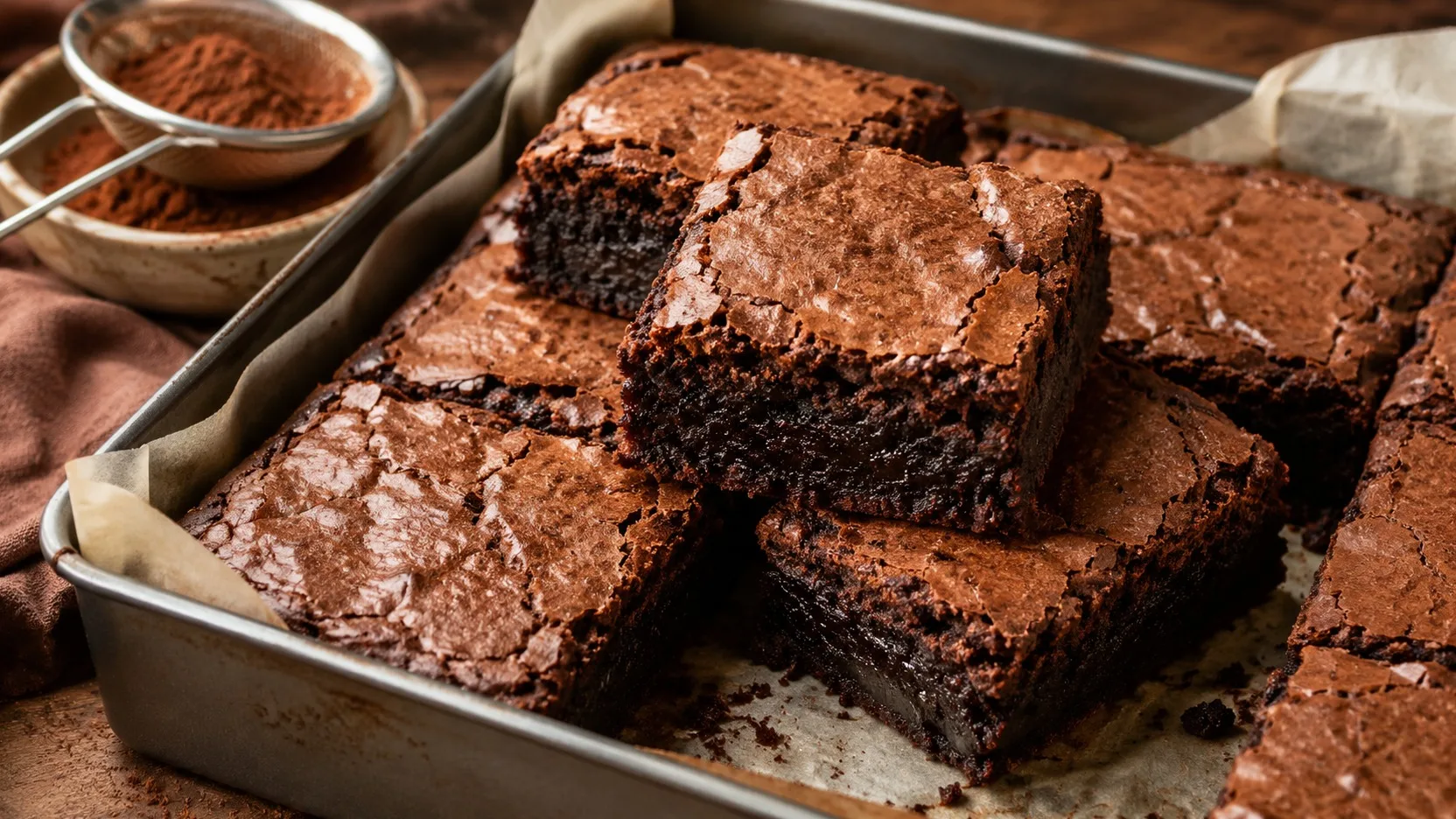
Transfer the dough to the pan and level the surface. Bake for 25 to 30 minutes. Start checking at 24 minutes: the surface should be thin, shiny and cracked, the edges should feel firm, and the center should not jiggle like liquid when you gently move the pan.
7. Cool before cutting
Let the brownie rest in its mold for at least 40 minutes. Remove by the parchment paper flaps and allow to cool completely if you want cleaner cut squares. Cut into 16 pieces measuring approximately 5 x 5 cm, cleaning the knife between cuts.
Right spot / how to know it’s ready
The top should form a thin, shiny film with small cracks. The edges are opaque and firm, while the center remains soft but without a liquid appearance. When you insert a toothpick about 3 cm from the edge, it should come out with moist crumbs; If it comes out completely clean and dry, the brownie is past its moistest point. Slight sinking during cooling is normal in dense brownies.
Tips for the recipe to work out
Use the indicated form
A 20 x 20 cm metal mold conducts heat quickly and gives the expected thickness. In a larger pan, the dough is thinner and bakes sooner; in a smaller or glass pan, the center tends to take longer to set and the time needs to be adjusted.
Don't cut out sugar too much
In this recipe, sugar is not just used to sweeten: it helps maintain moisture and participates in the formation of the crust. A large reduction tends to make the surface more matte and the texture less smooth.
Weigh the flour and chocolate powder
Measurements in cups vary greatly in these two ingredients. Too much flour leaves the brownie dry and crumbly; Excess 50% chocolate powder also alters the amount of sugar and cocoa solids in the formula.
Stop mixing when the flour disappears
After the flour, stir only as necessary. The egg and sugar emulsion is made first; Beating the dough for a long time at this stage strengthens the gluten and changes the bite.
Respect the cooldown
The center continues to firm up with residual heat. Cutting immediately makes the slice appear raw and can destroy the crust; Once cold, the same brownie becomes denser and more defined.
Substitutions and variations
Can I exchange 50% chocolate powder for 100% cocoa powder?
Not in a 1:1 ratio. As a practical reference for this formula, replace the 100 g of 50% chocolate powder with 50 g of 100% cocoa powder and increase the refined sugar from 250 g to 300 g. This approximates the relationship between cocoa and sugar, but the flavor and color may still vary depending on whether the cocoa is natural or alkaline.
Can I use chocolate milk?
Not a recommended direct exchange. Chocolate milk usually has less cocoa and more sugar, in addition to being able to contain other ingredients; using 100 g instead of 50% chocolate powder tends to make the brownie sweeter, less intense and with a different proportion of solids. To keep this recipe predictable, use a product labeled 50% cocoa chocolate powder.
Can I change the butter?
A culinary margarine with around 80% fat can be used in the same weight, but the flavor will be less buttery and the amount of water in the product may slightly alter the baking time and texture. Very creamy margarines, with a lower fat content, are not equivalent.
How to store
Once completely cooled, store the brownie without perishable topping or filling in a tightly closed container for up to 5 days at room temperature, protected from heat and humidity. The refrigerator is not necessary for short storage and makes the texture firmer; If you choose to refrigerate, keep the container tightly closed and let the brownie come to room temperature before serving. For longer storage, wrap squares individually and freeze for up to 1 month. Thaw while still packaged at room temperature to reduce condensation on the cone.
How to serve / side dishes
Serve at room temperature to better understand the contrast between the cone and the moist center. For a softer dessert, heat a square for a few seconds in the microwave and accompany it with ice cream, coffee or slightly acidic fresh fruit.
Common mistakes
Why did my brownie have no cone?
The most common reasons are reducing the sugar too much, not heating the butter and sugar mixture enough to start dissolving, or incorporating the eggs without beating until the dough is shiny. Use caster sugar and follow the emulsifying step before adding the flour.
Why was it dry and cake-like?
The brownie was probably overbaked, had too much flour added to it, or was made in a pan that was too big. Remove when there are still wet crumbs on the toothpick and weigh the flour to avoid compaction by volume.
Why was the center raw while the edges were cooked?
This usually happens when the layer of dough is too thick, the pan is made of glass or the oven is hotter at the edges than in the center. Use the 20 x 20 cm metal mold and confirm the point in the center without waiting for the toothpick to come out dry.