This version follows the classic structure of cachaça, lemon, sugar and ice, with special attention to maceration: the idea is to extract plenty of juice and aroma without turning the skin into paste. Lemon size and acidity vary, so visual cues and balance in the glass are more helpful than squeezing the fruit a rigid number of times.
Ingredients
• 1 medium, firm and fresh Tahiti lemon (about 80 to 90 g)
• 4 level teaspoons of white sugar (about 16 g)
• 60 ml of white or silver cachaça
• 1 cup of ice, cubed or broken into large pieces (about 120 to 150 g)
Preparation method
1. Cut the lemon
Wash and dry the lemon. Remove only the two ends, cut it lengthwise into four parts and then divide each quarter in half, forming eight pieces. If the central white core is especially thick and fibrous, remove only this toughest strip; It is not necessary to peel the lemon.
2. Mash with control
Place the pieces at the bottom of a low, sturdy glass, preferably with the skin facing towards the bottom and the pulp accessible to the pestle. Add the sugar. Press and turn the pestle in a short, controlled manner until the sugar is well moistened, there is plenty of juice at the bottom and the pieces are still recognizable. Avoid grinding or scraping the skin repeatedly.
3. Add ice and cachaça
Fill the glass with ice and pour in the cachaça. Mix from bottom to top for about 10 to 15 seconds, bringing the sugary broth from the bottom to the rest of the glass and chilling the drink thoroughly.
4. Serve immediately
Serve in the glass, with lemon pieces. If some of the sugar settles to the bottom, give it another short mix before taking your first sips.
Right spot / how to know it’s ready
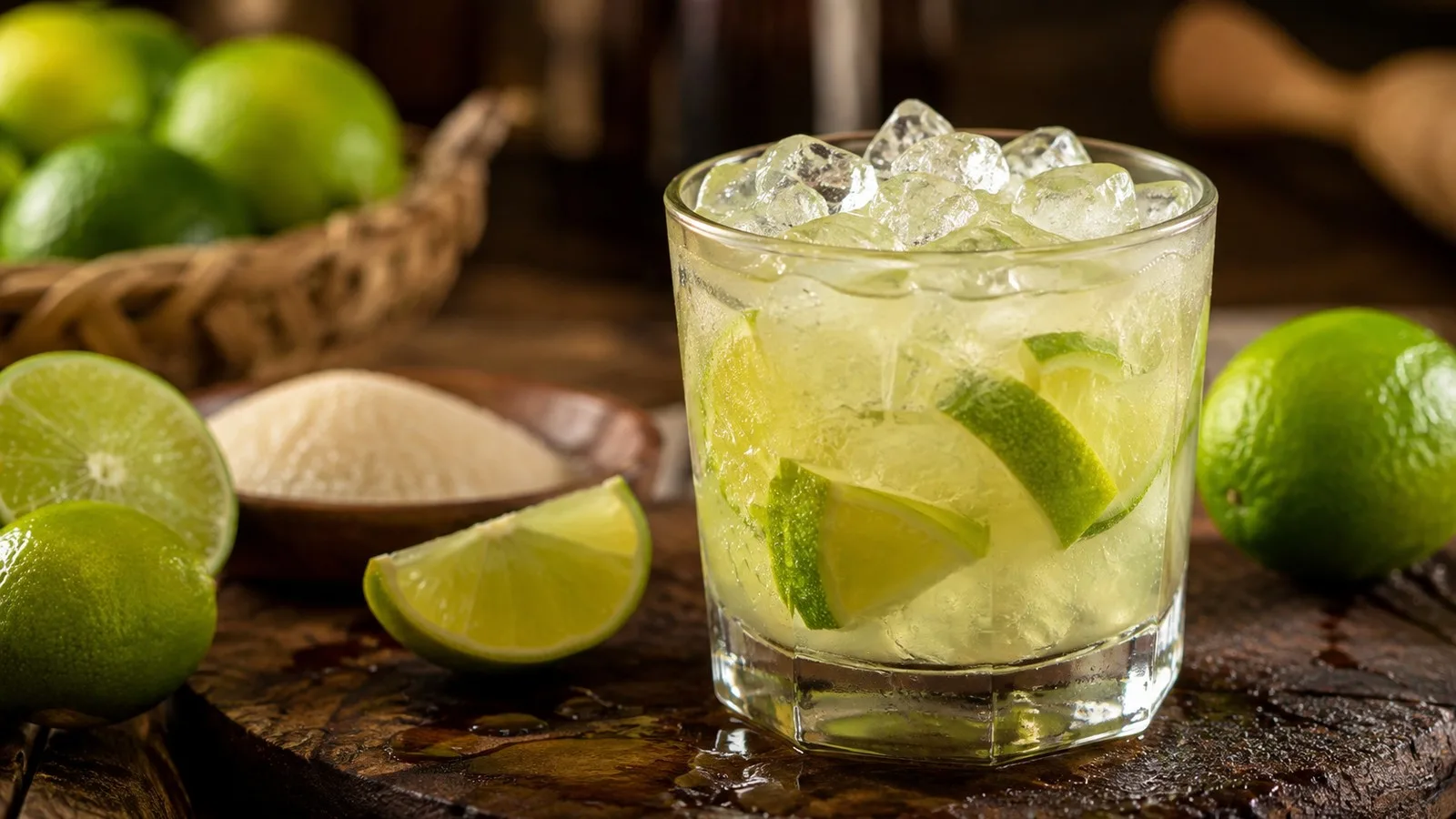
The caipirinha must be very cold, with a slightly cloudy appearance and a light yellowish-green tone. The sugar needs to be mostly incorporated into the broth, although some crystals may remain at the bottom. The lemon pieces should have released a lot of juice, but the peel should not be shredded or reduced to paste. On the palate, acidity, sweetness and cachaça should appear together, without a thick layer of sugar at the bottom or excessive dilution.
Tips for the recipe to work out
Use fresh, medium-sized lemon
Very small lemons provide less juice for the same amount of sugar and cachaça; very large ones can make the drink more acidic. To repeat the recipe, it is worth choosing fruits weighing approximately 80 to 90 g.
Do not confuse macerating with crushing
Maceration needs to release juice and part of the aromas from the skin, but excessive and repeated pressure can make the profile harsher or bitter. Stop when there is enough broth and the sugar is wet without destroying the shell.
Fill the glass with ice
A small load of ice loses cold more quickly during service. A good amount of cubes or large pieces helps to chill the caipirinha quickly and makes dilution more predictable.
Mix from the bottom
The sugar and juice remain concentrated at the base of the glass after maceration. A short mix from bottom to top distributes these components and prevents the first sips from being strong and the last sips from being overly sweet.
Substitutions and variations
Refined sugar and crystal work. The crystal takes a little longer to dissolve and offers more friction during maceration; the refined one integrates faster. Demerara sugar can be used, but it adds a molasses flavor and changes the color, deviating from the profile of this classic version.
Swapping cachaça for vodka produces a caipiroska; using rum produces a caipiríssima. These are known variations, but they are not equivalent to the classic cachaça caipirinha.
If your lemon is clearly smaller than indicated or not very acidic, start with 3 teaspoons of sugar. To maintain the main proportion of this recipe, use the 4 teaspoons when the fruit is in the indicated size range.
How to store
The ready-made caipirinha is not a drink to store: the ice continues to dilute, the sugar redistributes and the macerated lemon loses freshness over time. Prepare and serve immediately. To advance the service, leave washed and dried lemons, glasses and cachaça already cold, but cut and macerate the fruit only before assembling.
How to serve / side dishes
Serve in a low, sturdy glass, with plenty of ice. Savory snacks, nuts, light cheeses and fried portions usually combine with the acidity of the lemon and the character of the cachaça without requiring changes to the base recipe.
Common mistakes
Why was the caipirinha bitter or harsh?
The problem can come from a combination of factors: overripe lemon, too thick white pith, excessively crushed rind or too long maceration. Use fresh fruit, only remove the central core when it is very fibrous and press enough to extract the juice, without pulverizing the skin. Do not attribute the bitterness to a single part of the lemon, because the result also depends on the fruit and the intensity of the technique.
Why was it too sweet?
The lemon may be small or less acidic for the amount of sugar. For your next dose, reduce the sugar by 1 teaspoon or choose a lemon closer to the 80 to 90 g range. Adding more cachaça to correct a ready-made glass unbalances the alcohol content.
Why was it watery?
Ice already melting, very small cubes or slow serving time increase dilution. Use enough firm ice to fill the glass and serve as soon as you finish mixing.
Why was the cachaça separated from the lemon flavor?
This usually happens when there was little broth at the bottom or the final mixture was superficial. Muddle until the sugar is moistened and mix from bottom to top, bringing the juice from the bottom into the entire drink.