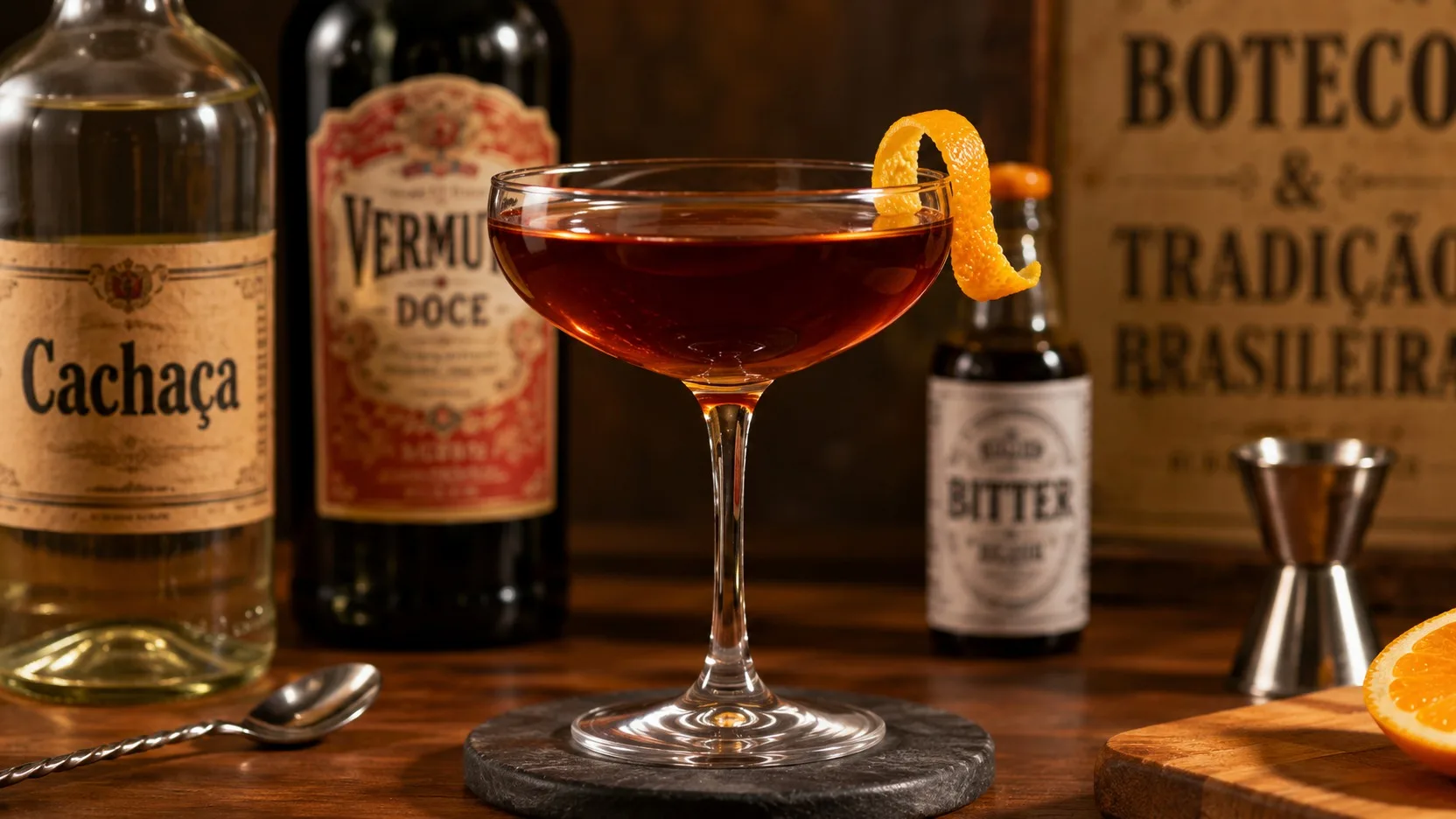
Ingredients
For 1 drink
• 60 ml of white cachaça
• 20 ml sweet red vermouth, rosso type
• 15 ml of Cynar
• 2 drops of Angostura, optional
• Enough cubed ice to fill a tall glass
• 1 strip of orange peel, with as little of the white part as possible
Preparation method
1. Cool the glass
Use a low rocks or old-fashioned glass. If it is at room temperature, add some ice cubes while separating and measuring the ingredients; Discard the ice and water formed before assembly.
2. Measure the cocktail base
Pour 60 ml of cachaça, 20 ml of sweet red vermouth and 15 ml of Cynar into the glass. If you want a more pronounced aromatic bitterness, add 2 drops of Angostura.
3. Add ice and stir briefly
Fill the glass with firm ice and stir for about 10 seconds, just until the liquid is very cold and slightly diluted. If the cubes are small or already wet and melting, stir for less time to avoid increasing dilution.
4. Finish with orange
Twist the orange peel over the surface of the drink to release the aromatic oils and use it as a garnish. Serve immediately.
Right spot / how to know it’s ready
Rabo de Galo should arrive at the table very cold, with a reddish-amber color and a clear orange aroma when you approach the glass. Cachaça still needs to appear in the foreground, while vermouth and Cynar make the sip more rounded, herbal and bitter. If the drink is watery or the alcohol has almost gone out, there has been excessive dilution.
Tips for the recipe to work out
Use plenty of firm ice
Little ice melts faster and can dilute the cocktail before it cools. Well-frozen cubes help to better control this balance.
Measure Cynar instead of pouring by eye
Five or ten milliliters more changes the bitterness a lot. The doser makes the proportion reproducible and preserves the cachaça as the base of the drink.
Do not confuse Cynar with concentrated aromatic bitters
Cynar comes in a volume of 15 ml and works as the bitter and herbal component of the formula. Angostura or other aromatic bitters are much more concentrated and, when used, only come in drops; do not substitute one for the other in the same quantity.
Avoid excess white part in the shell
The white part of the orange can add harsh bitterness. Remove a thin strip, prioritizing the colored part of the skin, and just twist it over the glass.
Substitutions and variations
Can I change the vermouth?
Yes. Another sweet red vermouth can be used to the same extent, but sweeter, vinous or herbal brands change the balance. If the new bottle is too sweet, don't try to correct it with more ice; adjust vermouth choice or reduce a few milliliters in a next round.
Can I exchange Cynar?
An artichoke amaro with a similar profile may work, but bitterness and sweetness vary between brands. Start with 15 ml and adjust in small amounts after tasting the combination.
What is the difference to the pub/historic formula?
The old formula associated with Rabo de Galo was more straightforward: about 2 parts cachaça to 1 part sweet red vermouth, for example 60 ml of cachaça to 30 ml of vermouth, without Cynar. The contemporary version of this recipe maintains the dominant cachaça, reduces the vermouth and adds Cynar, creating a more defined bitter and herbal layer.. The two formulas belong to the same drink and represent different moments in its evolution, so they do not need to be treated as independent recipes.
How to store
The ready-made cocktail must be assembled and served immediately; it's not worth storing it already mixed with ice. Once opened, keep the vermouth in the refrigerator and, to preserve its aroma and freshness, try to consume it within about a month. Cachaça, Cynar and aromatic bitters must be kept according to the manufacturer's instructions, tightly closed and protected from excessive heat and light.
How to serve / side dishes
Serve as an aperitif, in a low glass with ice. Savory snacks with a strong flavor, such as olives, chestnuts, cured cheeses or bar portions, combine well with the alcoholic, herbal and bitter profile of the drink.
Common mistakes
Why was my Rooster's Tail so bitter?
The most common causes are too much Cynar, aromatic bitters used in addition to a few drops, or too much white part in the orange peel. Go back to the measurements and treat Angostura as an optional accent only.
Why was it watery?
Small, already wet ice or stirring too long will increase dilution. Use firm cubes, fill the glass well and stop stirring as soon as the drink is cold.
Why did the cachaça lose its flavor?
Too much vermouth or amaro can cover the base. Keep the main proportion at 60 ml cachaça, 20 ml vermouth and 15 ml Cynar before making any preference adjustments.