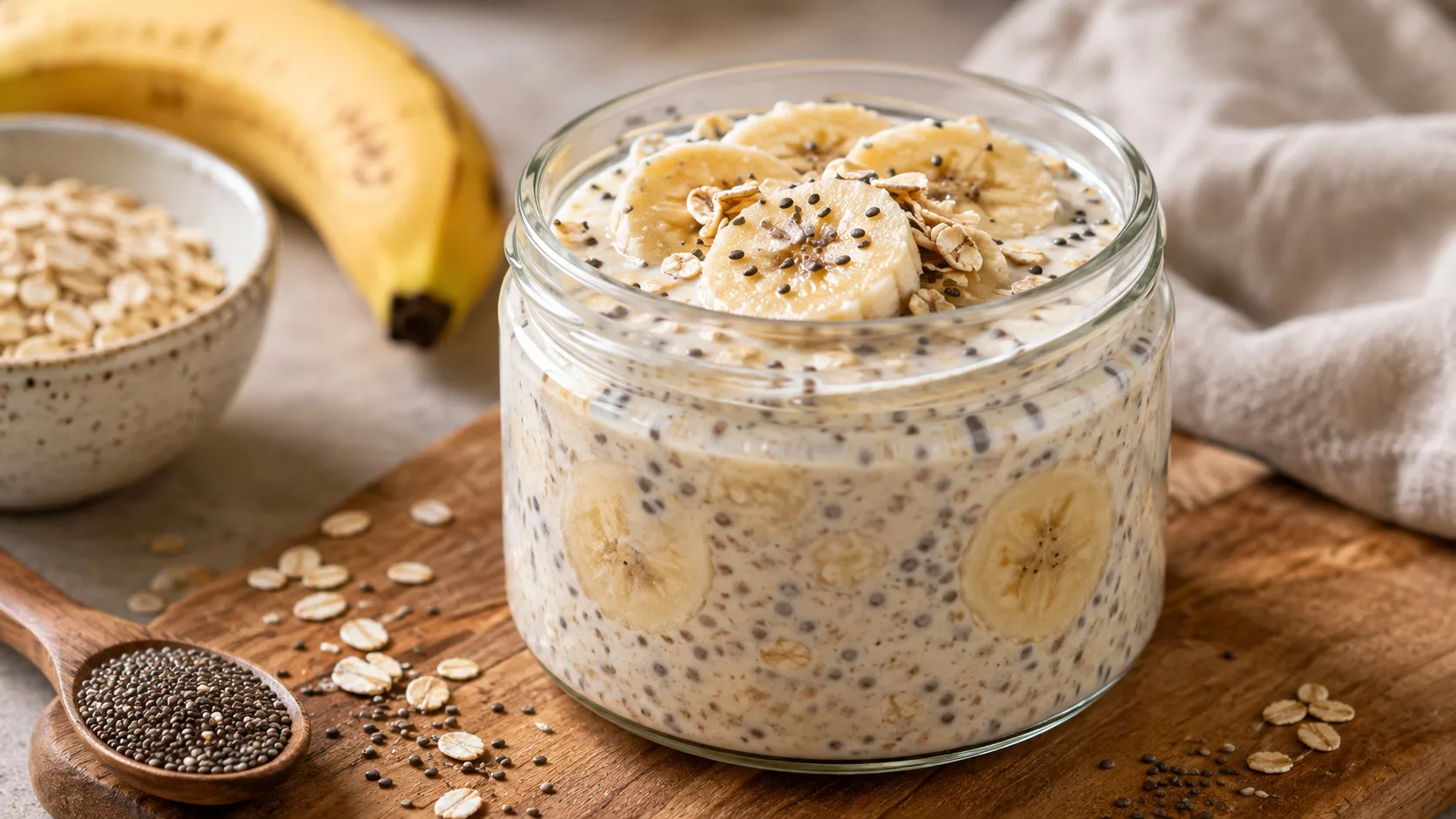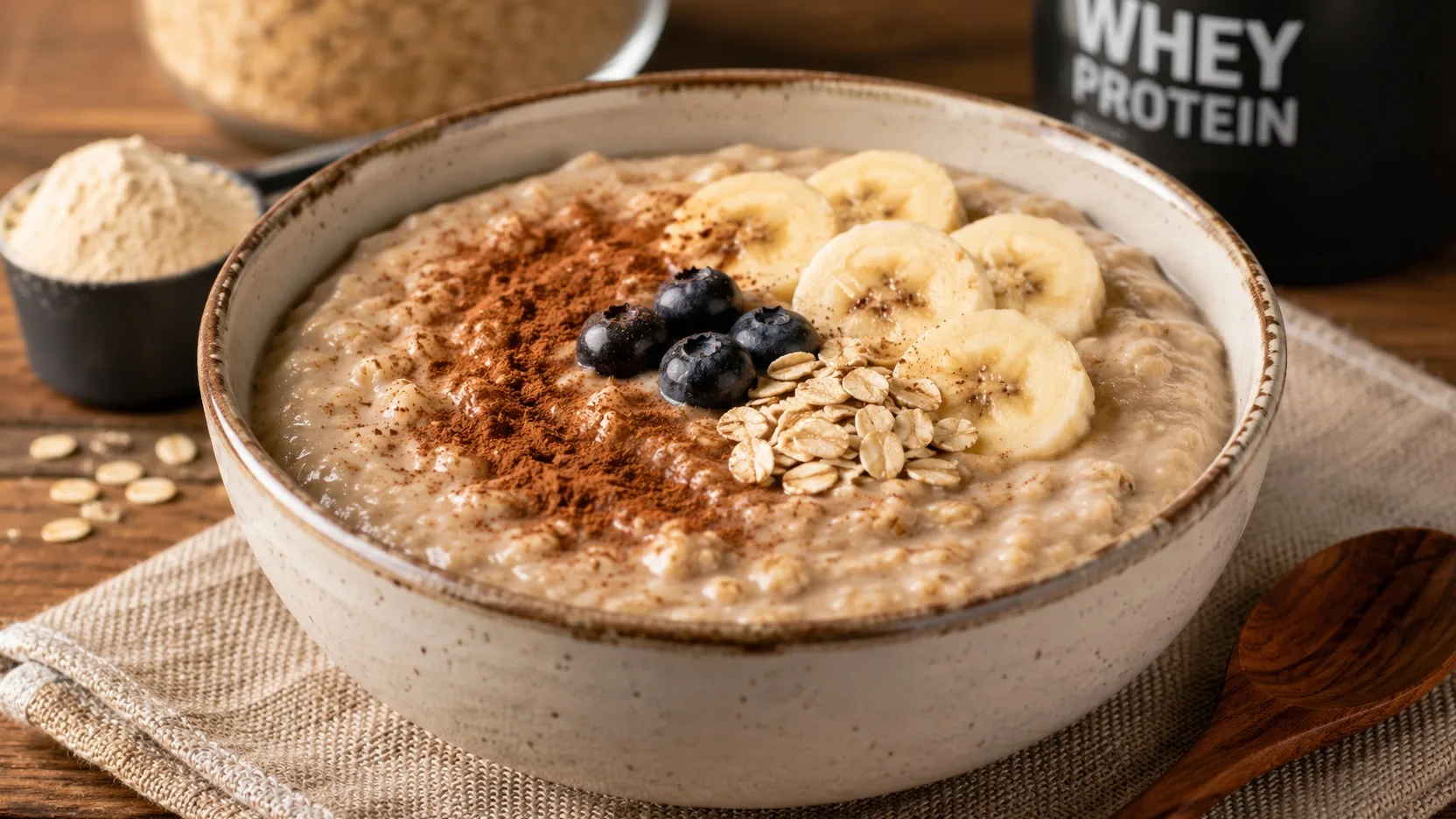
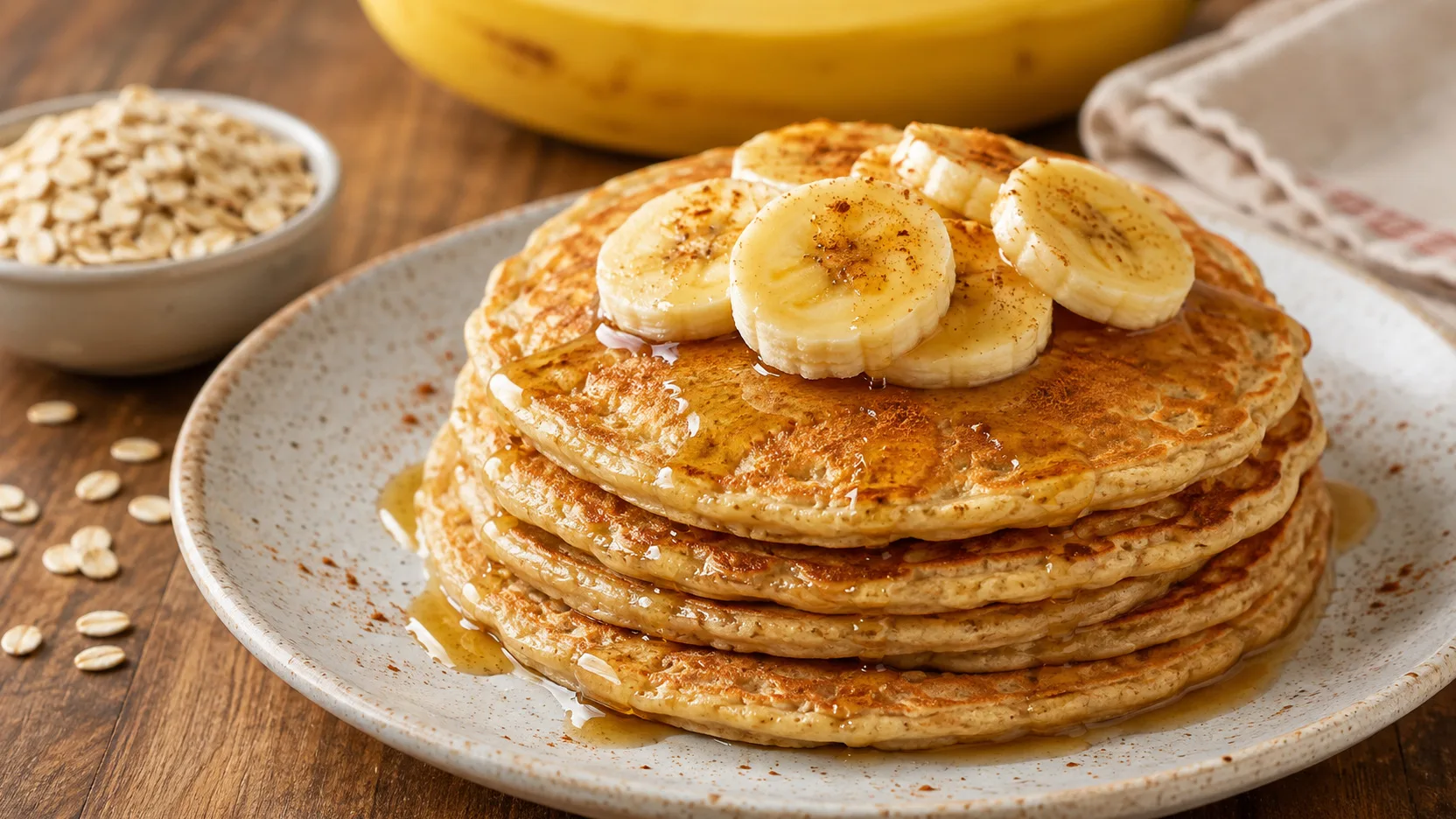
Small banana and oat pancakes, made with very ripe banana to add sweetness and moisture, beaten oats to form a uniform dough and controlled heat to cook the center before it browns too much on the outside.
Ingredients
For the dough
• 1 medium ripe banana, about 100 g without peel
• 1 large egg
• 60 g of rolled oats
• 30 ml of milk, 2 tablespoons
• 1 teaspoon of chemical baking powder, about 5 g
• 1/2 teaspoon ground cinnamon, optional
• 1 pinch of salt
• 1 teaspoon of neutral oil or butter, to grease the pan
To serve, optional
• 1/2 sliced banana
• Cinnamon powder to taste
• 1 to 2 teaspoons of honey or maple syrup
Preparation method
1. Grind the oats
Place the oats in a blender or processor and blend until you obtain a fine flour. This reduces the crumbly texture and helps the dough cook more evenly.
2. Beat the dough
Add the banana pieces, egg, milk, cinnamon and salt. Beat just until the mixture is homogeneous. Add the yeast and pulse quickly, just to combine.
3. Let the dough hydrate
Rest the dough for 5 minutes. The oats absorb some of the moisture during this time and the mixture should be thick but still fall off the spoon. If it is so firm that it doesn't spread when it touches the pan, add 1 more tablespoon of milk.
4. Heat the frying pan
Place a non-stick frying pan over low-medium heat for about 2 minutes. Grease with a thin layer of oil or butter and remove excess with paper towel, if necessary.
5. Model small pancakes
Put about 2 tablespoons of dough per unit, forming discs measuring approximately 8 to 9 cm. In a 24 to 26 cm frying pan, cook 2 or 3 at a time, without touching them. Don't make pancakes that are too thick: excessive thickness is one of the main causes of a moist center while the outside is already browned.
6. Cook the first side
Cook for about 2 to 3 minutes, keeping the heat low-medium. Wait for the edges to lose their raw dough shine and small bubbles to appear on the surface. The base must be golden brown before turning.
7. Turn and finish
Flip with a wide spatula and cook the second side for another 1 to 2 minutes. If it browns too quickly, reduce the heat. Repeat with the rest of the dough, greasing the pan only when necessary.
8. Serve
Serve the pancakes while they are still warm. If you want to reproduce the presentation on the cover, finish with banana slices, cinnamon and a small drizzle of honey or maple syrup.
Right spot / how to know it’s ready
The finished pancake is golden on both sides, flexible to the touch and without a strip of wet dough in the center when opened. Before turning, the edges should feel firm and the surface should have small bubbles. As the dough contains egg, if you use a culinary thermometer, the center must reach at least 71 °C.
Tips for the recipe to work out
Use a really ripe banana
Banana with a very yellow skin and brown spots mashes easily, sweetens the dough and provides the necessary moisture. Underripe bananas tend to make the result less sweet and firmer.
Prefer smaller pancakes
8 to 9 cm discs cook the center before the edges dry out. If you want larger units, reduce the heat and increase the time, watching the time instead of just following the clock.
Adjust the consistency after resting
Oats continue to absorb liquid. If the dough is stiff after 5 minutes, add 1 tablespoon of milk. If it is liquid and spreads like a crepe, mix in 1 tablespoon of crushed oats and wait another 2 minutes.
Do not press the pancake after flipping
Squeezing with a spatula expels steam and flattens the structure. Turn once and let the heat finish setting the center.
Substitutions and variations
Rolled oats can be replaced with the same weight of oat flour. In this case, skip the grinding step and check the consistency after resting, as finer flours may absorb liquid a little faster.
Cow's milk can be exchanged, in the same volume, for a sugar-free vegetable drink. The flavor changes depending on the drink chosen, but the main function of adjusting the fluidity of the dough is preserved.
Cinnamon is optional and can be omitted or exchanged for a small amount of vanilla essence. I don't recommend removing the egg without reformulating the recipe, because it participates in the binding and structure that prevents the pancake from breaking when flipped.
How to store
Once ready, do not leave the pancakes at room temperature for more than 2 hours. Store in a closed container in the refrigerator for up to 3 days. To freeze, wait for it to cool, separate the units with parchment paper and freeze for up to 1 month to better preserve the texture.
To reheat, use a frying pan over low heat, microwave at short intervals or air fryer at a moderate temperature, until heated through. If using a cooking thermometer, bring the center to 74°C when reheating refrigerated pancakes.
How to serve / side dishes
Pancakes work well with fresh fruit, natural yogurt, peanut butter or chopped nuts. If you use honey, syrup or another sweet ingredient, add it only when serving to avoid softening the surface during storage.
Common mistakes
Why is the pancake raw in the center?
The most common reason is to make discs that are too large or too thick, use high heat, or turn before the edges set. Make smaller units, keep the heat low-medium and wait for the surface to lose its raw dough shine before turning.
Why do pancakes become dry or brittle?
There may be too many oats for the moisture in the banana, or the batter may have rested too long and thickened beyond need. Adjust with 1 tablespoon of milk at a time until the dough slowly falls back from the spoon.
Why does it stick to the pan?
The frying pan may be cold, worn out or with insufficient fat. Preheat for a few minutes, use a good non-stick surface and apply a thin film of oil or butter before the first batch.
Why does it brown on the outside before firming up on the inside?
The heat is too high for the thickness of the pancake. Lower the flame and prolong the cooking; the color should advance with the firmness of the center, not before it.