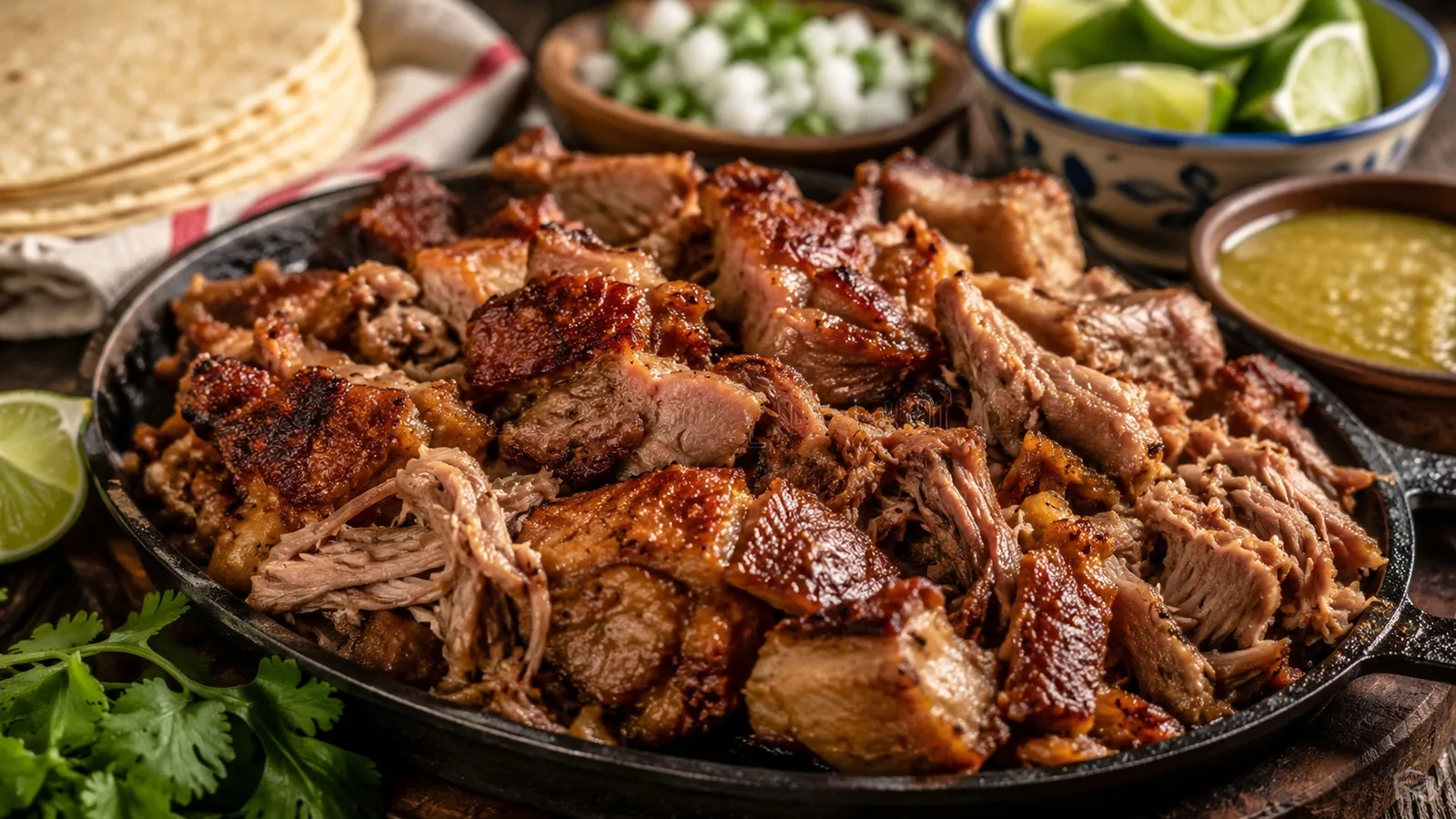
This domestic version of carnitas concentrates the flavor of the pork shoulder in a slow cooking, with little added fat and little liquid, and ends with a reduction of juices and high heat to create toasted edges. The difference to simply shredded meat lies precisely in this combination: large pieces become tender without losing all their structure and are then browned in the fat itself, creating a contrast between a juicy interior and a crispy exterior.
Ingredients
For the carnitas
• 1.5 kg of skinless pork shoulder, with good streaky fat, cut into pieces of approximately 5 cm
• 18 g of fine salt
• 30 g of lard
• 60 ml of orange juice
• 60 ml of water
• 4 cloves of garlic, lightly crushed
• 2 bay leaves
• 1 teaspoon dried Mexican oregano or dried common oregano
• 1/2 teaspoon freshly ground black pepper
To serve
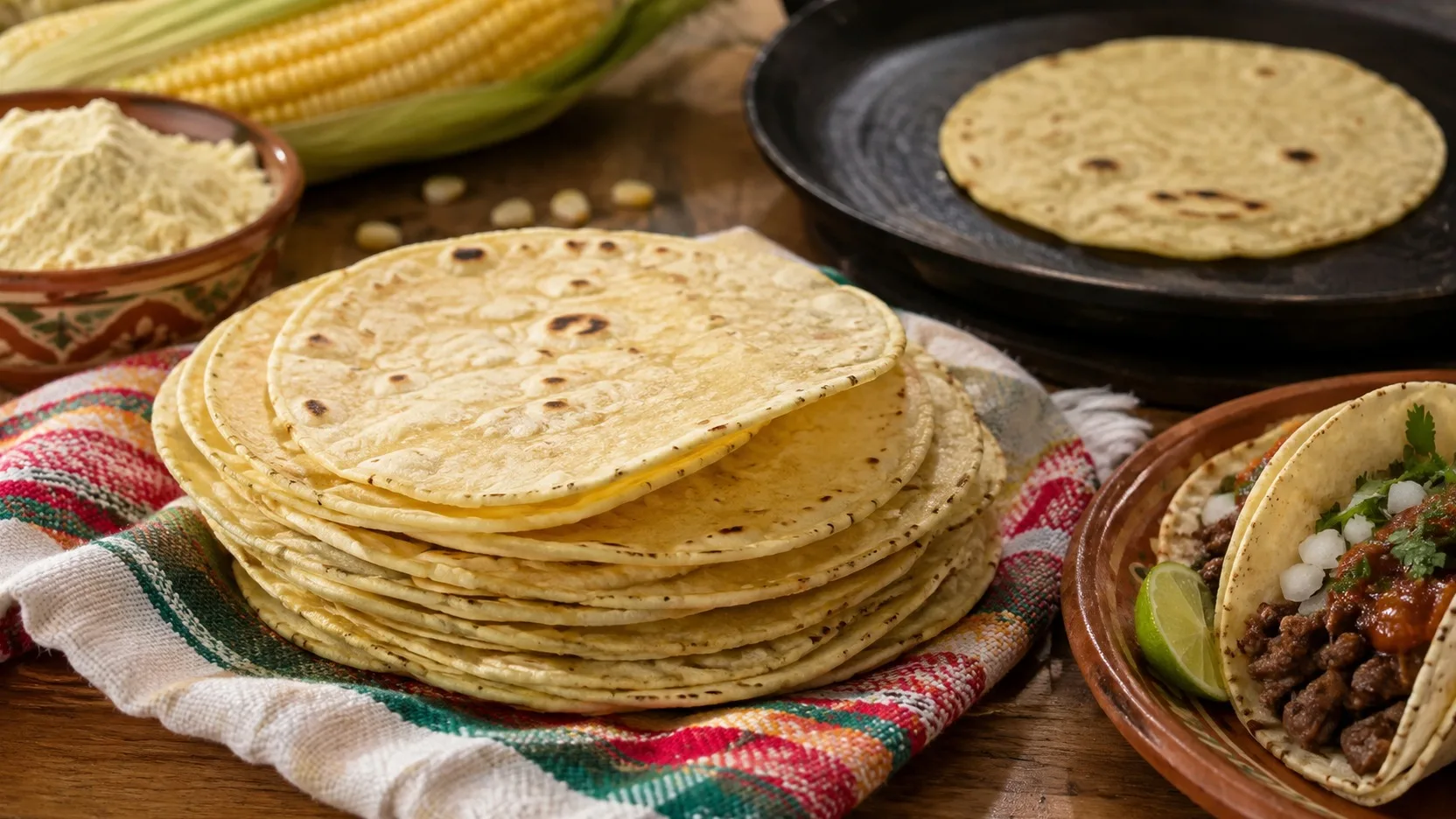
• 18 small corn tortillas, warmed
• 1 small white onion, chopped
• 1/2 cup chopped coriander leaves and stems
• 2 lemons cut into wedges
• Salsa verde or other Mexican salsa to taste
Preparation method
1. Heat the oven and prepare the meat
Heat the oven to 150°C. Dry the shoulder with paper towel, cut into large pieces and season on all sides with salt. Avoid small cubes: they lose moisture more quickly and tend to become dry threads during the crisping stage.
2. Set up slow cooking
Choose a heavy pan with a lid or a deep baking dish in which the meat will be well accommodated, with little empty space. Spread the lard on the bottom, add the meat, orange juice, water, garlic, bay leaves, oregano and pepper. The liquid does not need to cover the meat; During the oven, the shoulder releases fat and juices that coat the pieces.
3. Cook until very soft
Cover tightly and bake for 2 hours and 15 minutes. Open and test a thick piece. The meat should yield easily to the fork and begin to separate into large slivers when pressed, but still maintain its shape. If it is firm, cover again and bake for another 20 to 30 minutes. In general, this step takes 2 hours and 15 minutes to 2 hours and 45 minutes.
4. Separate the fat from the juices
Remove the meat to a platter and discard the garlic and bay leaves. Strain the liquid from the pan into a bowl and let it rest for a few minutes. Remove with a spoon about 3 tablespoons of the fat that rises to the surface and set aside to brown. Do not discard the concentrated liquid below.
5. Reduce juices
Pour the liquid part into a wide pan and boil over medium-high heat for 5 to 10 minutes, until it reduces significantly and acquires a slightly syrupy consistency. Taste before adding salt: reduction concentrates the salinity. Mix 2 to 4 tablespoons of this reduction into the meat, just enough to make it shiny and flavorful without making it soggy.
6. Break into pieces, without shredding it thinly
Using two forks or your hands, when the meat is warm, separate it into irregular pieces measuring 3 to 5 cm. Keep some faces whole and areas of fat. This structure creates crunchy areas without drying out the entire interior.
7. Leave the edges crispy
Increase the oven to 240 °C or turn the grill/broiler to maximum. Spread the meat in a single layer on a baking tray, without crowding, and drizzle with the reserved fat. Brown for 6 to 10 minutes, turn the pieces over and brown for another 4 to 8 minutes. Watch closely: the goal is to create golden brown spots and crispy edges, not to dry out the entire meat.
8. Serve
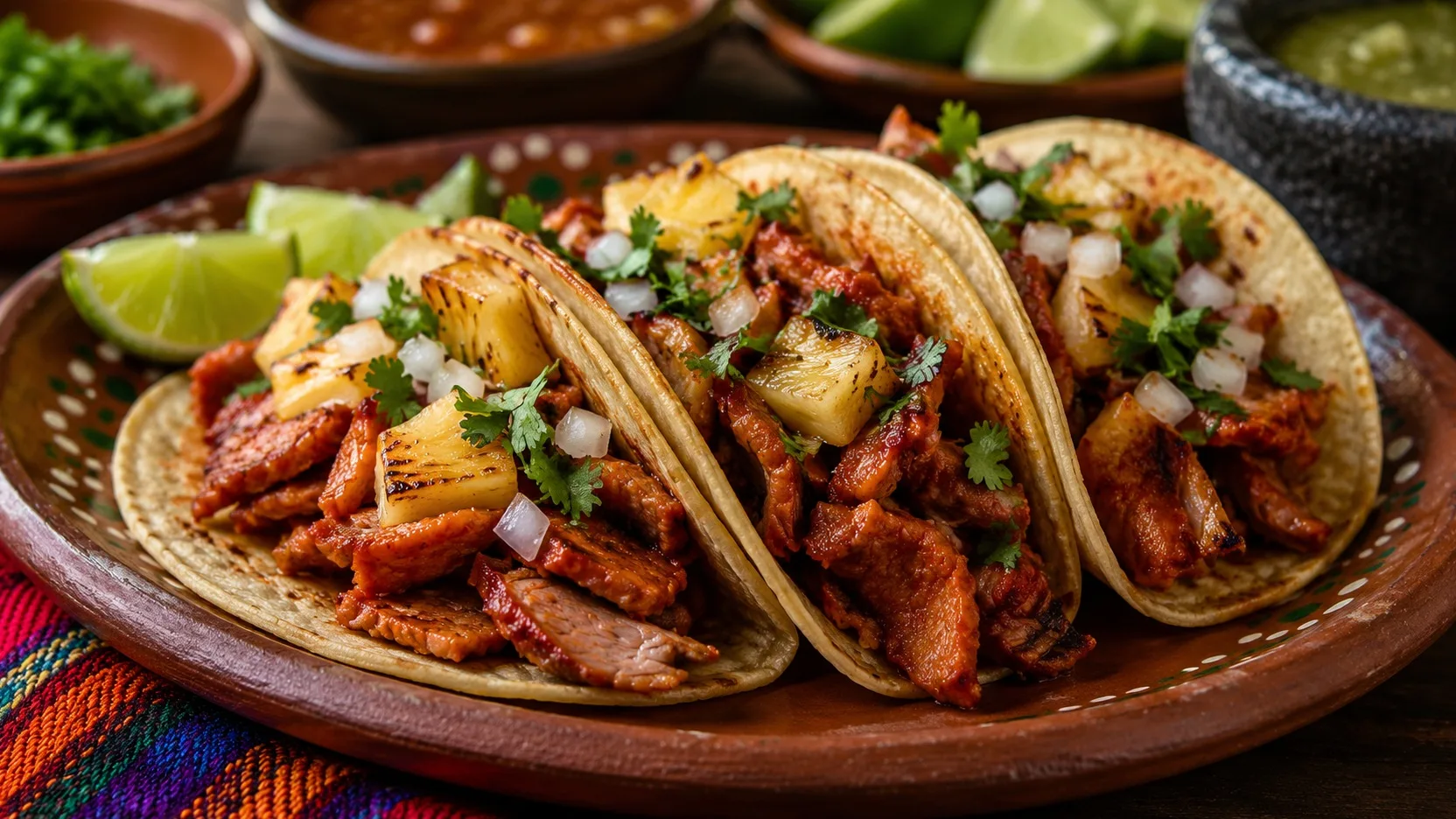
Serve immediately on warm corn tortillas. Complete with onion, cilantro, lemon and parsley. If desired, bring the remaining reduction to the table in small quantities to moisten portions that will not be crisped again.
Right spot / how to know it’s ready
At the end of slow cooking, the fork should enter with almost no resistance and the meat should separate into large, moist slivers, not dry fibers. The minimum safe temperature for whole cuts of pork is 63°C with a 3-minute rest, but carnitas require cooking well beyond that point to soften the connective tissue. When finished, look for golden brown edges, some crunchy spots and a still bright and juicy interior.
Tips for the recipe to work out
Use a tight-fitting container
The less empty space there is around the meat, the better it cooks in its own juices and the fat it renders. A baking dish that is too large spreads the liquid, speeds up evaporation, and can dry out the edges before the center is tender.
Do not turn everything into threads before browning
Carnitas gain texture when there are pieces with wide sides to caramelize. Shredding too finely increases the area exposed to heat and makes drying easier.
Reduction and fat have different functions
Use reduction to restore flavor and moisture; use the fat to conduct heat and brown. If the meat enters the grill soaked in liquid, it steams first and takes a while to form a crust.
Make the crunch close to serving time
The meat can be cooked in advance, but the edges will lose crispiness during storage. For better texture contrast, reheat and brown only the amount that will be served.
Substitutions and variations
Can I use ham instead of shoulder?
You can, but choose a piece with visible fat and avoid removing the entire layer of fat. The ham tends to be leaner, so it tends to be less greasy and requires more attention to avoid drying out when finished.
Can I change the lard?
Neutral oil works in the same amount, but delivers less pork flavor. It is not necessary to cover the meat with liters of fat in this domestic version: the tight container uses the fat that the shoulder itself releases.
Do I need to use orange juice?
No. Replace the 60 ml of juice with water and, if you just want the citrus aroma, add two wide strips of orange peel without the white part and remove them before reducing. The juice also helps with browning as it contains sugar.
What if I can't find Mexican oregano?
Use regular dried oregano. The aromatic profile is not identical, but the change is functional and does not alter the structure of the recipe.
How to store
Refrigerate the carnitas in shallow, closed containers within 2 hours of preparation. Keep at 4°C or below and consume within 4 days. To freeze, preferably store the cooked meat with some of the juices before the final crunch; For best quality, use within 2 to 3 months. When reheating leftovers, heat the center to 74°C and crisp in the oven, grill or frying pan only at the end. If the food exceeds 32°C, such as in a very hot outdoor environment, reduce the refrigeration period to 1 hour.
How to serve / side dishes
Carnitas work especially well on corn tortillas with white onion, cilantro, lime and green or red salsa. Beans, pickled onions, sliced radishes and a crunchy salad also balance the richness of the meat.
Common mistakes
Why are my carnitas dry and stringy?
The most common reasons are pieces that are too small, a container that is too wide, too much watery liquid or meat that is shredded finely before finishing. Use large pieces, cook covered and tightly and brown in thick chips only at the end.
Why weren't they crispy?
A wet surface and a crowded baking tray prevent browning. Drain well, mix in just a little of the reduction, spread the meat in one layer and use high heat. In a frying pan, work in batches.
Why were they salty after they were ready?
The reduction concentrates the salt that was already in the juices. Therefore, season the meat at the beginning, but taste the reduction before putting it back in and avoid adding salt while it is still very liquid.
Why did the bottom burn before the meat tenderized?
This usually happens when the seal is bad, the oven is hotter than indicated or the container is too wide. Check that the lid closes well; In a baking dish, use two firm layers of aluminum foil and keep a little liquid at the bottom during the covered phase.