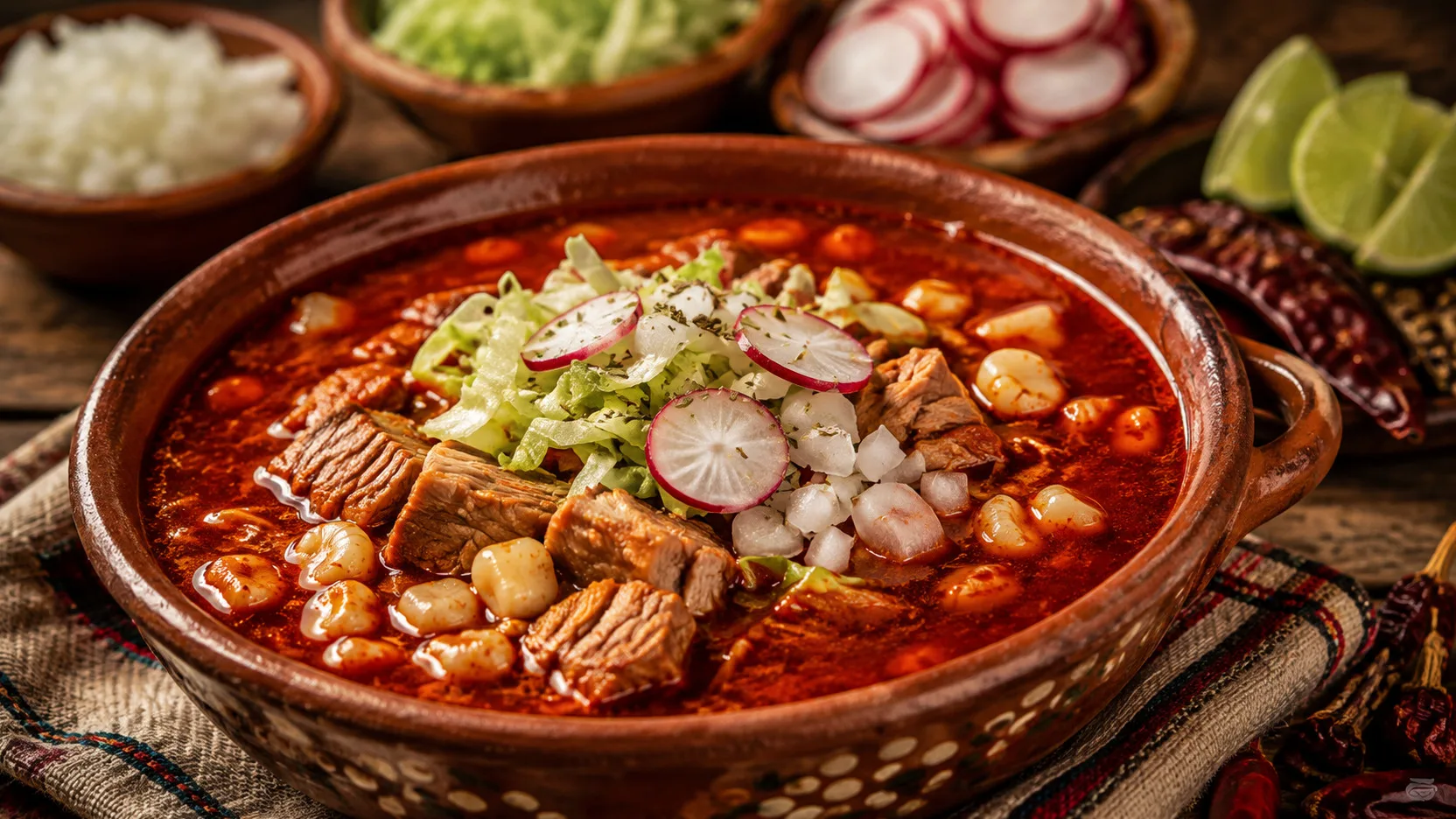
Pozole rojo is a corn and meat stew served in a broth reddened by dried chiles. In this domestic version, already cooked pozolero or hominy corn simplifies preparation without hiding the difference to the white hominy found in Brazil.
Ingredients
For the pozole
• 1.2 kg of skinless pork shoulder or shank, in large pieces of approximately 5 cm
• 1.3 kg of pozolero or hominy corn, already cooked and drained, approximately 3 large cans
• 2.5 liters of water, more if necessary
• 1 large white onion, cut in half
• 6 cloves of garlic, peeled
• 2 teaspoons of salt, plus as needed to adjust at the end
For the red chile broth
• 6 dried guajillo chiles
• 2 dried ancho chiles
• 1/2 medium white onion, in pieces
• 2 cloves of garlic
• 300 ml of hot water to hydrate the chiles
• 1 tablespoon of neutral oil
• 1 teaspoon dried Mexican oregano
To serve
• 3 cups of lettuce or finely sliced cabbage
• 8 radishes, finely sliced
• 1/2 small white onion, finely chopped
• 2 lemons cut into wedges
• 2 tablespoons dried Mexican oregano
• Tostadas or crispy corn tortillas to taste
• Chopped chile to taste, optional
Preparation method
1. Start the pork broth
Place the meat, 2.5 liters of water, onion, 6 cloves of garlic and 2 teaspoons of salt in a large pan. Cook over high heat until it starts to boil. Lower the heat to medium-low and remove any foam that rises in the first few minutes with a slotted spoon. Cover partially and cook at a gentle boil for 1 hour 30 minutes to 1 hour 45 minutes, until the meat is very tender.
2. Hydrate the chiles
While the meat cooks, remove stems and most of the seeds from the guajillos and anchos. Heat a dry frying pan over medium heat and fry the chiles for a few seconds on each side, just until they are aromatic and flexible; do not let it darken or burn. Cover with 300 ml of hot water and leave to hydrate for 20 minutes.
3. Make the red puree
Transfer the hydrated chiles to the blender with half an onion, 2 cloves of garlic, oregano and around 250 ml of the hydration water. Blend until as smooth as possible. Pass through a medium sieve, pressing with a spoon, to retain tougher skins.
4. Cook the chile sauce
Heat the oil in a pan or deep frying pan over medium heat. Carefully add the strained puree and cook for 5 to 7 minutes, stirring, until the color deepens slightly and the raw chile aroma disappears. Book.
5. Add the corn to the broth
Remove the meat from the broth and discard the cooked onion and garlic. If there is excess fat on the surface, remove some with a spoon, keeping some for flavor. Add the red sauce and pozolero or hominy corn to the broth. Cook uncovered, at a low boil, for 25 minutes for the corn to absorb the seasoning.
6. Finish with the meat
Shred the meat into large pieces or cut it into soft cubes and return it to the pan. Cook for another 15 to 20 minutes. If the pozole is too thick, add hot water little by little; it should remain full of corn and meat, but with plenty of broth. Taste and adjust the salt.
7. Serve with garnishes
Distribute the hot pozole in deep bowls. Serve lettuce or cabbage, radish, onion, lemon, oregano, tostadas and crushed chile separately so that each person can finish their own bowl.
Right spot / how to know it’s ready
The broth should be brick red, aromatic and fluid, not thick like a sauce. The meat should give easily to the fork and fall apart without resistance. The corn needs to be swollen and soft to the center; in nixtamalized pozolero corn, many kernels open at the edges like small flowers. If there is a hard or mealy center, cook more.
Tips for the recipe to work out
Do not burn the chiles
Guajillo and ancho become bitter when toasted too much. The goal is just to heat and release aroma before hydrating.
Cook at a gentle boil
Aggressive bubbling can make the broth cloudy and harden the surface of the meat before the collagen softens. Keep only constant, small bubbles.
Adjust the salt at the end
Corn absorbs a lot of seasoning during cooking. Make the final adjustment after the hominy and meat have cooked together.
Preserve contrast in trims
Radish, onion, lettuce or cabbage and lemon come raw when serving. This freshness is part of the balance of the dish and should not be cooked in the broth.
Substitutions and variations
Corn pozolero or hominy versus Brazilian hominy
The reference result uses pozolero or hominy corn, that is, corn prepared by nixtamalization. In Brazil, don't assume that white corn sold for hominy has gone through the same process; check the label. If using 500 g of dry white hominy, soak it for 8 to 12 hours, drain and cook in clean water until completely soft before adding it to the broth. In a pressure cooker, this usually takes around 30 to 40 minutes after it comes to pressure, but the point of the grain is more important than the clock. Hominy can be smaller, less open and have a different texture and flavor than pozolero corn.
If you can't find chile guajillo
You can increase the ancho ratio to maintain a dry chile broth, but the result will be darker, sweeter, and less bright. Avoid replacing all the guajillo with chile de árbol, which is much spicier and changes the balance of the dish.
How to store
Divide the pozole between shallow containers to cool faster and refrigerate for up to 2 hours. Store refrigerated at 4°C or below, consume within 3 to 4 days. To freeze, do so without the fresh trimmings; Soups and stews maintain best quality for about 2 to 3 months. When reheating, bring the pozole to 74°C in the center or until steaming and evenly hot.
How to serve / side dishes
Serve in large bowls, with garnishes in separate pots. Crispy corn tostadas are a classic side dish; the lemon should only enter the bowl so that the acidity remains lively. A small pinch of oregano rubbed between hands before sprinkling releases more aroma.
Common mistakes
Why did my broth taste bitter?
The most common reason is burnt chile on toast or chile sauce cooked over too high heat. Work quickly with the dried chiles and discard any that have turned black or smell burnt.
Why was the meat tough?
Shoulder and shank need time to soften. If the meat still resists the fork, maintain a gentle simmer and cook for another 15 to 30 minutes before shredding.
Why is corn still hard?
This usually happens when using dry corn that has not yet been cooked enough. The grain should be soft to the center before the final step with the chile sauce; Brazilian hominy may require additional time.
Why did the pozole turn into a very thick stew?
The pan lost too much liquid through evaporation. Add hot water little by little and adjust the salt again until it reaches a consistency rich in corn and meat, but clearly brothy.