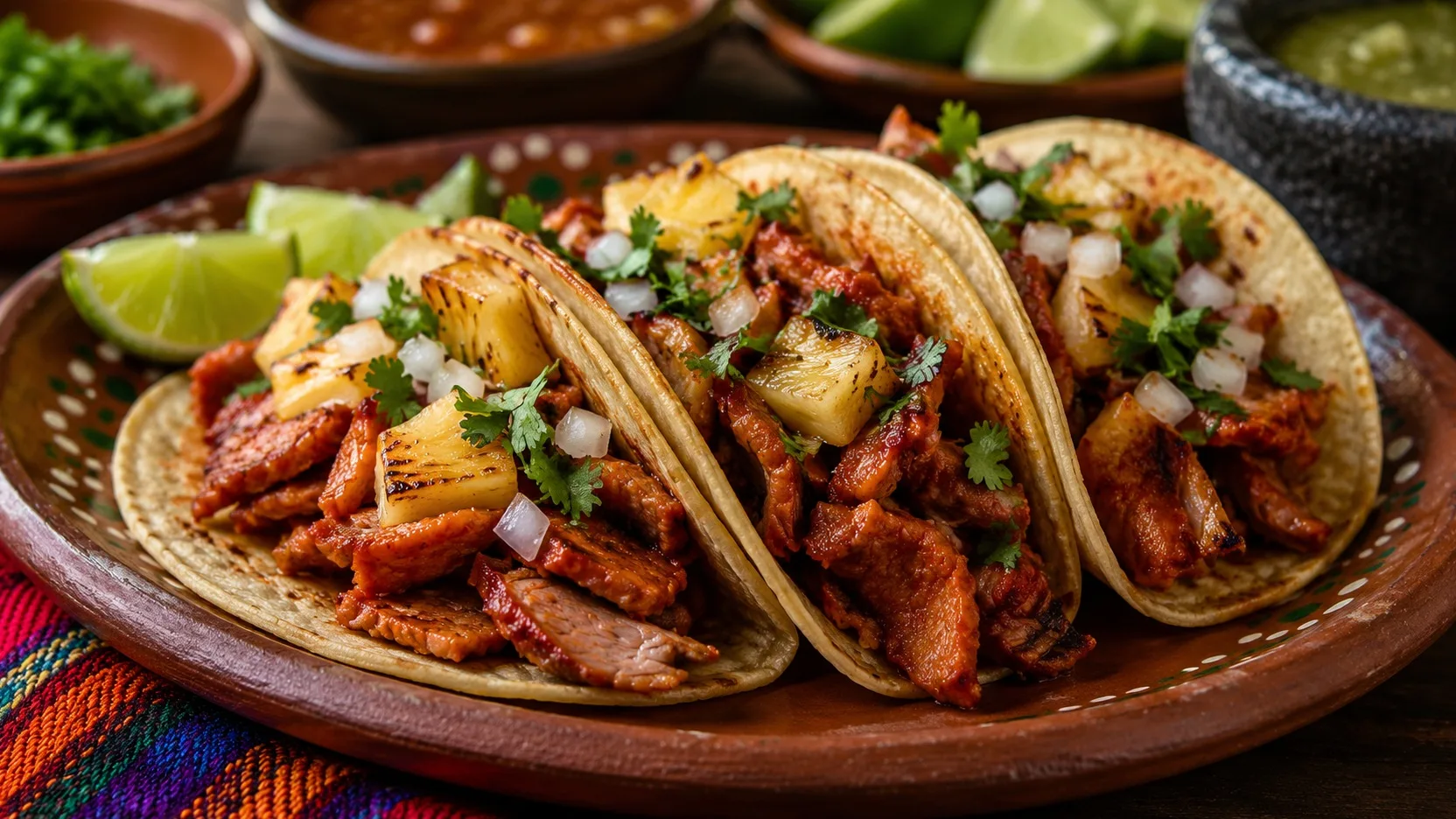
This home version preserves al pastor's central markers—pork in red adobo, achiote, chiles, high heat, and pineapple—but swaps the trompo for a heavy skillet. The objective is to form well-seared edges without drying out the inside of the meat.
Ingredients
For the adobo and meat
• 800 g of boneless pork ribs or pork shoulder, cut into 4 to 5 mm steaks
• 3 dried guajillo chiles, stems and seeds removed
• 3 cloves of garlic
• 30 g of achiote paste
• 60 ml of orange juice
• 30 ml of Tahiti lemon juice
• 30 ml of apple cider vinegar
• 1 teaspoon of dried oregano
• 1/2 teaspoon cumin powder
• 1/4 teaspoon of cinnamon powder
• 1/4 teaspoon ground black pepper
• 1 teaspoon of brown sugar
• 1 and 1/2 teaspoon of salt
• 1 tablespoon of neutral oil
To finish and serve
• 300 g of firm pineapple, without skin or hard core, in slices of approximately 1 cm
• 1 tablespoon of neutral oil, for the frying pan
• 16 small corn tortillas
• 1 small white onion, in small cubes
• 1/2 cup chopped coriander leaves and stems
• 2 Tahiti lemons, cut into wedges
• Red or green parsley, to taste, to serve
Preparation method
1. Roast and hydrate the chiles
Heat a frying pan without oil over medium heat. Press the guajillos against the surface for 20 to 30 seconds on each side, just until fragrant and slightly more pliable; don't let it get too dark. Cover with hot water and let it hydrate for 15 to 20 minutes. Drain.
2. Beat the adobo
In a blender, blend the hydrated chiles, garlic, achiote paste, orange juice, lemon juice, vinegar, oregano, cumin, cinnamon, black pepper, sugar, salt and 1 tablespoon of oil. If necessary, add 2 to 4 tablespoons of the chile hydration water to make a sauce.
thick and smooth. Separate 3 tablespoons of this adobo into a clean container before placing the rest on the meat.
3. Marinate the meat
Spread the remaining adobo over both sides of the pork steaks. Cover and refrigerate for at least 3 hours and preferably up to 8 hours. Remove from the refrigerator about 15 minutes before cooking, without leaving the meat at room temperature for a long time.
4. Caramelize the pineapple
Heat a heavy skillet or iron skillet over medium-high heat. Brush a thin layer of oil on the pineapple slices and brown for 2 to 3 minutes on each side, until brown spots and caramelized edges appear. Remove, let cool and cut into small cubes.
5. Brown the meat in batches
Increase the heat to high and let the skillet get very hot. Shake off excess marinade from the steaks and sear a few at a time, without overlapping. Cook for about 2 to 3 minutes on the first side, until a dark reddish crust forms on the edges, and for another 1 to 2 minutes on the other side. For whole cuts of pork, the center must reach at least 63°C; then let it rest for 3 minutes.
6. Chop and finish
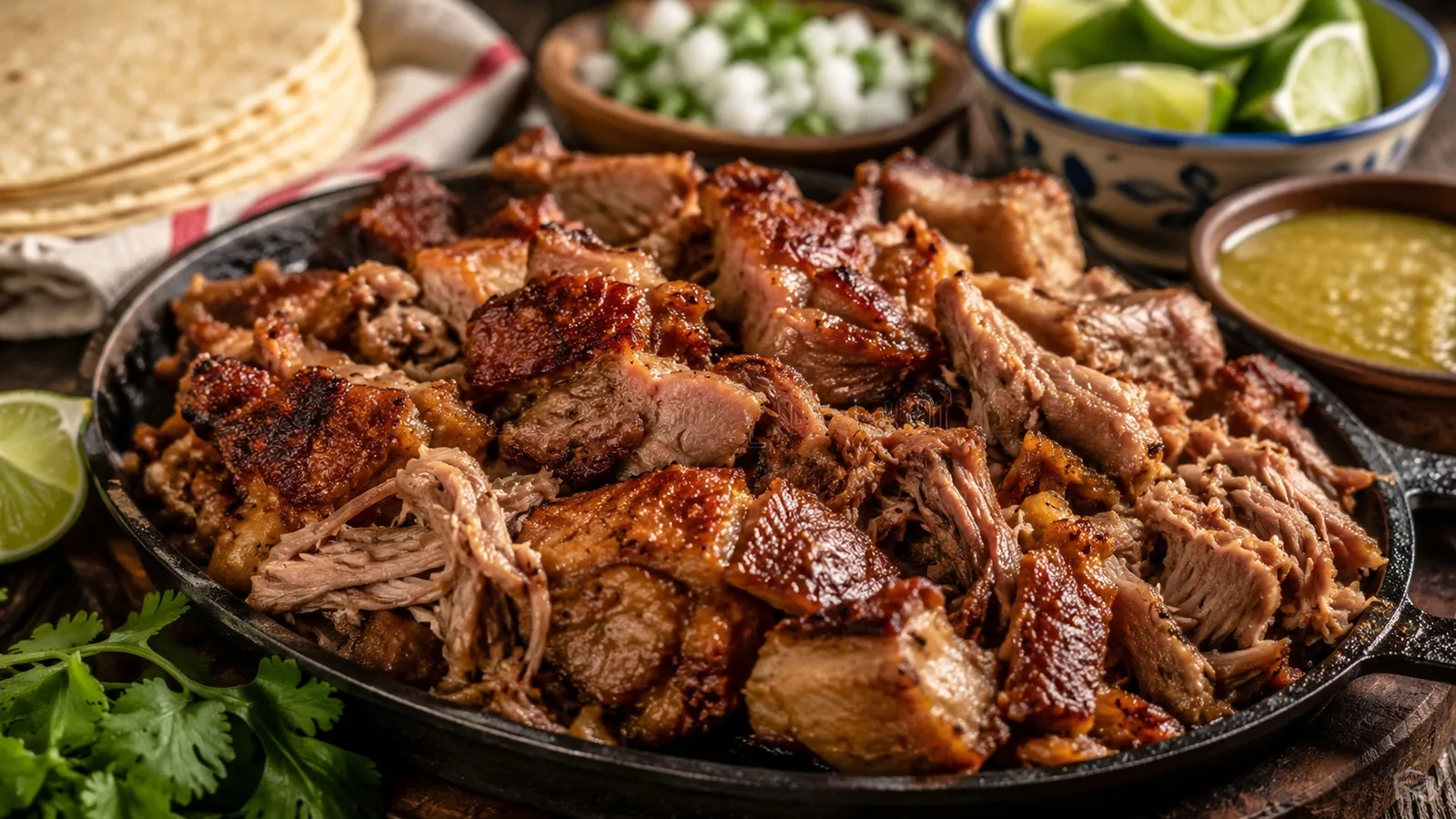
Transfer the meat to a cutting board and cut into short strips or small cubes. Return the meat to the hot skillet with the reserved 3 tablespoons of clean adobo and stir for 30 to 60 seconds, just until the sauce adheres and becomes shiny. Mix in part of the caramelized pineapple or keep it separate for each person to assemble the taco.
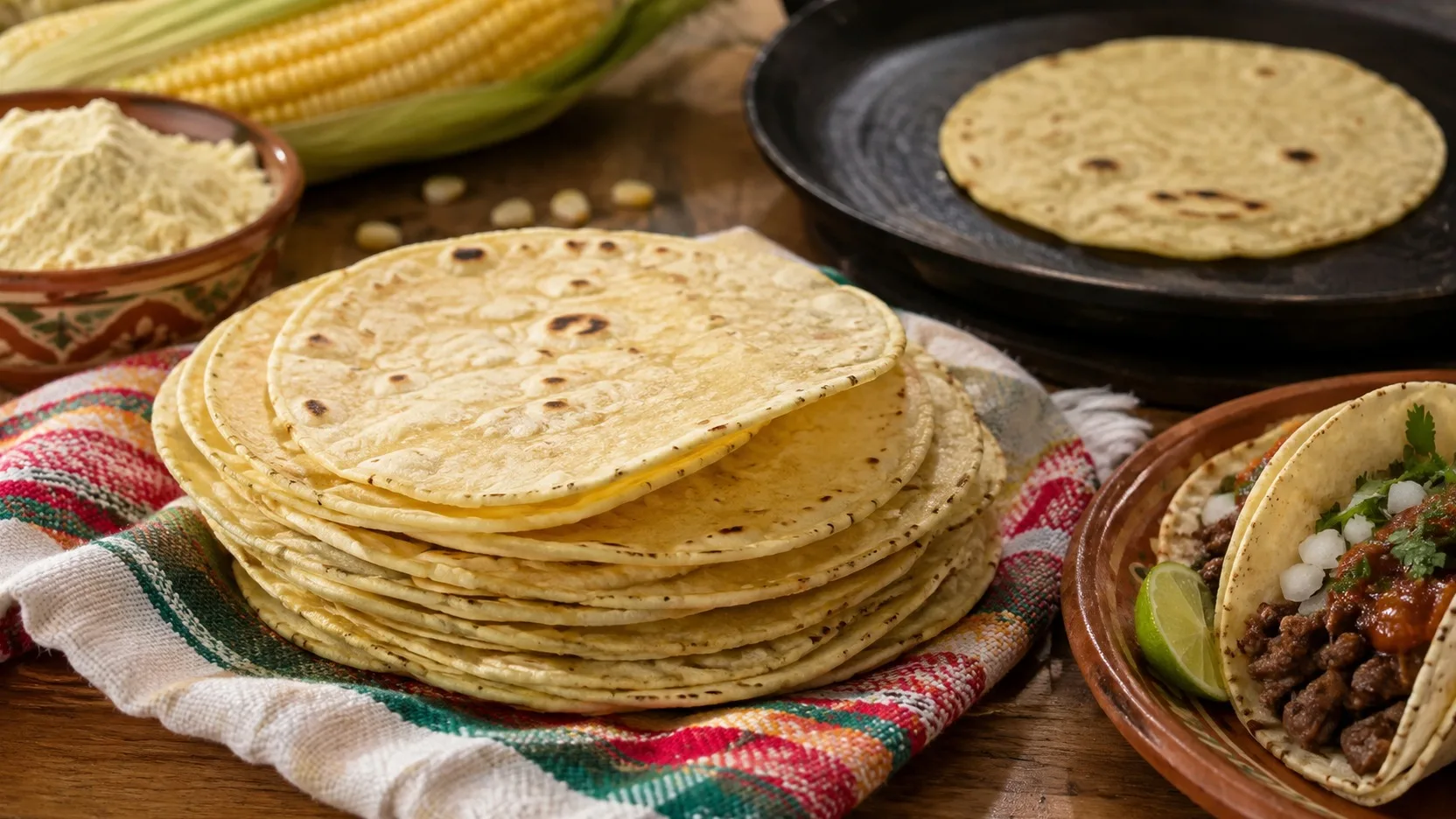
7. Heat the tortillas
In a clean, hot comal or frying pan, heat the tortillas for about 20 to 30 seconds on each side, until they are pliable and have small toasted spots. Stack them and keep them covered with a clean cloth to prevent them from drying out.
8. Assemble the tacos
Distribute the meat on the warm tortillas. Complete with caramelized pineapple, white onion and cilantro. Serve immediately with lemon wedges and parsley on the side.
Right spot / how to know it’s ready
The meat must have well-browned edges, dark red caramelization points and an almost dry surface, not cooked in liquid. Inside, it must remain moist and firm, without a raw or translucent appearance. Using a culinary thermometer, whole cuts of pork should reach at least 63°C and rest for 3 minutes. The pineapple should be marked and caramelized on the outside, but still juicy.
Tips for the recipe to work out
Fine and regular cut
Steaks with similar thickness cook at the same rate and increase the area of contact with the pan, which helps create the toast that resembles the surface of the trompo.
Do not crowd the frying pan
Too much meat at once releases steam and drops the temperature. Work in batches to really brown, rather than cooking the meat in its own liquid.
Toast the chiles without burning them
Burned guajillo becomes bitter quickly. The goal is just to awaken the aroma before moisturizing, not to make it black.
Reserve the adobo before raw meat
The portion used for finishing must be separated before the marinade comes into contact with the raw pork. This way, you avoid reusing contaminated marinade.
Control your sweet side
Sugar and pineapple promote caramelization, but they also burn easily. If the bottom of the pan darkens too much between batches, wipe off the residue before continuing.
Substitutions and variations
If you can't find achiote paste
Use 1 tablespoon of annatto paprika, 1/2 teaspoon of sweet paprika and add an extra 1 teaspoon of vinegar to the adobo. The color is close, but the flavor is less earthy and less complex than with achiote paste; it is an adaptation, not an equivalent exchange.
If you can't find chile guajillo
Dry ancho chile works, but produces a darker, fruitier, less bright adobo. As a more distant adaptation, use 1 and 1/2 tablespoons of sweet paprika and a small pinch of cayenne or pepperoni, adjusting the heat to taste.
Tenderloin, shoulder or loin
Tenderloin and shoulder have more streaky fat and tolerate high heat better. Loin can be used, but it must be cut thinly and removed as soon as it is cooked to avoid dryness.
Wheat tortilla
You can replace the corn tortilla with a wheat tortilla, but the flavor and texture will change and the result will move away from the more common profile of the taco al pastor.
How to store
Store cooked meat and pineapple in shallow, sealed containers in the refrigerator at 4°C or below, preferably separate from tortillas and fresh toppings. Refrigerate within 2 hours of preparation and consume leftovers within 3 to 4 days. To reheat, heat the meat until hot in the center; Official food safety references indicate 74°C for reheated leftovers. Cooked meat can also be frozen in portions for about 2 to 3 months for better quality. Thaw in the refrigerator before reheating.
How to serve / side dishes
Serve the tacos as soon as they are assembled, with salsa roja or salsa verde, lime and onion. Black beans, refried frijoles, sliced radishes, or a simple coleslaw work as sides without competing with the adobo and pineapple.
Common mistakes
Why did the meat turn pale and release water?
The frying pan was not hot enough, there was too much meat in the batch or the steaks had too much liquid marinade. Heat the surface better, cook in small quantities and remove excess adobo before sealing.
Why did the adobo taste bitter?
The chile probably burned during the toasting stage or the bottom of the pan was charred by sugar and marinade. Roast quickly and wipe off very dark residue between batches.
Why was the meat dry?
Very lean cuts and prolonged cooking will lose juiciness. Choose rib-eye or pork shoulder and use a thermometer when possible to stop at a safe point, without continuing to cook unnecessarily.
Why did the tortilla crack when folding?
She was cold or dry. Heat until pliable and keep the tortillas stacked and covered while you assemble the tacos.