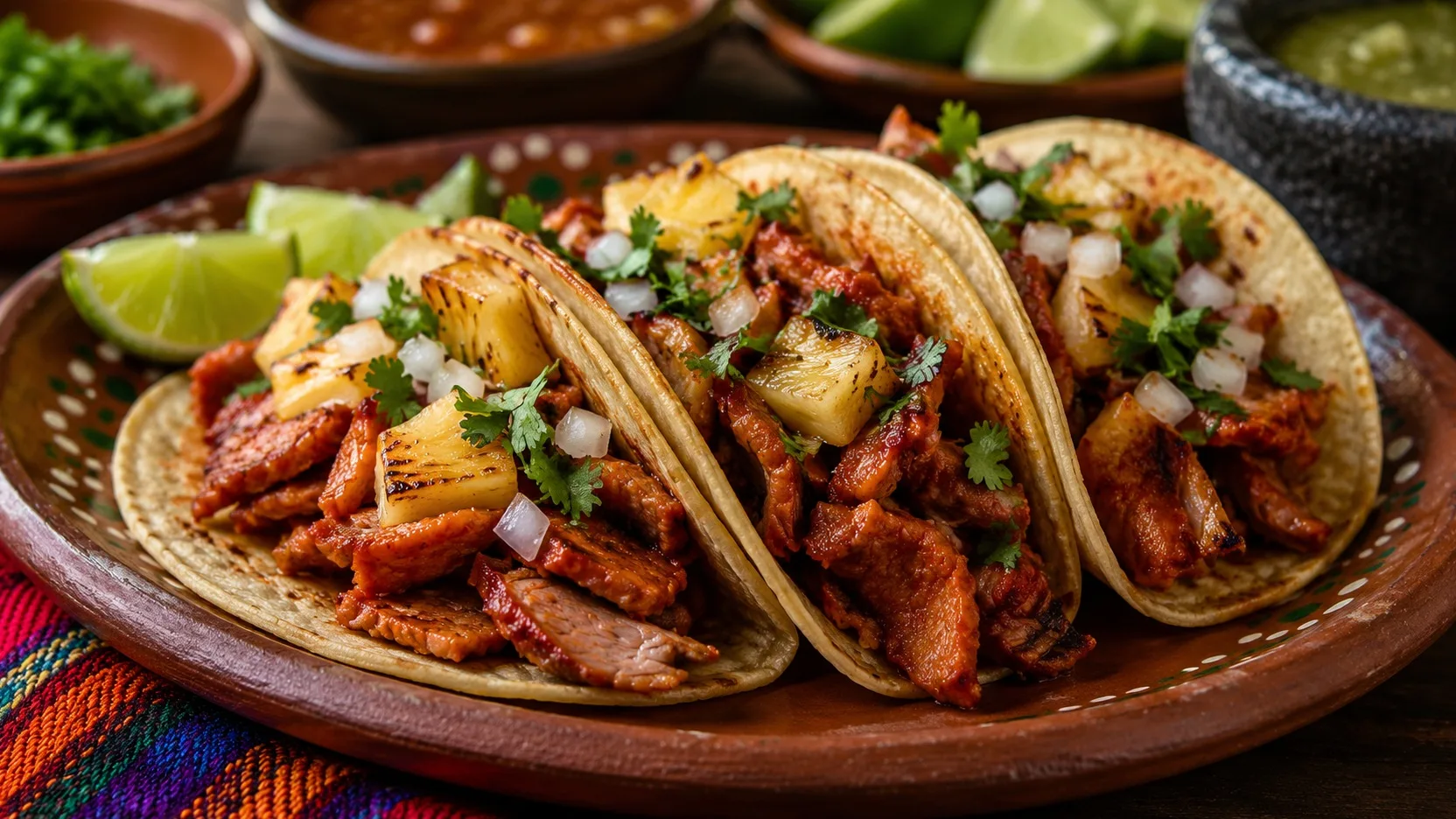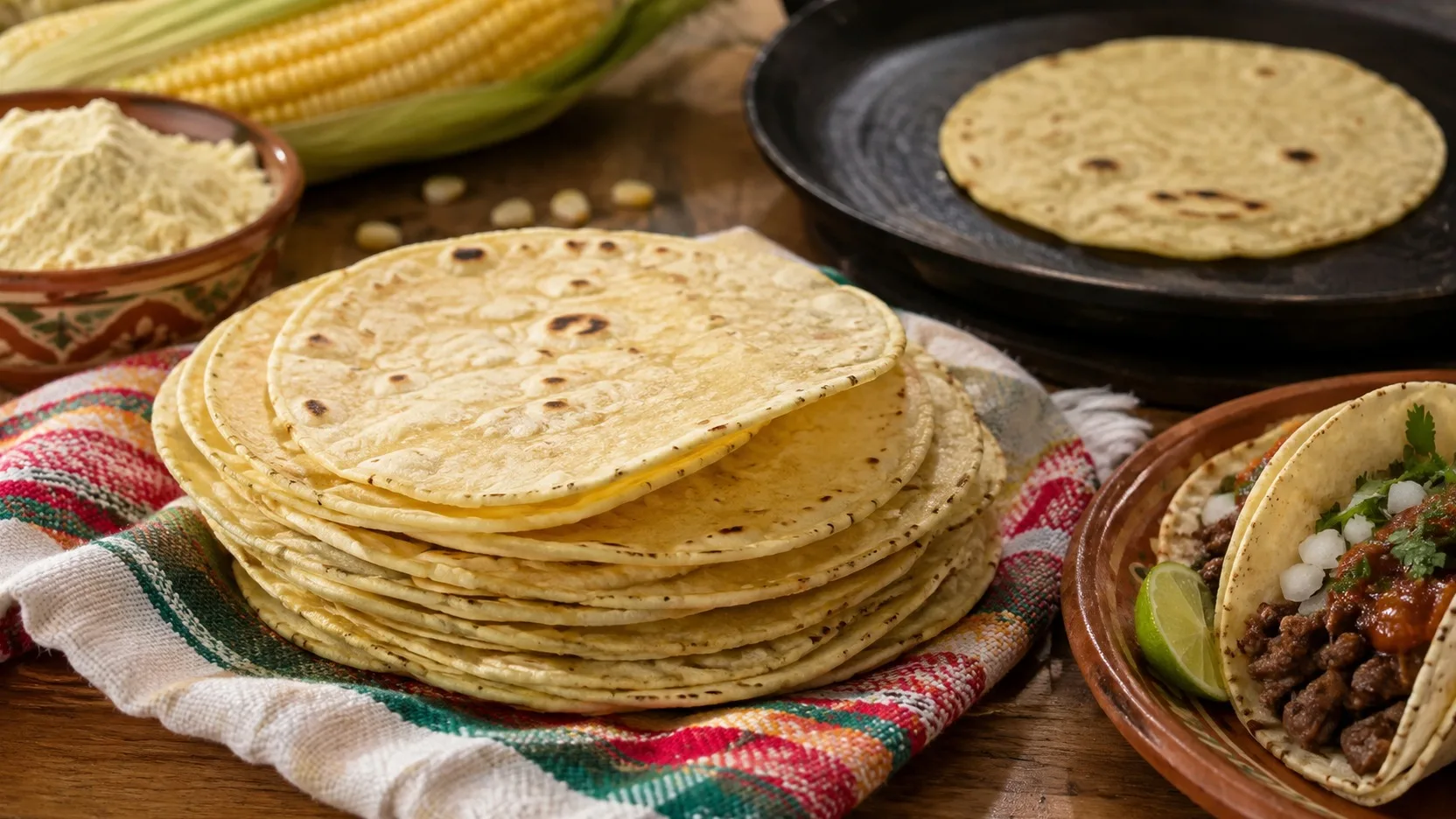
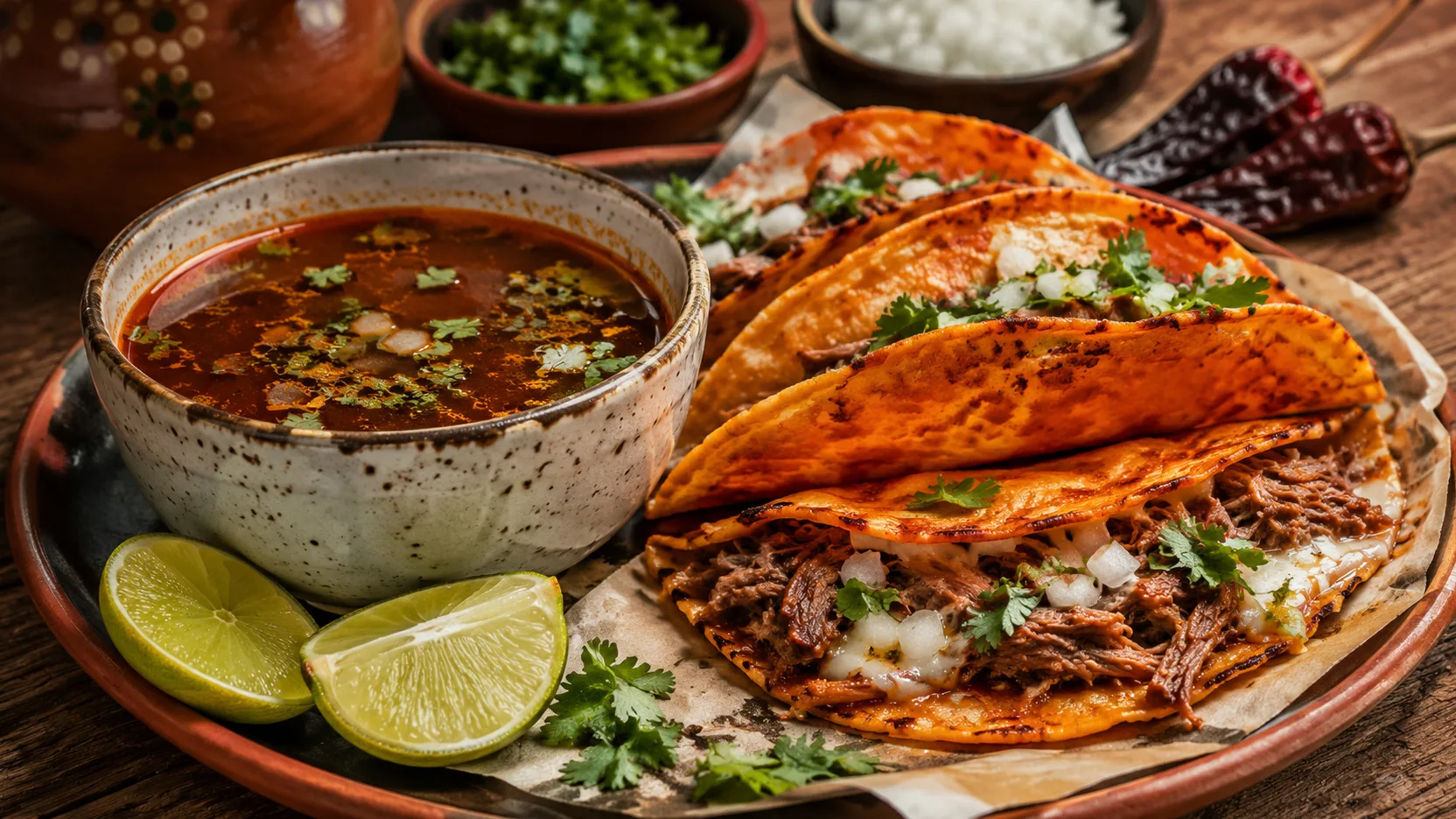
This homemade version of birria de res combines chuck, muscle and rib to form shredable meat and a broth with body. The adobo uses guajillo, ancho and pasilla; After cooking, the red fat from the preparation itself is separated from the consommé and used in a thin layer to brown the tortillas without making them soggy. The cheese is optional and transforms the assembly into quesabirria.
Ingredients
For birria and consommé
• 800 g of beef chuck, in 5 to 6 cm cubes
• 400 g of beef muscle, in 5 to 6 cm cubes
• 400 g bone-in beef ribs, in pieces
• 18 g of salt, plus as needed to adjust at the end
• 1 tablespoon of neutral oil
• 6 dried guajillo chiles, stems and seeds removed
• 3 dried ancho chiles, stems and seeds removed
• 2 dried pasilla chiles, stems and seeds removed
• 1 dried tree chile, seedless, optional for more heat
• 1 large white onion, about 250 g, divided
• 6 cloves of garlic, peeled
• 2 medium ripe tomatoes, approximately 250 g, cut in half
• 2 tablespoons of apple cider vinegar
• 1 teaspoon of dried oregano
• 1 teaspoon of cumin powder
• 1/2 teaspoon ground black pepper
• 1/4 teaspoon of cinnamon powder
• 1 generous pinch of ground cloves, about 1/8 teaspoon
• 2 bay leaves
• 1.4 liters of hot water or unsalted meat broth for the common pan; for the pressure cooker, use 900 ml in total
To assemble the clubs
• 16 small corn tortillas, 12 to 14 cm
• 250 g of Oaxaca cheese or grated low-moisture mozzarella, optional
• 1/2 small white onion, finely chopped
• 1 cup chopped coriander leaves and stems
• 3 Tahiti lemons, cut into wedges
Preparation method
1. Prepare the chiles
Open the chiles, remove stems, seeds and excess ribs. Heat a dry frying pan over medium heat and toast the chiles for a few seconds on each side, just until they become aromatic and more flexible; do not let it darken to the point of burning. Cover with very hot water and let it hydrate for 15 minutes. Drain and discard this water.
2. Brown the meat
Dry the pieces of meat and season with salt. Heat a large, heavy pan with the oil over medium-high heat. Brown the meat in batches, without crowding, for about 2 to 3 minutes on each side. Book. This browning adds flavor, but the tenderness will come from long cooking.
3. Blend and cook the adobo
In a blender, place the hydrated chiles, half the onion, garlic, tomatoes, vinegar, oregano, cumin, black pepper, cinnamon, cloves and 300 ml of hot water or broth. Beat until smooth. Pass through a fine sieve directly into the pan used to brown the meat, pressing out the solids. Cook the adobo over medium heat for 4 to 5 minutes, stirring, until it loses its raw smell and becomes brick red and shiny.
4. Cook in a common pan
Return the meat to the pan, add the bay leaf and add the remaining 1.1 liters of hot water or broth. The liquid should surround the meat without having to cover it completely. When it boils, turn down to low heat, cover leaving a small gap and cook for 2 hours and 45 minutes to 3 hours and 15 minutes. Turn the pieces a few times and add a little hot water if the level drops too low. The meat is ready when it falls apart with little pressure from two forks.
5. Or cook in the pressure cooker
After cooking the adobo, return the meat to the pressure cooker, add the bay leaves and top up with just 600 ml of hot water or broth, totaling around 900 ml of liquid with what was used in the blender. Close respecting the filling mark and minimum volume indicated by the manufacturer. Cook on high pressure for 60 minutes from pressurization and let the pressure come down naturally for 15 to 20 minutes. If the muscle still offers resistance to shredding, cook under pressure for another 10 minutes.
6. Separate meat, fat and consommé
Remove the meat and discard the bones, bay leaves and large pieces of fat or gristle that have not softened. Shred the meat while it is still warm. Let the broth rest for 5 minutes: the red fat will rise. Remove with a ladle and reserve in a bowl. Strain the remaining consommé if you want a smoother texture. Taste and adjust salt. If it is too thin, boil uncovered for 10 to 15 minutes; if it is too concentrated, adjust with hot water.
7. Prepare the frying pan and tortillas
Heat an iron or heavy-bottomed frying pan over medium heat. If the tortillas are cold or brittle, heat them quickly without fat until they are pliable. Stir the shredded meat with 2 to 3 small ladles of consommé, just enough to make it moist, not soggy.
8. Brown the tacos without soaking them
Brush a thin layer of the reserved red fat on just one side of each tortilla; do not dip the entire tortilla in the consommé. Place greased side down in skillet. Distribute about 60 to 70 g of meat in one half and, if you want it to taste, 15 g of cheese. Fold and press lightly. Brown for 1 to 2 minutes on each side, until the surface is crispy and has browned spots. Work in batches so the pan doesn't lose heat.
9. Finish and serve
Serve the tacos immediately with small bowls of piping hot consommé. Finish the consommé and tacos with chopped onion, cilantro and lime to taste. Dip each bite in the broth only before eating to preserve the crunch.
Right spot / how to know it’s ready
The meat should separate into fibers with little pressure from the fork, without elastic or hard parts. The consommé should be brownish-red, fragrant, fluid, and light in body, not a thick paste. The separated fat should form a reddish layer on the surface. The finished taco must support the filling without collapsing, have dry and crunchy areas on the outside and remain juicy on the inside.
Tips for the recipe to work out
Do not burn the chiles
The toast is short. Blackened chiles leave lingering bitterness in the adobo; If they burn, it's better to discard them than try to mask the flavor.
Use the fat, not the broth, for browning
Consommé contains a lot of water and softens the tortilla. The thin layer of reddish fat transfers color and flavor while allowing the surface to fry and crisp.
Give room for the meat to cook
Large cubes preserve juiciness during long cooking. In the regular pan, maintain just a gentle boil; Violent bubbling can evaporate liquid too quickly before the collagen softens.
Do not overload the club
Too much filling prevents the tortilla from touching the pan and interferes with the crispiness. For small tortillas, 60 to 70 g of meat is enough.
If you can, make the birria before assembly
Once cold, the fat separates even more easily. Reheat meat and consommé before assembling and use only the amount of fat needed for the pan.
Substitutions and variations
Can I use just chuck chuck?
Yes. Use 1.6 kg of chuck if it is the most affordable cut. Consommé tends to be a little less gelatinous than with muscle and rib; Choose chuck with some fat interspersed and do not remove all the fat before cooking.
What to do if you run out of ancho or pasilla?
If there is guajillo, keep it as a base. The lack of ancho can be compensated with 2 more guajillos; the result is less sweet and fruity. The lack of pasilla can be compensated with 1 extra ancho; the broth is less dark and less earthy. These swaps approximate the function in adobo, but do not exactly reproduce the flavor of each chile.
Brazilian adaptation when I can't find guajillo
As an adaptation, not as an equivalence, replace the 6 guajillos with 1 large roasted, skinless red pepper, 1 and 1/2 tablespoons of sweet paprika and 1 dried seedless finger pepper. Keep ancho and pasilla if you can find them. The result will have controlled color and heat, but will lose part of the fruity aroma and identity of dried Mexican chiles.
Can I use wheat tortilla?
You can, but it changes the texture and flavor a lot. The wheat tortilla absorbs fat differently and tends to be more flexible than crispy. For the proposed result, prefer corn tortilla.
Is cheese mandatory?
No. Birria can be served in a taco without cheese. Adding Oaxaca or mozzarella transforms the assembly into a quesabirria; low-moisture mozzarella is a practical replacement, with a more neutral flavor.
How to store
Transfer meat and consommé to shallow containers and refrigerate within 2 hours of preparation. Keep at 4°C or below and consume within 3 to 4 days. To store longer, freeze meat and consomme separately or together for 2 to 3 months for best quality. Do not freeze already assembled tacos if crunchiness is your priority. When reheating leftovers, bring to 165°F in the center; Reheat the consommé until hot and assemble the tacos just before serving.
How to serve / side dishes
Serve the consommé in small bowls, with white onion, cilantro and lemon. Sliced radishes and a fresh tomato or tomatillo salsa go well together because they bring acidity and crunch without competing with the broth. For a larger meal, Mexican rice or plain beans can accompany.
Common mistakes
Why are my tacos soft and greasy?
The most common cause is dipping the tortilla in whole consommé or using too much fat. Use only the layer of fat separated, in a thin film, and a frying pan that is already hot. Serve the broth separately for dipping later.
Why is the meat still hard after the indicated time?
Cuts with a lot of collagen vary. If there is still resistance to the fork, the meat needs more time, not higher heat. In the regular pan, continue at a gentle boil for 20 minute blocks. Pressurize, add 10 minutes and release again naturally.
Why did the consomme taste bitter?
The most likely reason is burnt chile during the tostado or adobo stuck to the bottom. Toast just until fragrant and cook the sauce over medium heat, stirring. Discarding the hydration water also helps avoid excessive bitterness.
Why did almost no red fat appear on the surface?
The meat combination may be too lean. Do not remove all the fat from the chuck and ribs before cooking.. If there is still little fat in the pan, mix 1 tablespoon of neutral oil with a small portion of concentrated adobo or consommé and use only to brush the tortillas.