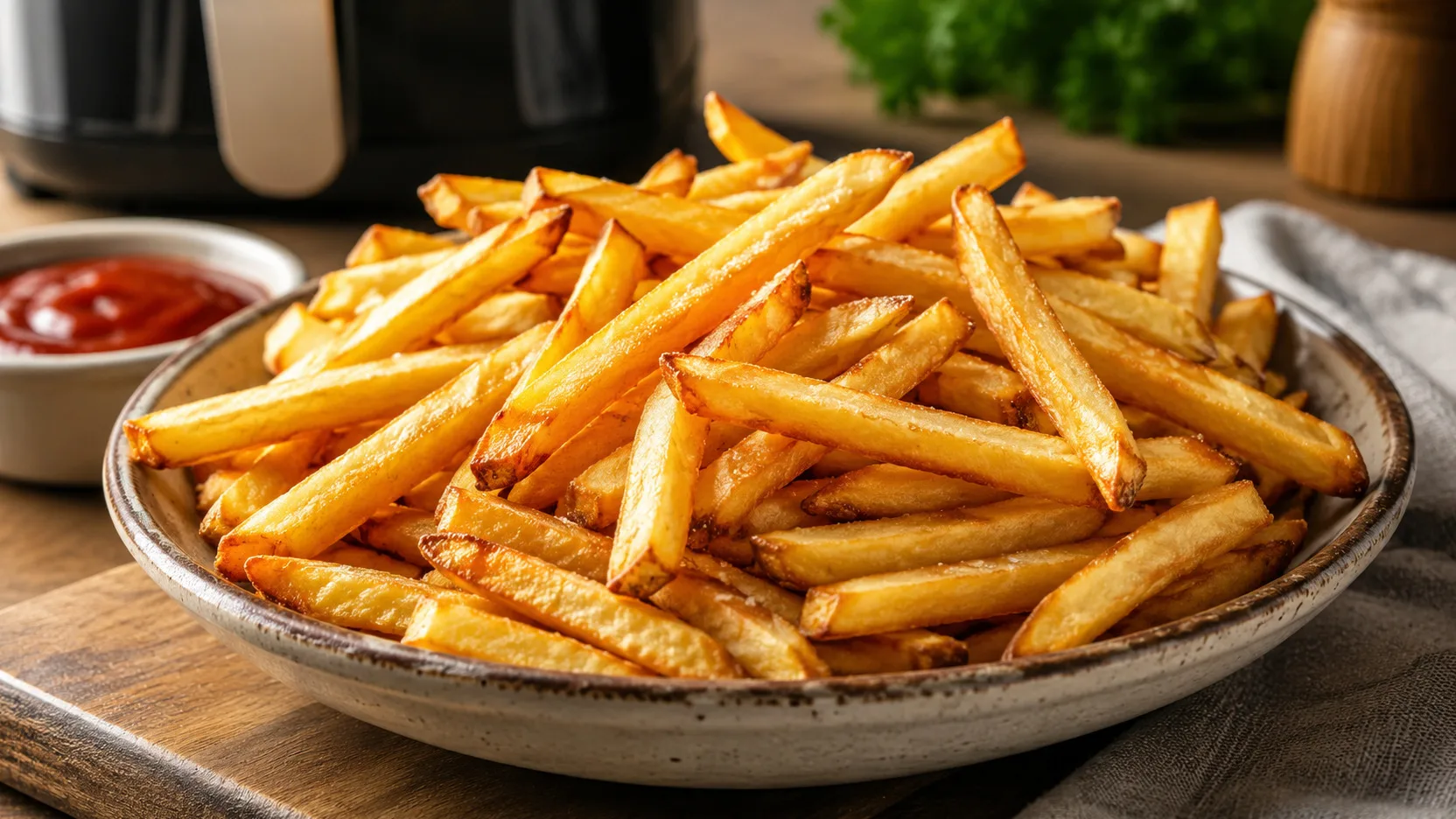
This recipe uses fresh potatoes cut into sticks of approximately 8 mm, a step of soaking in water and carefully drying before the Air Fryer. The quantity was sized so as not to suffocate air circulation: in this formulation, work with a maximum of 400 g per batch; If the basket is small or the sticks are packed together, reduce the quantity until they can move when shaken.
Ingredients
• 400 g of Asterix potatoes, preferably of similar size
• 1 tablespoon of olive oil or neutral vegetable oil, about 15 ml
• 1/2 teaspoon of fine salt, or to taste, to finish
Preparation method
1. Cut the sticks to the same size
Wash and peel the potatoes, if desired. First cut into slices and then into sticks about 8 mm thick. Maintaining a uniform cut is important so that the sticks cook and brown at the same rate.
2. Leave to soak for 30 minutes
Place the sticks in a bowl and cover with plenty of cold water. Leave to soak for 30 minutes. Then drain and rinse quickly.
3. Dry until the surface is really dry
Spread the sticks on a clean kitchen towel or paper towel and dry very well, pressing without breaking them. The surface must be free of visible drops and without a wet sensation to the touch; Adhered water delays browning and favors soft potatoes.
4. Cover with oil
Transfer the dried potatoes to a bowl, add the olive oil and mix until a thin, uniform film forms. Don't add salt yet: it comes in after cooking.
5. Start at 180°C
Preheat the Air Fryer to 180°C for 3 minutes, if your model recommends or benefits from preheating. Distribute a maximum of 400 g of potatoes per batch, without compacting. Cook at 180°C for 14 to 16 minutes, shaking the basket at 7 and 12 minutes to redistribute the sticks.
6. Finish at 200°C to brown
Increase to 200°C and cook for a further 5 to 9 minutes. Shake once halfway through this step. Start watching early: Power, basket size, potato variety and cut thickness all change timing. Remove when the sticks are firm on the outside, well browned and with some more toasted tips.
7. Salt and serve immediately
Place the potatoes on a platter, season with salt while they are still hot and serve immediately. The crispiness decreases as the steam from the interior migrates to the surface.
Right spot / how to know it’s ready
The potato is ready when the surface has lost its moist appearance, has gained a visible golden color and the edges are firm. When you pick up a toothpick, it should support its own weight better than a baked potato and offer crunchy resistance on the first bite, while the center remains soft and cooked. If it is still pale and flexible, leave it for another 2 to 3 minutes at 200°C and check again.
Tips for the recipe to work out
Prefer Asterix potatoes
Asterix tends to have a drier texture and is a good choice for frying. Regular potatoes also work, but may need a few extra minutes and tend to brown less intensely depending on the batch.
Use 8 mm as a thickness reference
Very thin sticks will darken before the center becomes soft; thick sticks cook, but take longer to lose moisture on the surface. A cut close to 8 mm balances crust and interior.
Do not overcrowd the basket
For this recipe, 400 g per batch is the reference ceiling. If the sticks form a compact mass or the basket is small, reduce the quantity. More space for hot air to circulate means more even browning.
Drying is more important than adding more oil
After soaking, remove as much surface water as possible. Increasing the oil does not compensate for the wet toothpick and can even leave the feeling heavier.
Use the clock as a track, not an end point
Air Fryers vary greatly in power and airflow. The last step should be about color and texture, not just the timer.
Substitutions and variations
Can I use regular potatoes?
Yes. Keep the same cut and method, but expect variation in texture and timing because the water and starch content changes between potatoes and batches. Extend the final step in short intervals if necessary.
Can I change the oil?
Yes. Use the same amount of neutral vegetable oil, such as canola, sunflower or corn. The main impact will be on flavor; the thin film of fat continues to help with browning.
Can I leave the shell on?
You can, as long as the potato is washed well and the skin is in good condition. The appearance is more rustic and some edges can be firmer.
How to store
The best texture is right after preparation. If there are any potatoes left, just let the strong steam dissipate for a few minutes, place in a closed container and refrigerate without delay; For a conservative margin, consume within 3 days. To recover some of the crispiness, spread it in one layer and heat it in the Air Fryer at 200 °C for about 3 to 5 minutes, watching to avoid burning.
How to serve / side dishes
Serve as an accompaniment to burgers, sandwiches, meat, chicken or fish, or as a snack with ketchup, seasoned mayonnaise or other sauce of your choice.
Common mistakes
Why are my potatoes soft?
The most likely causes are a still wet surface, an overfilled basket or lack of agitation during preparation. If this happens, spread the sticks out better and heat them at 200°C in intervals of 2 to 3 minutes, shaking between them.
Why did it turn pale even though it was cooked?
This usually indicates too much humidity or too little direct exposure to hot air. Reduce the quantity per batch and ensure the final stage at a higher temperature until real browning appears.
Why did some ends burn before the center was ready?
The cut was probably too thin or uneven, or the high temperature set in early. Standardize the sticks and first do the step at 180 °C to cook the inside before concentrating the browning at 200 °C.