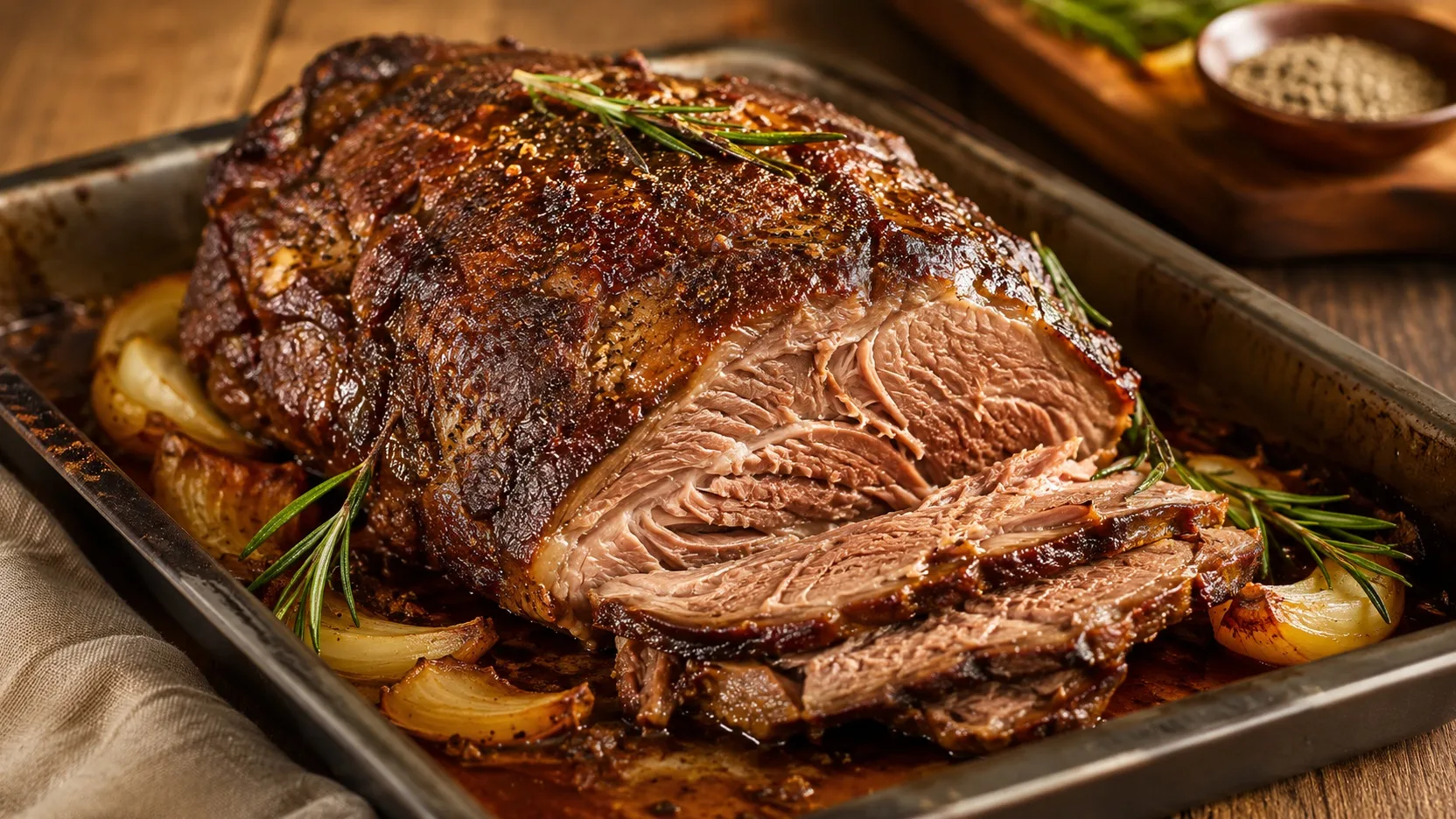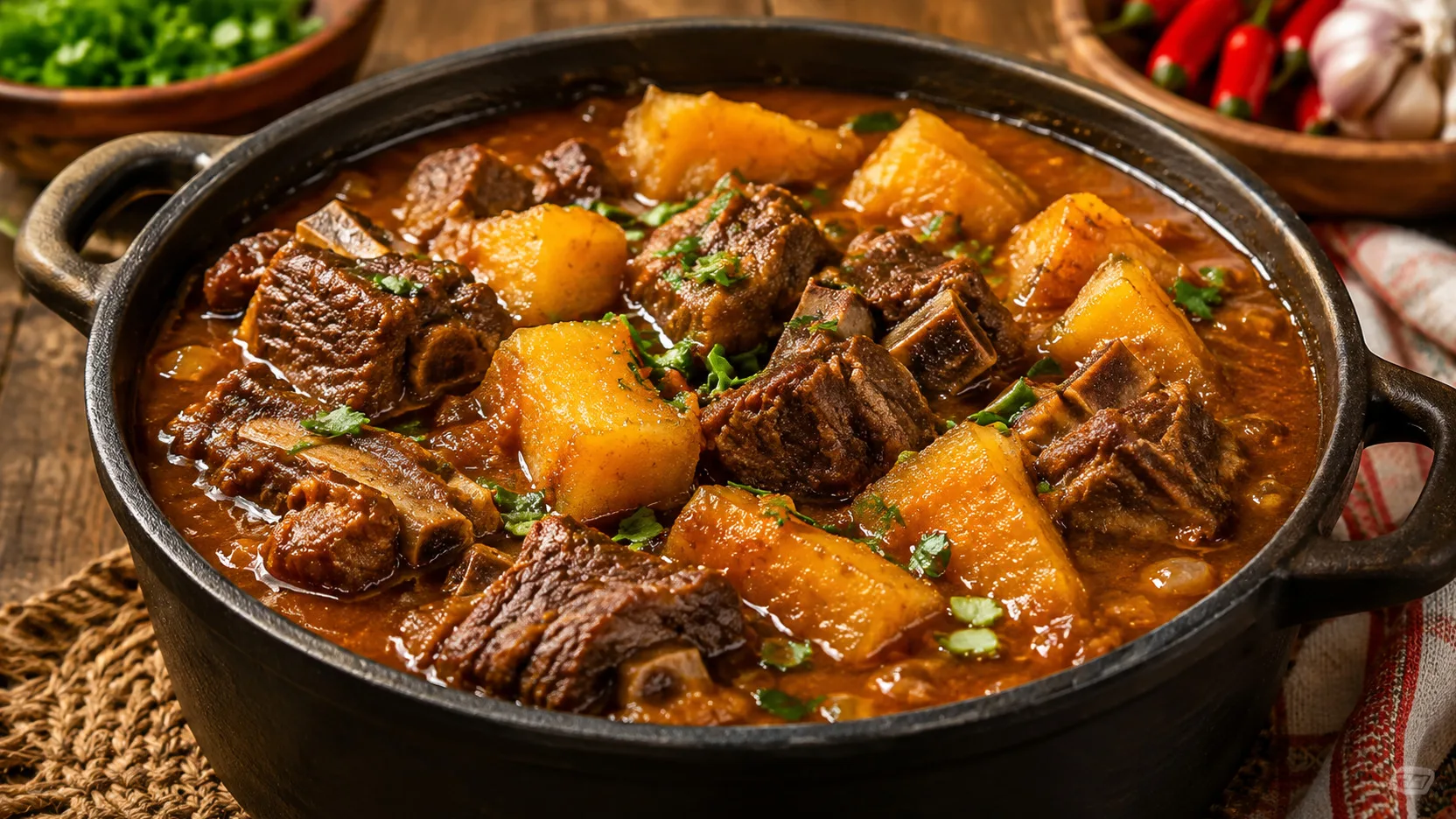
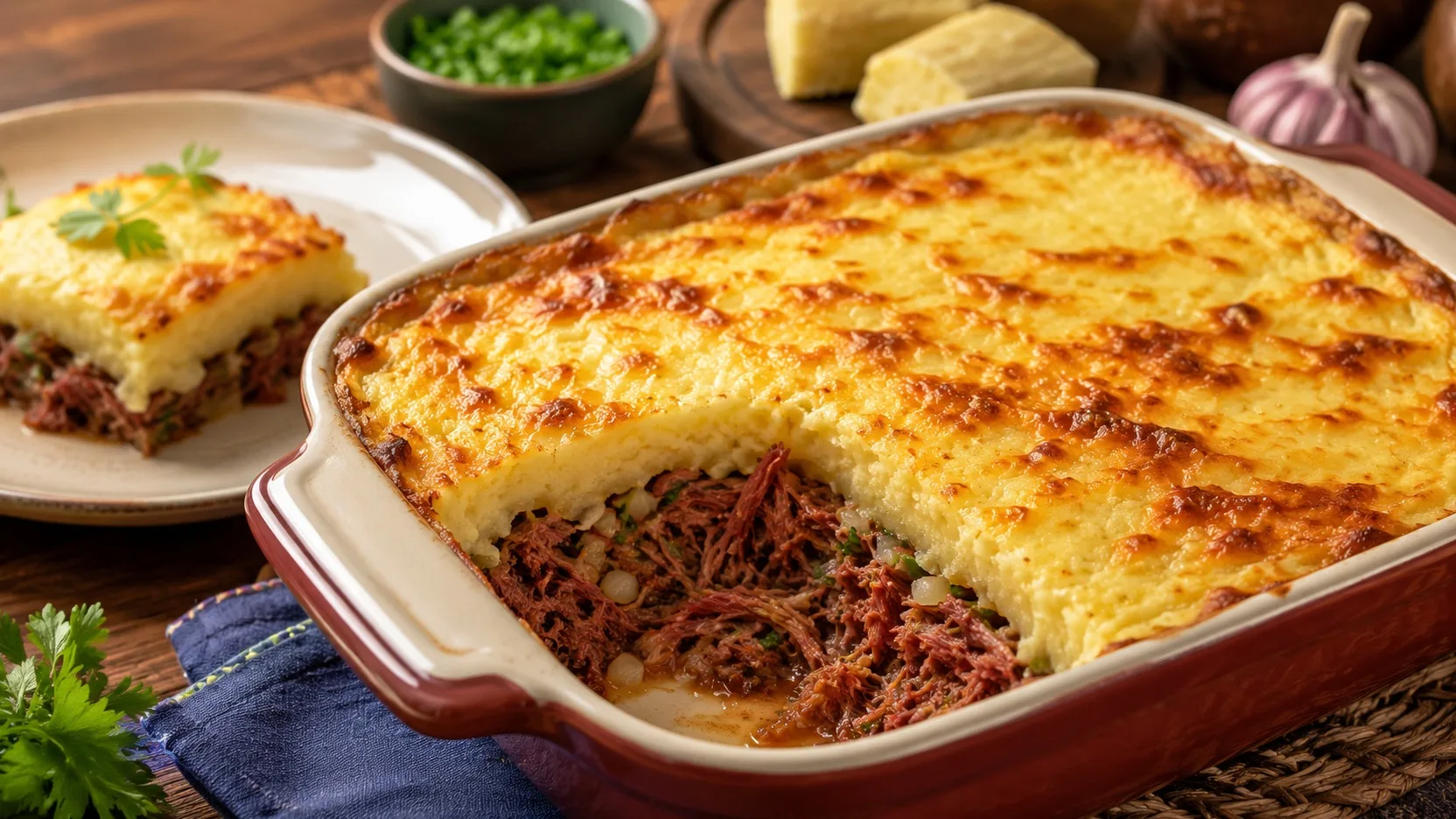
This little hideaway is assembled to keep the layers defined: the dried meat is desalted in advance, the filling is sautéed until it loses excess liquid and the puree gradually receives milk to make it creamy without running out. The short rest after the oven helps to serve more stable portions.
Ingredients
For the dried meat
• 600 g of dried meat in pieces
• Sufficient cold water for desalting and cooking
• 1 tablespoon olive oil
• 1 large onion (about 180 g), chopped
• 2 cloves of garlic, chopped or crushed
• 2 ripe tomatoes (about 250 g), seeded and cut into small cubes
• 2 tablespoons of chopped green scent
• Black pepper to taste
• Salt, only if necessary after tasting the cooked filling
For the puree and assembly
• 1 kg of already cooked cassava, well drained and without the central fiber
• 150 to 200 ml of warm whole milk
• 40 g of butter
• Salt to taste, with caution due to the dried meat and cheese
• 100 g of grated mozzarella
• 25 g of finely grated Parmesan cheese
Preparation method
1. Desalt the dried meat
Cut the meat into pieces measuring approximately 6 to 7 cm, wash under running water and place in a bowl. Cover with plenty of cold water and keep in the refrigerator for 12 hours, changing the water 3 times during this period. Do not taste the raw meat to assess the salt.
2. Cook and shred the meat
Drain the desalting water, transfer the meat to the pressure cooker and cover with clean water without exceeding the equipment limit. Once the pan reaches pressure, cook over low heat for about 30 minutes. Turn off, wait for the pressure to release completely, drain and shred the meat while it is still warm, removing excess fat and very firm parts.
3. If necessary, cook and weigh the cassava
If you are starting with raw cassava, cook it in water until the pieces are very soft and open easily when pressed with a fork. Drain very well, remove the central fiber and only then weigh 1 kg for the puree. Weighing after cooking reduces moisture variation between different cassavas.
4. Make a moist filling, but without loose broth
Heat the olive oil in a wide pan. Saute the onion for 3 to 4 minutes, until wilted, and add the garlic for another 30 seconds. Add the tomato and cook until it softens and most of the liquid evaporates. Add the shredded meat, season with pepper and sauté for 4 to 6 minutes, stirring, until the bottom of the pan is free of pools of broth. Turn off, mix the green chilli and taste before deciding if it needs salt.
5. Prepare the firm and creamy puree
Knead the cassava while it is still hot until it is uniform. Place over low heat with the butter and mix. Add 150 ml of hot milk little by little, mixing well. Add the rest only if necessary: the puree should be soft enough to spread, but remain in a groove made with the spatula for a few seconds without running.
6. Assemble in proportional layers
Use a refractory approximately 30 x 20 cm, 5 to 6 cm high. Spread about a third of the puree on the bottom, forming a layer of approximately 1 cm. Distribute all the filling in an even layer of 1.5 to 2 cm and cover with the rest of the puree, without pressing too much. Finish with mozzarella and parmesan.
7. Gratin
Bake in a preheated oven at 220°C for 15 to 20 minutes, until the topping melts, bubbles around the edges and browns in spots.. If the hideaway was assembled with cold components, the time may increase; In this case, let it heat up completely before browning the surface.
8. Rest before serving
Remove from the oven and wait 10 minutes. This interval allows the steam to reduce and the puree to firm up enough for the portion to come out with more defined layers.
Right spot / how to know it’s ready
The finished puree is creamy, but not liquid: the spatula opens a path that takes time to close. The filling should be juicy and shiny, but with no juice accumulated at the bottom of the pan. In the oven, the topping turns golden in spots and the edges begin to bubble. When serving after resting, the layer of meat remains in place and does not allow liquid to drip onto the plate.
Tips for the recipe to work out
Control humidity before assembling
The biggest risk of water forming in the refractory is adding very soft puree to the filling that is still brothy. Reduce the tomato until there is almost no free liquid and gradually add the milk to the puree.
Knead the hot cassava
Cassava hardens as it cools. Kneading it hot makes it easier to obtain a uniform puree without having to add excess milk.
Don't adjust the salt too soon
The salt content varies greatly between brands and batches of jerky. Season the filling only after the meat is desalted, cooked and braised; the cheeses also add salt to the assembly.
Use a refractory that does not leave the layers too high
In a very small dish, the center takes longer to heat up and the weight of the puree can compress the filling. An area of approximately 30 x 20 cm maintains the proportion of the layers and favors a uniform gratin.
Substitutions and variations
The mozzarella can be replaced with finely grated coalho cheese. Coalho cheese tends to brown well, but melts less elastically. If using only Parmesan, make sure to apply a thin layer so as not to leave the surface too salty or dry.
Lactose-free milk can replace whole milk without significantly altering the structure. Vegetable drinks change the flavor and can make the puree sweeter; Choose sugar-free versions and add them little by little.
Dried meat can be replaced with sun-dried meat, but the desalting and final salt content change depending on the product. Adjust the desalting time to the label and taste only after cooking.
How to store
Once ready, do not leave the hide at room temperature for more than 2 hours. Refrigerate in a closed container and consume within 3 to 4 days. To freeze, wait for it to cool, portion and package well; for a better texture of the puree, prefer to consume it within 2 months.
When reheating, heat the center completely. Using a culinary thermometer, the reference for reheated leftovers is 74 °C. If it is frozen, defrosting it in the refrigerator before heating helps to better preserve the texture.
How to serve / side dishes
The Escondidinho serves as the main dish. Serve with leafy salad, tomato vinaigrette or roasted vegetables, fresher and more acidic accompaniments that balance the dried meat and gratin.
Common mistakes
Why was there liquid at the bottom of the refractory?
Usually the tomato was not reduced enough, the cassava was not drained enough or too much milk entered the puree. Correct these three points before assembly; the oven should not be used to evaporate a large amount of liquid from the filling.
Why was the puree heavy and difficult to spread?
The cassava may have cooled too much or received too little liquid. Return the puree to low heat and add small amounts of hot milk, mixing until it regains creaminess without losing its ability to support the layer.
Why was the meat salty even after desalting?
Very large pieces, few water changes or desalting outside the refrigerator can harm the process. Cut into similar portions, use plenty of cold water and make the expected changes. Avoid adding salt to the stew before tasting the cooked meat.
Why did the layers fall apart when serving?
The Escondidinho may be too hot or the puree may have been left too fluid. Wait about 10 minutes after baking and keep the puree at a firm consistency before assembling.