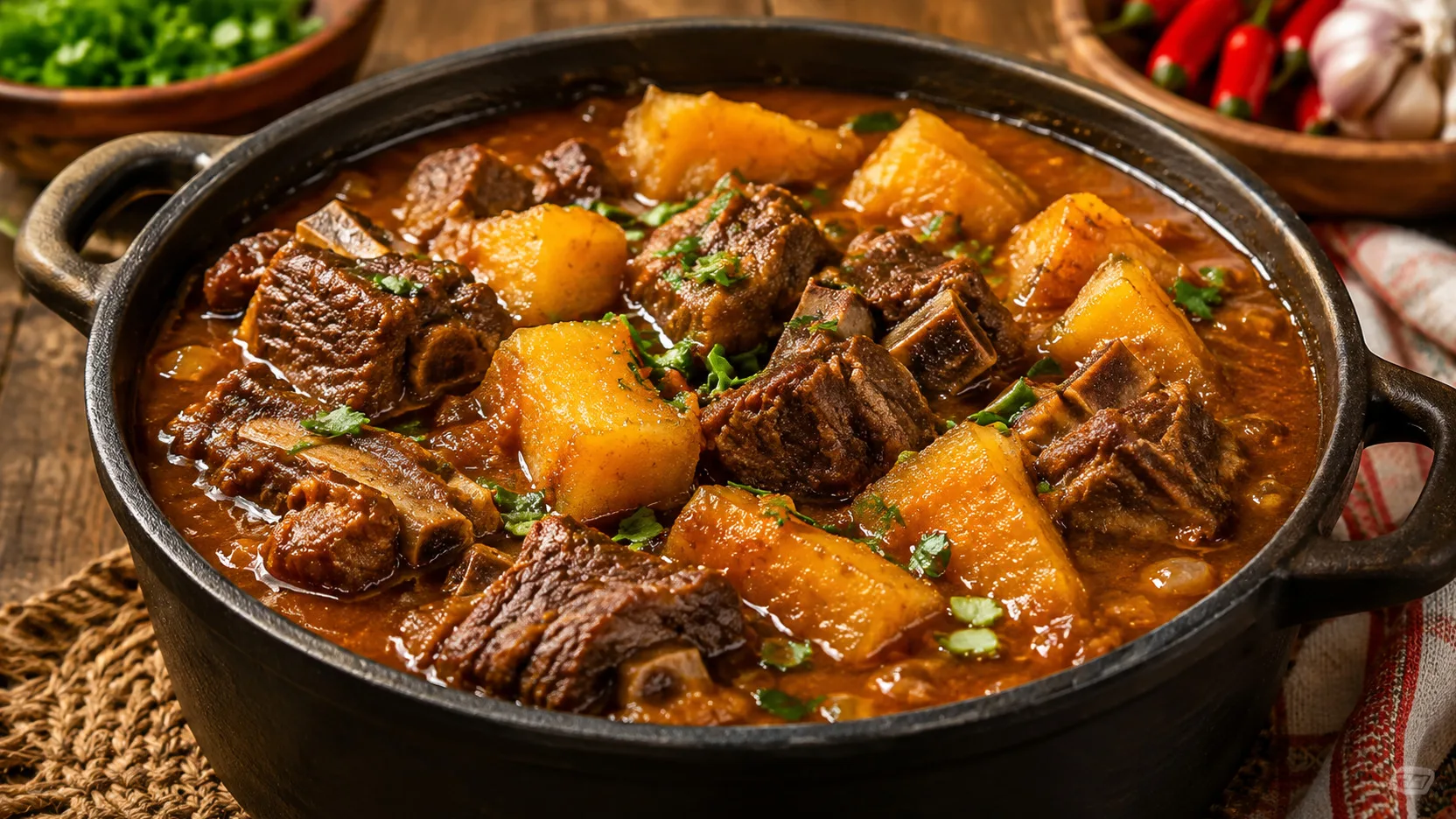
In this stewed cow, the rib is well browned before being pressed and the cassava comes in only after the meat is tender. This way, it is possible to control the point: part of the cassava remains in pieces, while another part falls apart and naturally thickens the broth.
Ingredients
• 1.5 kg of bone-in beef ribs, cut into 6 to 8 cm pieces
• 2 level teaspoons of salt, about 12 g, more to adjust at the end
• 1 teaspoon of ground black pepper
• 2 tablespoons of vegetable oil, about 30 ml
• 2 medium onions, about 300 g, chopped
• 4 cloves of garlic, about 16 g, chopped
• 3 ripe tomatoes, approximately 360 g, chopped
• 1 tablespoon of wine or apple cider vinegar, about 15 ml
• 2 bay leaves
• 800 ml of hot water, plus 100 to 250 ml if necessary during the cassava stage
• 1 kg of peeled cassava, cut into pieces of approximately 5 cm
• 3 tablespoons of chopped green chilli, about 20 g
Preparation method
1. Season and dry the rib
Dry the rib pieces well with paper towel and season with salt and black pepper. If there are loose fragments of bone, discard them. The drier surface facilitates browning and prevents the meat from cooking in its own steam.
2. Brown the rib in stages
Heat a pressure cooker of at least 6 liters, without the lid, over medium-high heat. Add the oil and brown the ribs in 2 or 3 steps, without crowding the pieces. Turn to create a brown crust on several sides; count about 12 to 18 minutes total. Transfer the browned meat to a serving dish.
3. Build the broth base
In the same pan, turn down to medium heat and sauté the onion for 4 to 5 minutes, scraping the bottom. Add the garlic and stir for 1 minute. Add the tomatoes and cook for another 4 to 5 minutes, until they start to break down. Drizzle with vinegar and a small sip of hot water, scraping up any browned residue from the bottom.
4. Pressure cook the ribs
Return the rib to the pan, add the bay leaf and pour in 800 ml of hot water. The liquid does not need to completely cover the meat. Close the pan respecting the manufacturer's maximum filling line. Once it reaches pressure, lower the heat and cook for 35 minutes. Turn off and wait for the pressure to release naturally before opening.
5. Add the cassava after the meat
Open the pan and check the ribs: they should be tender when pierced with a fork. If it is still resistant, cook another 5 to 10 minutes under pressure and release the pressure naturally again. With the meat soft, add the cassava. If the broth is too low, add 100 to 250 ml of hot water, just enough for the cassava to cook in contact with the liquid.
6. Cook the cassava and thicken the broth
Cook without pressure, at a moderate boil and with the pan partially covered, for 20 to 30 minutes. Stir gently every few minutes, especially toward the end. Once the cassava is soft, mash 2 or 3 pieces against the side of the pan and mix into the broth. Let it boil without a lid for another 3 to 5 minutes, until the sauce thickens.
7. Adjust and finish
Remove the bay leaves. Taste the broth and adjust the salt. Turn off the heat, mix in most of the green chilli and use the rest on top when serving. Let it rest for 5 minutes before taking it to the table; the broth gains a little more body during this interval.
Right spot / how to know it’s ready
The rib is done when the fork enters with little resistance and the meat begins to fall away from the bone without becoming completely shredded. The cassava must be soft to the center: some pieces remain whole, but with brittle edges, while others fall apart in the broth. The final sauce should be thick enough to coat the meat and cassava, but still flow when you move the pan.
Tips for the recipe to work out
Grow without crowding the pan
Too many ribs at once release water and reduce the temperature. Working in stages creates the golden residue at the bottom that gives depth to the broth.
Use a pressure cooker loosely
For this quantity, a pan of at least 6 liters makes preparation easier. Never exceed the maximum line indicated by the manufacturer, especially after adding liquid.
Put the cassava only after pressing
Rear input allows you to better control the texture. If the cassava cooks from the beginning with the ribs, it may fall apart before the meat softens and make the bottom more prone to sticking.
Watch the cassava, not just the clock
The time varies depending on the variety and size of the pieces. Start testing at 20 minutes; If it's soft beforehand, go straight to thickening the broth.
Remove excess fat before finishing
Ribs release a lot of fat. If there is a thick layer on the surface after pressing, remove some of it with a spoon before adding the cassava, preserving just enough flavor and shine.
Substitutions and variations
Can I use frozen cassava?
Yes. Use the same amount, still frozen or partially defrosted, and start checking for doneness after 15 minutes, as some products are already pre-cooked and soften faster.
Can I change the rib?
You can use around 1.2 kg of chuck or muscle in large cubes. The dish becomes less fatty and loses part of the bone flavor characteristic of the rib; cook the meat for about 30 to 35 minutes under pressure before adding the cassava.
Can I use peeled tomatoes?
You can. A can of approximately 400 g replaces fresh tomatoes. The broth tends to be a little more uniform and with a more present tomato flavor.
How to store
Do not keep the cow ready at room temperature for a long time. Divide leftovers into smaller, airtight containers and refrigerate. Kept at 5°C or below, preferably consume within 3 to 4 days.
To freeze, distribute in shallow portions in suitable containers and place in the freezer without leaving the dish at room temperature for a long period. Leave room for expansion. For best texture, consume within 2 to 3 months. Cassava may be a little softer after thawing. Defrost in the refrigerator or reheat directly over low heat, adding a little water if the broth is too thick. Heat well before serving.
How to serve / side dishes
Serve very hot, preferably in a deep dish. White rice is a simple side dish to enjoy the broth. Braised cabbage, salad leaves or vinaigrette help balance the richness of the rib. If you want a heartier table, a small portion of farofa also goes well, but it is not necessary to complete the dish.
Common mistakes
Why was the rib tough?
The pressing time may have been short for the size of the pieces or for that piece of meat. Return the meat to pressure for another 5 to 10 minutes and only then add the cassava.
Why was the broth thin?
This usually happens when there is too much water or when the cassava has not yet released enough starch.. Crush some pieces and boil without a lid for a few minutes, stirring to avoid sticking to the bottom.
Why did cassava turn into puree?
It may have come in too early, been cut small, or been a variety that cooks quickly. Next time, keep larger pieces and check for doneness before 20 minutes. If it has already broken down, there is no problem using it: adjust the consistency with a little hot water and serve as a creamier broth.
Why was the dish very greasy?
Some ribs have a thicker layer of fat. Remove any visible excess before cooking and, after pressing, remove part of the fat that rises to the surface before adding the cassava.