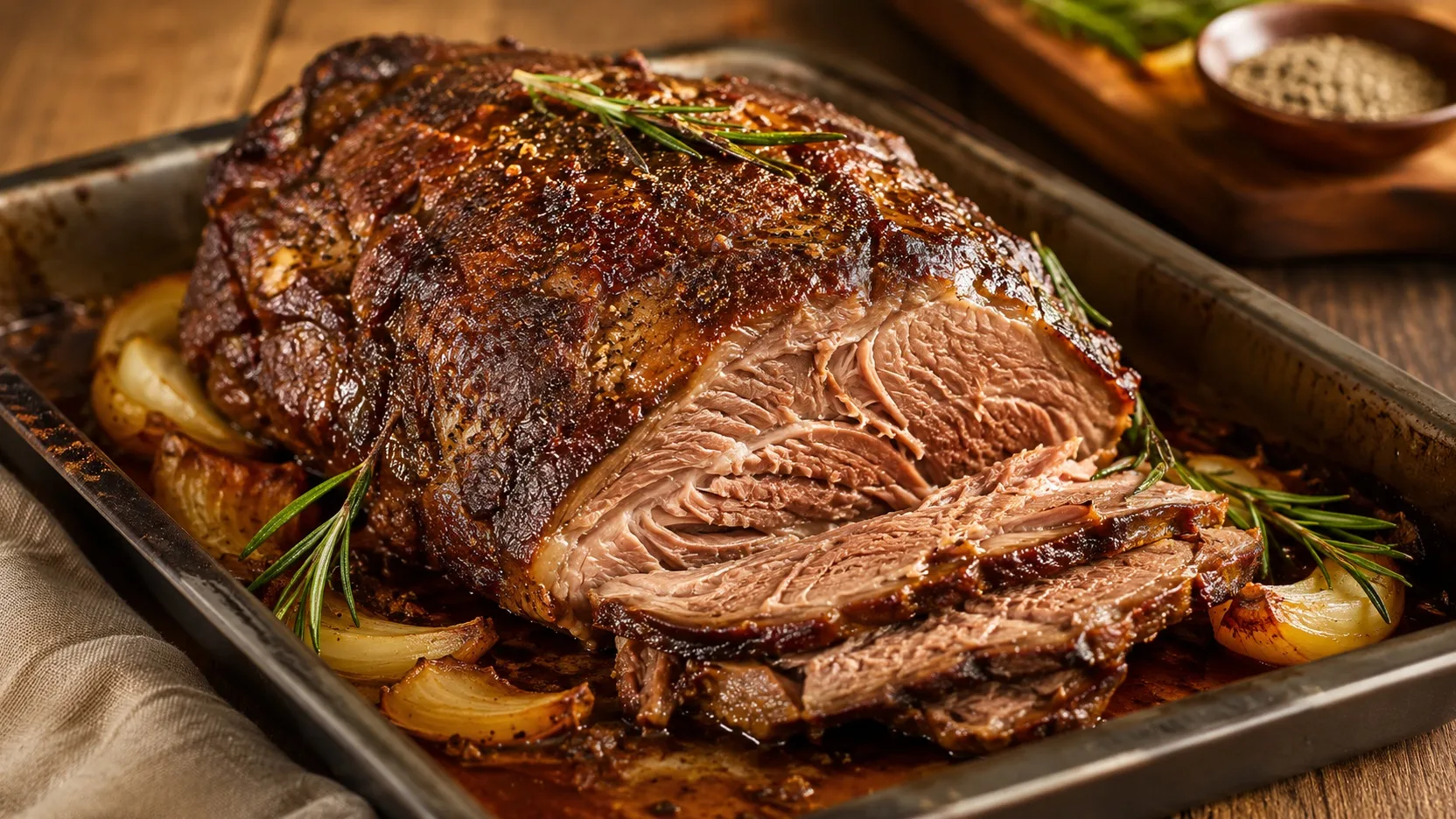
The termite is roasted in two phases: first, well sealed, at a moderate temperature, so that the piece cooks for enough time without drying out the surface; then uncovered, in a hotter oven, just to brown. The time varies depending on the weight and shape of the meat, so the tenderness test is worth more than the clock.
Ingredients
• 1 piece of bovine termite weighing approximately 1.8 kg
• 22 g of fine salt (1.2% of the weight of the meat; for another piece, use 12 g of salt per kg)
• 5 crushed garlic cloves (about 20 g)
• 1 teaspoon of freshly ground black pepper
• 1 tablespoon olive oil
• 2 large onions, cut into wedges
• 2 sprigs of rosemary
• 150 ml hot water, plus up to 100 ml if necessary during roasting
Preparation method
1. Temper the termite
Dry the surface of the meat with a paper towel. Mix the salt, garlic, pepper and olive oil and spread over the entire piece, without removing the firm fat that is part of the cut. If possible, season 4 to 12 hours in advance and keep covered in the refrigerator; if there is no time, go straight to the oven.
2. Assemble the baking dish and seal well
Preheat the oven to 165°C. Spread the onion segments at the bottom of a baking dish, place the termite on top, add the rosemary and pour 150 ml of hot water into the bottom, without washing the meat seasoning. Cover the baking dish with two sheets of aluminum foil and seal the edges tightly to reduce steam loss.
3. Bake slowly
Bake in the oven for 3 hours without opening. After this period, carefully remove the pan and test the meat at its thickest point with a thin skewer, a narrow knife or the stem of a thermometer. If there is still firm resistance, seal again and bake for another 30 minutes. Repeat the test at 30-minute intervals. For a piece weighing around 1.8 kg, the total covered phase time is usually between 3 hours and 30 minutes and 4 hours and 20 minutes, but the shape of the piece and the oven change this interval.
4. Control the liquid
When opening for each test, observe the bottom of the pan. There must be enough broth to moisten the base and serve to baste the meat, without turning the roast into submerged stew. If the bottom is almost dry before the meat is tenderized, add up to 100 ml of hot water to the side and seal again.
5. Brown at the end
When the rod enters with little resistance and the meat gives way when pressed, remove the aluminum foil. Baste the surface with part of the pan juices, increase the oven to 230°C and bake for 15 to 25 minutes, until the outside is golden brown. Watch in the final minutes so as not to burn the garlic or dry the surface.
6. Rest and slice
Remove the termite from the oven and let it rest for 15 minutes, just covered loosely with aluminum foil. Slice against the direction of the grain. Serve with the pan juices and roasted onions.
Right spot / how to know it’s ready
The termite is tender when a thin rod enters the thickest region with minimal resistance, almost like passing through firm butter, and the flesh yields to the touch without appearing elastic. When cutting, the fibers should separate easily and remain moist. If the knife still finds a firm, rubbery core, the piece needs to be covered for more time.
To be safe, a whole beef roast should exceed 63°C in the center and rest for at least 3 minutes. In this recipe, however, 63 °C is just a safety floor, not the tenderness point: the termite needs to remain in the oven for much longer until the connective tissue softens.. Use the thermometer as a safety check and the low resistance of the stem as the main culinary criterion.
Tips for the recipe to work out
Calculate salt by weight
The proportion of 12 g of salt per kg makes the recipe reproducible when the piece changes size. Weighing the salt is more accurate than using a spoon, because the volume varies greatly between fine, coarse and crushed salt.
Keep the long phase really sealed
The aluminum foil must close the baking tray at the edges. If there are too many gaps, steam escapes, the bottom dries out early and the outside can dry out before the center softens.
Don't use the clock as the only criterion
Two pieces with the same weight can have different heights and fat proportions. Start testing after 3 hours and continue in 30 minute blocks until the rod enters with little resistance.
Leave the gilding for last
The discovery phase should be short. The objective is to concentrate the flavors of the broth and create color on the surface after the meat is tender, and not to continue tenderizing the piece in a very hot oven.
Substitutions and variations
The rosemary can be exchanged for 2 bay leaves or a few sprigs of thyme. The aroma changes, but the cooking technique remains the same.
Water can be replaced with unsalted meat broth. If you use industrialized broth or another already salty liquid, reduce the salt calculated on the meat to avoid excess.
For smaller or larger pieces, maintain the proportion of 12 g of salt per kg and adjust the time according to the softness test. The time does not increase in a perfectly proportional way to the weight, because the thickness of the piece influences more than the isolated weight.
How to store
Refrigerate leftovers in a shallow, tightly closed container within 2 hours of preparation. In the refrigerator at 4°C or below, consume within 3 to 4 days. To store for longer, freeze portions with a little of the broth; for best quality, use within 2 months.
To reheat, cover the meat and heat with a little of the broth to reduce dryness. Leftovers should reach 165°F in the center before serving.
How to serve / side dishes
Termite goes well with white rice, farofa, boiled or roasted cassava, vinaigrette and a more acidic salad. The pan juices can be strained and served over the slices; If it is very greasy, remove some of the fat from the surface before serving.
Common mistakes
Why did the termite stay hard even after hours in the oven?
Most likely, there was still time left in the covered phase. If the stem meets firm resistance, seal again and continue roasting in 30-minute blocks. Increasing the temperature too much can brown and dry the surface before the inside softens.
Why did the outside dry out?
This usually happens when the pan loses steam, when the bottom dries out or when the uncovered phase starts too soon. Reinforce the seal, add the liquid from the first opening and only brown it after the meat is tender.
Why did you add too much liquid?
A well-marbled piece releases fat and juices during the oven. If there is a lot of liquid at the end of the covered phase, remove the meat momentarily, discard only the excess surface fat and use part of the broth for basting. It is not necessary to leave the meat submerged during browning.
Why did the termite become salty?
The most common mistake is measuring salt only by volume or adding salty seasonings without compensation. Use 12 g of salt per kg of meat and reduce this amount if broth, sauce or ready-made seasoning contains sodium.