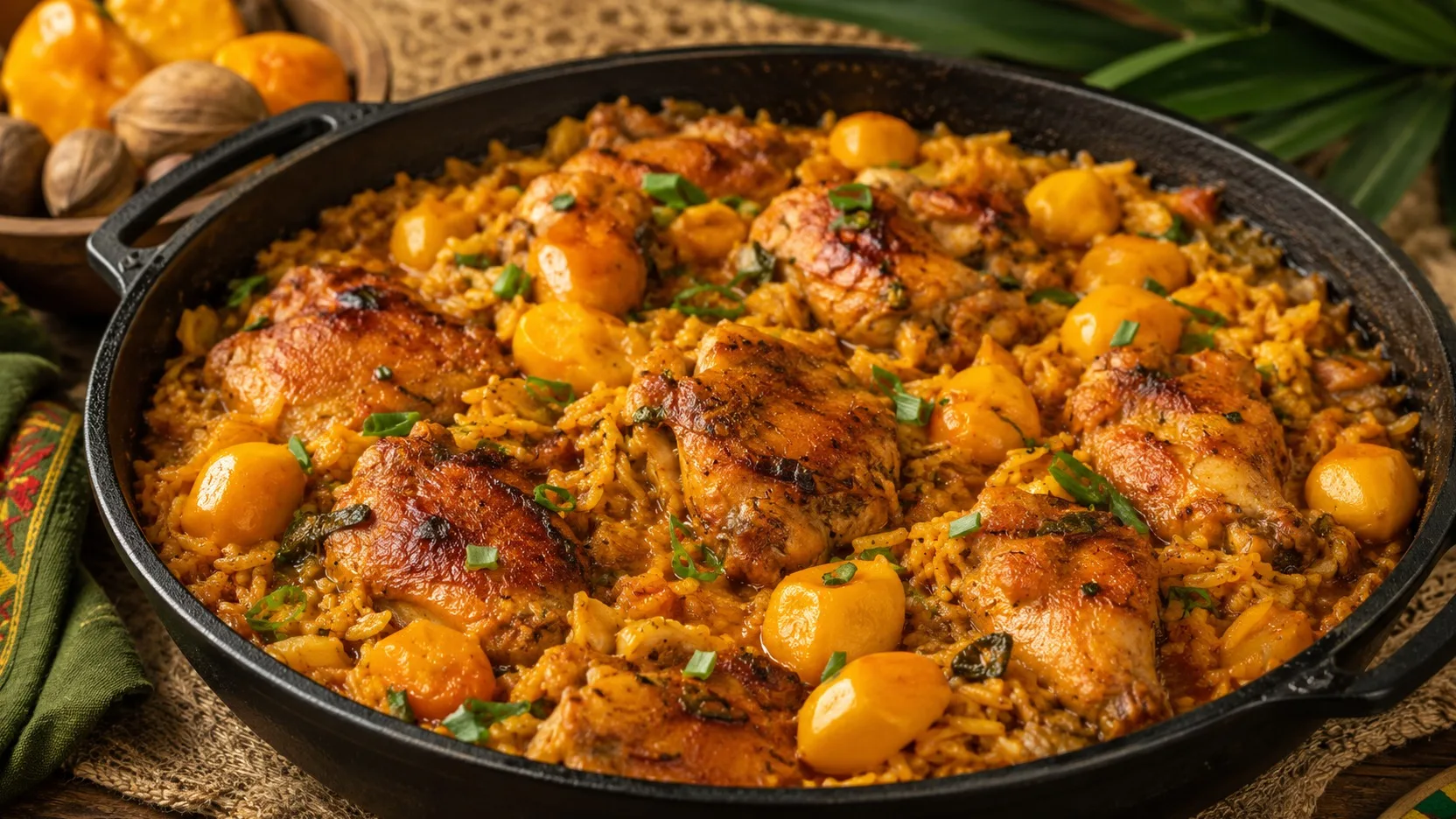
This domestic version combines chicken, rice, saffron and pequi in the same pan. The preparation begins with heavily browning the chicken to form flavor in the background; Then, the pequi cooks with the seasonings before adding the rice, which finishes cooking in this broth.
Ingredients
• 1.2 kg of bone-in chicken thighs and drumsticks, separated at the joints
• 2 1/2 teaspoons fine salt, divided
• 1/2 teaspoon ground black pepper
• 2 tablespoons of vegetable oil
• 1 large onion, chopped into small cubes
• 4 cloves of garlic, chopped or crushed
• 1 teaspoon of turmeric (turmeric)
• 1 small chili pepper, seeded and chopped, optional
• 2 ripe tomatoes, without the hard part of the stem and chopped
• 12 fresh or frozen pequi seeds, with the outer shell removed, approximately 430 to 500 g
• 2 cups (tea) of long-grain white rice, about 360 g
• 1.1 liters of hot water
• 1/2 cup (tea) chopped green scent
Preparation method
1. Season and dry the chicken
Dry the chicken pieces well with paper towels. Season with 1 1/2 teaspoons of salt and black pepper. Leave the other ingredients measured before starting, because the preparation continues in the same pan without long pauses.
2. Brown the chicken in stages
Heat a wide, heavy 5- to 6-quart saucepan over medium-high heat. Add the oil and brown the chicken in two or three batches, without crowding, for about 10 to 14 minutes in total. Turn only when each side is well browned. Transfer browned pieces to a plate; They don't need to be fully cooked yet.
3. Build the background of flavor
Reduce heat to medium. If there is too much fat, only leave about 2 tablespoons in the pan. Sauté the onion for 3 to 4 minutes, scraping the bottom. Add the garlic, turmeric and sweet pepper, if using, and stir for 30 seconds. Add the tomatoes and cook for 3 minutes, until they start to break down.
4. Cook the chicken with pequi
Return the chicken to the pan and add the pequi seeds. Add 450 ml of hot water, partially cover and cook over medium-low heat for 12 minutes after it boils. The liquid should bubble steadily without drying out quickly.
5. Add the rice
Add the rice, the remaining 1 teaspoon of salt and the remaining 650 ml of hot water. Mix just enough to distribute the grains and bring to a boil. Lower the heat, partially cover and simmer for 15 to 18 minutes. Avoid stirring repeatedly to prevent the rice from releasing excess starch.
6. Adjust the point and rest
When the rice is tender and there is still glistening moisture between the grains, check the chicken. The thickest part must reach at least 74 °C, without touching the thermometer to the bone. If the rice is still firm and the liquid has run out, add 2 ounces of hot water and cook for a few more minutes. Turn off, cover and let rest for 5 minutes.
7. Finish and serve
Gently loosen the rice around the chicken pieces and pequis. Mix the green scent without breaking the lumps. Serve the chicken hot, bringing the whole pequis to the table along with the rice and chicken.
Right spot / how to know it’s ready
The rice must be cooked, with the grains defined and moist, but without a pool of broth at the bottom. The chicken should be golden on the outside, juicy and completely cooked close to the bone; For safety, confirm at least 74°C in the thickest part. The yellow pulp of the pequi is soft and fragrant, but the seed remains intact.
Be careful when eating pequi: beneath the pulp there is a layer of fine thorns. Do not bite or try to break the seed. Scrape off only the yellow pulp carefully and stop when the surface starts to turn white.
Tips for the recipe to work out
Gold in batches
Overfilled pan cools and causes the chicken to release water. The browning in stages creates the crust and caramelized residue that adds depth to the chicken broth.
Use hot water
Adding hot water keeps the boil more stable and helps control the cooking time of the chicken and rice.
Stir shortly after the rice comes in
An initial mixture is enough. Stirring often breaks the grains and makes the chicken more mushy than moist.
Do not wash raw chicken
Dry with a paper towel and wash your hands, utensils and surfaces that have had contact with the chicken. Washing the bird in the sink can spread contaminated spills throughout the kitchen.
Substitutions and variations
Can I use canned pequi?
Yes. Use around 180 to 200 g of well-drained canned pequi and add it with the rice, as it has already been cooked. Taste before adjusting the salt: preserves can be more salty or acidic and tend to have a less intense aroma than fresh pequi.
Can I use free-range chicken?
It can, but it usually requires more time to soften. After browning, cook the chicken with the pequi and the first 450 ml of water for around 25 to 35 minutes, or until the meat starts to give way, before adding the rice. Top up the water if necessary and confirm 74°C at the end.
What if I don't find pequi?
There is no substitute that reproduces the flavor and aroma of pequi. It is possible to do the same technique with chicken, rice and saffron, but the result will be a chicken without pequi and must be presented that way.
How to store
Transfer leftovers to shallow containers and refrigerate within 2 hours of preparation. Keep at 4°C or below and consume within 3 to 4 days. If freezing, do so within 3 to 4 days and keep for up to 3 months for best quality; The texture of the rice may become softer after thawing. Thaw in the refrigerator and reheat leftovers until they reach 74°C in the center.
How to serve / side dishes
The chicken already works as a complete dish. To balance the meal, serve with leafy salad, tomato or finely sliced cabbage. Pepper sauce can go on the table for those who want to reinforce the heat without changing the entire pan.
Common mistakes
Why was the chicken pale instead of golden?
The pan was probably too full or the chicken came in wet. Dry the pieces well, heat the pan before the oil and brown them in batches, leaving space between the pieces.
Why was the rice soggy?
Excessive water, too low heat from the beginning or too much stirring can release more starch and break apart the grains. Use measured water, maintain a gentle boil and stir only when adding the rice.
Why did the rice dry out before cooking?
A pan that is too wide, a lid that is too open or a high heat will accelerate evaporation. Add hot water little by little, in 60 ml portions, until the grain is soft without turning the dish into soup.
Can I break the pequi seed to use more pulp?
No. The traditional pequi seed has thin thorns just below the pulp. Serve it whole and carefully scrape off just the yellow part.