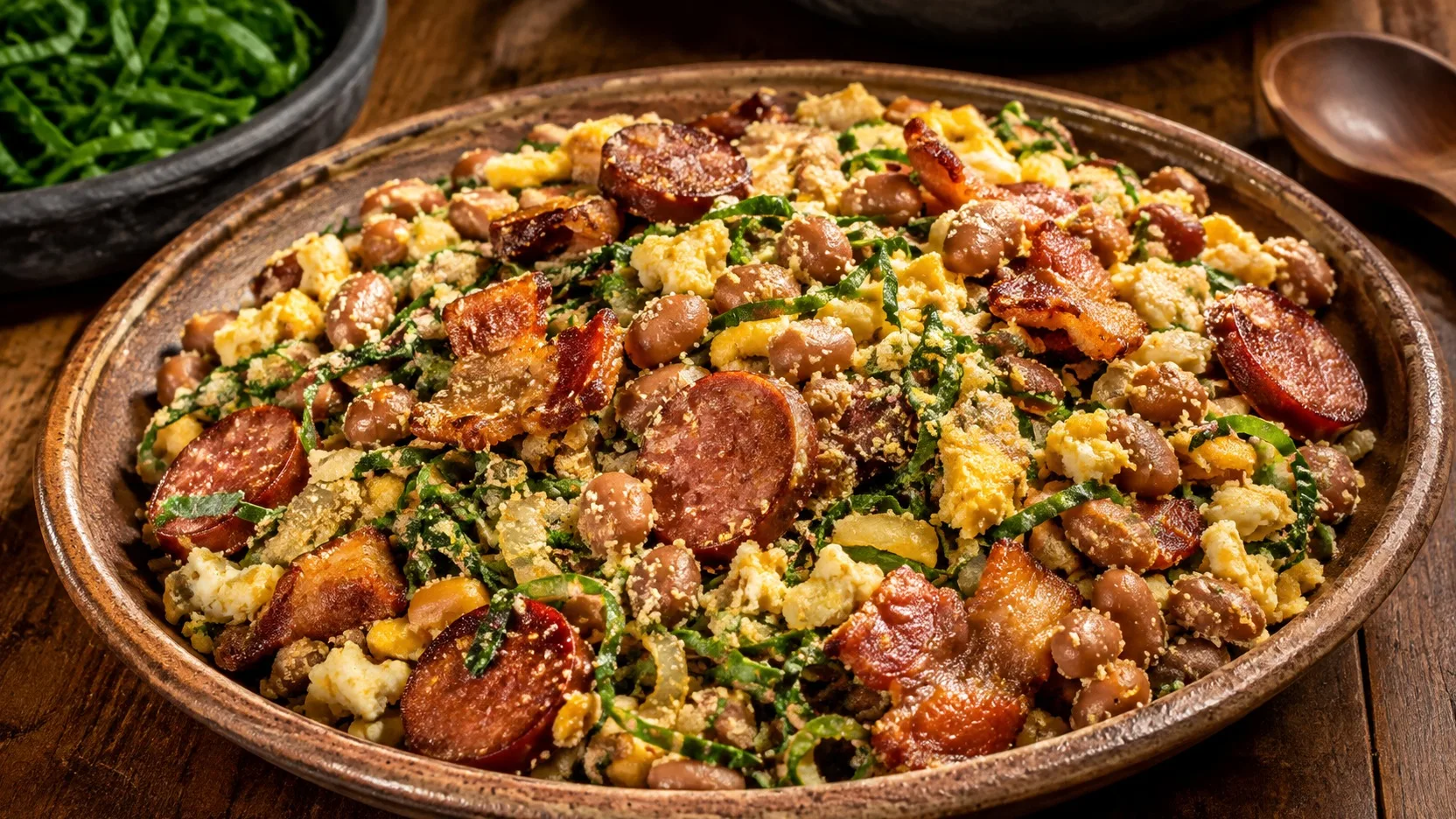
The point of these tropeiro beans is in the sequence: cook the beans just until they are soft and whole, drain well, brown the complements separately and only then gradually incorporate the flour. This way, the grains remain loose, the flour absorbs the fat without turning into dough and the cabbage maintains its color and texture.
Ingredients
For the beans
• 300 g of dried carioca beans • enough water for soaking • 1.3 liters of water for cooking • 2 bay leaves
To assemble the drover
• 180 g of bacon, cut into cubes of approximately 1 cm • 250 g of Calabrian sausage, cut into thin half-moons • 4 large eggs • 1 medium onion, approximately 150 g, chopped into small cubes • 4 cloves of garlic, chopped • 150 g of kale without the central stem, sliced very thin • 120 g of toasted cassava flour, divided to add little by little • 3 tablespoons of chopped green chilli • 1/2 teaspoon of freshly ground black pepper • salt to taste, only to adjust at the end • up to 1 teaspoon of neutral oil, only if the pan is dry
Preparation method
1. Soak it
Choose and wash the beans. Cover with plenty of water and leave to soak for 6 to 12 hours; If possible, change the water once. Drain and discard the soaking water before cooking.
2. Cook the beans without breaking them apart
Put the drained beans in the pressure cooker with 1.3 liters of new water and the bay leaves. Cover and place over high heat. When the pan comes to pressure, lower the heat and count 9 minutes. Turn off and wait for the pressure to release naturally before opening.
Try a grain: it should be soft in the center, but still retain its skin and shape. If it is too firm, return to pressure for another 2 minutes. Younger or older beans may require small timing adjustments.
3. Drain and dry the grains
Remove 1/2 cup of the cooking broth and set aside. Drain the remaining beans in a colander or colander for about 10 minutes. Do not assemble the tropeiro with accumulated broth, as the flour thickens this liquid and makes the dish pasty.
4. Brown the bacon and pepperoni
Heat a wide pan or large frying pan over medium heat. Add the bacon and fry for 6 to 8 minutes, stirring, until golden and fat free. Remove with a slotted spoon and set aside, leaving about 2 tablespoons of the fat in the pan.
In the same fat, brown the sausage for 4 to 5 minutes, until the edges are well browned. Remove and reserve with the bacon. If the pan is dry, use just a little of the oil specified in the ingredients.
5. Boil the eggs and make the stew
Beat the eggs just to mix the whites and yolks. Add them to the pan and stir for 1 to 2 minutes, until they are cooked through and no liquid is visible, but still soft. Remove and set aside.
In the same pan, sauté the onion for about 3 minutes, until it becomes translucent and begins to brown. Add the garlic and stir for 30 seconds, without letting it burn.
6. Heat the beans and gradually incorporate the flour
Add the well-drained beans to the onion and garlic sauté. Season with black pepper and mix with broad movements, without crushing the grains, for 2 minutes. Return the bacon and pepperoni to the pan.
Reduce the heat and first spread about 80 g of the cassava flour, mixing gently. Add the rest in small portions just until the tropeiro is loose and there is no liquid at the bottom. It may not be necessary to use all 120 g as the grain size and amount of fat vary.
7. Finish with cabbage and eggs
Add the sliced kale and mix for 1 to 2 minutes, just until it wilts and turns bright green. Add the reserved eggs and green chillies. Taste and only then adjust the salt. If the mixture seems too dry, moisten with 1 tablespoon of the reserved broth at a time, mixing before deciding if more is needed.
Right spot / how to know it’s ready
The finished tropeiro must have whole, loose grains, covered in a thin layer of flour, with no accumulated broth and no appearance of puree. The flour should appear moist from the fat and steam, but not lumpy or dusty. Bacon and pepperoni are golden, the eggs appear in soft pieces and the cabbage remains green and slightly tender.
Tips for the recipe to work out
Drain before measuring the flour
Flour should not fix wet beans. Let the grains drain well and use the flour to add finish and texture, not to absorb excess broth.
Use a wide pan
More contact area makes it easier to brown bacon and sausage and allows you to mix the beans with less pressure on the grains. Small pan favors steaming and breaking of the beans.
Reserve part of the broth
Having a little broth on hand allows you to correct a tropeiro that has passed the point of dryness. Always add in spoonfuls, as too much liquid quickly turns the flour into a heavy mixture.
Adjust the salt at the end
Bacon and Calabrian sausage already contribute a lot of salt. Seasoning too soon increases the risk of a salty result after everything is brought together.
Substitutions and variations
Carioca beans can be exchanged for kidney or brindle beans, as long as they are cooked until soft and still whole. Pressure time may change depending on the type and age of the grain.
If you use coarser cassava flour, the texture will be more crunchy and rustic; a fine flour integrates faster and may require a smaller amount. In any case, keep the addition gradual.
The Calabrian sausage can be reduced to 180 to 200 g if you want a less intense and less salty tropeiro; there is no need to compensate by increasing the bacon.
How to store
Pour the leftovers into shallow, well-sealed containers and refrigerate as soon as they stop releasing intense steam, without letting the dish remain at room temperature for more than 2 hours. Keep refrigerated at 4°C or below and consume within 3 days.
To freeze, portion cold and freeze for up to 2 months to better preserve quality. Kale and eggs tend to become softer after thawing. Defrost in the refrigerator or reheat directly in a pan over low heat, stirring and adding a spoonful of water if necessary. When reheating leftovers, heat completely to about 165°F in the center.
How to serve / side dishes
Serve hot as an accompaniment to white rice, grilled or roasted meats and a fresh salad. A slice of orange or a more acidic vinaigrette helps balance the fat in the bacon and sausage.
Common mistakes
Why did my tropeiro beans become mushy?
The most common reasons are overcooked beans, grains still full of broth or aggressive mixing. Cook just until the center softens, drain well and use wide movements with the spoon.
Why was it dry and crumbly?
You probably got too much flour or added it all at once. Stop as soon as there is no liquid at the bottom and the beans are loose. If necessary, recover the moisture with small spoonfuls of the reserved broth.
Why did the grains turn to puree?
The beans may have been overcooked or stirred too hard while they were still very hot and soft. Adjust the cooking time for your batch and use a wide pan to cover the ingredients without crushing them.
Why was it salty?
Bacon and pepperoni vary greatly in salt. Avoid salting the beans during assembly before gathering all the complements; Taste the entire dish and adjust only at the end.