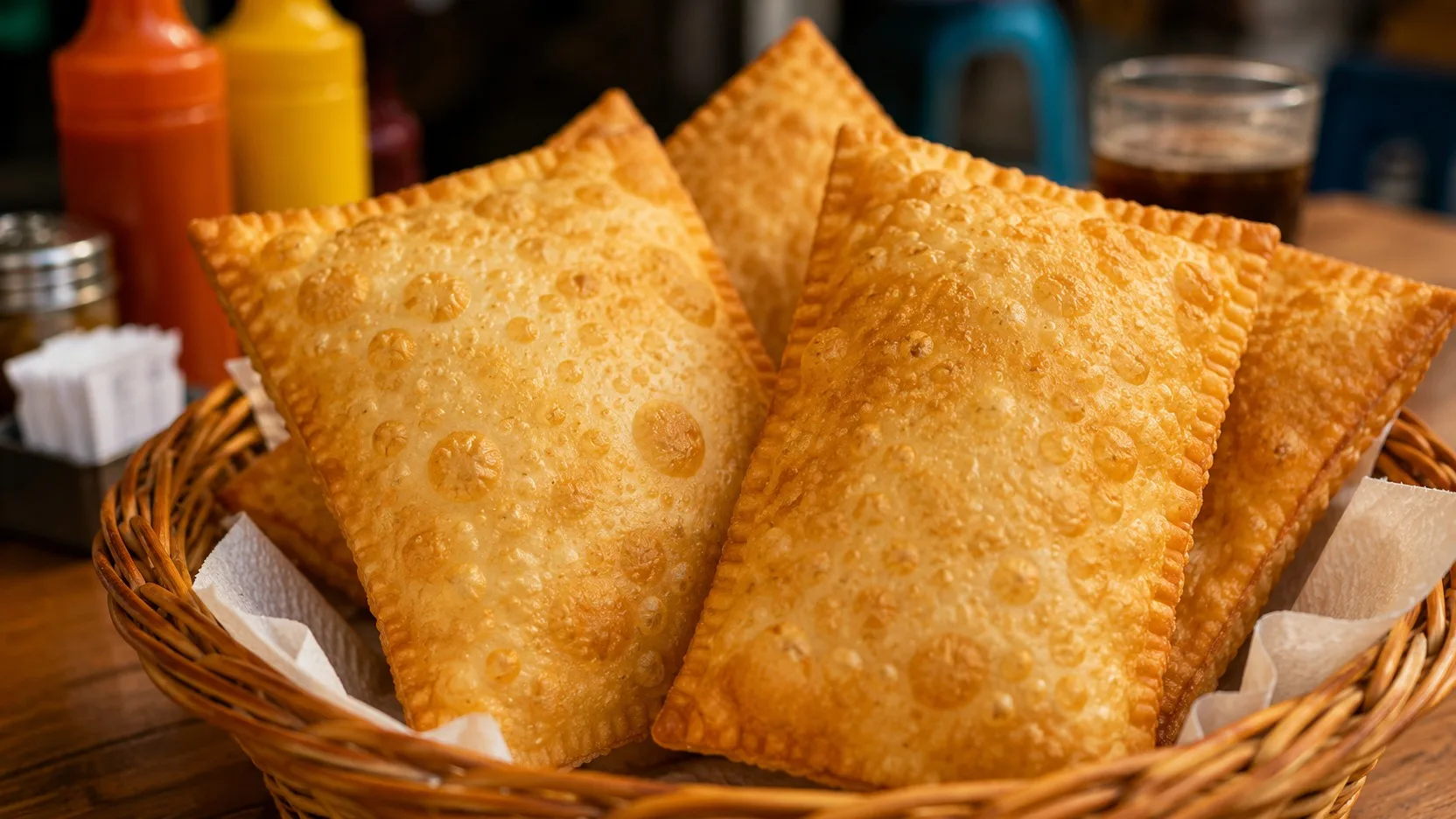
Homemade fair pastry depends less on an isolated ingredient and more on the whole: firm dough, rest, thin opening, cold filling without excess moisture, careful sealing and oil at the right temperature. The cachaça helps with the crunchy texture and bubbles, but it doesn't compensate for thick batter or frying in cold oil.
Ingredients
For the dough
• 500 g of common wheat flour
• 9 g of salt
• 30 g of neutral oil, such as soy, corn or sunflower
• 30 g of white cachaça
• 210 g of water at room temperature
• up to 10 g of extra water for adjustment if necessary
For the meat-based filling
• 350 g of ground beef
• 80 g finely chopped onion
• 5 g of minced or crushed garlic
• 8 g of oil
• 5 g of salt, or to taste
• black pepper to taste
• 40 g pitted green olives, chopped and well drained
• 20 g of chopped green scent
To assemble and fry
• wheat flour in a small amount to sprinkle the countertop
• approximately 1.5 liters of neutral oil for deep frying, depending on the size of the pan
Preparation method
1. Prepare a dry filling
Heat the 8 g of oil over medium heat and sauté the onion for about 3 minutes, until wilted. Add the garlic and stir for 30 seconds. Add the ground beef, salt and pepper and cook, breaking up the lumps, for about 6 to 8 minutes, until there is no liquid accumulated in the pan and the meat is completely cooked. If using a thermometer, the ground beef should reach at least 71°C. Mix the olives and green chillies, transfer to a wide plate and let cool completely before filling.
2. Mix the dough
In a large bowl, whisk together the flour and salt. Make a well in the center and add the oil, cachaça and 210 g of water. Mix first with a spoon and then with your hands, until there is no loose flour left. If the dough remains crumbly after a few minutes of work, add the extra water little by little, without exceeding 10 g.
3. Knead until smooth
Put the dough onto the counter and knead for 8 to 10 minutes. The point is firm and flexible: the dough should be smooth, fold without cracking and not stick to your hands. Avoid adding too much flour, as this makes the dough harder after frying.
4. Let the dough rest
Form a ball, brush the surface with a minimal film of oil or pack it very well so it doesn't dry out and let it rest for 1 hour. Resting relaxes the dough and makes it easier to roll it out thinly without it shrinking too tightly.
5. Open up to 1.5 to 2 mm
Divide the dough into 4 parts and keep the portions you are not using covered. Roll out one portion at a time using a cylinder or rolling pin, using only as much flour as necessary to avoid sticking. Aim for a thickness of 1.5 to 2 mm: thin enough to be crispy, but still resistant to filling. Cut rectangles measuring approximately 15 x 20 cm or another equivalent shape.
6. Fill without overdoing it
Distribute about 35 to 40 g of cold filling on one half of each rectangle, leaving at least 2 cm free around the edges. Remove excess air when folding. If the edge is dry, dampen it very lightly with water. Press first with your fingers and then reinforce the seal with a fork, without piercing the filling area.
7. Fry at 180 °C
Heat the oil in a deep pan to 180 °C. Fry 1 or 2 pastries at a time, depending on the space in the pan, to avoid dropping the temperature. Once they get into the oil, bubbles should start to appear. Fry for about 1 minute on each side, adjusting the time depending on the color, until golden. Try to keep the oil between 175°C and 185°C throughout frying.
8. Drain without suffocating
Remove the pastries with a slotted spoon, let the excess oil drop for a few seconds and transfer to a wire rack or absorbent paper without stacking them. Serve immediately, while the dough is stiff and crispy.
Right spot / how to know it’s ready
The finished pastel has a uniform golden color, firm edges and a surface with many bubbles of varying sizes. When lifting with a slotted spoon, the dough should hold its shape and appear stiff, not mushy or soggy. If it is browning before it bubbles and becomes crispy, the oil may be too hot; If it takes too long to brown and comes out oily, the temperature has probably dropped.
Tips for the recipe to work out
Control water by weight
The recipe starts with 210 g of water for 500 g of flour and reserves just 10 g for adjustment. Flours absorb differently; Adding any extra water unnecessarily can make the dough sticky and make sealing difficult.
Do not roll out thick dough
The thickness of 1.5 to 2 mm is a practical reference. Thick dough takes longer to lose moisture and tends to be heavy, even with cachaça.
Stuffing needs to be cold and without broth
Hot or humid filling softens the dough, makes it difficult to seal and increases the chance of oil leaking. For meat, cook until the pan is practically dry and leave to cool spread out on a plate.
Remove the air before closing
Large pockets of air expand during frying and put pressure on the seal. Fold the dough closer to the filling and expel the air before pressing the edges.
Fry a few units at a time
Many pastries at the same time cool the oil. The range of 175°C to 185°C helps the dough brown and lose moisture quickly without absorbing excess oil.
Substitutions and variations
The white cachaça can be replaced with the same weight of neutral vodka. If you prefer not to use alcohol, replace it with water, knowing that the texture and bubble formation may change; In this case, fine opening and oil temperature control become even more important.
For cheese pastry, use about 30 g of firm, slightly moist mozzarella per unit. For other fillings, keep the same logic: the filling must be cold, without free juice and in a quantity that allows enough edge to seal.
How to store
The dough without filling can be well packaged in the refrigerator for up to 2 days; it may darken slightly and become wetter over time. Fried pastry is best served right away. If you have leftovers with perishable filling, refrigerate within 2 hours and consume within 3 to 4 days. To recover some of the crunchiness, reheat in a very hot oven or air fryer until the center is heated; Microwaves tend to soften the dough.
How to serve / side dishes
Serve the pastries immediately, without stacking them, with pepper sauce, well-drained vinaigrette or sugarcane juice. For a snack table, keep the sauces aside so the pasta doesn't lose its crunch.
Common mistakes
Why did my pastry turn out oily?
The most common reason is oil below the proper temperature, especially after placing several units together. The dough also absorbs more oil when it is thick or when it remains frying for too long.
Why did the pastry open when frying?
Excess filling, moist filling, trapped air or poorly sealed edges are the most likely causes. Leave a 2 cm margin, expel the air and make a double seal with your fingers and fork.
Why did they barely form bubbles?
Thick open dough, little rest and frying at a low temperature reduce the effect. The cachaça helps, but the result depends mainly on the combination of thin thickness, relaxed dough and correct thermal shock.
Why was the dough hard?
Excessive flour on the counter, too little water or prolonged frying can harden the pastry. Work with as little extra flour as possible and remove from the oil as soon as it reaches a golden color and stiff texture.