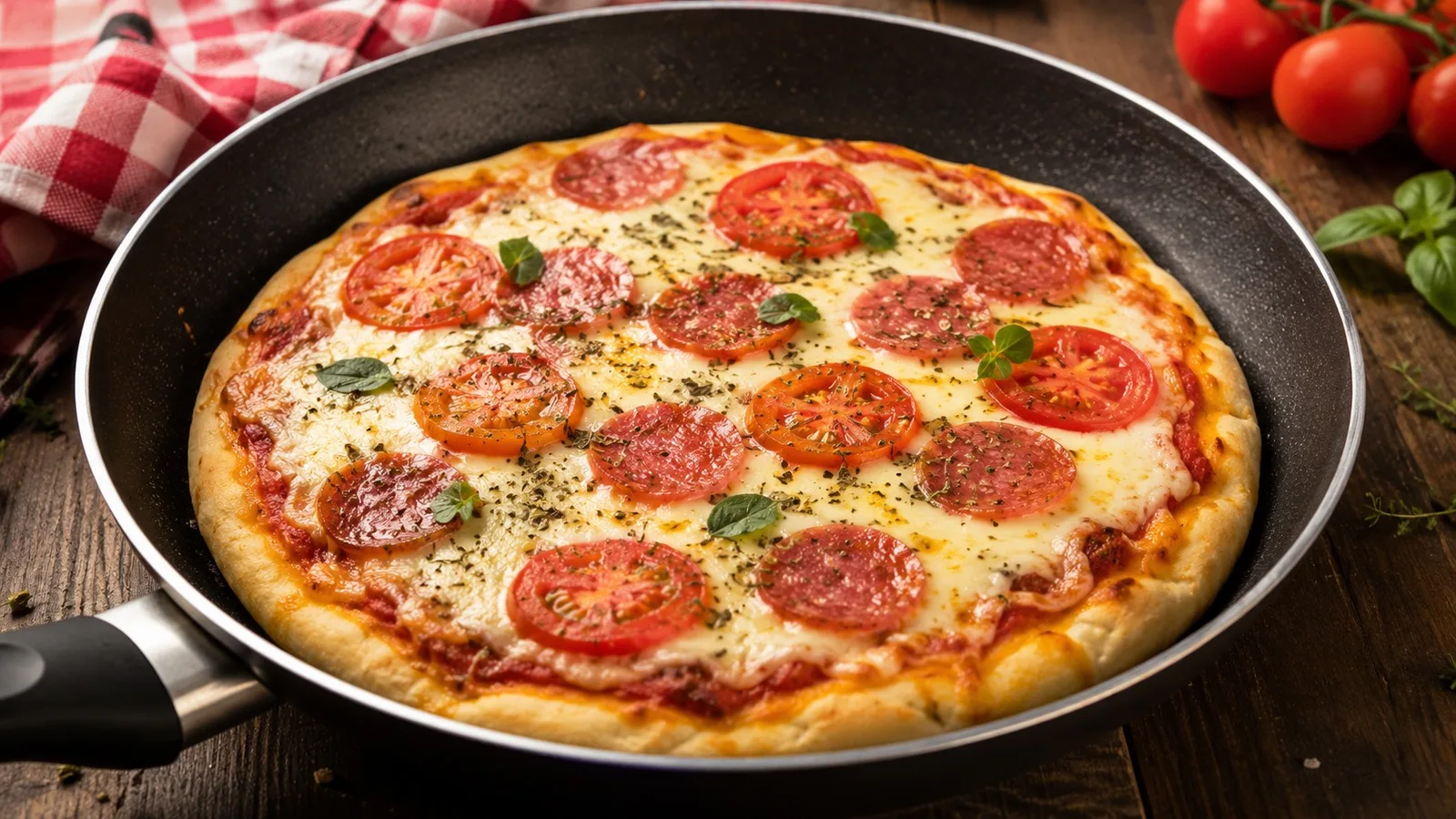
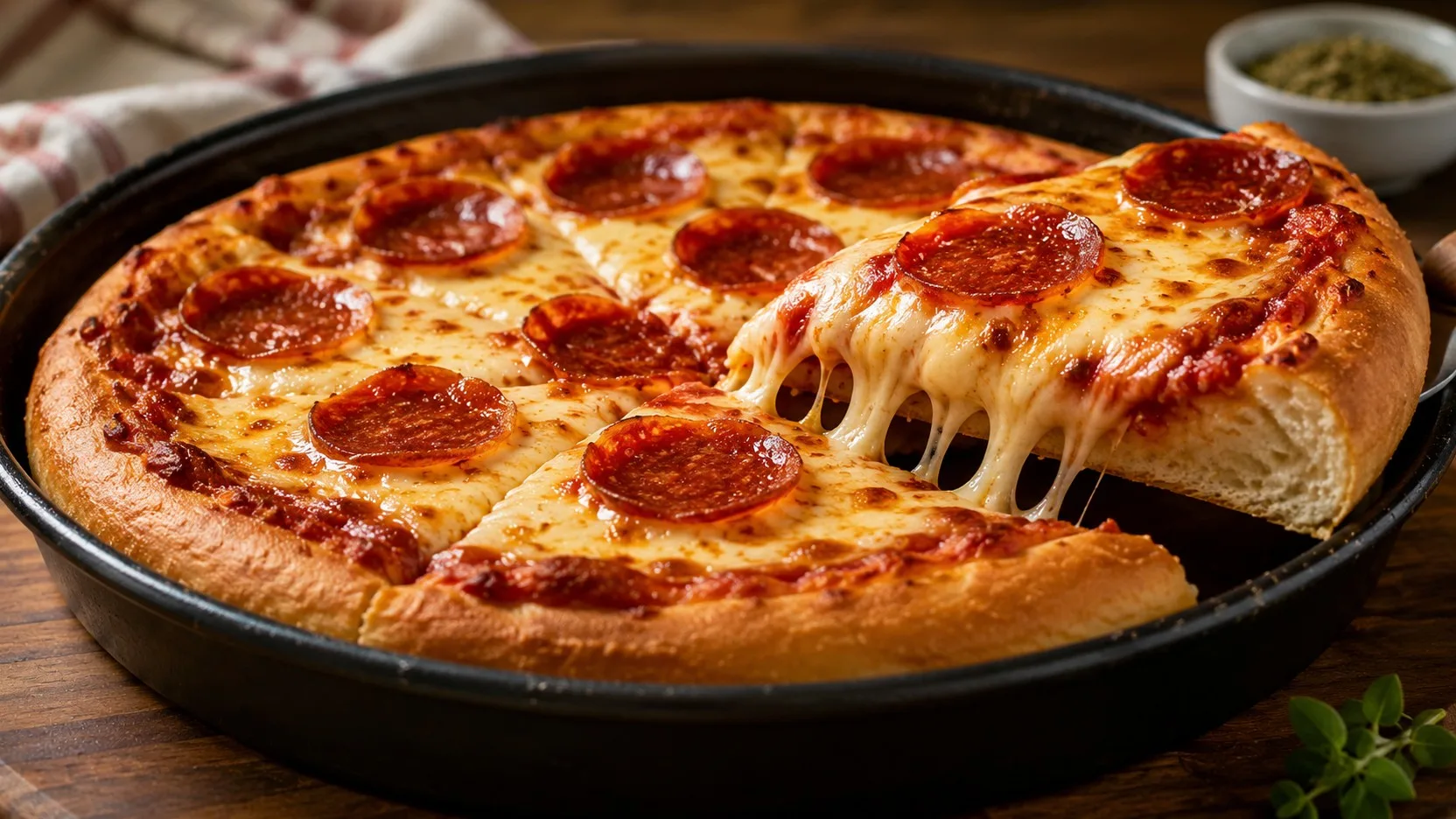
This homemade version is inspired by the texture of pan pizza from a pizzeria: a golden and crispy bottom due to contact with the oil and the shape, browned sides and a tall, soft and airy crumb. The formula below is sized to a 12-inch round pan and uses pepperoni topping to match the approved cover.
Mass formula in percentages
100% flour; water 65%; sugar 4%; powdered milk 3%; salt 2%; instant dry yeast 1.1%; oil in the dough 5%. The oil used to grease the pan is outside the percentage of the dough.
Ingredients
For the dough
• 350 g of wheat flour for bread
• 228 g of water at room temperature
• 14 g of sugar
• 11 g of whole or skimmed milk powder
• 7 g of salt
• 4 g of instant dry yeast
• 18 g of neutral oil, such as sunflower, corn or canola
For form
• 30 g of neutral oil for a 30 cm round mold, preferably dark and at least 4 cm high
For coverage
• 140 g tomato pizza sauce, thick and cold
• 250 g low-moisture mozzarella, grated
• 80 g thinly sliced pepperoni
• 2 g dried oregano, optional
Amount of dough and oil per diameter
To maintain a similar thickness, work with approximately 0.89 g of ready-made dough per cm² of pan. As a reference, use approximately 440 g of dough and 21 g of oil in a 25 cm pan; 550 g of dough and 26 g of oil in a 28 cm mold; 630 g of dough and 30 g of oil in a 30 cm mold; or 720 g of dough and 34 g of oil in a 32 cm mold. Weigh the finished dough and reserve the excess when using a smaller pan.
Preparation method
1. Mix and develop the dough
Mix the flour, sugar, powdered milk and yeast. Add the water and stir until there are no dry spots left. Add the salt and oil and work the dough for 6 to 8 minutes with a mixer fitted with a hook, or for about 10 minutes by hand, until it is smooth, elastic and still slightly sticky. Avoid correcting the texture by adding excess flour.
2. Make the first fermentation
Form into a ball, place in a lightly greased bowl and cover. Let it ferment for 60 to 90 minutes in a warm environment, until it gains around 70% to 80% in volume and is visibly aerated. In a cold kitchen, this time can be approximately 2 hours; use volume and texture, not just the clock.
3. Prepare the mold and open without tearing
Spread the 30 g of oil on the bottom and go a little up the sides of the 30 cm mold. Transfer the dough to the pan, turn once so that both sides receive a thin film of oil and press gently from the center to the edges. If the dough shrinks, cover and wait 15 minutes before pressing again. Do not force the gluten when it is retracting.
4. Make the final fermentation in the mold
Cover without touching the dough and let it rise for 60 to 75 minutes. The point is a fluffy mass, with small bubbles under the surface, which occupies the mold without being tense and shakes slightly when the mold is moved. It doesn't necessarily need to double in volume.
5. Preheat the oven well
While the dough finishes proving, heat the oven to 230°C for at least 40 minutes, with a rack in the lower third. The oven is preheated, not the pan: the dough must continue fermenting in the greased pan. A stabilized oven helps brown the bottom before the crumb dries out.
6. Assemble without soaking the dough
Spread the cold sauce in a thin layer, leaving about 1.5 cm of border. Distribute the mozzarella evenly and finish with the pepperoni. Avoid adding very wet ingredients or a thick layer of sauce, as the tall dough needs to receive enough heat in the center.
7. Bake in the lower third
Place the pizza in the oven and bake for 18 to 22 minutes, until the edges are intensely golden, the cheese is bubbling and the bottom is evenly colored. Near the end, lift one edge with a spatula to check the base. If the bottom is ready and the top is still pale, move the pan to a higher rack for 2 to 3 minutes.
8. Unmold to preserve the crunchiness
Remove from the oven, wait just 2 minutes and loosen the sides with a spatula. Transfer the pizza to a wire rack or cutting board without trapping steam under the base. Wait about 5 minutes before cutting so the crumb can finish firming up without losing too much moisture.
Right spot / how to know it’s ready
The edge should be dark golden, but not burnt; the bottom should form a firm, evenly golden crust, with no pale, soft areas. The center of the dough should spring back slowly when pressed and should not feel doughy or wet. The cheese needs to be completely melted and bubbling, and the pizza should come out of the pan without leaving the bottom sticking.
Tips for the recipe to work out
The oil in the shape is part of the texture
The 30 g of oil creates a continuous film between the dough and the metal. This layer favors a crispier, more golden bottom and helps to color the sides. Reducing the oil drastically changes the texture; increasing too much can make the foundation heavy and greasy.
Prefer dark pan or cast iron
Dark, heavy shapes transfer heat to the background more efficiently. In a very clear aluminum form, the topping can be ready before the base; In this case, keep the pizza lower in the oven and bake for a few minutes, observing the color of the bottom.
Don't confuse fermentation with exact size
Ready-to-bake dough appears light, soft and full of fizz. If it is still dense and resistant to the touch, it needs more time. If it is extremely fragile, sinking at the slightest touch and with a strong alcoholic smell, it is past its prime and may lose its structure.
Control the humidity of the roof
Thick sauce, low-moisture cheese, and sliced pepperoni work well because they don't flood the surface. Very watery raw vegetables should be pre-cooked or well dried before being added to the pizza.
Remove from the pan immediately after baking
Leaving the hot pizza in the pan for several minutes traps steam and softens the crust that the oil helped create. Two minutes of rest is enough to release and transfer.
Substitutions and variations
Common wheat flour
It can be used, but some common flours absorb less water. Start with 213 g of water, reserving 15 g, and add little by little only if the dough accepts it. With less water, the crumb tends to be a little more closed.
Without powdered milk
Milk powder can be omitted without altering the safety of the recipe. The dough tends to brown a little less and loses some of its softness and dairy flavor; no need to substitute flour.
Cold fermentation
For more flavor and flexibility, use 2 g of dry yeast instead of 4 g. After 30 minutes at room temperature, cover and refrigerate the dough for 12 to 24 hours. Remove from the refrigerator about 45 minutes before putting it in the mold and follow the final fermentation until the point signs described above.
Other coverage
The pepperoni can be replaced with thinly sliced cured pepperoni, previously sautéed mushrooms or another relatively dry filling. The wetter and heavier the frosting, the greater the chance that the center will be too soft before the bottom is golden brown.
How to store
After serving, do not leave the pizza at room temperature for more than 2 hours. Store leftovers in an airtight container in the refrigerator for 3 to 4 days. To freeze, wrap slices individually and use within 1 to 2 months for best quality. Reheat until the center is hot; If using a culinary thermometer, reheated leftovers should reach 74°C.
How to serve / side dishes
Serve after 5 minutes of rest, when the cheese is still fluid and the crumb has firmed up enough to cut. A simple, tangy salad helps balance the richness of the pasta, cheese and pepperoni.
Common mistakes
Why did the bottom become pale and soft?
The most common causes are a slightly preheated oven, a light pan, too little oil or too high a position in the oven. For the next batch, stabilize the oven for at least 40 minutes, use the bottom third and check the bottom before removing.
Why was the dough dense instead of fluffy?
This usually happens due to too much flour when kneading, insufficient fermentation or aggressive pressure when opening the already fermented dough. The dough should remain soft and slightly sticky and arrive in the pan with much of the gas preserved.
Why was the pizza greasy?
The relationship between the amount of mass, diameter and oil was unbalanced. Using the entire recipe in a very large pan leaves a thin layer of batter swimming in oil; Maintaining approximately the indicated proportion per area avoids this problem.
Why is the center wet or rubbery?
Excessive sauce, very wet cheese, watery coating, dough too thick for the pan or short oven time can prevent the center from baking. First correct the proportion of dough to diameter and the amount of topping before increasing the baking time too much.