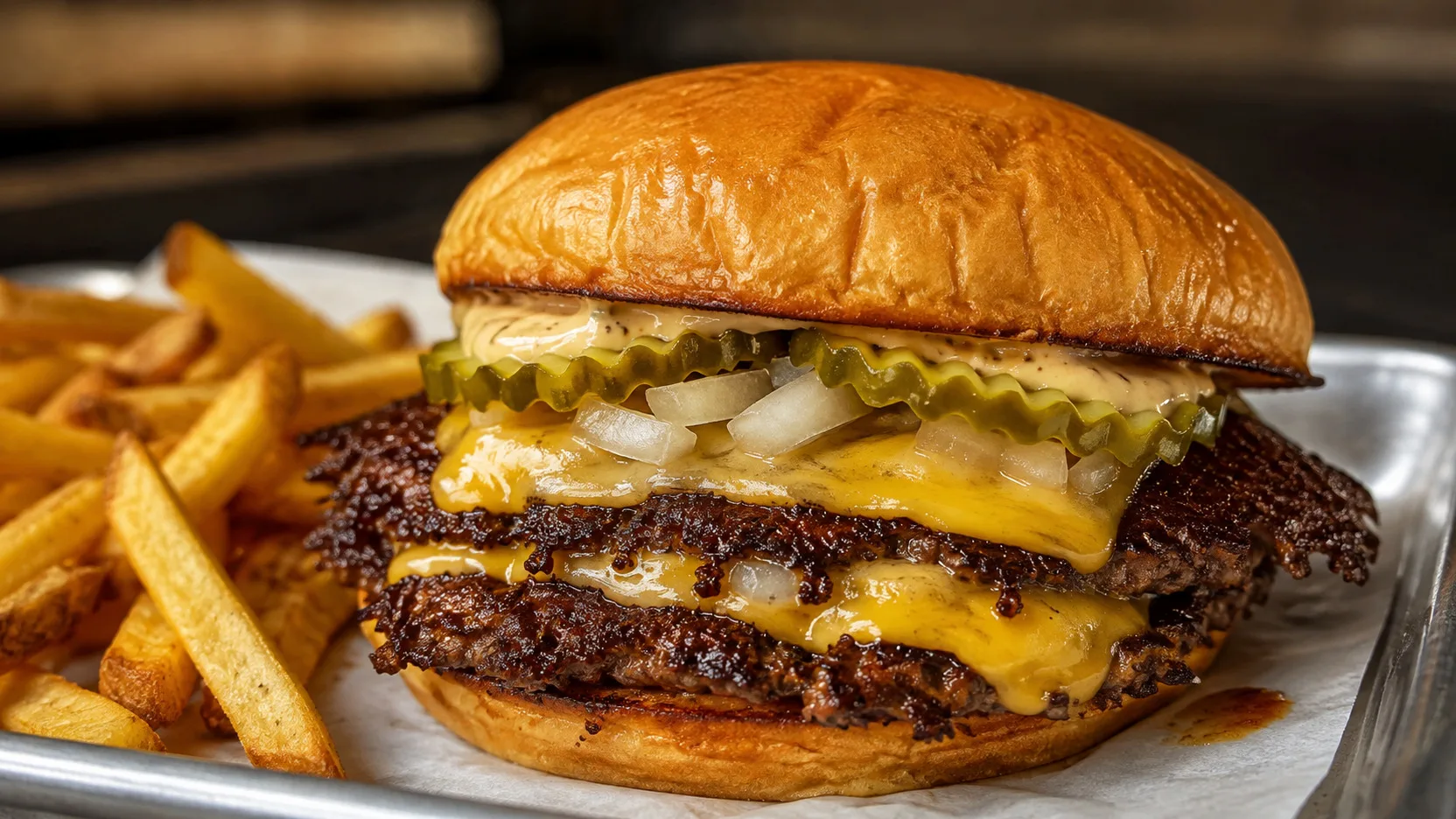
Ingredients
For the smash burgers
• 640 g of ground beef with approximately 20% fat, well chilled
• 6 g of salt (about 1 level teaspoon)
• 8 slices of sliced cheddar cheese, approximately 160 g
• 4 soft hamburger buns, 10 to 11 cm in diameter
• 15 g of butter to brown the bread
• 1 teaspoon of neutral oil, just to form a thin film on the pan
For the sauce and assembly
• 60 g mayonnaise
• 20 g of ketchup
• 10 g of yellow mustard
• 10 g of pickle liquid
• 80 g sliced cucumber pickle
• 60 g of white onion, chopped into small cubes
Preparation method
1. Prepare the sauce and assembly
Mix the mayonnaise, ketchup, mustard and pickle liquid until smooth. Leave pickles, onions and cheese already portioned next to the stove: once the meat is on the grill, the process is quick.
2. Portion the meat without compacting
Divide the chilled meat into 8 portions of 80 g. Shape each just enough to form a loose ball; do not mash or work the meat into meatballs. Keep portions refrigerated until ready to cook.
3. Brown the bread
Heat a heavy 11- to 12-inch cast iron, carbon steel, or stainless steel skillet over medium heat. Spread the butter on the cut sides of the bread and brown for 45 to 90 seconds, until brown spots appear and the surface is slightly crispy. Book.
4. Heat the frying pan well
Remove crumbs, coat with oil and spread with paper towel to leave just a very thin film. Heat for about 4 minutes over medium-high heat, then increase to high heat for 1 minute. The frying pan needs to be very hot for the meat to sizzle as soon as it touches the metal.
5. Smash immediately
Place the first ball of meat in the frying pan and, for the first 10 seconds, cover with a square of baking paper and press with a rigid metal spatula or press until it forms a disc about 12 cm in diameter and approximately 5 mm thick in the center, with even thinner edges. Place the second ball next to it and repeat immediately. Remove the paper and season the surface with part of the salt. Do not press again during cooking.
6. Form the crust before stirring
Cook without moving the discs for 70 to 90 seconds. The edge should be dark brown and lacy, and the meat seen on top should lose much of its raw appearance. Pass the spatula almost parallel to the pan, scrape firmly under each disc and only then turn it over. The objective is to bring the crust along with the meat, not to let it stick to the metal.
7. Melt the cheese and finish cooking
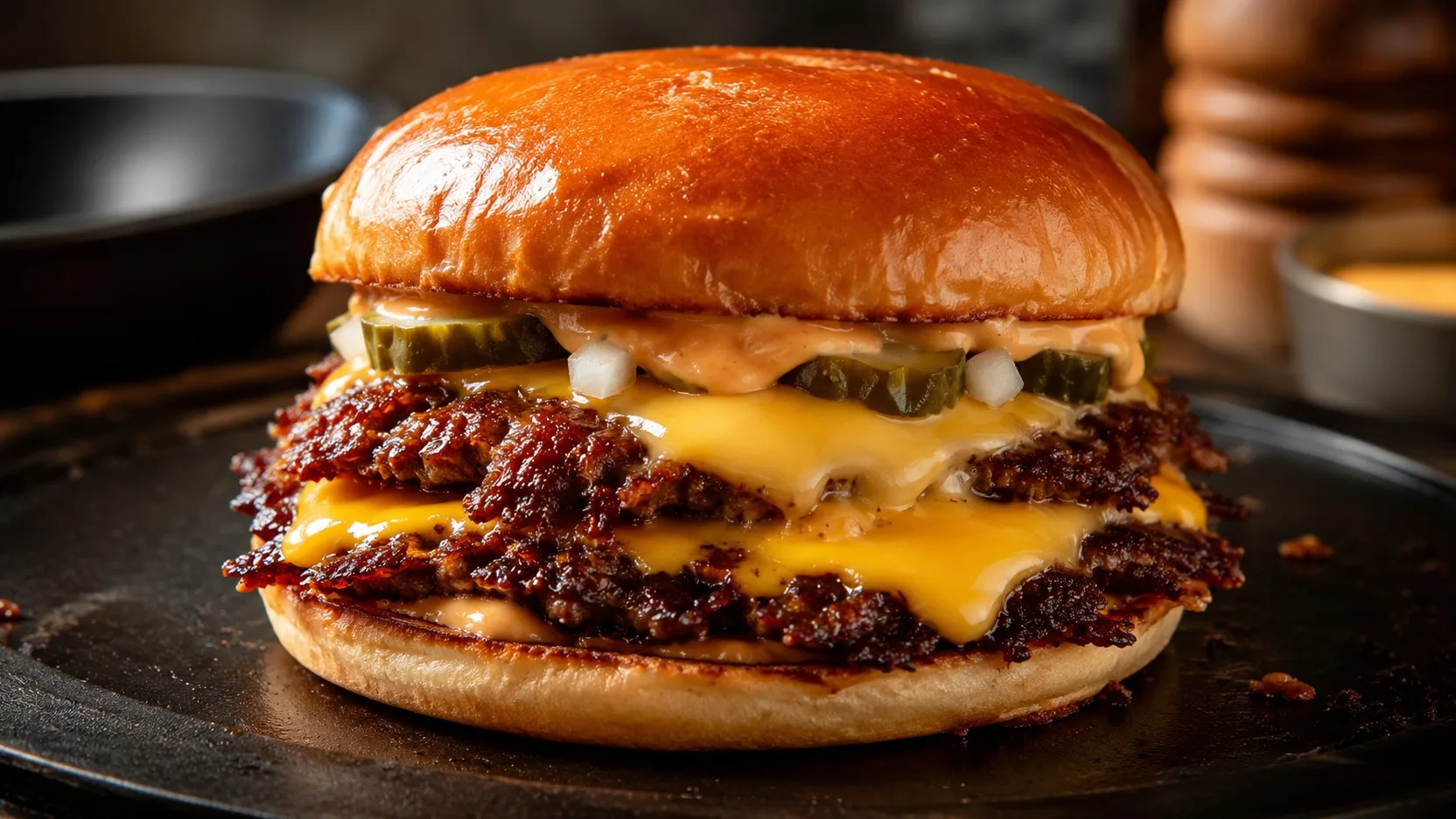
Right after turning, place 1 slice of cheese on each disc. Cook for another 45 to 60 seconds, or as needed for the meat to reach at least 71°C in the center. Stack one disc on top of the other to form a double burger and immediately remove from the pan.
8. Assemble and repeat
Spread about 25 g of the sauce (approximately 1 1/2 tablespoons) on the bread, place the double smash with cheese, distribute pickles and onion and close. Repeat the process with the remaining 6 portions, always working with 2 discs at a time in the 28 to 30 cm frying pan. Serve each burger as soon as it is ready to preserve the crust.
Right spot / how to know it’s ready
The first side should have a continuous dark brown crust, with thin, crispy edges, without large gray areas. When scraping, the disc should come off in one piece with the crust adhered to the meat. After turning, the cheese should soften and begin to flow over the edges.
As it is ground meat, the safety reference is to reach at least 71°C in the center. For very thin discs, insert the tip of an instant-read thermometer through the side, into the thickest part, and check at least one disc from each batch until you know how your pan behaves.
Tips for the recipe to work out
Use meat with enough fat
Very lean meat tends to dry out before developing the characteristic crust. Around 20% fat offers a better margin for quick and intense frying.
Do a single smash, right at the beginning
The pressure serves to increase the contact between the cold meat and the hot metal. Repeating the pressure after the disc has started to cook expels fat and liquid and does not improve the crust.
Prefer a thin, rigid metal spatula
A spatula that is too flexible slides over the crust or breaks the disc. Enter with the blade close to the metal and scrape decisively before turning.
Do not crowd the frying pan
In a 28 to 30 cm frying pan, 2 80 g discs at a time are a practical limit. Adding more meat lowers the temperature and favors steam instead of browning.
Get everything ready before cooking
Cheese, bread, sauce, pickles and onions should be within reach. The smash passes the point in a few seconds; stopping to look for an ingredient costs crust and juiciness.
Substitutions and variations
Sliced cheddar cheese can be exchanged for mozzarella, dish or another good melting cheese. Firmer cheeses take longer to melt; In this case, cover the pan for a few seconds after turning, without prolonging cooking unnecessarily.
For a simple burger, use just 1 disc weighing 100 to 120 g per bun and increase the diameter of the smash. The technique remains the same, but the second side may need a few extra seconds to reach a safe temperature.
Brioche bread gives a richer, sweeter result; potato bread or traditional hamburger bread makes the assembly lighter. In all cases, choose a soft bread that compresses easily when bitten into.
How to store
The best result is to eat the smash burger immediately. If you have leftover cooked discs, place them in the refrigerator in a shallow, closed container within 2 hours of preparation and consume within 3 to 4 days. Reheat leftovers to 74°C. Store bread, sauce and vegetables separately to prevent the assembly from getting damp.
Refrigerated raw ground beef should be kept at 4°C or below and used within 1 to 2 days; for a longer term, freeze. Don't leave raw portions waiting by the pan while batches cook.
How to serve / side dishes
Serve with fries, rustic potatoes or a crunchy salad. If you make all four burgers in a single pan, it's worth serving them in sequence; If you want everyone to eat at the same time, a large griddle allows you to cook more discs without dropping the temperature.
Common mistakes
Why is my smash gray and crustless?
The frying pan was probably not hot enough, had too much meat at once, or had liquid on the surface. Really preheat, dry the pan, and work in small batches.
Why did the crust stick to the pan?
Stuck-on crust is not always a sign of error: it needs to be scraped off. Wait for the first side to brown well and use a rigid metal spatula almost parallel to the bottom, passing under the disc before turning.
Why was the burger thick in the center?
The pressure was insufficient or it happened too late. Use portions of 80 g and press for the first few seconds until approximately 12 cm in diameter; do not try to correct the thickness when the meat is already firm.
Why was the meat dry?
The most common causes are lean meat, long cooking or pressing again after the first smash. Use meat with adequate fat, do a single smash at the beginning and remove as soon as the cheese has melted and the meat has reached a safe temperature.