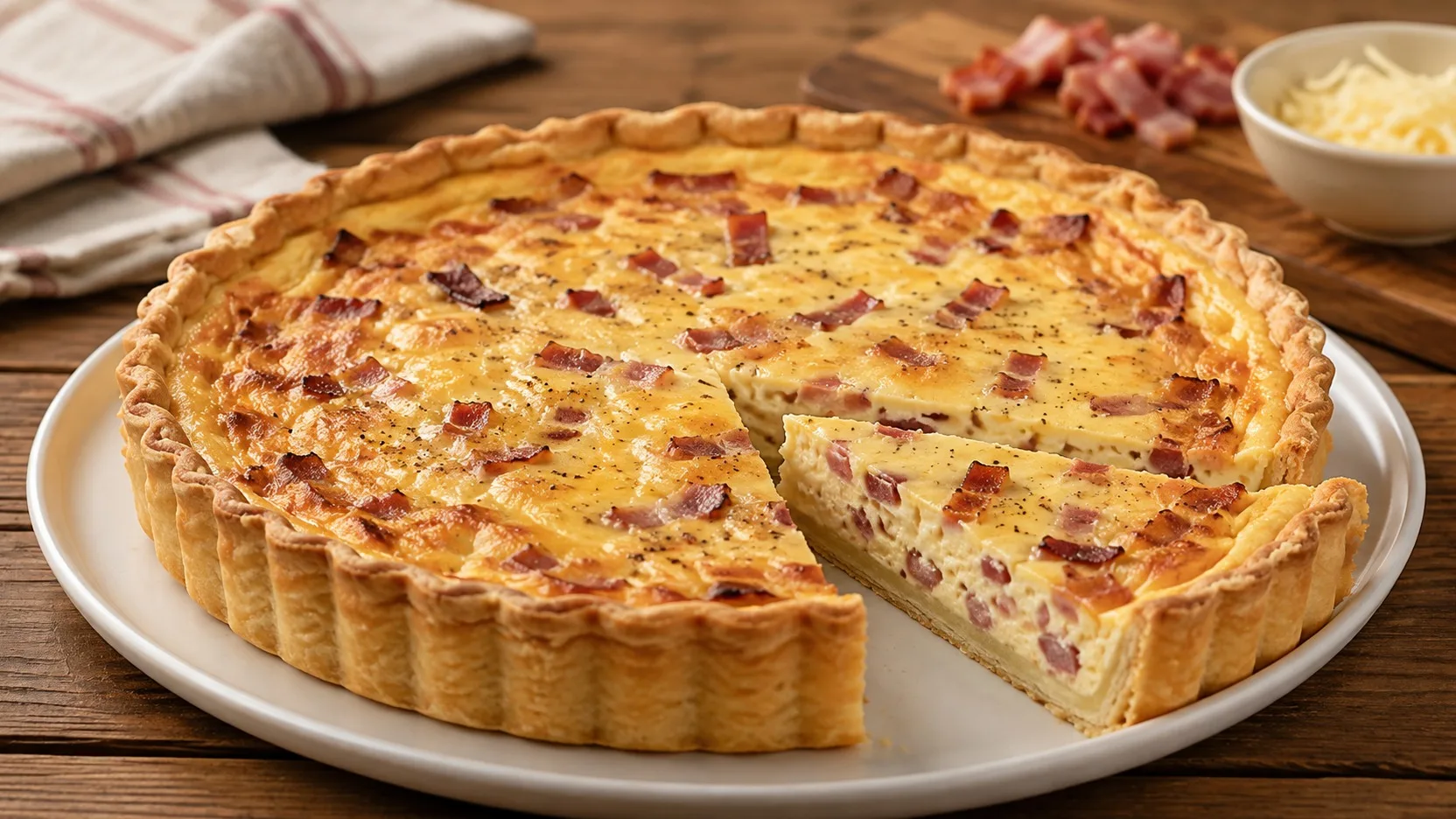
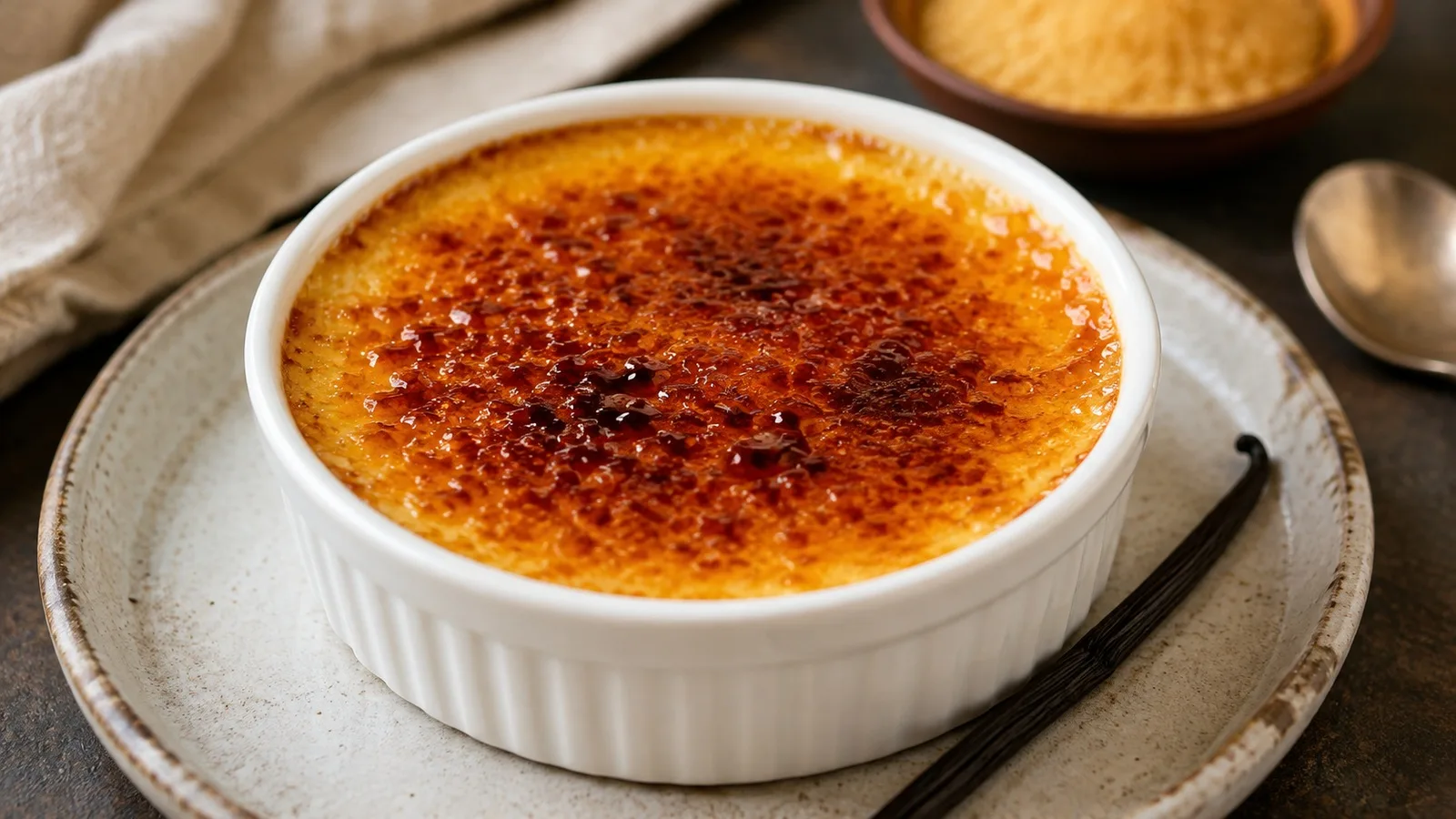
Crème brûlée combines a slow-roasted vanilla cream with a caramelized sugar crust made only at the end. Controlling the bain-marie, cream height and cooking point avoids jagged edges and a liquid center.
Ingredients
For the cream
• 500 ml of fresh cream, with approximately 35% fat
• 1 vanilla bean
• 6 large egg yolks, approximately 90-100 g without the whites
• 70 g of refined sugar
• 1 small pinch of salt
For the crust
• 40 g caster or fine crystal sugar, about 6-7 g per ramekin
For the bain-marie
• Very hot water, enough to reach approximately half the height of the ramekins
Preparation method
1. Prepare the ramekins and oven
Heat the oven to 150°C, with the rack in the middle. Set aside 6 low ramekins of 100-120 ml, preferably 9-10 cm in diameter. Arrange them in a deep baking dish, leaving space between them. This low pan keeps the cream layer at around 2-2.5 cm and facilitates uniform cooking.
2. Infuse the cream with vanilla
Open the vanilla bean lengthwise and scrape out the seeds. Place seeds, fava beans, cream and salt in a pan. Heat over medium-low heat until steam and small bubbles appear at the edge, without boiling vigorously. Turn off, cover and leave to infuse for 10 minutes.
3. Mix egg yolks and sugar without incorporating air
In a bowl, stir the egg yolks with the 70 g of sugar just until the mixture is homogeneous. Avoid beating until foamy: air trapped in the cream tends to form bubbles on the surface. Remove the broad bean from the pan and slowly pour the hot cream over the yolks, stirring continuously and gently.
4. Strain and distribute
Pass the mixture through a fine sieve to eliminate any fragments of coagulated yolk and thick foam. Divide between the ramekins, placing about 90-100 ml in each and leaving approximately 5 mm free to the edge. If there are bubbles on the surface, remove them with a spoon or gently place a piece of paper towel against it.
5. Set up the water bath
Take the baking dish close to the oven and pour very hot water around the ramekins, without letting any water fall into the cream, until it reaches about half their height. The water should be very hot, but not bubbling aggressively. Carefully transfer the baking dish to the oven.
6. Bake until the center still jiggles
Bake for 30-40 minutes. Start checking at 28 minutes because the depth of the ramekins and the oven will change the timing. The edges should be firm and the center should shake as a single piece when the ramekin is moved lightly, without appearing liquid. With an instant-read thermometer, look for 78-80°C in the center and remove before it exceeds 82°C.
7. Cool and freeze
Remove the ramekins from the water bath immediately and place them on a wire rack. Let it lose the most intense heat for 20-30 minutes and refrigerate; do not leave the dessert out of refrigeration for more than 2 hours in total. When cold, cover and freeze for at least 4 hours, preferably until the center is completely firm and cold.
8. Make the crust with a blowtorch
When serving, dry any drops of condensation from the surface. Sprinkle 6-7 g of sugar into each ramekin and swirl it around to form a thin, even layer; Discard any loose excess. Use the torch flame in a continuous motion, a few centimeters from the surface, until the sugar melts and takes on an amber color.. Wait 1-2 minutes for the crust to harden and then serve.
9. Caramelize without a blowtorch, if necessary
Heat the oven grill to maximum power and position the grill approximately 8-10 cm from the heating element. Work with the very cold creams, cover each one with the same thin layer of sugar and place under the grill, keeping an eye on it, until the sugar melts and caramelizes. The time can vary greatly between ovens, normally 2 to 5 minutes. Remove as soon as the crust is amber; This method heats the cream more and tends to caramelize it less uniformly than using a torch.
Right spot / how to know it’s ready
At the end of the oven, the cream should not be hard. The edges are stable, while the center still makes a small, even tremor when the ramekin is touched. If the surface swells, bubbles or cracks, cooking is overcooked. The most objective reference is 78-80°C in the center.
After at least 4 hours in the fridge, the spoon should go through a smooth and homogeneous cream, which maintains its shape without releasing liquid. The finished crust becomes glassy, makes a dry sound when touched with a spoon, and breaks into thin sheets.
Tips for the recipe to work out
Use low, similar-sized ramekins
Containers with different depths reach the point at different times. A layer of about 2-2.5 cm gives more control than a narrow, very deep container.
Avoid foam in the mixture
Stir egg yolks, sugar and cream without beating vigorously. The foam bakes before the rest and can leave the surface porous, making it difficult to achieve an even crust.
Remove the ramekins from the water as soon as they come out of the oven
Hot water continues to transfer heat. Leaving the cream in the bain-marie outside of the oven increases the risk of overcooking.
Caramelize only close to serving
The sugar crust absorbs moisture from the cream and the air. The longer it waits, the more it loses its snap and tends to soften.
Make a really thin layer of sugar
Too much sugar takes longer to melt, heats the cream and forms a thick layer. Spread just enough to cover the surface without mounds.
Substitutions and variations
Can I use vanilla extract?
Yes. Instead of the bean, use about 2 teaspoons of vanilla extract and mix it into the cream after turning off the heat. The flavor is more direct and the cream will not have visible fava seeds.
Can I swap part of the cream for milk?
It is possible to replace up to 100 ml of cream with whole milk. The result is less rich and a little firmer, with a more noticeable yolk flavor. Avoid replacing all the cream without recalibrating the recipe, as the texture changes a lot.
Can I use demerara sugar in the crust?
You can, but larger crystals take longer to melt and increase the risk of overheating the cream. For a quick, thin crust, caster or fine crystal sugar is more predictable.
How to store
Once baked and cooled, keep the crème brûlée covered in the refrigerator at 4°C or below and consume within 3-4 days. For better texture, prepare the cream in advance and leave the sugar to caramelize just before serving.
If the crust is already caramelized, the dessert can be put back in the refrigerator, but the sugar tends to absorb moisture and lose its crunch. Freezing is not recommended for quality, as the custard can separate and become grainy when thawing.
How to serve / side dishes
Serve the crème brûlée cold, but not frozen, as soon as the crust sets. Slightly tart fruits, such as strawberries, raspberries or berries, balance the richness of the cream without competing with the vanilla.
Common mistakes
Why was the cream grainy or curdled?
Most likely it is too much heat: too strong an oven, not enough bain-marie or cooking too long. Reduce the actual oven temperature, keep water around the ramekins and remove the cream while the center is still shaking slightly.
Why did the center remain liquid even after freezing?
The cream probably came out of the oven too soon or was baked in a deeper layer than expected. Next time, confirm uniform shaking and, if possible, the 78-80°C range before removing.
Why did the crust become thick and bitter?
This usually happens due to too much sugar or leaving the flame at the same point. Use a thin layer and move the torch continuously, stopping when the color turns amber.
Why did the crust soften?
It was made too far in advance or the surface of the cream was damp. Dry off the condensation, caramelize just before serving and wait 1-2 minutes for the sugar to harden before breaking.