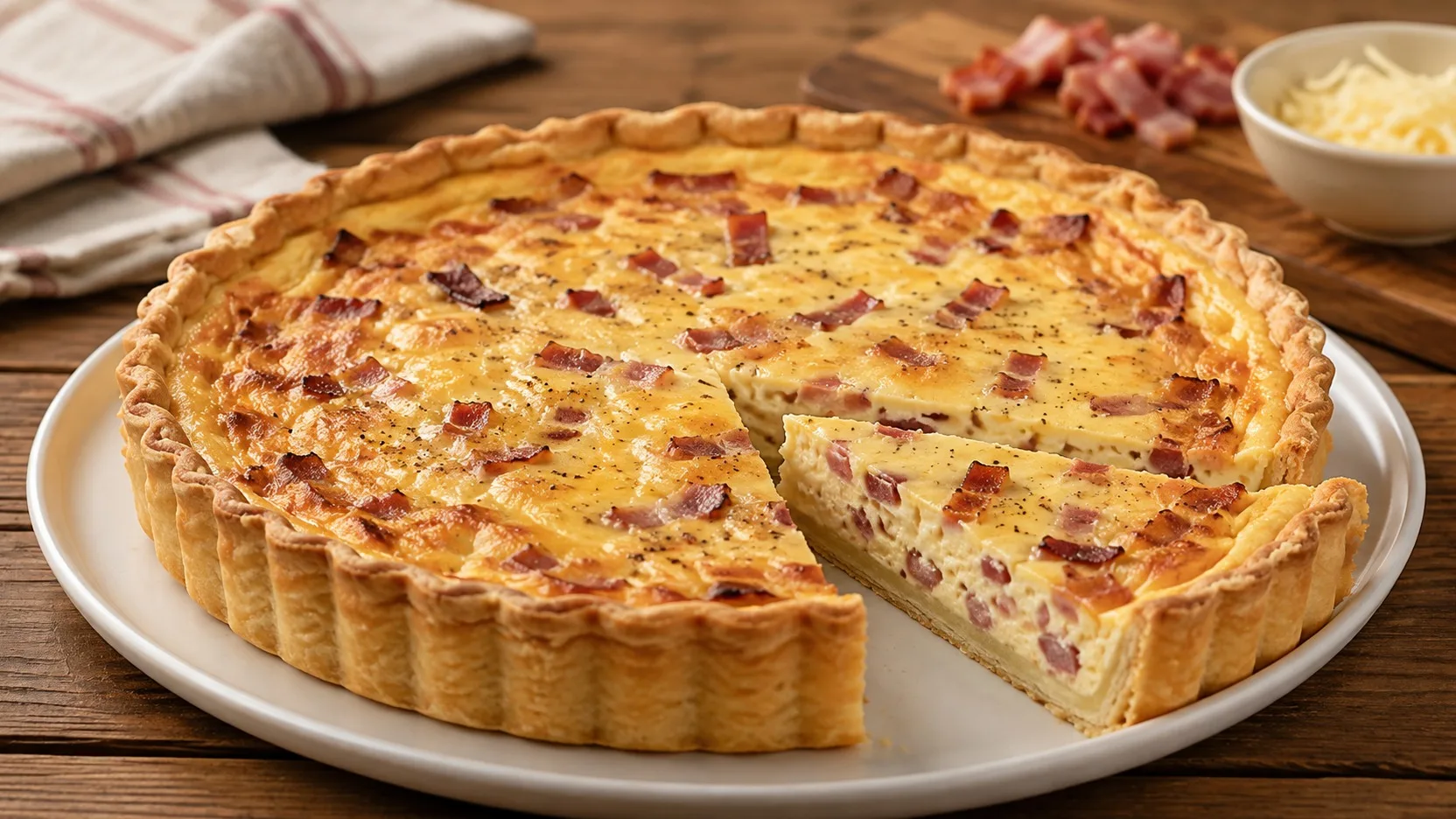
Quiche Lorraine is a savory shortcrust and buttery pie, filled with an egg and cream mixture, bacon and Gruyère. In this domestic version, the dough is pre-baked to gain structure before receiving the filling, which helps keep the bottom dry even with abundant cream.
Ingredients
For the pâte brisée
• 250 g of wheat flour
• 125 g of very cold unsalted butter, in small cubes
• 5 g of fine salt
• 1 large egg, about 50 g without shell
• 25 ml of very cold water
For the filling
• 200 g smoked bacon, cut into lardons or cubes of approximately 1 cm
• 80 g coarsely grated Gruyère cheese
• 3 large eggs
• 2 gems
• 250 ml fresh cream with approximately 35% fat
• 100 ml of whole milk
• up to 1 g of fine salt, about 1/4 teaspoon, depending on the salt of the bacon and cheese
• 1 g of freshly ground black pepper, about 1/2 teaspoon (tea)
• 0.25 g grated nutmeg, about 1/8 teaspoon
Preparation method
1. Prepare the pâte brisée
Mix the flour and salt. Add the cold butter and rub the cubes with your fingertips until you have an uneven crumb, with some small pieces of butter still visible. Add the egg and ice water and mix just until the dough comes together. Don't knead. Flatten into a disc, wrap and refrigerate for 1 hour.
2. Open and line the pan
Use a quiche or tart pan with a removable bottom measuring 24 cm in diameter and about 3 cm in height. Roll out the dough between two sheets of baking paper until approximately 3mm thick. Line the bottom and sides without stretching the dough, trim the excess and gently press the corners. Refrigerate for another 15 minutes.
3. Pre-bake the dough
Heat the oven to 190°C, without ventilation. Cover the cold dough with parchment paper and fill with pie weights or dried beans. Bake for 20 minutes. Remove the paper and weights and bake for another 8 to 10 minutes, until the bottom loses its raw appearance, is dry to the touch and begins to brown around the edges. Reduce the oven to 180 °C.
4. Brown the bacon
While the dough is pre-baking, place the bacon in a cold frying pan and place over medium heat. Cook for 6 to 8 minutes, stirring, until some of the fat is released and browned on the edges without being completely dry. Transfer to absorbent paper and let cool.
5. Mix eggs and cream apparatus
In a bowl, mix the eggs and yolks just until smooth. Add the cream, milk, pepper and nutmeg. Taste the bacon and cheese before adding salt; use no more than the indicated amount. Mix without over-beating to avoid incorporating too much foam.
6. Assemble the quiche
Spread the bacon and Gruyère over the pre-baked base. Pour the appliance slowly, leaving about 3 to 4 mm free to the edge of the dough. If there is excess liquid filling, do not force the entire volume into the mold.
7. Bake until the center is set
Bake at 180°C for 27 to 32 minutes. The edges of the filling should be firm and slightly inflated, while a small central area should still jiggle gently when the pan is moved. If using a culinary thermometer, the center must reach at least 71°C. If the edge of the dough darkens before the filling sets, protect it with a strip of aluminum foil.
8. Rest before cutting
Remove from the oven and let the quiche rest for 15 to 20 minutes on a wire rack.. This interval finishes stabilizing the cream and allows you to cut clean slices without continuing to overbake the center.
Right spot / how to know it’s ready
The dough should be golden at the edges, dry and firm at the base. The filling should appear smooth, without pools of liquid, with firm sides and the center still with a slight quiver, not rippling like liquid. For an objective safety check, the central part must reach at least 71°C. After resting, the slice should maintain its shape, but the inside should remain soft and creamy.
Tips for the recipe to work out
Keep the dough cold
Soft butter and heated dough increase the chance of shrinkage and a heavy texture. If the dough is too soft when rolled out, refrigerate it for 10 minutes before continuing.
Don't skip pre-baking
The filling is moist and cooks faster than a raw base. Pre-baking with weights and then drying the bottom without the weights creates a structural barrier against the wet bottom.
Drain the bacon fat
Very greasy bacon poured directly onto the dough can leave the bottom oily and interfere with the texture of the cream. Brown, drain and let cool before assembling.
Mix the filling without foaming
Whisking vigorously incorporates air and can form a bubbly surface or a more spongy texture. The goal is just to homogenize eggs, cream and milk.
Remove from the oven before the center becomes hard
The residual heat continues to cook the appliance while it is resting. If the center is already completely hard when it comes out of the oven, the filling tends to become drier and rubbery as it cools.
Substitutions and variations
Exchange for Gruyère
Emmental or Comté can replace Gruyère in the same quantity. Emmental leaves the flavor smoother; Comté tends to be more intense and buttery.
Version without cheese
It is possible to omit the Gruyère without changing the volume of the device. The quiche is less salty, less gratin and with a flavor more centered on bacon and cream.
Bacon swap
Diced pancetta can be used in the same quantity. As it is usually less smoked, the final flavor is more delicate; Adjust the salt only after tasting the filling.
Ready dough
A good quality ready-made pâte brisée can replace homemade dough to reduce time. Still, pre-bake before adding the filling to preserve the crispy base.
How to store
After baking, do not leave the quiche at room temperature for more than 2 hours; in an environment above 32 °C, limit this period to 1 hour. Once cold, cover and keep in the refrigerator at 4°C or below for 3 to 4 days. To freeze, cut into portions, package well and store for 1 to 2 months. Defrost in the fridge and reheat in the oven at 160°C until hot; for reheated leftovers, 74°C in the center is a safe guideline.
How to serve / side dishes
Serve warm or at controlled room temperature, accompanied by green leaves with Dijon mustard vinaigrette. For brunch, it also pairs with seasoned tomatoes or roasted vegetables, which balance the richness of bacon, cheese and cream.
Common mistakes
Why was the bottom wet?
The most common causes are short pre-baking, dough that is still pale and soft when filling, bacon with excess fat or filling placed above the pan's capacity. Bake the base until it looks dry before assembling and drain the bacon well.
Why did the dough shrink on the sides?
The dough may have been stretched when lining the pan or baked without sufficient rest.. Place it without pulling, press the corners and allow it to cool before baking.
Why was the filling rubbery?
The appliance probably baked for too long or at too high a temperature. Remove when the edges are firm and the center still has a slight jitter; rest completes the point.
Why did the filling release water when cutting?
This can happen when the quiche is cut immediately after coming out of the oven or when the appliance has been overmixed and baked unevenly. Rest for at least 15 minutes and mix liquids gently.