Ingredients
• 1.4 kg of firm apples, preferably Pink Lady or Fuji (about 7 to 8 medium to large pieces)
• 180 g of refined sugar
• 70 g unsalted butter, cold, cut into cubes
• 1 tablespoon of lemon juice
• 300 g defrosted but very cold puff pastry
• wheat flour, only if necessary to roll out the dough
Preparation method
1. Prepare the puff pastry
Roll out the puff pastry on a lightly floured surface until it forms a disc measuring around 27cm, slightly larger than a frying pan or 25cm tin. Poke a few holes with a fork, transfer to a baking tray or plate and refrigerate while you prepare the apples and caramel. The dough must go into the oven cold.
2. Prepare the apples
Peel the apples, cut each one into 4 lengthwise parts and remove the core. Drizzle with lemon juice and mix just to coat. Don't let the apples rest in the sugar: the idea is to prevent them from releasing liquid before reaching the caramel. If they are very wet, dry the surface with a paper towel.
3. Heat the oven and choose the pan
Preheat the oven to 200°C. Use a 24 to 26 cm ovenproof frying pan, preferably with a light or medium bottom to make it easier to read the color of the caramel. Have a larger baking tray available to place under the frying pan to contain any spills.
4. Make the amber caramel
Spread the sugar in the frying pan and place over medium heat. When part of it starts to melt around the edges, move it gently with a dry silicone spatula to bring the still white sugar closer to the already liquid areas. Cook until it turns deep amber, without smoking. Remove from the heat, gradually add the cold butter and stir carefully until the caramel is homogeneous. The caramel bubbles a lot at this stage and is extremely hot.
5. Arrange and pre-cook the apples
With the caramel still fluid, place the apple quarters with the rounded side facing down. First make a tight outer ring and complete the center, fitting the pieces together without leaving large spaces. Return to low heat and cook for 8 to 10 minutes. During this time, drizzle spoonfuls of the caramel on the top of the apples. They should start to look translucent at the edges and give slightly to the tip of a knife, but still maintain their shape.
6. Cover with cold dough
Turn off the heat and wait 5 minutes to reduce the heat on the surface. Remove the puff pastry from the fridge, place it over the apples and fold the edge inwards, between the fruit and the side of the pan. Press just enough to settle the dough. Make 2 or 3 small cuts in the center to allow steam to escape.
7. Bake until golden brown
Place the frying pan on the larger baking tray and bake for 25 to 35 minutes. The dough should be golden brown, with visible layers, and the caramel should be bubbling on the sides. If the dough is still pale after 25 minutes, continue baking and check the color every few minutes.
8. Wait for the caramel to thicken
Remove from the oven and let the Tarte Tatin rest in the pan for 35 to 45 minutes. During this time, the syrup becomes thicker and adheres better to the apples. The pan must still be warm when unmolding; If cooled completely, the caramel may harden and seize the pie.
9. Unmold at once
Run a thin knife along the side to loosen the dough. Place a serving plate larger than the frying pan on it, hold the plate and frying pan firmly and turn in a quick, sure motion. Wait a few seconds before lifting the pan. If any apples get stuck, reposition them with a spatula. If the pie doesn't release, heat the bottom of the skillet over low heat for 1 to 2 minutes and try again.
Right spot / how to know it’s ready
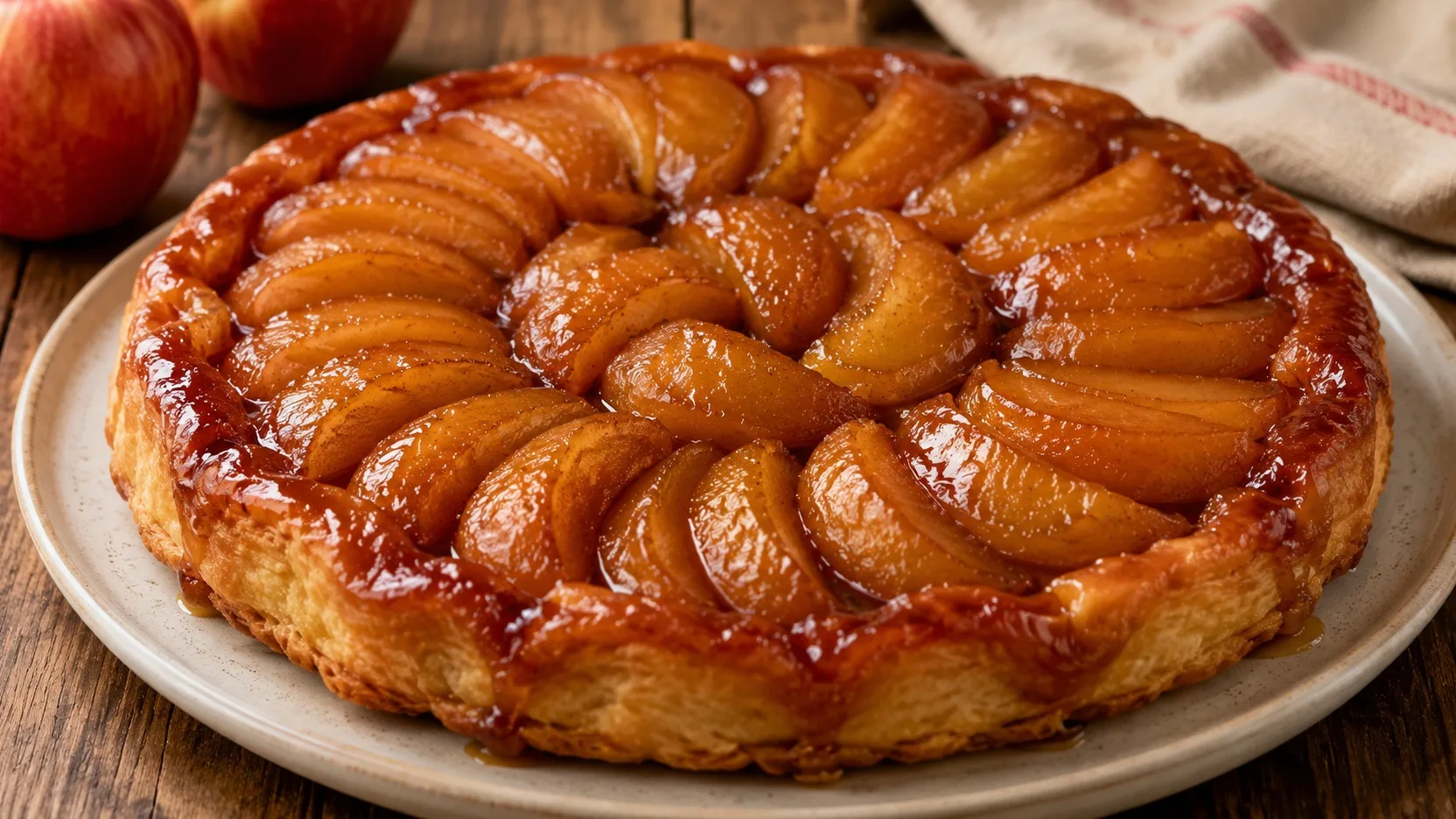
The apples should be golden to amber, shiny, and soft enough for a thin knife to enter with slight resistance without falling apart. The puff pastry needs to be golden all over and dry on the surface. Before unmolding, tilt the pan carefully: the caramel should move like a thick syrup, not like thin liquid. Once turned, the segments should remain recognizable and covered in a thin layer of caramel.
Tips for the recipe to work out
Choose firm apples
Prefer firm fruits, heavy for their size and without soft areas. Pink Lady and Fuji tend to maintain good structure. If using Gala, choose very firm units and reduce pre-cooking if they begin to sag quickly. Green apple also works and makes the result more acidic.
Do not cut thinly or leave the fruit to macerate
Quarted apples withstand long heat better than thin slices. Sugar in prolonged contact with the fruit draws water out and increases the chance of watery syrup and brittle apples.
Stop the caramel before it turns dark brown
Look for an intense amber, similar to dark honey. The caramel continues to receive heat from the pan and will still cook with the apples and in the oven; If it reaches almost black on the stove, it tends to become bitter.
Keep the dough cold
The filling should not be smoking when the dough is added. The short wait before topping the apples helps keep the butter in the puff pastry cold enough to form more defined layers in the oven.
Respect the wait before turning
Removing immediately leaves the syrup very fluid; Waiting too long can stick the pie. The best time is when the caramel has thickened and the pan is still warm.
Substitutions and variations
Can I change the puff pastry?
Yes. A brisée pastry or buttery pie dough, rolled out thinly, produces a less airy and firmer base. Baking time may vary by a few minutes; Use the golden color of the dough as a reference.
Can I use another apple?
Yes, as long as it is a firm variety. Granny Smith gives more acidity; Gala works best when it is firm and underripe. Mealy or overripe apples tend to fall apart during pre-cooking and in the oven.
Can I change the lemon?
A teaspoon of apple cider vinegar can replace lemon juice to add acidity without bringing such a noticeable citrus flavor. Use little so as not to overpower the caramel.
How to store
Tarte Tatin has the best texture the day it is made, because the moisture from the apples gradually softens the dough. If there is any leftovers, cover and refrigerate; to better preserve the texture, preferably consume it the next day. Reheat for around 10 minutes in the oven at 160°C, just until warm and the dough regains some of its crunch. Freezing is not recommended because fruit and dough tend to lose texture after thawing.
How to serve / side dishes
Serve warm or at room temperature. Crème fraîche, low-sweetened whipped cream or a small dollop of vanilla ice cream balance the caramel without hiding the apple flavor.
Common mistakes
Why are my apples turned to puree?
The most common causes are overripe fruit, small pieces or too long pre-cooking. Use firm apples, keep the quarters large, and move on to the dough stage as soon as the edges are slightly translucent and the center still offers resistance.
Why was there a lot of liquid syrup on the plate?
The apples may have released too much water or the pie may have been unmolded too soon. Dry the fruit before caramelizing it, keep the pre-cooking process on low heat and wait for the syrup to thicken in the pan before turning it over.
Why was the caramel bitter?
It turned from amber to very dark brown before receiving the butter. Remove from heat as soon as it reaches intense amber; If there is a burning or smoking smell, it is best to start the caramel again.
Why was the dough soggy?
Very thin syrup, excess liquid from the apples or waiting too long after unmolding will moisten the dough. Bake until golden brown, wait for the caramel to thicken before turning and serve the pie on the same day whenever possible.
Why did the pie stick to the pan?
The caramel has probably cooled and hardened too much. Heat the bottom of the frying pan over low heat for 1 to 2 minutes, just to soften the syrup, and repeat the unmolding process.