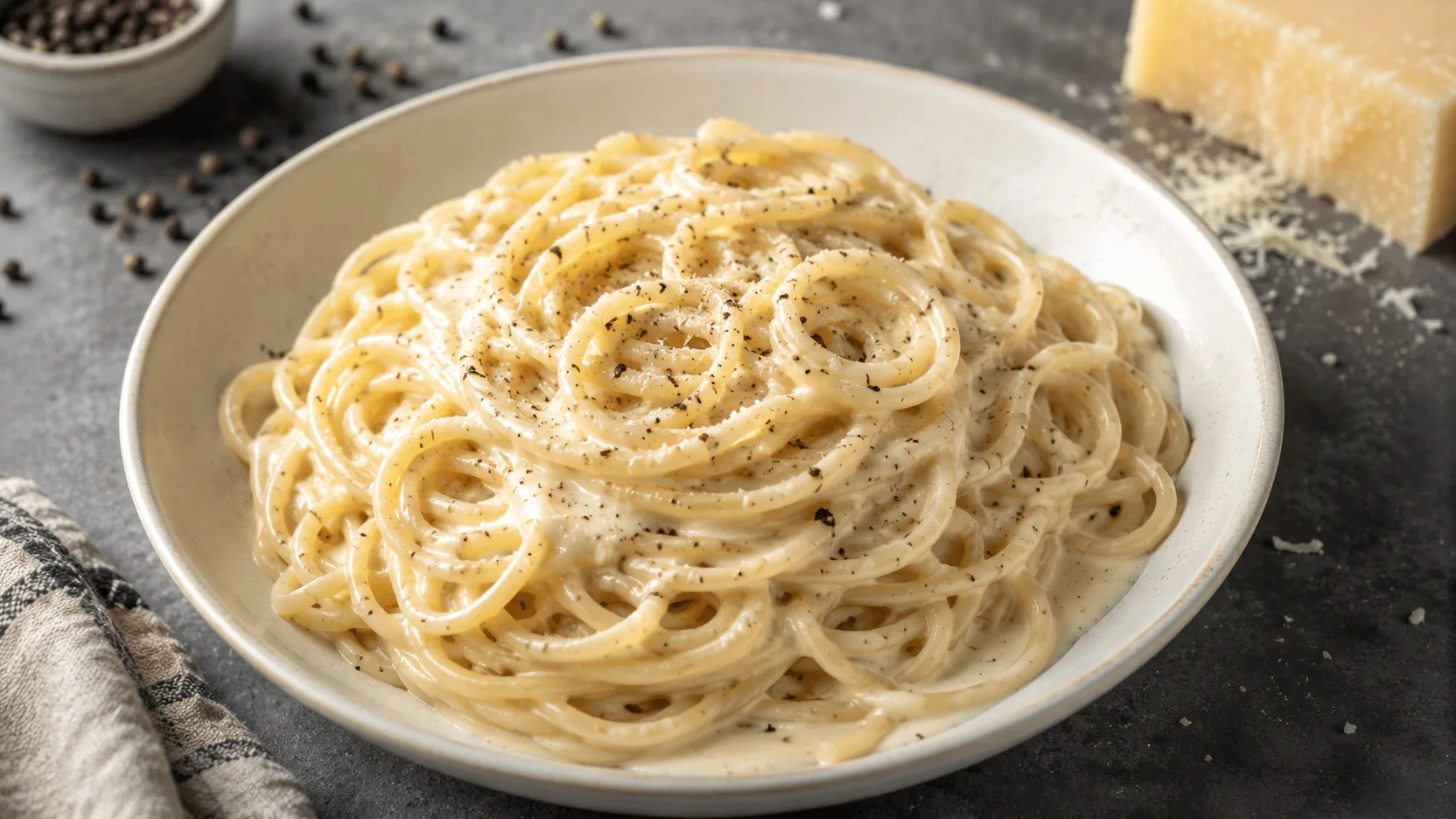
This version maintains the dominant flavor of pecorino and pepper, but uses a measured 5 g of cornstarch to make the emulsion more predictable. The critical point is to avoid excessive heat when the cheese comes into contact with water: the pecorino cream is prepared separately and incorporated into the dough off the heat.
Ingredients
• 320 g of dry spaghetti or tonnarelli
• 200 g of Pecorino Romano, preferably PDO, grated very fine
• 5 g cornstarch
• 50 g of cold water to gelatinize the starch
• 100 g of cold water to cool and adjust the cream cheese
• 4 g black pepper, freshly ground, preferably coarser
• 1.8 liters of water to cook the pasta
• 6 g of fine salt for the cooking water
Preparation method
1. Grate the pecorino and toast the pepper
Grate the pecorino as finely as possible and set aside. Heat a large frying pan over medium-low heat, add about three-quarters of the pepper and toast for 1 to 2 minutes, stirring, just until aromatic. Remove the frying pan from the heat so it starts to lose heat.
2. Make the starch base
Mix the 5 g of cornstarch with 50 g of cold water in a small pan until dissolved. Cook over low heat, stirring constantly, until it thickens and becomes almost translucent. Turn off and add 100 g of cold water. Wait until the mixture is just warm, with no visible steam; Do not add the cheese while the base is very hot.
3. Prepare the pecorino cream
Place the warm starch base and pecorino in a tall glass and beat with a hand mixer for 30 to 60 seconds, until you obtain a thick, smooth and shiny cream. Mix in the toasted pepper. If you don't have a mixer, use a small blender; alternatively, beat vigorously with a whisk, but the cheese needs to be extremely fine to reduce the risk of lumps.
4. Cook the pasta in lightly salted water.
Bring 1.8 liters of water to the boil, dissolve the 6 g of salt and cook the pasta until al dente. Before draining, reserve around 200 ml of the cooking water. Drain and let the pasta rest for 45 to 60 seconds: it should still be hot, but not releasing intense steam when the cream cheese is added.
5. Make the emulsion off the heat
Pour the dough into the warm frying pan. Add the pecorino cream in three batches, mixing and stirring vigorously between each addition. Add the reserved water little by little, one tablespoon at a time, until the sauce is fluid enough to coat all the strands without forming a puddle at the bottom.
6. Adjust the point and serve
If the mass cools too much during emulsification, return the frying pan to minimum heat for 10 to 20 seconds at a time, stirring constantly, and remove before any boiling. Finish with the remaining pepper and serve immediately.
Right spot / how to know it’s ready
The sauce should be continuous, shiny and creamy, adhering to the hair without looking like a heavy paste. When lifting a portion with a fork, the pasta should be covered in a thin layer of sauce, with no water separated and no balls or elastic strands of cheese. The bottom of the pan may be slightly creamy, but there should not be a pool of liquid.
Tips for the recipe to work out
Measure starch in grams
The 5 g of starch correspond to 2.5% of the weight of 200 g of cheese. This band helps stabilize the sauce without making it excessively thick as it cools.
Check the temperature before adding the cheese
The greatest risk of lumps occurs when the pecorino sits on a very hot base.. Gelatinize the starch first, cool the mixture and only then blend it with the cheese. When finishing, prefer short, low heat rather than keeping the pan over the flame.
Grate the pecorino very finely
Small particles hydrate and disperse more evenly. Thickly flaked cheese tends to melt unevenly and increases the chance of lumps forming.
Add water little by little
The cooking water serves to adjust the texture at the end. Adding it all at once can make the sauce thin; add in small amounts and watch how it wraps around the dough.
Salt water sparingly
Pecorino Romano is already a salty cheese. A lightly salted cooking water gives more room to adjust the final seasoning without leaving the dish excessively salty.
Substitutions and variations
Corn starch can be exchanged for potato starch in the same 5 g mass. The behavior may vary slightly in viscosity, but both work as cream stabilizers.
You can replace up to about 30% of the pecorino with Parmigiano Reggiano for a less spicy and less salty flavor. The result is softer and moves away from the profile focused solely on Pecorino Romano.
Tonnarelli is a good choice because it has a thicker section and holds the sauce well; spaghetti is the easiest alternative to find. Rigatoni also works, but changes the serving experience and sauce distribution.
If you want to omit the added starch, use very concentrated cooking water and reduce some of it before making the sauce. This approach preserves a leaner ingredient list, but requires more precise heat control and makes stability less predictable.
How to store
The best result is immediately after preparation. If there is any leftovers, place in a shallow container and refrigerate for up to 2 hours. Consume within 3 to 4 days, keeping the refrigerator at 4°C or below. To reheat, use a frying pan over low heat with a small splash of water, stirring until the sauce coats the pasta again; avoid boiling. Freezing is not recommended for quality, as the pasta softens and the sauce may lose some of its texture when thawing.
How to serve / side dishes
Serve on warmed plates, with freshly ground black pepper. As the pasta is intense and salty, simple and fresh accompaniments, such as bitter leaves with lemon, help balance the meal without competing with the sauce.
Common mistakes
Why did the cheese turn into clumps or stretchy threads?
The most common cause is excessive heat before the cheese is well dispersed. Remove the pan from the heat before incorporating the cream and avoid boiling. If the sauce has just begun to tighten, a little warm water and vigorous stirring can restore its fluidity; Already firm lumps are difficult to reverse.
completely.
Why was the sauce watery?
You probably got too much water at once or the dough wasn't stirred enough. Continue stirring for a few seconds for the sauce to adhere and, if necessary, heat it very briefly over low heat. Next time, adjust the water spoon by spoon.
Why was the sauce grainy even though there were no big lumps?
The pecorino may have been grated too coarsely or incorporated into a base that is still too hot. Grate finely, beat the cream until smooth and wait for the starch base to lose steam before adding the cheese.
Why was it too salty?
Pecorino Romano contains a lot of salt, so salted pasta water, as in other recipes, can exceed the point.. Use the indicated amount and adjust only after the sauce is ready.