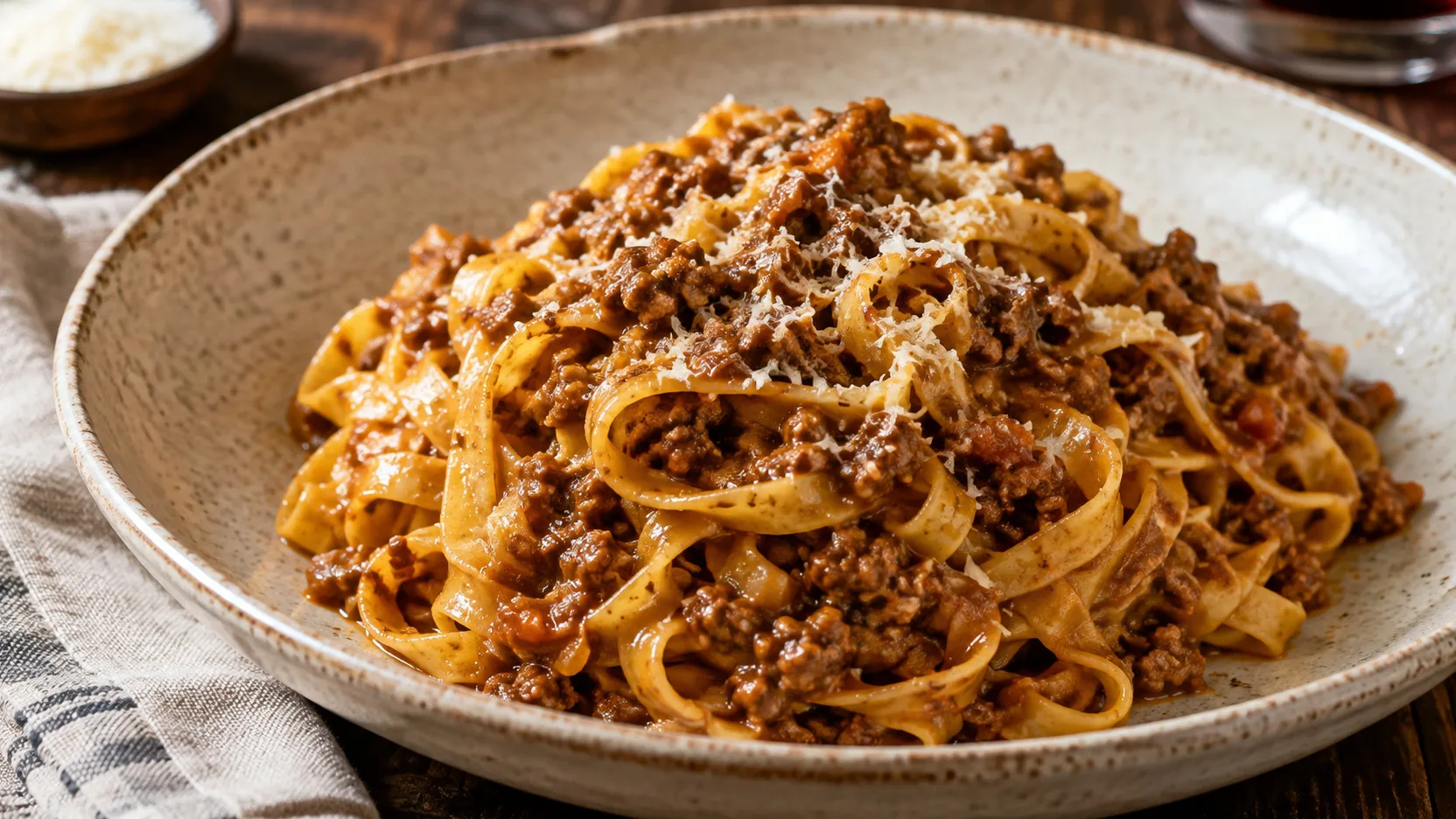
This recipe is based on the proportions of the reference formula updated by the Accademia Italiana della Cucina and deposited at the Bologna Chamber of Commerce in 2023, with domestic measures explained to facilitate execution. The profile is of meat and pancetta, with little tomato and long cooking; therefore, the result is different from a quickly prepared tomato sauce with meat.
Ingredients
• 150 g fresh pork pancetta, unsmoked, finely chopped or ground
• 45 ml extra virgin olive oil (3 tablespoons)
• 60 g onion, finely chopped
• 60 g carrot, finely chopped
• 60 g of celery, finely chopped
• 400 g coarsely ground beef, preferably cuts with some collagen, such as chuck, brisket or shoulder
• 150 ml of dry wine, red or white
• 200 g tomato passata
• 20 g of concentrated tomato paste (about 1 heaped tablespoon)
• up to 500 ml of light meat or vegetable broth, kept warm, to use little by little
• 200 ml whole milk, optional
• 2 g of salt to start (about 1/3 teaspoon), adjusting at the end depending on the pancetta and broth
• 1 g freshly ground black pepper (about 1/2 teaspoon), or to taste
Preparation method
1. Prepare the soffritto
Chop onion, carrot and celery with a knife into very small cubes. The idea is for the vegetables to integrate into the sauce during cooking without turning into raw food processor paste.
2. Melt the pancetta
Heat a heavy 9- to 10-inch pan over medium-low heat. Add the pancetta and olive oil and cook for 4 to 6 minutes, stirring, until the fat begins to melt. The pancetta should soften and flavor the fat, without becoming crunchy or dark.
3. Cook the soffritto without browning
Add onion, carrot and celery. Cook over medium-low heat for 8 to 10 minutes, stirring frequently, until everything is soft and translucent. If the onion starts to turn dark in color, lower the heat.
4. Sear the meat until it sizzles again
Increase heat to medium-high and add beef. Break up only the larger blocks and cook for 8 to 12 minutes, stirring, until the released water evaporates and the meat sizzles in the fat again. This signal shows that the aqueous stage has ended and the flavor is concentrating.
5. Evaporate the wine completely
Pour in the wine and scrape the bottom of the pan. Cook for approximately 4 to 6 minutes, or until the liquid reduces and the alcoholic aroma no longer dominates. Do not proceed while there is an obvious layer of wine at the bottom.
6. Add the tomato and start slow cooking
Mix the extract and passata. Add about 250 ml of the hot broth, stir, lower the heat and cover. The ragù should cook with small, spaced bubbles, never at an aggressive boil.
7. Cook for 2 to 3 hours
Keep on very low heat for at least 2 hours; for a smoother, more integrated sauce, cook for 2 hours 30 minutes or 3 hours. Stir every 20 to 30 minutes and add the hot broth in small batches when the bottom starts to dry out before the meat is tender. The total amount of broth may vary depending on the pan and the intensity of the heat.
8. Use milk if desired
Halfway through cooking, add the whole milk. Cook slowly until it is completely absorbed and the sauce becomes concentrated again before adding more broth. Milk softens the acidity and rounds out the texture, but it's optional.
9. Adjust and rest
When the ragù is thick, creamy and dark orange-brown in color, turn off. Adjust salt and pepper and let rest for 10 minutes before serving or using to assemble a lasagna.
Right spot / how to know it’s ready
The finished ragù should not look like a liquid, red tomato sauce. The meat is soft and surrounded by a creamy film, the fat is integrated and does not form a separate pool, and the color tends to dark orange-brown. When you pass the spoon along the bottom, a path opens that takes a moment to close; if the liquid runs immediately, it still needs to be reduced. If the bottom dries out and starts to stick before the meat is tender, add a little hot broth and continue over low heat.
Tips for the recipe to work out
Chop the soffritto with a knife
Small cubes cook evenly and partially dissolve in the ragù. Over-processing releases water and can turn vegetables into a paste that cooks differently.
Don't rush the meat step
The meat needs to lose its water and sizzle again before the wine. If the wine enters while there is still a lot of water in the pan, the flavor will be less concentrated and the sauce will take longer to gain body.
Use little tomato on purpose
Here the tomato provides acidity, moisture and color, but is not the main base. The smaller proportion lets meat, pancetta and soffritto dominate the sauce.
Keep the broth warm
Adding cold broth lowers the temperature and stops the slow cooking. Use only as much as necessary to keep the bottom from drying out while the meat still needs to tenderize.
Add the salt at the end
Pancetta and broth can now add salt. Starting small and correcting at the end reduces the risk of concentrating too much salt during the reduction hours.
Substitutions and variations
Beef can be made with chuck, shoulder, brisket or a mixture of front cuts. It is also possible to use a mixture of approximately 60% beef and 40% pork, which makes the sauce fattier and smoother.
Fresh pancetta can be substituted for pancetta cured without smoking. Smoked bacon changes the aroma a lot and does not reproduce the classic profile of this version.
Dry red and white wine work; the red tends to have a slightly more intense flavor and color, while the white maintains a more delicate profile. Avoid sweet wines.
Whole milk is optional. Without it, the ragù is a little more direct and vinous; with it, it gains softness and a more rounded feel.
Light broth can be replaced with hot water when necessary. In this case, the final concentration will depend even more on the good caramelization of the meat and the long cooking.
To maintain the profile of this version, do not add garlic, rosemary, parsley, flour or a large amount of tomato sauce: all of these change the structure or aroma of the ragù in a noticeable way.
How to store
Transfer the ragù that will not be consumed into shallow containers and refrigerate within 2 hours of preparation. Well chilled, consume within 3 to 4 days. To store for longer, freeze in portions for up to about 3 months for best quality.
To reheat, place over low heat with a small amount of water or broth if it is too thick and heat through; If you use a culinary thermometer, the center should reach 74 °C.
How to serve / side dishes
Serve with tagliatelle, wrapping the pasta directly in the ragù and using a little of the cooking water only if you need to adjust the texture. Top with grated Parmigiano-Reggiano, if desired.. The sauce also works very well between the layers of a Bolognese lasagna, in enough quantity to moisten without making the pasta soggy.
Common mistakes
Why did my ragù turn red and have a dominant tomato taste?
This usually happens when too much tomato is added or when cooking is short. Keep the proportion of passata controlled and let time transform meat, fat, vegetables and tomatoes into a unique sauce.
Why was the meat tough or grainy?
Boiling hard for a long time can dry out the pieces of meat before the whole becomes creamy. After the sealing step, always work with gentle bubbles and add broth in small quantities when necessary.
Why did the bottom burn?
The heat was too high, the pan was dry or the sauce went too long without being stirred. Regularly scraping the bottom and adding a little hot broth prevents the concentrated sugars and proteins from burning.
Why was it greasy on the surface?
Very fatty pancetta, meat with excess fat or insufficient reduction can leave a separate layer. Cook for a few more minutes over low heat, stirring to reincorporate some of the fat; If there is still excess, just remove the surface film with a spoon.
Frequently asked questions
Do you really need to cook for so many hours?
The sauce can be ready in around 2 hours on low heat, but 2 hours 30 minutes to 3 hours gives more time for the meat to soften, the soffritto to integrate and the liquid to reduce. The appearance and tenderness of the meat are more important than the exact minute.
Can I prepare it the day before?
Yes. Once cooled and refrigerated properly, the ragù can be reheated the next day. The sauce tends to firm up in the refrigerator; heat over low heat and adjust with a small amount of water or broth.