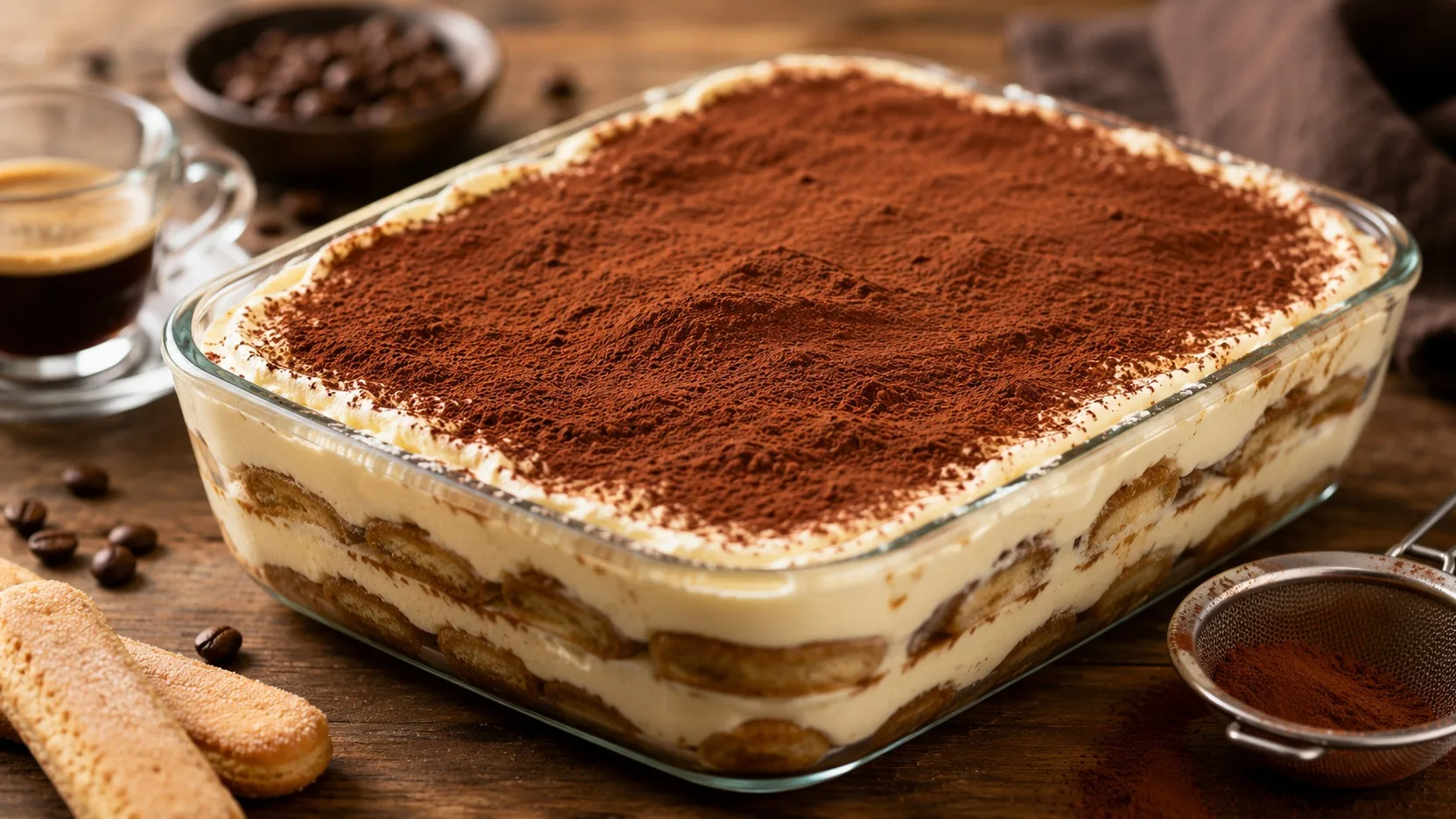
This version maintains the classic profile of tiramisù: strong, cold coffee, savoiardi biscuits, mascarpone cream with eggs and sugar and a final layer of cocoa. The most sensitive step is balancing a light but firm cream with cookies that are moist enough to lose their dryness without falling apart.
Ingredients
For coffee and layers
• 300 ml of espresso coffee or very strong brewed coffee, without sugar and completely cold
• 250 g of savoiardi biscuits or dry champagne biscuits, approximately 30 to 36 units depending on size
For the mascarpone cream
• 500 g chilled mascarpone cheese
• 4 large pasteurized eggs in the shell, with whites and yolks separated
• 100 g of refined sugar
To finish
• 15 g of 100% unsweetened cocoa powder, to sift over the surface
Preparation method
1. Prepare and cool the coffee
Make 300 ml of espresso or very strong, unsweetened brewed coffee. Transfer to a wide container and let cool completely. Warm coffee heats the cream and softens the cookies too quickly.
2. Beat the egg yolks with part of the sugar
Place the 4 pasteurized egg yolks in a bowl and add 70 g of sugar. Beat with an electric mixer for about 4 to 5 minutes, until the mixture is light, voluminous and thick. When lifting the whisk, the cream should fall in a ribbon and remain visible for a few seconds before integrating.
3. Add the mascarpone
Stir the mascarpone just enough to make it malleable. Add it to the egg yolks in 3 batches, beating on low speed just until each addition disappears. Stop once the cream is smooth and thick; Beating too much can make the mascarpone grainy or make the cream lose its structure.
4. Beat the egg whites
In another clean, fat-free bowl, beat the 4 pasteurized egg whites until they foam. Add the remaining 30 g of sugar little by little and continue beating until firm but still shiny peaks form. The peak should hold up when the whisk is lifted, without appearing dry or brittle.
5. Finish the cream
Mix about a third of the egg whites into the mascarpone cream to loosen it. Incorporate the rest in 2 additions, using a spatula and movements from bottom to top. The final cream should be airy, uniform and thick enough to form a layer that does not run immediately.
6. Moisten the first layer of cookies
Spread a thin layer of cream on the bottom of a serving dish measuring approximately 20 x 28 cm. Take one cookie at a time, touch one side to the cold coffee for about 1 second, turn over and remove immediately. It should darken on the outside but remain firm when held. Arrange the cookies side by side until the bottom is covered.
7. Assemble the two layers
Cover the cookies with half of the remaining cream and level without pressing. Make a second layer of moistened biscuits in the same way and finish with the rest of the cream. Smooth the surface with the spatula.
8. Freeze until set
Cover the dish without letting the film or lid touch the cream. Refrigerate for at least 6 hours. For a more defined cut and more integrated flavor, the tiramisù can rest for 8 to 12 hours.
9. Finish with cocoa
Just before serving, sift the cocoa powder over the entire surface. Sprinkling at the end keeps the layer drier, more aromatic and visually uniform.
Right spot / how to know it’s ready
The ready-to-assemble cream must be airy and thick: when you use the spatula, the mark remains visible for a few seconds and the cream does not form liquid at the bottom of the bowl. After resting, the dessert should be cold and firm enough for a portion to emerge with recognizable layers. The cookies need to be soft in the center, with no dry pockets, but they should not turn into a doughy dough.
Tips for the recipe to work out
Use strong, completely cold coffee
Tiramisù depends on the contrast between bitter coffee, sweet cream and cocoa. Weak coffee disappears between the layers; Hot coffee speeds up absorption and can soften the cream.
Control the cookie dip
Very dry Savoiardi absorb liquid quickly. Give the coffee a short run and adjust only if your cookie is exceptionally dense. If it bends or threatens to break in your hand before it reaches the plate, it has absorbed too much coffee.
Do not beat the mascarpone for too long
The goal is just to incorporate it. If the cream starts to look grainy or lose volume, stop beating and finish gently with a spatula.
Preserve the air of the egg whites
Mix the egg whites with broad movements from bottom to top. Stirring vigorously reduces the volume and makes the dessert heavier and less firm once chilled.
Respect rest
The time in the refrigerator is not just for cooling: it allows the cream to gain body and for the moisture to be distributed throughout the cookies. Cutting too early often produces portions that sag on the sides.
Substitutions and variations
Can I swap the mascarpone for cream cheese?
It is possible to make a coffee dessert with cream cheese, but the result is more acidic and dense and no longer has the classic tiramisù profile. For this recipe, mascarpone is the best choice.
Can I use regular champagne biscuits?
Yes. Champagne biscuits that are less dry than Savoiardi absorb coffee more quickly; further reduce contact time with liquid and observe firmness before assembling.
Can I use decaffeinated coffee?
Yes. Prepare it strong and let it cool in the same way. The switch reduces caffeine but preserves coffee's role in texture and flavor.
Can I add alcohol?
If desired, mix 20 to 30 ml of Marsala or dark rum into the cold coffee. It's a flavor variation, not a necessary step. To serve to children, pregnant women or people who avoid alcohol, simply omit.
What if I don't find pasteurized eggs in the shell?
Use commercially pasteurized egg yolks and whites, following the manufacturer's instructions for use in no-cook preparations and for beating. Do not substitute raw regular eggs in this no-cook version; Another option is to choose a method in which the egg mixture is heated with temperature control.
How to store
Keep the tiramisù covered and refrigerated at 4°C or below. With pasteurized eggs, preferably consume within 2 to 3 days. Do not leave the dessert out of refrigeration for more than 2 hours; in an environment above 32 °C, limit to 1 hour.
To freeze, divide into tightly sealed portions and freeze for up to 2 weeks to better preserve the texture. Thaw in the refrigerator and avoid refreezing a portion that has already been defrosted.
How to serve / side dishes
Serve well chilled, taking it out of the fridge just before serving.. A sugar-free espresso goes well with dessert and reinforces the flavor of the coffee without increasing the sweetness.
Common mistakes
Why was my tiramisù watery?
The most common causes are mascarpone that has been beaten too long, egg whites that are not firm enough or aggressive incorporation that has knocked out the air. It can also happen when the cookies contain too much coffee and release excess liquid during rest.
Why did the cookies turn into dough?
They stayed in the cafe too long. The biscuit must be wet quickly and placed on the plate while it is still firm. The rest of the hydration takes place during the refrigerator hours.
Why doesn't the portion keep the layers?
The rest may have been short, the cream may have lost volume in the mixture or the dish may have received layers of cream that were too thick compared to the biscuits. Leave at least 6 hours in the fridge before cutting and use a wide spatula to serve.