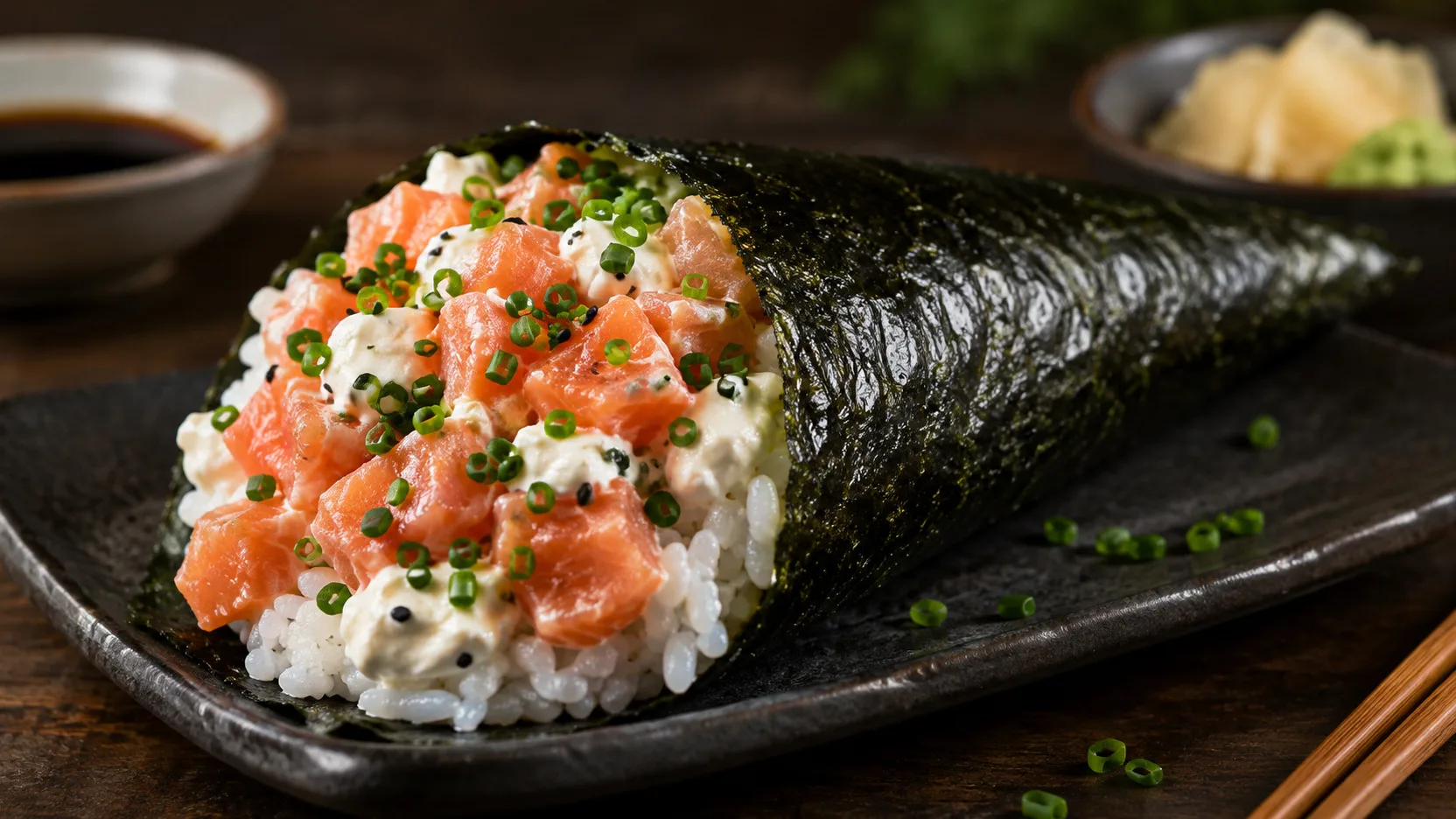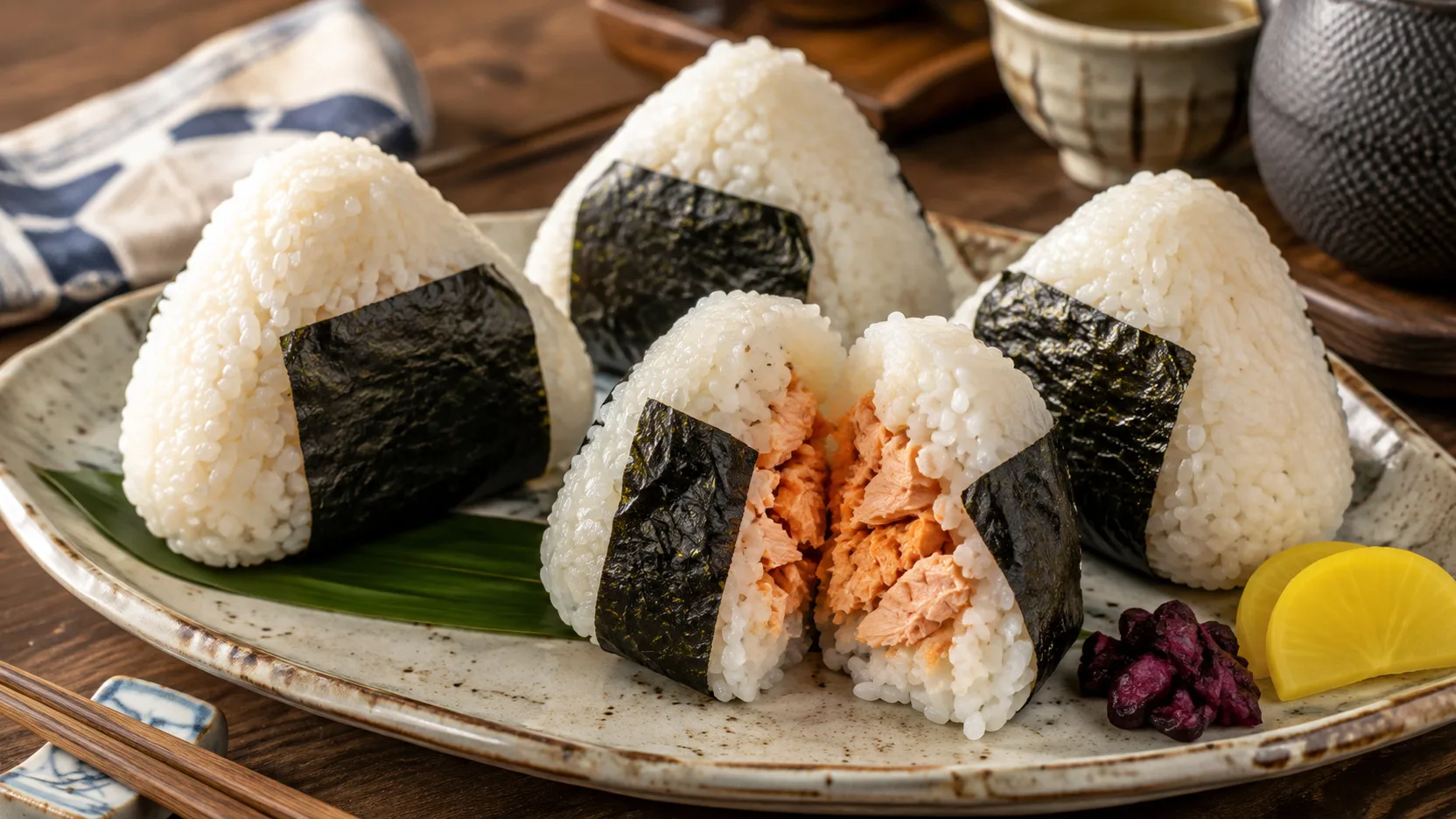
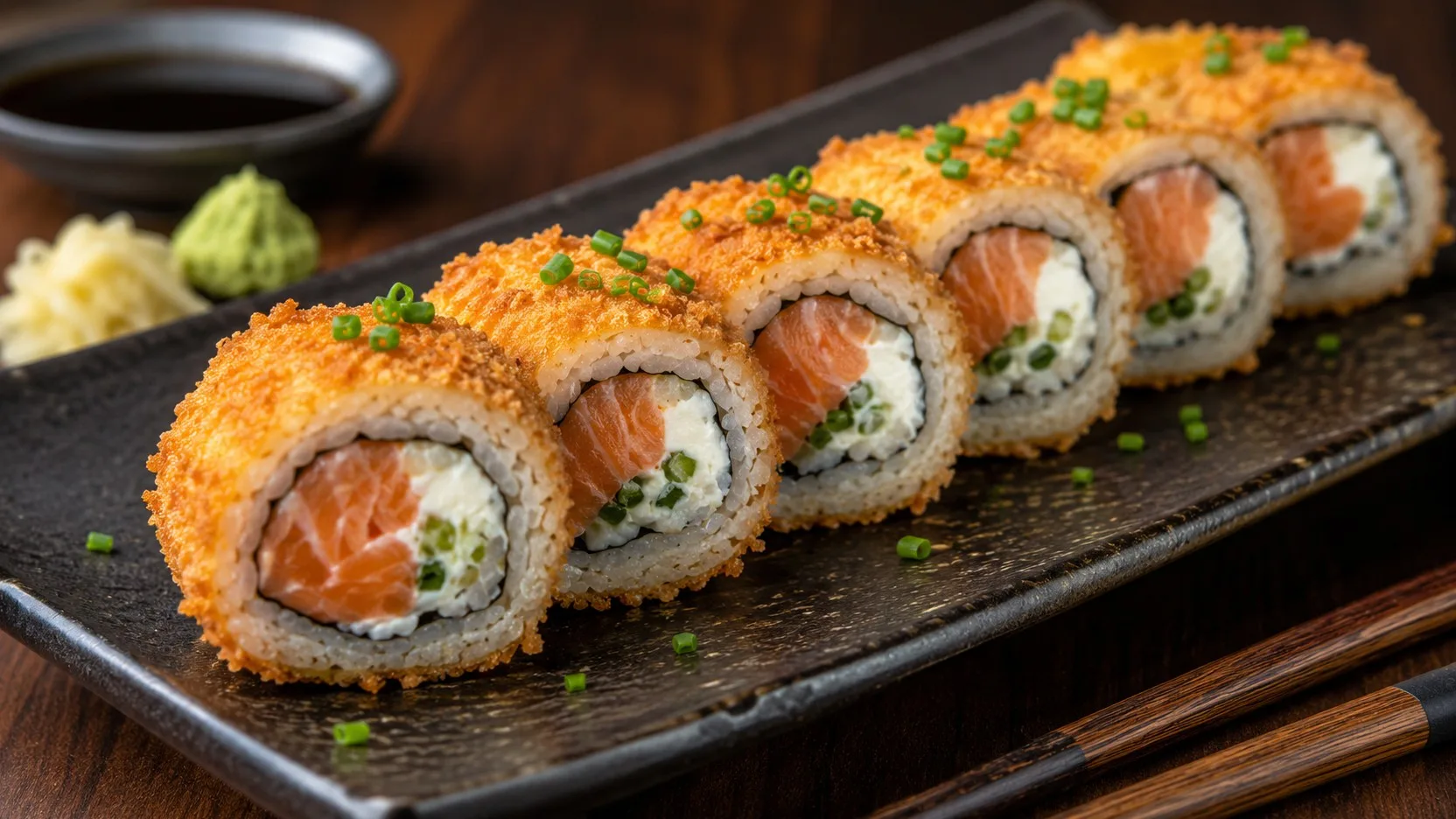
The secret to this hot roll is to treat assembly, breading and frying as separate steps: the roll needs to be firm before receiving the dough, the oil must remain hot enough to brown quickly and the rest must let the steam escape before cutting. The recipe uses ready-made shari to focus the technique on breaded sushi.
Ingredients
For the rolls
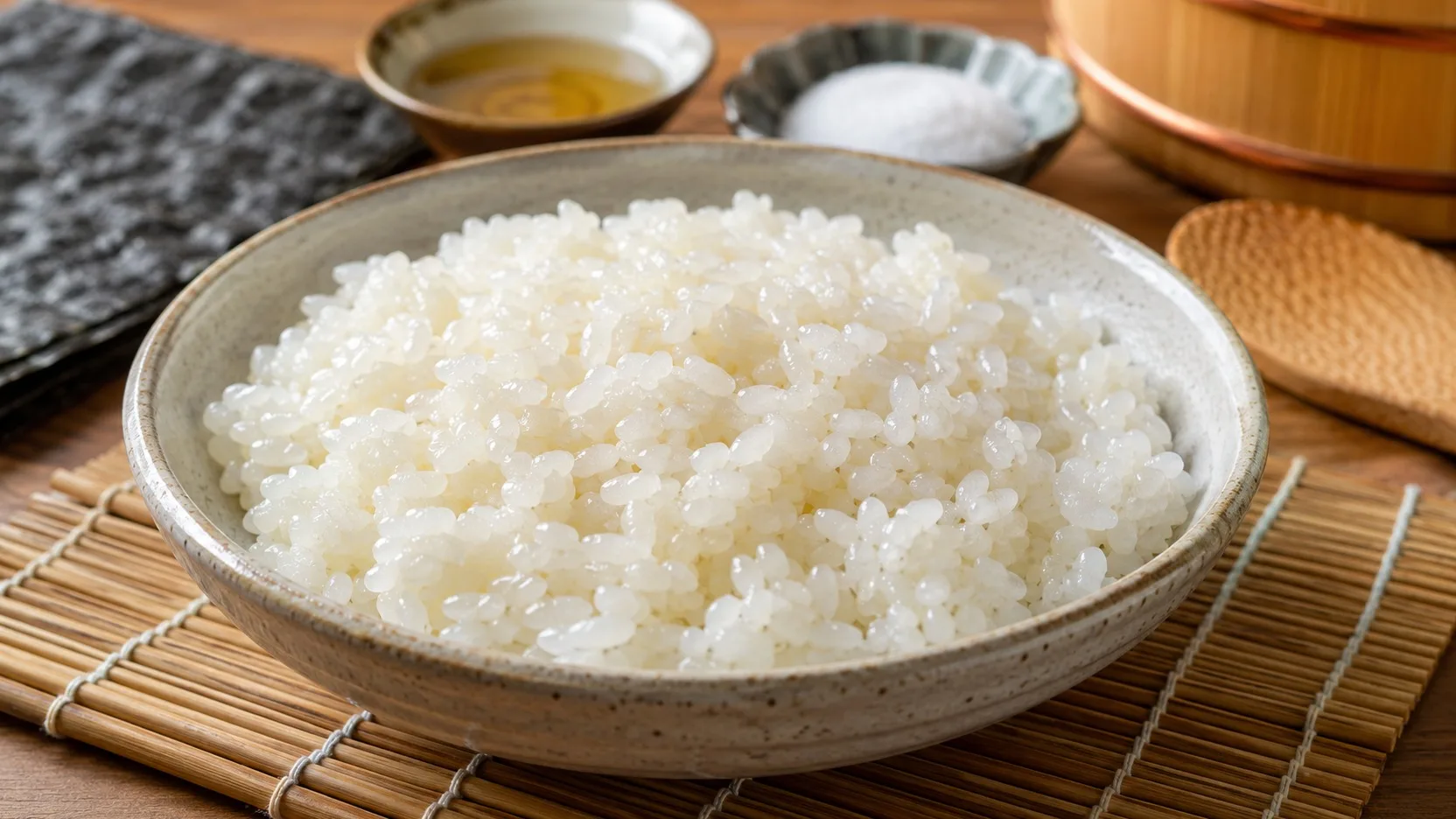
• 320 g of ready-made shari (already seasoned sushi rice), at room temperature and without excess moisture
• 2 whole sheets of nori seaweed
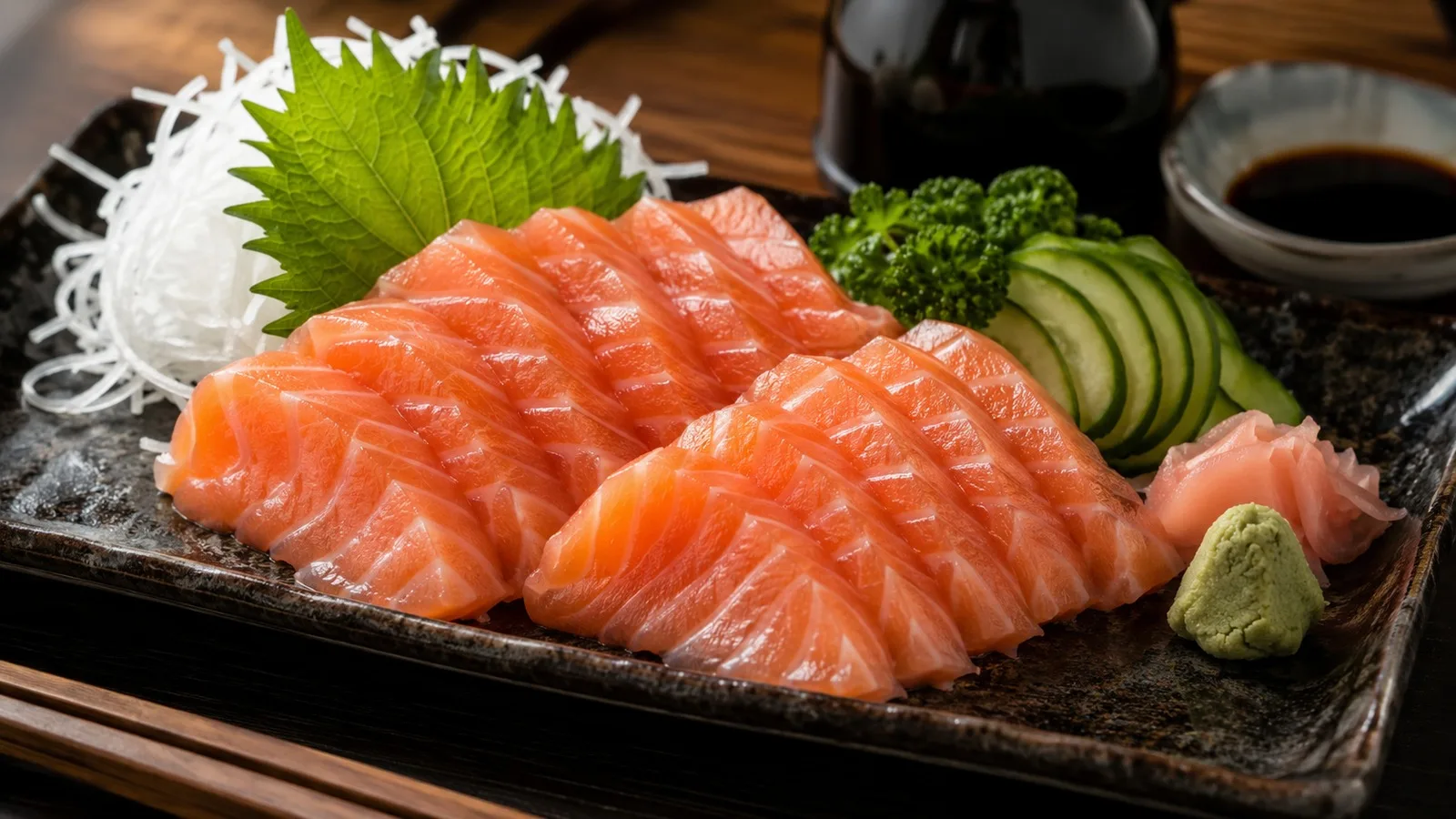
• 140 g skinless, boneless salmon fillet, well chilled, cut into 2 long strips
• 80 g of firm, cold cream cheese
• 2 tablespoons of finely chopped chives
• Filtered water in a small amount to moisten your hands and seal the algae
For breading and frying
• 90 g of wheat flour
• 125 ml of very cold water
• 80 g of panko flour, approximately
• 800 ml to 1 liter of neutral vegetable oil, or enough to form a layer of 4 to 5 cm in the pan
To serve
• Tarê or soy sauce, to taste
Preparation method
1. Arrange the salmon and shari
Keep the salmon refrigerated until ready to assemble. If it is going to be raw or just heated in the center, use fish from a regulated supplier, suitable for raw consumption and previously frozen. Quickly frying the hot roll browns the breading, but does not guarantee that the center will reach full cooking temperature. For a fully cooked version, use the variation noted below.
2. Assemble the first roll
Place a sheet of nori on the sushi mat with the rough side facing up. Lightly moisten your hands and spread 160 g of shari into a thin, even layer, leaving about 2 cm free on the far edge. Arrange half the salmon, 40 g of cream cheese and half the chives in a strip close to the bottom edge.
3. Roll up and secure the structure
Lift the mat by the closest edge and make the first turn keeping the filling in the center. Press firmly enough to compact the rice, but without crushing the cream cheese. Continue rolling until the free edge, moisten this strip of nori and close the roll. Leave the seam facing down for 5 minutes. Repeat with the second sheet.
4. Prepare the breading
Place the panko in a long bowl. In another, mix the wheat flour with very cold water just until it forms a fluid dough that covers a spoon with a thin, continuous layer. If it is thick enough to form a heavy layer, add 1 tablespoon of ice water; If it runs without sticking, add 1 tablespoon of flour. Prepare this dough only when the oil is already heating.
5. Heat the oil to the correct range
Heat the oil in a deep, stable pan to 175-180 °C, measuring with a culinary thermometer. This range allows you to brown the panko quickly without keeping the roll in the fat for too long. Fry one roll at a time to avoid a sudden drop in temperature.
6. Bread without excess
Pass a whole roll through the dough, let the excess drip off for a few seconds and cover with panko. Press the flour just enough to adhere without compacting it. The breading should be uniform, but still airy. Repeat only when the first roll is ready to enter the oil.
7. Fry until golden
Carefully lower the roll into the oil and fry for about 1 minute and 30 seconds to 2 minutes, turning if necessary, until the surface is golden and crispy. Monitor the temperature and adjust the heat to maintain it between 175 and 180 °C. Remove with slotted spoon or long tongs.
8. Drain without suffocating
Leave the roll on a wire rack for approximately 2 minutes. The rack allows steam to escape and reduces moisture that softens the crust. Do not cover and do not stack. If you don't have a rack, use absorbent paper just underneath, without wrapping the sushi.
9. Make the clean cut
Use a long, very sharp knife. Lightly moisten the blade and wipe it between cuts. Cut the roll in half, then each half in half, and finally each quarter in half, forming 8 slices. Make a short sawing motion without pressing the roller down. Repeat with the second roll and serve immediately.
Right spot / how to know it’s ready
The breading should be evenly browned, dry to the touch and with visibly loose and crispy panko, without a shiny film of oil. The roll must maintain a cylindrical shape, and the slices must show compact rice, intact nori, centered salmon and soft cream cheese without excessive runny. The color of the salmon in the center should not be used as a safety criterion when it has been assembled raw, as rapid frying does not guarantee complete cooking.
Tips for the recipe to work out
Use the shari at the right point
Very hot rice releases steam and weakens the nori; Dry rice doesn't stick well. Use the shari at room temperature, still malleable, and spread without crushing the grains.
Don't load up on cream cheese
Excessive filling increases internal pressure and encourages the roll to open during frying. Keep the filling in a narrow, even center strip.
Bread close to frying time
If the breaded roll sits still for too long, the dough starts to moisten the panko. Have oil, dough and panko ready and fry right after breading.
Check the oil with a thermometer
Oil below the range tends to prolong frying and increase fat absorption; Oil too high browns the crust before it heats evenly.
Allow two minutes before cutting
Cutting as soon as the oil comes out causes steam to condense on the blade and increases the chance of the crust breaking. A short rest on a wire rack firms the breading without letting the hot roll cool down too much.
Substitutions and variations
Fully cooked salmon
To avoid raw or undercooked fish, pre-cook the salmon to 63°C in the center, let it cool under refrigeration and use it in strips when assembling. The texture becomes firmer and less greasy, but the frying of the roll may remain short, focused only on browning the breading.
Breadcrumbs instead of panko
It is possible to use regular breadcrumbs, but the crust tends to be more compact and less airy. Use a thin layer to reduce the weight of the breading.
No chives
The chives can be omitted without altering the structure. The flavor is more centered on salmon, rice and cream cheese.
How to store
Hot roll has a better texture when consumed right after frying. Perishable foods should only remain unrefrigerated for the minimum time necessary; Anvisa recommends keeping cold foods below 5 °C and not leaving leftovers at room temperature for more than 2 hours. If there is a surplus, refrigerate it promptly in a closed container and prefer to consume it on the same day for quality reasons. Do not rely on reheating to correct fish that was used raw without proper origination and freezing care.
How to serve / side dishes
Serve the slices while still hot with tarê or soy sauce in a small amount, so as not to make the crust soggy. Pickled ginger and wasabi can be served separately. If you use sauce on the hot roll, apply it only before serving.
Common mistakes
Why was the hot roll soggy?
The most common causes are oil below 175°C, breading dough that is too thick, frying too many rolls at the same time or draining without air circulation. Correct the temperature, let the excess dough drain and use a wire rack after frying.
Why did the crust come off?
The rolling pin may have been too wet before breading, the dough may be so thin that it doesn't stick, or the panko may have been applied without even contact. Dry any excess water from the surface and press the panko lightly, covering the entire roll.
Why did the roll open in the oil?
Normally there is excess filling, little compaction or poorly sealed seams. Leave the final strip of nori without rice, moisten just that edge and keep the roll seam side down for a few minutes before breading.
Why did the cutting dismantle the slices?
Dull knife, vertical pressure and cutting immediately after frying crush the structure. Wait about 2 minutes, use a sharp blade and make short sawing movements, cleaning the knife between slices.