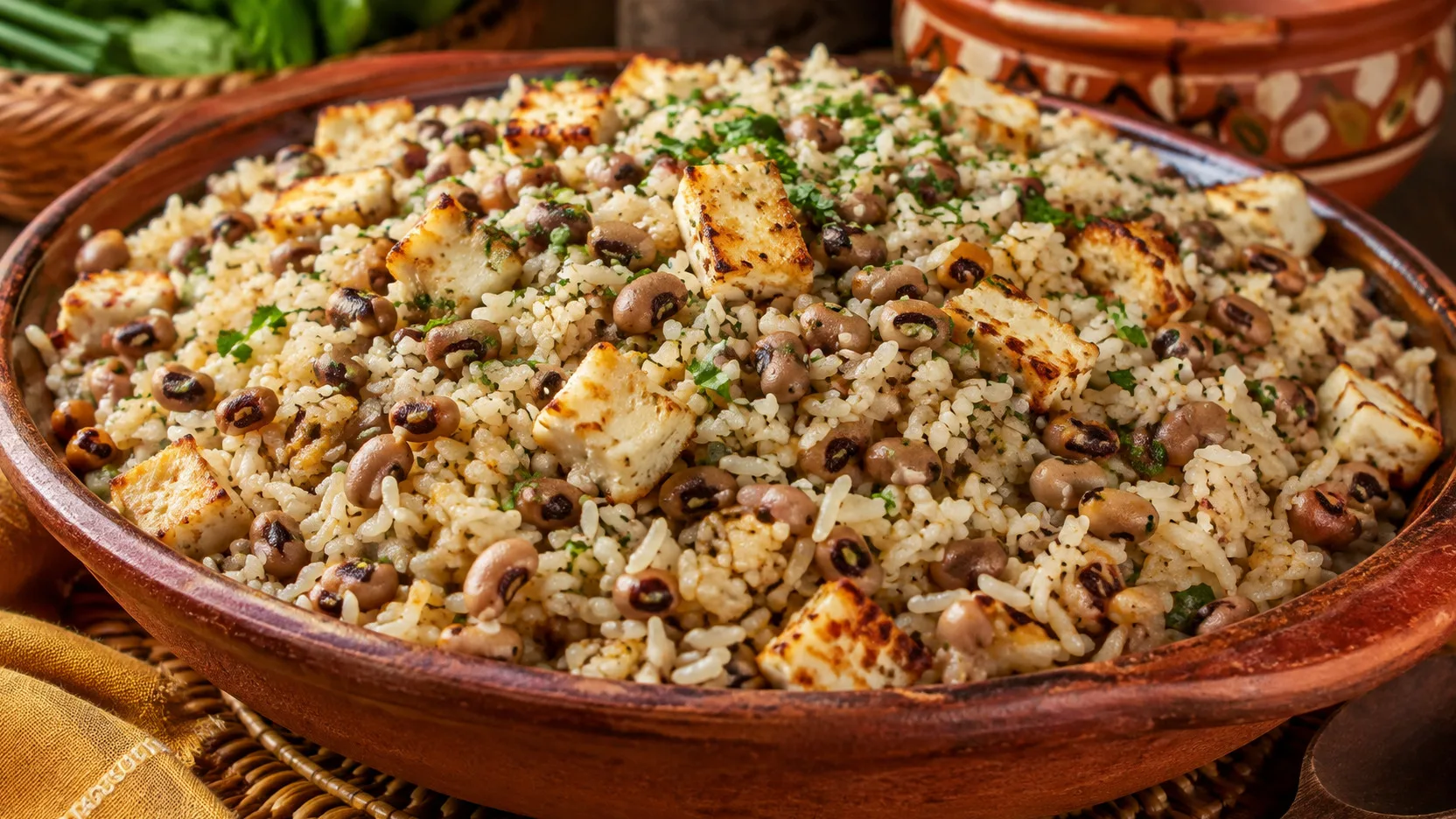
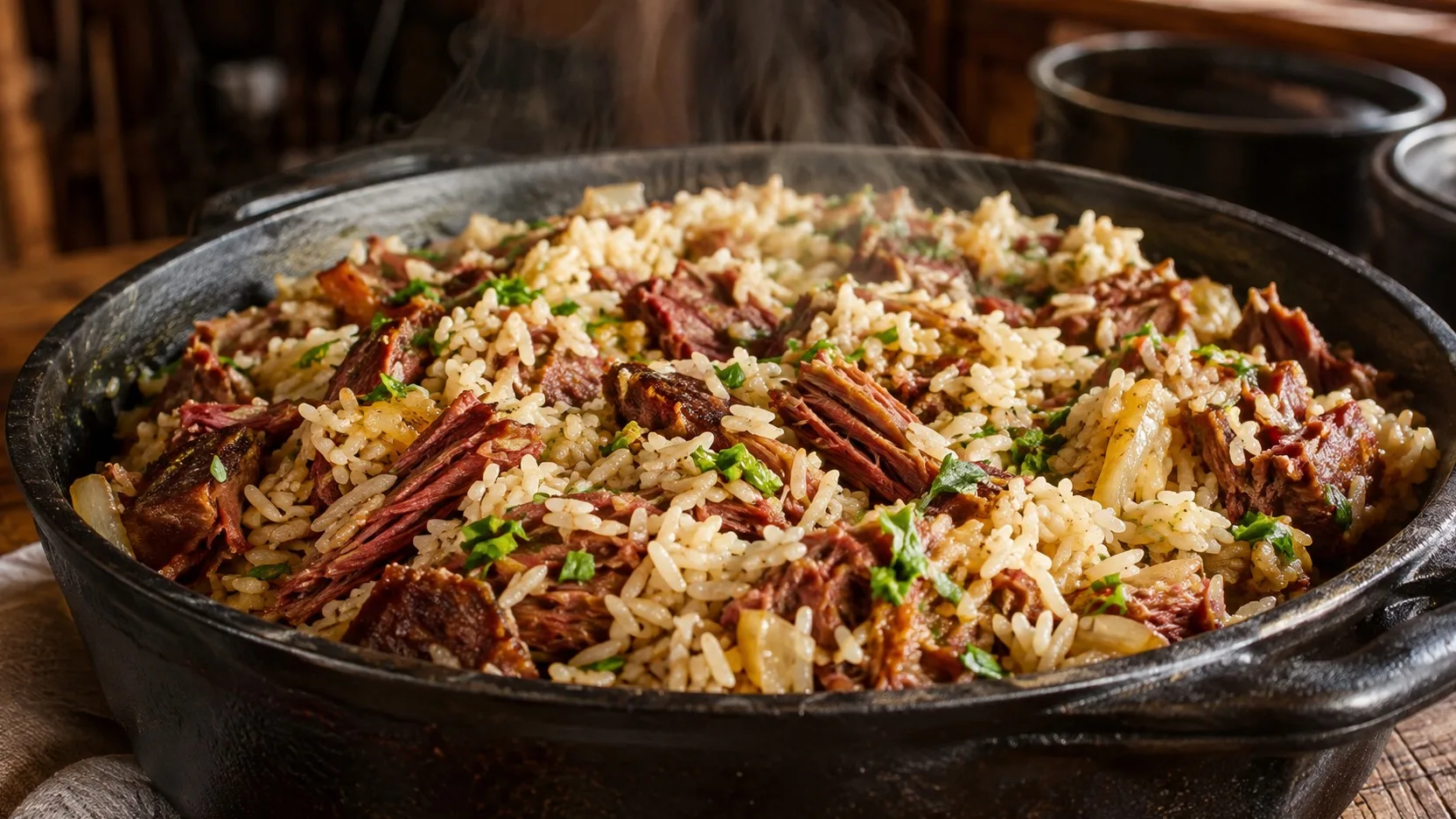
This version keeps the carreteiro centered on two elements: beef jerky and rice. The secret to making the rice fluffy is to desalt and dry the meat well, brown it beforehand, sauté the grains in fat and add hot water without stirring during cooking.
Ingredients
• 600 g of beef jerky in pieces, before desalting
• Sufficient cold water for desalting and cooking the jerky
• 2 tablespoons of lard or oil, about 30 g or 30 ml
• 1 large onion, approximately 180 g, cut into small cubes
• 4 cloves of garlic, about 20 g, chopped
• 2 cups (tea) of raw needle rice, about 360 g
• 840ml boiling water, plus up to an extra 100ml kept hot for adjustment
• 2 bay leaves
• 1/2 teaspoon ground black pepper
• 1/3 cup (tea) chopped parsley and chives, about 20 g
• Fine salt only if necessary, after tasting the cooking liquid
Preparation method
1. Cut and desalt the jerky
Remove only the very thick layers of fat and cut the jerky into pieces of around 3 cm. Rinse under running water, place in a container, cover with plenty of cold water and refrigerate for 8 to 12 hours. Change the water 3 times during this period. Desalting must take place under refrigeration.
2. Cook the jerky until tender
Drain the desalting water and place the beef jerky in the pressure cooker. Cover with clean water, close and cook for 20 minutes after the pot reaches pressure. Turn off, wait for the pressure to release safely, drain and let the meat cool. Separate into thick chips or irregular pieces of 2 to 3 cm and dry the surface with a paper towel. Taste a piece: it should be tasty and salty, not aggressively salty.
3. Brown the meat
Heat a wide, thick-bottomed pan, preferably 24 to 26 cm in diameter, over medium-high heat. Add the lard or oil and brown the jerky for 5 to 7 minutes, stirring only as necessary, until well-colored edges appear. Remove about a third of the meat and set aside to return at the end; this preserves more defined chunks.
4. Make the stew
In the same pan, turn down to medium heat, add the onion and sauté for 3 to 4 minutes, until wilted and starting to brown. Add the garlic and stir for about 30 seconds, just until fragrant, without letting it burn.
5. Saute the rice
Add the dry rice to the pan and stir for 1 to 2 minutes, covering the grains well in the braised fat. They should become shiny and start to look more translucent around the edges. Add the bay leaves and black pepper.
6. Add water as needed
Pour 840 ml of boiling water. Mix once, scraping the bottom to release the golden flavor. Taste the liquid carefully and only add salt if it is really missing. Once it boils again, lower the heat to low and leave the pan partially covered.
7. Cook without stirring
Cook for 15 minutes without stirring. Make a small opening with the tip of a spoon to see the bottom. If there is still liquid, cook 2 to 4 minutes more. If the bottom is dry but the center of the grain is still too firm, water the sides with 2 to 3 tablespoons of the reserved hot water, cover and cook for another 2 minutes. Repeat only if necessary.
8. Rest and loosen the grains
When the rice is cooked and there is no free water at the bottom, turn off the heat.. Spread the reserved beef jerky over the top, cover completely and let it rest for 10 minutes. Remove the bay leaf, loosen the rice gently with a fork and finish with the parsley and chives.
Right spot / how to know it’s ready
The rice is done when the grains are cooked to the center, but remain whole and separated. When you open a small space with the spoon, the bottom of the pan should be free of accumulated water. The set should look moist and shiny, not creamy; When passing the fork, the grains come loose without forming blocks. The jerky should be tender, with noticeable chips and some browned edges.
Tips for the recipe to work out
Use a wide pan
A layer of rice that is too high cooks less evenly. Wide, thick-bottomed pan helps distribute heat and makes it easier to evaporate excess water without drying out the top.
Dry the jerky before browning
Wet meat releases steam and takes time to create color. After pressing, drain well and dry the surface before placing it in the hot fat.
Don't compensate for salt too soon
The salt content of jerky varies even after desalting. Tasting the liquid after adding the meat is safer than salting the stew out of habit.
Don't stir after the water
Stirring repeatedly breaks down grains and releases more starch, bringing the result closer to creamy rice. After the water enters, just do the initial mixing and let the cooking continue.
Prefer to correct with little water at a time
If the rice is still firm when the bottom dries, small additions of boiling water are easier to control than pouring in a large volume and risking sogginess.
Substitutions and variations
Dried meat can replace jerky, but curing, moisture and salt vary between products. Keep the salting refrigerated, taste the meat after cooking and adjust the salt only in the rice liquid.
Neutral oil can replace lard without changing the structure of the dish; the flavor becomes less pronounced. If you use olive oil, choose one with a mild profile so as not to cover the beef jerky.
For a simpler version, use just parsley or just chives to finish. Sausage and bacon work in modern variations, but they change the focus of this formula, which was scaled for beef jerky and rice.
How to store
If there is leftovers, do not leave the cart at room temperature for more than 2 hours. Divide into shallow containers, cover and refrigerate at 5°C or below. For a conservative household margin, consume within 3 days. To freeze, refrigerate the shallow portions quickly and, once they are cold, transfer them to the freezer; keep for up to 3 months and thaw in the refrigerator. When reheating, heat the entire contents until hot and releasing steam; If you use a culinary thermometer, the center should reach 74 °C.
How to serve / side dishes
Serve immediately after resting, while still hot. Green salad, tomato and onion vinaigrette or roasted vegetables balance the intensity of the jerky without competing with the rice. Pepper sauce can be served separately.
Common mistakes
Why did my carrier get soaked?
The most common causes are too much water, a narrow pan, or stirring the rice repeatedly after the water has entered. Next time, use the indicated initial measurement, wider pan and only make adjustments with small amounts of boiling water.
Why did the rice become hard even after drying?
The fire may have evaporated the water too quickly or the pan may have lost too much steam. Water the sides with 2 to 3 tablespoons of boiling water, cover and cook over low heat for another 2 minutes before checking again.
Why was it salty?
The jerky was not desalted enough or received salt before the broth was tasted. If the dish is already ready, the most effective fix is to mix in a portion of unsalted cooked white rice; Adding just water dilutes it momentarily, but can compromise the texture.
Why was the beef jerky hard?
Some parts require more pressure. Before adding to the rice, the meat must yield to the fork and allow it to form thick flakes. If it is still resistant after 20 minutes, return to pressure with clean water for another 5 to 10 minutes.