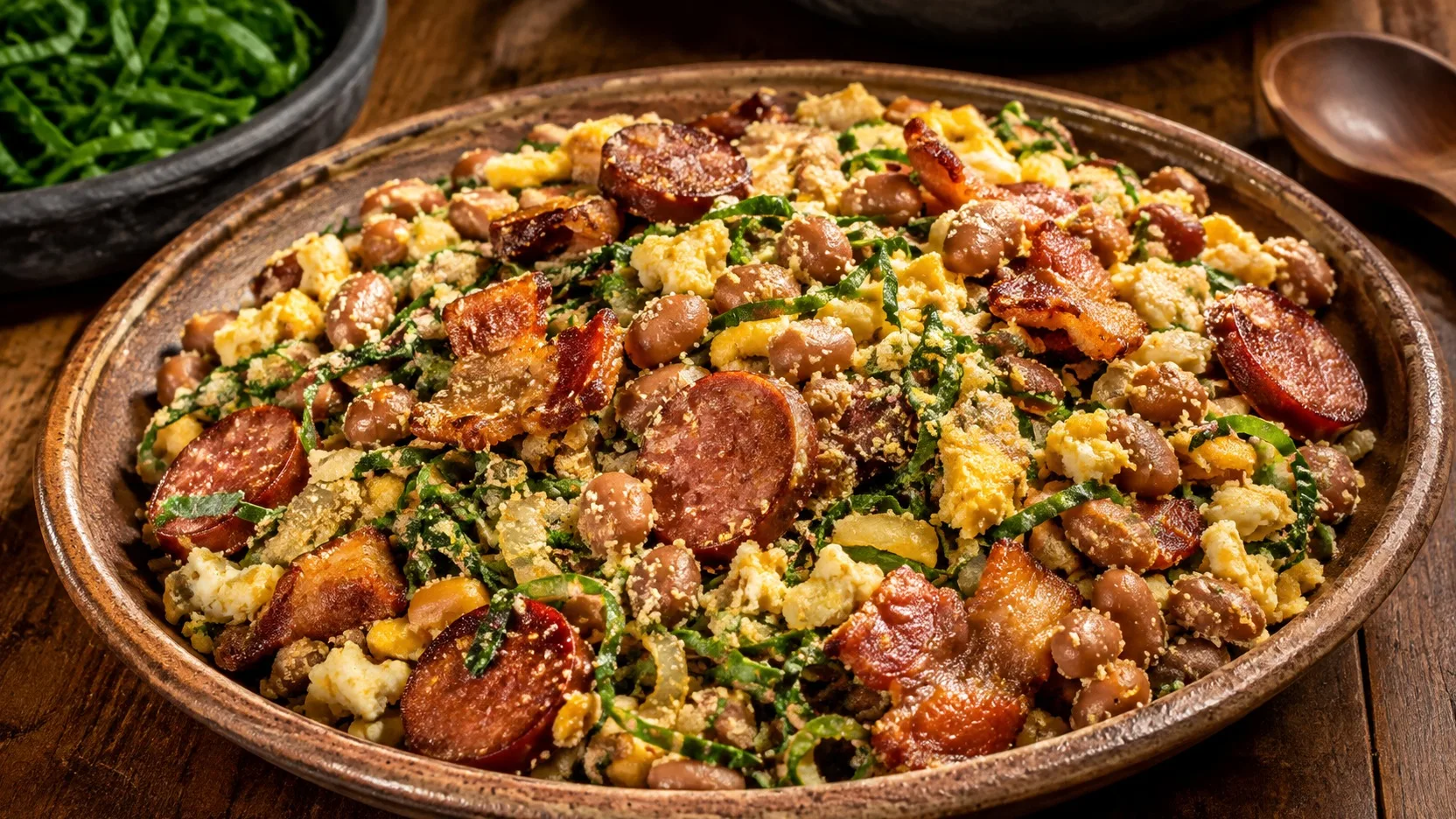
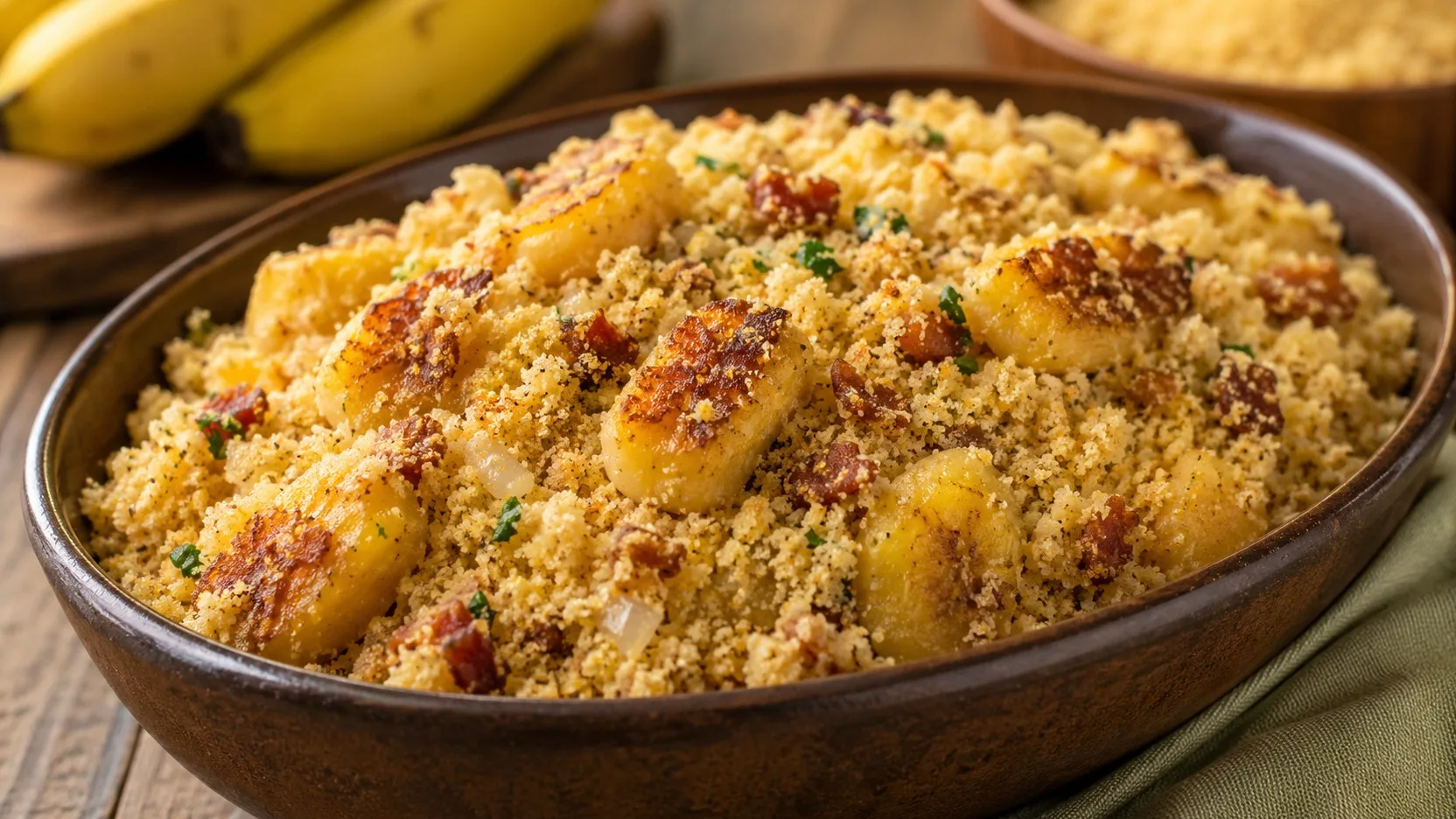
Banana crumble made to be perfectly dry, crunchy and with the fruit still visible. The point mainly depends on using a firm banana, browning it without excessive movement and only returning it to the pan after the flour has already toasted.
Ingredients
• 3 ripe but firm silver bananas
• 2 cups (tea) of roasted cassava flour, about 250 g
• 60 g butter
• 1 tablespoon of oil, 15 ml
• 1 small onion, about 100 g, cut into small cubes
• 1/2 teaspoon salt, more to taste
• Freshly ground black pepper to taste
• 3 tablespoons of chopped parsley or green chilli
• 80 g of bacon in small cubes, optional; if using, reduce the butter to 30 g
Preparation method
1. Cut and dry the banana
Peel the bananas and cut each one into thick slices or 1.5 to 2 cm pieces. If the surface is very damp, lightly touch it with a paper towel. This helps it brown instead of cooking in the steam itself.
2. Brown the banana without breaking it up
Heat a large frying pan over medium-high heat. Add the oil and 15 g of butter. Spread the banana in a single layer and let it brown for about 1 minute and 30 seconds without stirring. Turn the pieces over with tongs or a spatula and brown the other side for another 1 minute. Remove to a plate and set aside. If you use bacon, fry it before this step, reserve the cubes and use about 1 tablespoon of the fat in the pan; in this case, only use the reduced butter indicated in the list.
3. Saute the onion
Reduce heat to medium. Add the remaining butter and onion. Saute for 4 to 5 minutes, stirring occasionally, until soft and starting to brown around the edges.
4. Toast the flour
Add the toasted cassava flour, salt and pepper. Mix to coat the grains in the fat and cook over medium-low heat for 4 to 6 minutes, stirring frequently, until the farofa becomes golden, loose and has a toasted aroma.
5. Finish without crushing the fruit
Turn off the heat. Return the browned banana to the frying pan and, if using, add the reserved bacon. Add the parsley and mix with broad, delicate movements, just until the pieces are evenly distributed. Taste and adjust the salt.
Right spot / how to know it’s ready
The flour should be loose, without appearing wet or cakey, and the grains should form a light, crunchy layer around the ingredients. The banana needs to be golden on the outside, soft on the inside and still maintain its shape when the farofa is mixed. If the pieces start to fall apart, stop stirring and serve.
Tips for the recipe to work out
Use ripe but firm banana
The skin may be yellow, but the pulp must offer resistance to cutting. Very ripe bananas release more moisture and fall apart easily.
Prefer a wide frying pan
The more space the banana has to touch the hot bottom, the better it browns. In a small pan, the pieces accumulate steam and become more fragile.
Do not add the banana before toasting the flour
Toasting the flour without the fruit allows you to stir as much as necessary to gain crunch. The banana only comes back at the end, when it hardly needs to be handled anymore.
Do not cover the hot farofa
The steam trapped in the pan moistens the flour and reduces the crispiness. If you are not serving it immediately, spread the farofa on a plate and let the excess heat escape before storing.
Substitutions and variations
Can I use plantain?
Yes. It is firmer and less sweet than the silver banana. Cut into cubes of about 2 cm and give a little more time to brown, observing the softness in the center.
Can I make it with bacon?
Yes. Use the 80 g indicated as optional. Brown the bacon first, reserve the cubes and use part of the fat for the banana. Reduce the butter to avoid heavy or oily crumbs.
Can I swap the roasted cassava flour?
Biju cassava flour leaves the texture thicker and crunchier. Use the same measurement in cups and adjust the fat little by little, as larger flakes may require a different distribution of butter.
How to store
For better texture, serve the same day. If there is any leftovers, let it lose steam, place in a shallow, closed container and refrigerate for up to 2 hours. Consume preferably within 3 days. To regain some of the crunchiness, heat in a dry frying pan over low heat, stirring gently. Freezing is not the best option for this version, as the banana tends to become softer after thawing.
How to serve / side dishes
Serve as an accompaniment to beans, grilled or roasted meats, chicken, fish or meals with rice. The sweetness of bananas works especially well alongside savory and well-seasoned preparations.
Common mistakes
Why did the banana turn into puree?
The most common cause is using overripe fruit or stirring before a golden crust forms. Use a firm banana, let the first side brown without moving it and make the final mixture with just a few movements.
Why was the farofa wet?
The banana may have released water due to lack of heat or excessive handling, or the flour may have been incorporated without enough time to toast. Brown the fruit in a single layer, remove it and dry the farofa over the heat before adding everything.
Why was the farofa greasy?
Too much butter or the addition of butter and all the bacon fat can weigh it down. If using bacon, discard excess fat and keep only a small amount in the pan before cooking.