The secret to this tutu is to treat beans, broth and flour as separate measures. The flour comes in little by little and the heat finishes the job: the tutu should come out of the pan a little looser than seems necessary, because it continues to thicken as it rests.
Ingredients
• 500 g of cooked and drained carioca beans, reserving the broth separately
• 300 ml of bean cooking broth, divided into 250 ml for blending and up to 50 ml to adjust the doneness
• 100 g bacon in small cubes
• 1 medium onion (about 120 g), finely chopped
• 3 cloves of garlic, chopped or crushed
• 45 to 70 g of fine cassava flour, preferably unseasoned
• 1/2 teaspoon freshly ground black pepper, or to taste
• salt to taste, only after tasting the beans and bacon
• 2 tablespoons of sliced chives to finish
Preparation method
1. Brown the bacon
Place the bacon in a wide, still cold pan and place over medium-low heat. Cook for 6 to 8 minutes, stirring occasionally, until the fat has melted and the cubes are golden. Remove the bacon with a slotted spoon and reserve for finishing, keeping about 2 tablespoons of the fat in the pan.
2. Sauté the seasonings
Add the onion to the bacon fat and sauté for 4 to 5 minutes, until soft and starting to brown around the edges. Add the garlic and stir for about 30 seconds, just until fragrant, without letting it get too dark.
3. Blend the beans with the measured broth
In a blender, blend the 500 g of cooked beans with 250 ml of the broth until obtaining a smooth and uniform cream. Reserve the remaining 50 ml of broth to correct the texture at the end. If your blender is small, blend in two steps.
4. Boil the bean cream
Pour the blended beans over the stew. Mix well and cook over medium heat until it starts to bubble. Lower the heat and maintain a gentle boil for 4 to 5 minutes, stirring the bottom of the pan to prevent sticking.
5. Thicken without clumping
Start with 45 g of cassava flour. Sprinkle in fine rain over the beans, stirring constantly with a wire whisk or firm spoon. Cook for 3 minutes over low heat. If the tutu is still too runny, add the rest of the flour in batches of about 5 g, cooking for approximately 1 minute after each addition before deciding if it needs more.
6. Hit the spot and season
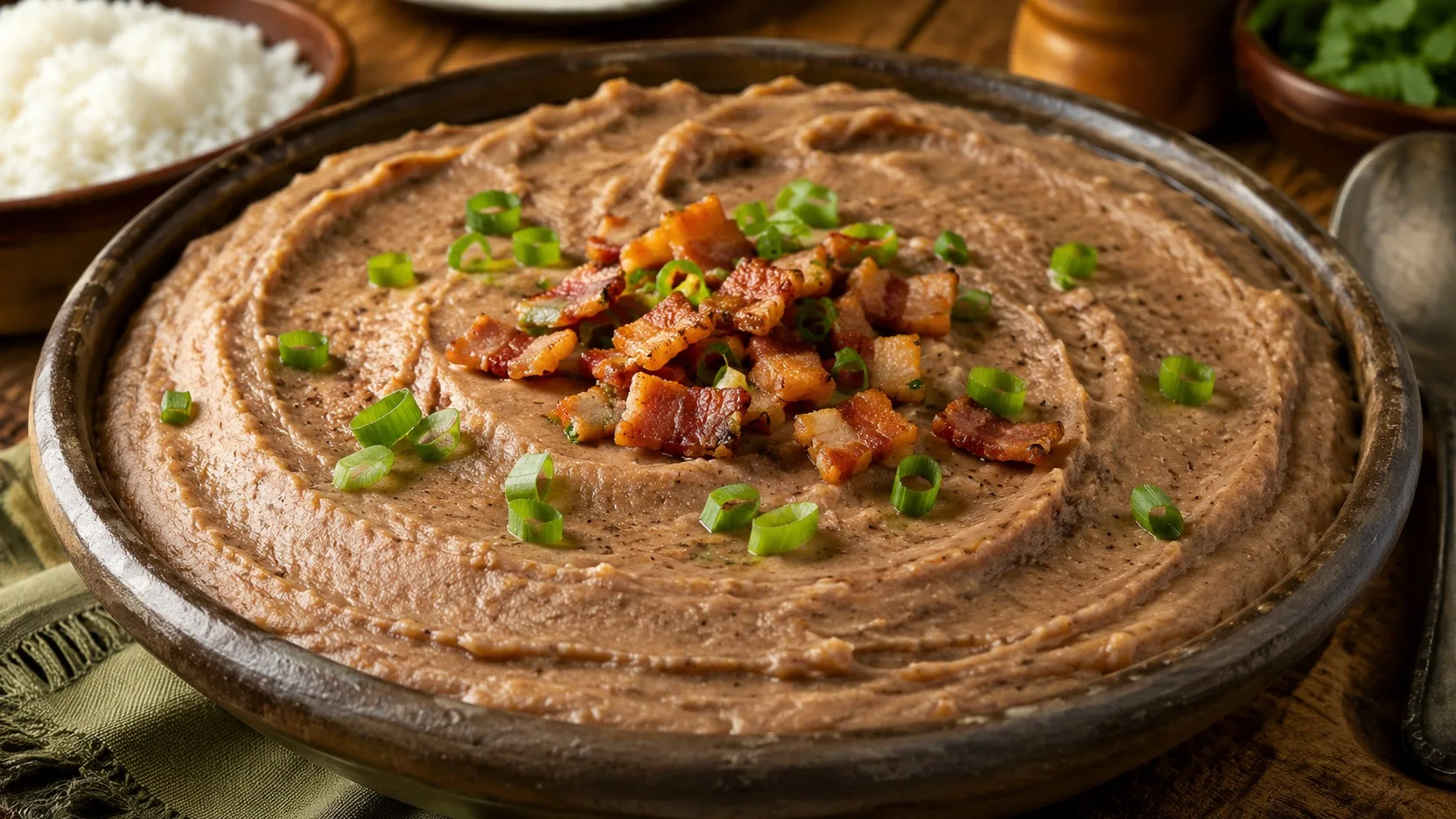
When the tutu is creamy, taste and adjust pepper and salt. It should fall off the spoon in a wide band and leave a groove that slowly closes when you pass the spoon along the bottom. If it is firmer than that, mix the reserved broth little by little, still hot, until it regains its creaminess. Turn off the heat and let rest for 3 to 5 minutes.
7. Finish and serve
Transfer to a platter and scatter the browned bacon and chives over the top. Serve hot, right after the brief rest.
Right spot / how to know it’s ready
The finished tutu should not look like soup or compact puree. While it is hot, the spoon opens a path at the bottom of the pan and this path begins to slowly close; when you lift the spoon, the cream falls in a thick band, without flowing like broth. After 3 to 5 minutes off the heat, it will firm up a little, but should still yield easily to the spoon. If it already forms a hard block in the pan, it is past the flour or reduction stage.
Tips for the recipe to work out
Measure the broth separated from the beans
The moisture content of cooked beans changes a lot from one pan to another. Measuring 500 g of cooked grains and 300 ml of broth separately makes the doneness more predictable and still leaves a small reserve to correct the texture.
Add the flour in stages
Starting with 45 g prevents the tutu from hardening all at once. Different flours absorb different amounts of liquid, so the remaining 25 g serves as an adjustment range, not a mandatory amount.
Give the flour time to hydrate
After each small addition, cook before evaluating. If you add flour repeatedly without waiting, the tutu may appear thin in the pan and become too hard a few minutes later.
Stop just before the final serving point
The flour continues to absorb liquid during rest. Turn off when the mixture is still slightly creamier than you want on the plate.
Adjust salt only at the end
Bacon and already seasoned beans can contain a lot of salt. Tasting after the tutu thickens reduces the risk of oversalting.
Substitutions and variations
Can I use black beans?
Yes. Use the same weight of cooked beans and start with the same amount of broth and flour. The result is darker and with a more pronounced bean flavor; Absorption may vary, so keep the flour as your adjustment range.
Can I use roasted cassava flour?
You can. It adds a more toasty flavor and may thicken a little differently. Start with the same 45 g and only increase it after cooking and observing the consistency.
Can I change the bacon?
For a version without bacon, sauté onion and garlic in 2 tablespoons of oil or lard. The tutu loses the smoked flavor and crunchy coating shown in the photo, but the thickening technique remains the same.
How to store
Do not leave the finished tutu at room temperature for more than 2 hours. Transfer leftovers to a shallow container, cover and refrigerate. For home use, consume within 3 days. To freeze, divide into portions and store for up to 2 months for best quality. Thaw in the refrigerator and reheat in a pan, adding small amounts of water or broth, as the flour makes the tutu firmer after refrigerating or freezing.
How to serve / side dishes
The tutu works as an accompaniment to white rice, braised cabbage, fried eggs, sausage or roasted meats. If the rest of the dish already contains fatty meats, use the finishing bacon sparingly so as not to make the whole dish heavy.
Common mistakes
Why did my tutu bunch up?
The most common cause is adding too much flour at once or stopping stirring while it hydrates. Remove the pan from the heat, add a little hot broth and beat vigorously with a wire whisk. If lumps persist, use a mixer for a few seconds before returning to low heat.
Why did the tutu become hard after it cooled?
You probably got too much flour or the cream reduced for too long. Reheat over low heat and add broth or hot water, 1 to 2 tablespoons at a time, until it regains its creamy texture.
Why did the tutu get thin?
First let it boil gently for another 1 to 2 minutes, as some of the excess water may evaporate. If it remains thin, add flour in small portions of about 5 g, stirring constantly, and cook before evaluating again.