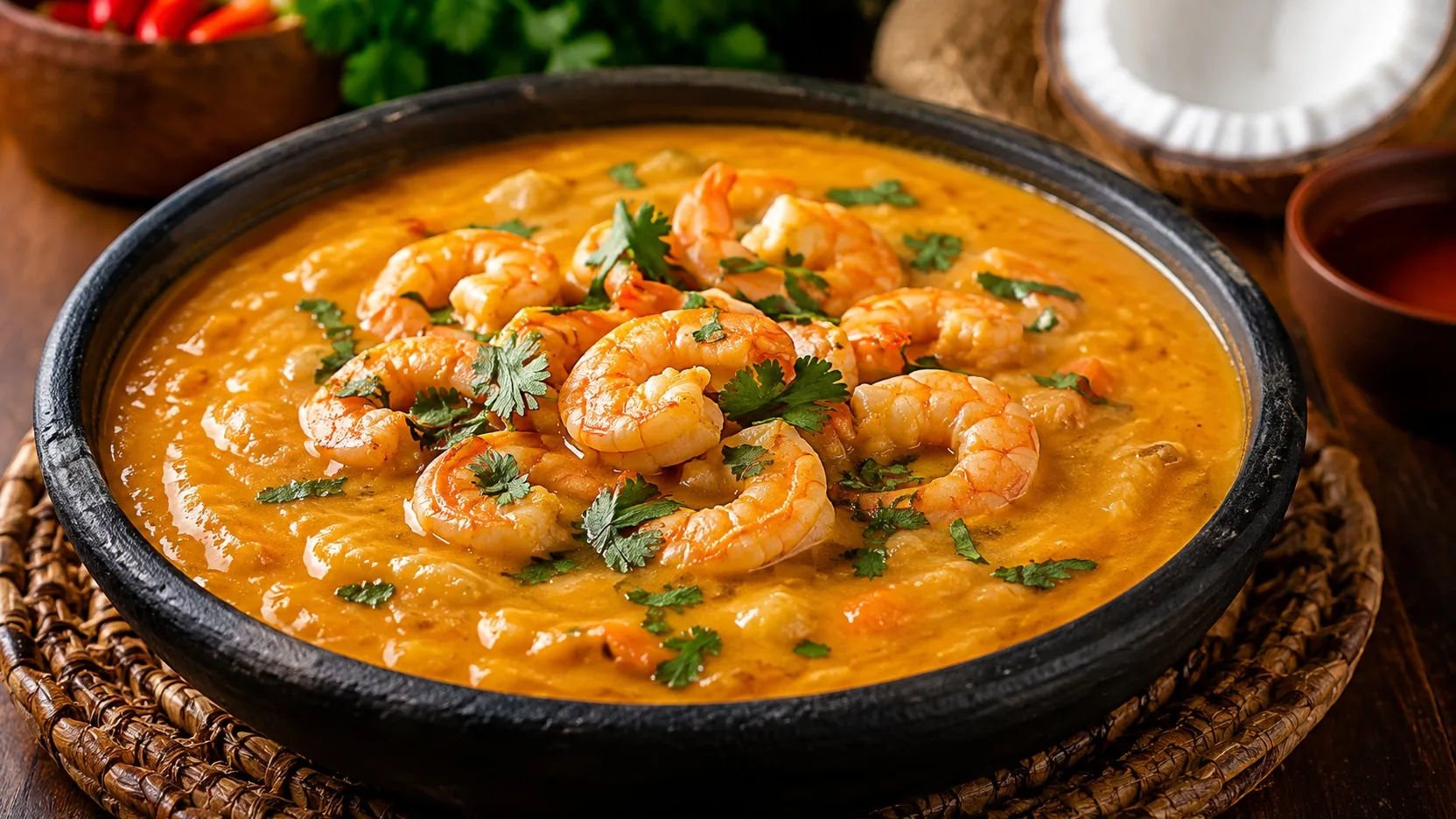
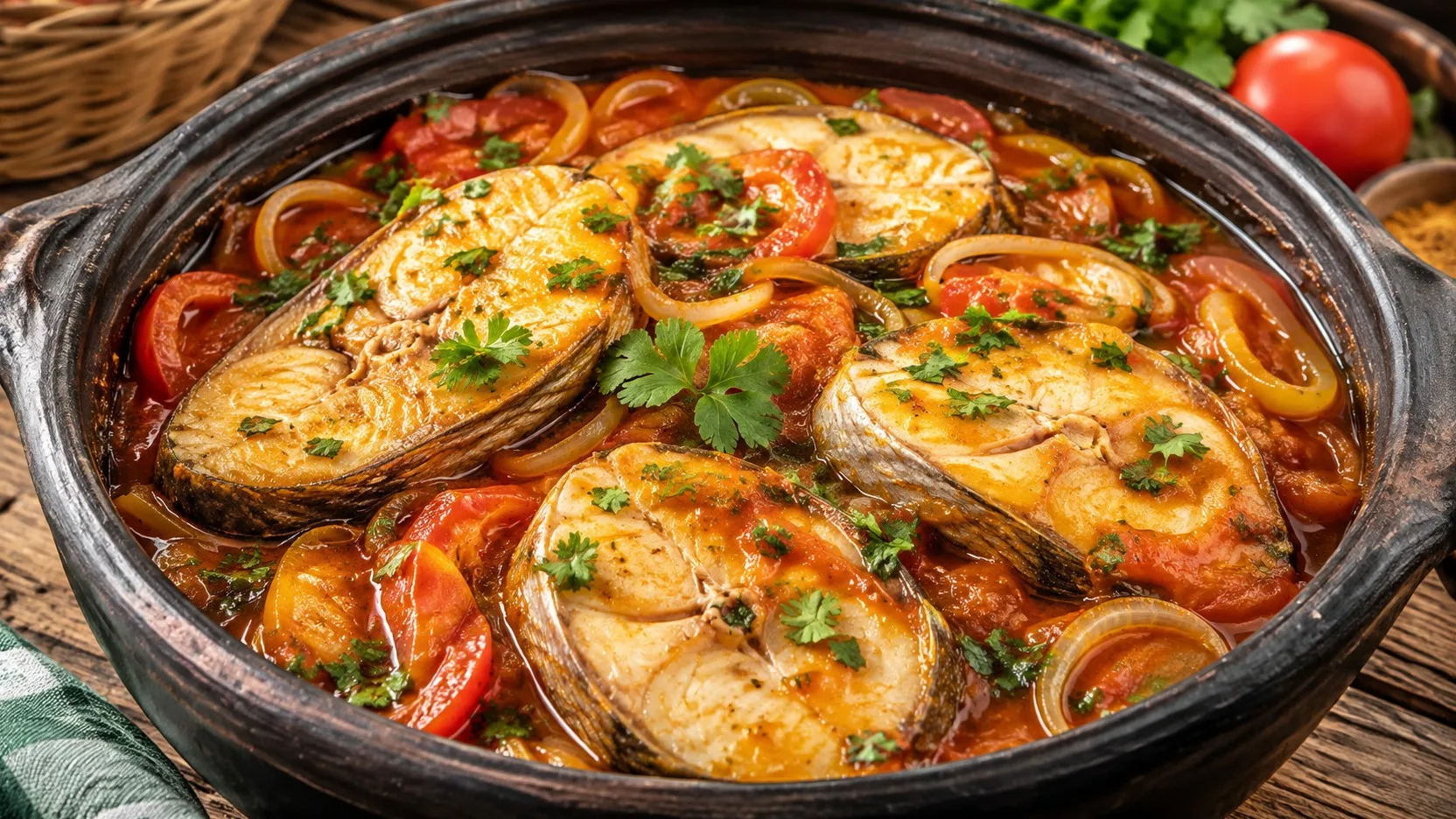
In this version of the Espírito Santo profile, the fish cooks in a single layer over tomato, onion, coriander and annatto. No water enters the preparation: the broth is formed with the moisture from the vegetables and the fish itself, which helps to keep the flavor concentrated and the steaks intact.
Ingredients
• 1.2 kg of firm fish in 3 to 4 cm slices, in sufficient quantity to form a single layer (whiting, sea bass, boyfriend, dorado or grouper)
• 12 g fine salt (about 2 teaspoons), divided, plus more for final adjustment if necessary
• 60 ml lemon juice (4 tablespoons), divided
• 45 ml olive oil (3 tablespoons), divided
• 30 ml of annatto oil or culinary tincture (2 tablespoons)
• 3 cloves of garlic (about 15 g), chopped
• 3 medium onions (about 400 g), cut into slices of approximately 5 mm
• 5 medium ripe tomatoes (about 650 g), cut into 7 to 10 mm slices
• 1 small bunch of coriander (about 40 g), with chopped soft leaves and stems, divided
• 4 stalks of chives (about 20 g), sliced
• ¼ teaspoon ground black pepper, optional
Preparation method
1. Season the steaks
Dry the fish with paper towel and check that there are no loose bones. Season with 8 g of salt, 45 ml of lemon juice and black pepper, if using. Keep in the fridge for 15 to 20 minutes while you prepare the vegetables. Avoid leaving the lemon for too long, as the surface may soften and become more fragile during cooking.
2. Make the tomato and onion base
Use a wide clay pot, about 28 to 30 cm, or another wide, heavy pot. If it is made of clay, heat it gradually according to the manufacturer's instructions. Add 30 ml of the olive oil and the garlic and heat over medium-low heat until fragrant, without browning. Add half the onion, half the tomato and half the cilantro and cook for about 3 minutes, just until they start to wilt.
3. Assemble the moqueca in one layer
Arrange the pieces side by side, without overlapping. Top with remaining onion, tomato and cilantro. Drizzle with annatto oil and the remaining 15 ml of olive oil. Distribute the remaining 4 g of salt over the top. Do not add water or broth; Ripe tomatoes must provide the necessary moisture during cooking.
4. Cook without touching the steaks
Cover and increase heat to medium until the broth starts to bubble steadily, which usually takes 5 to 7 minutes. Lower to medium-low and cook for another 10 to 13 minutes. Do not stir with a spoon and do not turn the fish. If the flame heats one side more strongly, just turn the pan over the heat-protected burner, without shaking the slices.
5. Check the point and finish
Start checking the thickest steak after about 15 minutes of total cooking. The center should be opaque and moist, separating into large flakes when gently pressed with a fork. For an objective safety check, the center of the thickest part must reach 63 °C. Drizzle with the remaining 15 ml of lemon juice, scatter the chives, turn off the heat and leave the pan covered for 3 minutes before serving.
Right spot / how to know it’s ready
The correct steak remains whole when lifted with a wide spatula, but the meat already separates into large slivers under light pressure. The center should not be translucent. The broth is reddish from the annatto, light and fluid, with soft tomato and onion; it should not have a creamy appearance. If using a culinary thermometer, measure in the thickest part without touching a bone or bone and confirm 63 °C.
Tips for the recipe to work out
Use really thick slices
Slices of 3 to 4 cm support cooking better without falling apart. Thin fillets cook too quickly and break more easily with this setup.
Choose a wide pan
The pan needs to hold the fish in a single layer. Overlapping the steaks creates uneven cooking and requires you to change the preparation, increasing the chance of breaking the fish.
Choose ripe, firm tomatoes
They provide the cooking liquid without turning the sauce into puree. Very green tomatoes release less juice; Overcooked tomatoes fall apart and make the base more watery.
Do not use a spoon after assembling
After the fish enters the pan, the best control is by fire. Stirring or turning the steaks during cooking breaks the meat that has already been softened by the heat and lemon.
Control the heat after it boils
Boiling too hard hits the steaks, reduces the broth quickly and can burn the bottom. As soon as the liquid bubbles, reduce the heat and maintain just a moderate boil.
Substitutions and variations
Winging, sea bass, boyfriend, dorado and grouper work well because they have firm meat. If using another fish, keep pieces of similar thickness and start checking for doneness earlier if the meat is delicate.
The clay pot is the reference for preparing Espírito Santo and retains a lot of heat. If there isn't one, use a wide, heavy-bottomed pan; It can heat up and cool down faster, so monitor the boiling and doneness of the fish more closely.
If you can't find annatto oil, mix 1 teaspoon of paprika with 2 tablespoons of neutral oil and use at the same time as in the recipe. The color remains similar, but the aromatic profile may change. Do not use palm oil or coconut milk if the intention is to maintain the Espírito Santo profile of this version.
Substituting coriander for parsley is possible due to personal preference, but it noticeably changes the characteristic flavor of the dish.
How to store
If there are leftovers, transfer the moqueca to shallow containers and refrigerate for up to 2 hours. Keep at 4°C or below and consume within 4 days. To reheat, heat only the portion that will be served until the center reaches 74 °C, preferably over low heat and without moving the pieces.
To freeze, place the steaks with a little of the broth in a tightly sealed container and use within 2 months for best quality. Defrost in the refrigerator; The texture of the fish may become a little drier and more fragile after freezing.
How to serve / side dishes
Serve the moqueca very hot with white rice. The broth itself can be served with a cassava flour mush prepared separately. To keep the steaks whole, remove each one with a wide spatula and distribute the broth and vegetables around.
Common mistakes
Why did the fish break?
The most likely causes are thin filling, overlapping, too much time in the lemon, boiling too hard or movement during cooking. Use thicker pieces, keep a single layer and do not move after assembly.
Why was the moqueca watery?
Overcooked or overcooked tomatoes can release too much water. Carefully remove the finished steaks and keep the broth on the heat, uncovered, for 3 to 5 minutes to reduce; then return the fish for serving only.
Why did the bottom start to seize before the fish cooked?
The flame was probably too high or the tomatoes released too little moisture. Reduce heat immediately. As an emergency correction, add 30 ml of hot water to the side of the pan, without pouring directly onto the steaks; This correction prevents burning, although it deviates from the planned waterless preparation.