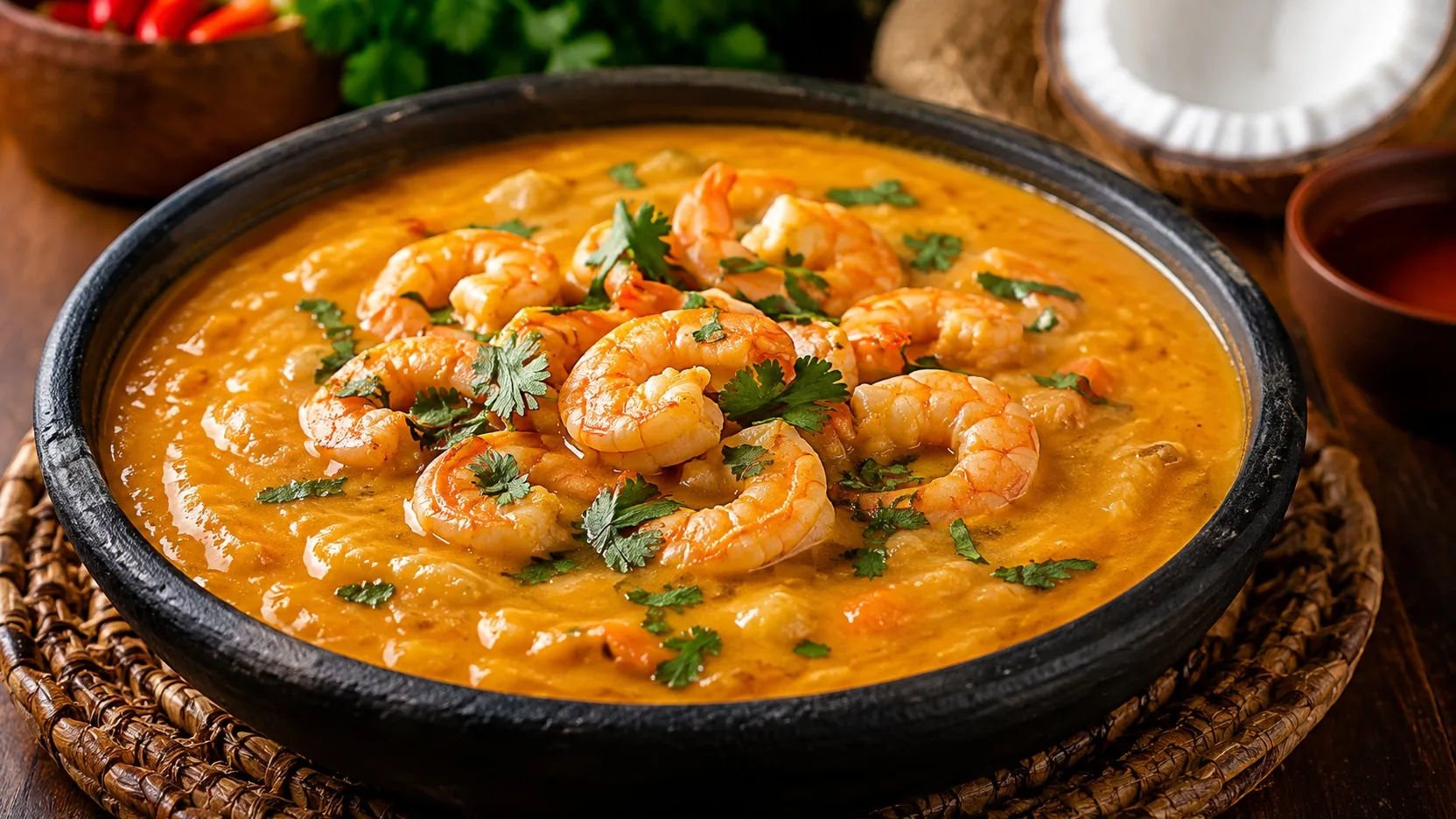
This shrimp bobó combines a smooth cassava cream with concentrated broth from the shells, coconut milk and palm oil. The shrimp only enters at the end, to finish cooking without losing tenderness, and the consistency is adjusted with the reserved broth instead of excessively thickening the dish.
Ingredients
For the shrimp broth
• Shells and heads of 1 kg of medium shrimp, approximately 300 g
• 1 tablespoon of olive oil, 15 ml
• 1/2 medium onion, about 80 g, sliced
• 1 clove of garlic, lightly crushed
• Stems of 6 coriander sprigs
• 1 bay leaf
• 1 liter of water
For the fool
• 700 g of peeled and gutted medium shrimp, obtained from the 1 kg used in the broth
• 650 g of peeled cassava, cut into 5 to 7 cm pieces
• 600 ml of prepared shrimp broth
• 200 ml coconut milk
• 1 medium onion, about 150 g, chopped
• 1 small red pepper, about 120 g, seeded and chopped
• 2 ripe tomatoes, approximately 250 g, seeded and chopped
• 3 cloves of garlic, chopped
• 1 small finger pepper, seeded and chopped
• 2 tablespoons olive oil, 30 ml
• 2 tablespoons of palm oil, 30 ml
• Juice of 1/2 Tahiti lemon, about 15 ml
• Leaves from 6 coriander sprigs, chopped
• 2 level teaspoons of fine salt, about 10 g, divided, more to adjust
• 1/2 teaspoon ground black pepper
Preparation method
1. Clean the shrimp and separate the shells
Peel and gut the prawns, reserving shells and heads for the broth. Keep the shrimp meat refrigerated while you prepare the other steps. Quickly rinse the shells and drain well.
2. Make a concentrated broth with the peels.
Heat 1 tablespoon of olive oil in a medium pan over medium heat. Add peels and heads and sauté for 6 to 8 minutes, stirring and pressing some heads, until they turn orange and appear golden on the bottom. Add half an onion, garlic, coriander stalks and bay leaves; stir for 2 minutes. Add 1 liter of water, scrape the bottom and, when it boils, reduce the heat. Cook uncovered, at a gentle boil, for 25 to 30 minutes. Strain by pressing out the solids. Measure 600 ml; if there is less, top up with hot water. Book.
3. Cook the cassava until it almost falls apart
While the broth is cooking, place the cassava in the pressure cooker and cover with water about 2 cm above the pieces, without exceeding the safe limit of the pan. After coming to pressure, cook for 20 minutes over low heat. Turn off and wait for the pressure to release completely. The cassava should be opening at the edges and a fork should pass through the center without resistance. If it is still firm, pressure cook for another 5 minutes. Drain and remove the toughest central threads.
4. Sear the shrimp quickly
Dry the shrimp with paper towel. Season only at this point with the lemon juice, 1/2 teaspoon of salt and black pepper. Heat 1 tablespoon of olive oil in a wide pan over medium-high heat. Seal the shrimp in 2 or 3 batches, without crowding, for about 45 to 60 seconds on each side. Remove as soon as the edges are pink and the surface begins to become opaque; the center will finish cooking in the bobó. Reserve with the liquid that forms.
5. Build the vegetable base
Reduce heat to medium and add another tablespoon of olive oil to the same pan.. Sauté the onion and pepper with 1/2 teaspoon of salt for 5 to 6 minutes, until softened. Add the tomato and cook for 4 to 5 minutes, pressing with a spoon, until it loses part of the water. Add the garlic, finger pepper and 1 tablespoon of palm oil; stir for 1 minute, without letting the garlic darken.
6. Beat the cassava cream
Transfer the cassava and the stew to the blender. Add 350 ml of the broth and beat, in stages if necessary, until you obtain a smooth cream. If your blender is not suitable for hot preparations, wait for the cream to cool or use a mixer directly in a deep pan, following the manufacturer's instructions.
7. Adjust creaminess
Return the cream to the pan over low heat. Mix the coconut milk and another 150 ml of broth. Cook for 5 minutes, stirring frequently to avoid sticking. Add the remaining spoon of palm oil. The bobó should fall off the spoon in a thick band and settle slowly in the pan, without remaining firm like puree. If it is too thick, add the reserved broth little by little, 1 to 2 tablespoons at a time. If it is too runny, cook for an additional 2 to 5 minutes before returning the shrimp.
8. Finish the shrimp in the bobó
Add the shrimp and reserved liquid. Cook over low heat for about 2 minutes, stirring gently, just until the meat is firm, pearly and opaque throughout. Turn off the heat, stir in the coriander and taste. Adjust the salt and, if you want more acidity, add a few extra drops of lemon to the dish served.
Right spot / how to know it’s ready
The cream should be thick, glossy and fluid enough to level out slowly after stirring. When you pass the spoon along the bottom, a path opens that begins to close within a few seconds. The cassava should not leave hard lumps or thick threads. The shrimp is ready when it is curved, firm and with pearly, opaque flesh; Prolonging the cooking after this point tends to make it rubbery.
Tips for the recipe to work out
Dry the shrimp before sealing
Water on the surface makes the shrimp cook in their own steam. Drying well and working in batches allows for quick browning without prolonging the cooking time.
Use the cassava point, not just the clock
Cassava varies a lot. Beat only when the pieces are very soft; Still firm cassava produces a grainy cream and requires more liquid to become homogeneous.
Reserve part of the broth for final adjustment
It is easier to thin a thick cream than to correct a watery bobo. The last 100 ml of broth works as an adjustment margin for different cassava varieties.
Add the shrimp at the end
The cream can boil and reduce before adding the shrimp. After it returns to the pan, the objective is just to complete the cooking and heat evenly.
Substitutions and variations
Frozen, peeled shrimp can be used, but you lose the shells that add depth to the broth. Defrost in the refrigerator, dry very well and replace the shell broth with a mild fish or vegetable broth; the result will be less intense in shrimp flavor.
Lighter coconut milk makes the bobó less unctuous and may require a few extra minutes of reduction. Do not increase the cassava automatically, as this can make the texture heavy.
Dendê is responsible for an important part of the aroma, flavor and color of this Bahian version. If you need to omit it, use olive oil to maintain the fat in the recipe, knowing that the result will have a different profile and will not be an equivalent exchange in flavor.
Parsley and chives can replace coriander for those who don't like the herb, but they noticeably change the aromatic profile of the dish.
How to store
Place leftovers in shallow containers and refrigerate promptly, preferably within 2 hours of preparation. Keep refrigerated below 5°C and consume within 3 days. To freeze, portion cold and use within 2 months to preserve better texture and flavor. Defrost in the refrigerator or heat directly in a pan over low heat, adding a little water if the cream thickens. When reheating, leave the bobó very hot all over; With a culinary thermometer, the reference for reheated leftovers is 74 °C.
How to serve / side dishes
Serve the bobó hot with white rice, which balances the creaminess and absorbs the sauce. Cassava or coconut flour adds crunchy contrast. Finish with fresh coriander and leave lemon at the table for those who want to adjust the acidity.
Common mistakes
Why did the shrimp turn rubbery?
The most common reason is excessive time on the fire. Sear for less than 1 minute on each side and finish cooking for about 2 minutes in the cream, removing from the heat as soon as the meat is pearly and opaque.
Why was the bobó as heavy as puree?
There was too little liquid for the amount or variety of cassava, or the cream reduced too much. Add the reserved broth little by little, over low heat, until it falls off the spoon and settles slowly.
Why did the bobó become thin?
The braising may have released too much water or the cream received too much broth at once. Before adding the shrimp, cook without the lid for a few minutes, stirring to avoid sticking, until the spoon leaves a path that slowly closes.
Why was the bark broth strong or bitter?
Aggressive boiling or reduction for too long concentrates harsh flavors. After browning the shells, keep it at a gentle boil for 25 to 30 minutes and strain without crushing the solids in a blender.