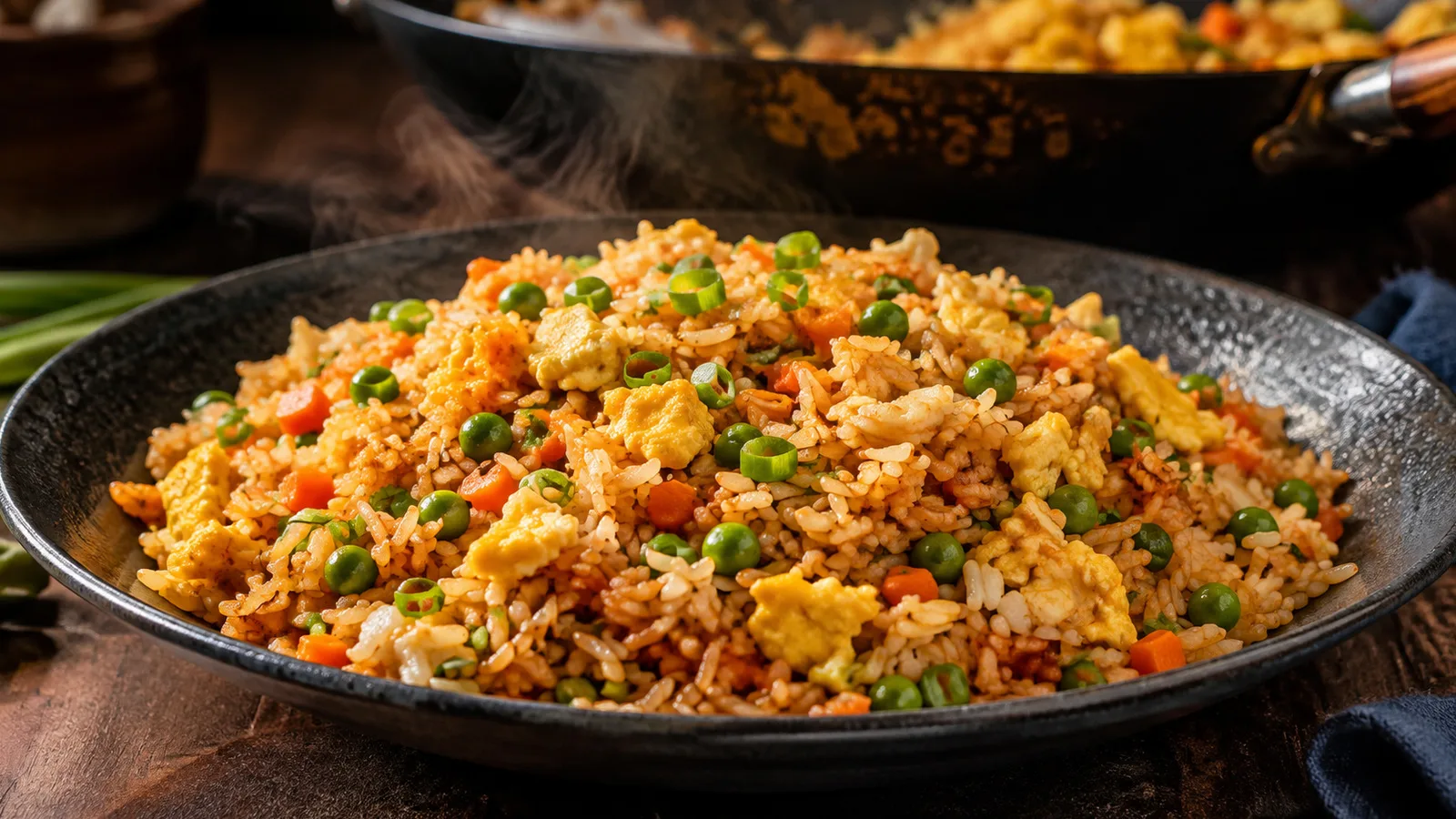
This domestic version of Chǎofàn uses previously cooked and cold rice, egg, carrots, peas and chives. The method prioritizes separate grains: everything is ready before turning on the fire, the wok works very hot and the seasoning comes in in small quantities, only at the end.
Ingredients
• 600 g of cooked white rice, cold and very loose, preferably jasmine or needle (about 4 cups)
• 3 large eggs
• 80 g of carrot, cut into cubes of approximately 4 mm
• 80 g frozen peas, defrosted and well dried
• 4 spring onions, with the white and green parts separated and sliced
• 2 small garlic cloves, finely chopped
• 3 tablespoons of neutral oil with a high smoke point, such as canola, refined sunflower or peanut (45 ml), divided
• 1 1/2 tablespoons light soy sauce (22 ml)
• 1 teaspoon dark soy sauce (5 ml), optional, for color only
• 1 teaspoon of toasted sesame oil (5 ml)
• 1/2 teaspoon of sugar (2 g)
• 1/4 teaspoon ground white pepper
• 1/4 teaspoon salt, divided, more if necessary at the end
Preparation method
1. Loosen and dry the rice
While the rice is still cold, break up all the blocks with your hands or a fork, without crushing the grains. Leave the carrot ready, dry the peas well and separate the white part of the chives from the green part. The rice must enter the wok without steam or excess surface moisture.
2. Mix the seasoning
In a small bowl, whisk together the light soy sauce, dark soy sauce, if using, sugar, and white pepper. Leave the sesame oil separate for finishing. Having the seasoning ready prevents the rice from sitting around while the wok loses heat.
3. Cook the eggs
Heat a 35cm wok or wide, heavy frying pan over high heat for about 2 minutes. Add 1 tablespoon of neutral oil, swirl to coat the bottom and add the beaten eggs with half the salt. Stir for 30 to 45 seconds, just until soft, almost completely firm pieces form. Transfer to a plate.
4. Sauté the vegetables
Return the wok to high heat and add 1 tablespoon of the oil. Add the garlic and the white part of the chives and stir for about 20 seconds. Add the carrot and sauté for 2 minutes. Add the peas and cook for another 45 to 60 seconds, until hot and bright in color. Transfer everything to the plate with the eggs.
5. Fry the rice at high temperature
Heat the wok again until it is very hot. Add the last spoonful of oil and then the rice. Spread for a few seconds and begin turning and stirring continuously for 3 to 4 minutes, breaking up any remaining clumps. The rice should be very hot, drier on the surface and loose. If the pan is smaller than 32 cm or loses heat quickly, do this step in two batches and divide the seasoning between them.
6. Season and finish
Keep the heat high. Drizzle the soy sauce mixture over the hot side of the wok and immediately stir for 30 to 45 seconds, until the liquid is gone and the beans are evenly seasoned, with no puddles at the bottom. Add the eggs and vegetables, add the green part of the chives and stir for another 30 seconds. Turn off, add the sesame oil, taste and adjust the salt only if necessary. Serve immediately.
Right spot / how to know it’s ready
The rice is done when the grains appear separated and firm, with a dry and slightly shiny surface, without a pasty or soupy appearance. When stirring, the mixture should flow freely through the wok, with no liquid accumulating at the bottom.. The carrot remains slightly firm, the peas become warm and lively, and the egg appears in soft pieces. The aroma should be toasty and savory, never burnt.
Tips for the recipe to work out
Use cold, block-free rice
Refrigerated rice tends to be firmer and easier to separate. Loosen the grains before starting; trying to break large blocks inside the wok reduces the temperature and encourages dented spots.
Do all the mise en place before the fire
The stir-fry is quick. Sauce, eggs, vegetables and chives need to be measured and within reach so that the wok stays hot from start to finish.
Do not crowd the pan
A very thick layer traps steam and cooks the rice instead of frying it. In a smaller frying pan or stove with moderate power, dividing the rice into two batches usually gives a drier and more uniform result.
Dry thawed vegetables
Water stuck to peas or other vegetables lowers the temperature of the wok and can make the rice moist. Pat dry with paper towel before sautéing.
Use sesame oil only at the end
It comes as an aroma, not as the main frying fat. A small amount at the end preserves the perfume without overpowering the dish.
Substitutions and variations
Can I use rice made on the same day?
Yes. Spread the cooked rice in a thin layer on a baking sheet to lose heat quickly and refrigerate as soon as possible until cool and dry on the surface. Do not use rice that is still hot and steaming, as it tends to release moisture into the wok.
Other types of rice
Jasmine rice and needle rice work well because the grains separate easily once cooled. Avoid very creamy or deliberately sticky rice for this version, as the final texture changes a lot.
No dark soy sauce
The dark soy sauce is optional and is mainly used to add color. Omit without replacing; Increasing the light soy sauce too much can salt and moisten the rice.
To add protein
Add 150 to 200 g of chicken, shrimp, roast pork or tofu already cooked and cut into small pieces. Heat the protein with the vegetables and set aside before frying the rice, so as not to overload the wok.
How to store
Cooked rice requires special care with cooling and reheating. If preparing the rice in advance, cool it quickly, ideally within 1 hour, refrigerate and use within 24 hours. The cold rice in this recipe is reheated in the wok; so don't plan on reheating leftovers a second time. The safest thing is to prepare the amount that will be consumed immediately. If the rice was already refrigerated the day before, consume the Chǎofàn on the same day it was prepared.
How to serve / side dishes
Serve immediately, while the grains are still dry and loose. It works as a light main dish or accompaniment to sautéed vegetables, tofu, chicken or meat prepared separately. Chili sauce or chili oil can be served at the table, without mixing in the wok for those who prefer a cleaner base flavor.
Common mistakes
Why is my rice soggy?
The most common causes are hot or wet rice, excess sauce and a crowded pan. Use cold rice, dry the vegetables, limit the sauce to the indicated amounts and work in two batches if the wok loses heat.
Why did the rice stick and burn before browning?
The wok may not have been preheated enough, the rice may have come in clumps, or the heat may be too concentrated in a thin frying pan. Heat the pan well, loosen the grains beforehand and stir frequently after the initial brief contact with the hot surface.
Why did the taste become strong and salty?
Too dark soy sauce or too much light soy sauce quickly weighs down the rice. The goal is to season without soaking; if it lacks intensity, adjust first with a small pinch of salt or white pepper, not an extra large dose of sauce.