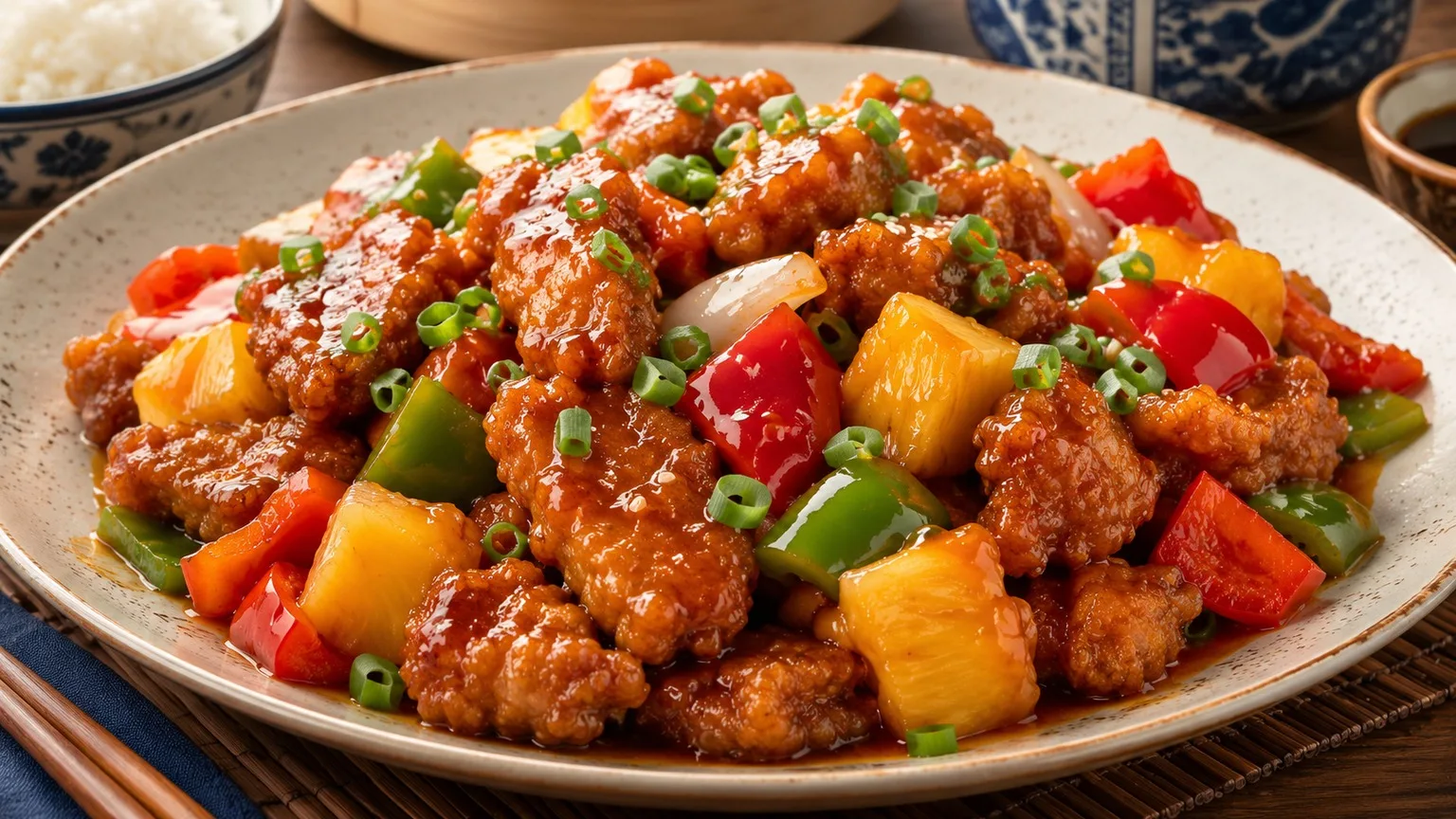
This domestic version of sweet and sour pork follows the Cantonese profile of the dish: small pieces of pork with a crispy coating, a sauce with well-marked acidity and sweetness and vegetables that remain firm. The secret to the texture is to fry in two stages and mix the meat with the sauce only at the end, long enough to coat each piece without making the crust soggy.
Ingredients
For the pig
• 500 g of boneless pork ribs or pork shoulder, cut into cubes of approximately 2.5 cm
• 1 tablespoon light soy sauce, 15 ml
• 1 tablespoon of Shaoxing wine, 15 ml
• 1/2 teaspoon salt
• 1 large egg, beaten
• 60 g corn starch
• 40 g of wheat flour
• 700 to 900 ml of neutral oil for frying, depending on the size of the pan
For the sweet and sour sauce
• 60 g of ketchup, about 4 tablespoons (soup)
• 50 g sugar, about 1/4 cup
• 60 ml unseasoned rice vinegar, 1/4 cup
• 60 ml of canned pineapple juice or water
• 2 teaspoons light soy sauce, 10 ml
• 1 teaspoon of cornstarch, 5 g
• 1 tablespoon of water, 15 ml, to dissolve the starch
For the vegetables and finishing
• 1/2 red pepper, about 80 g, in 2.5 cm squares
• 1/2 green pepper, about 80 g, in 2.5 cm squares
• 1 small onion, about 100 g, in wide petals
• 180 g diced pineapple, fresh or canned, well drained
• 2 stalks of chives, sliced
• 1 teaspoon of toasted sesame seeds
Preparation method
1. Marinate the meat
Dry the pork cubes with paper towels. Mix with soy sauce, Shaoxing wine and salt until the surface absorbs the liquid. Add the beaten egg and mix again. Let it rest for 15 minutes while you prepare the other ingredients.
2. Mix the sauce
In a bowl, combine ketchup, sugar, rice vinegar, pineapple juice and soy sauce. In another small container, dissolve 1 teaspoon of cornstarch in 1 tablespoon of water. Reserve the two preparations separately.
3. Bread the pork
Mix the 60 g of cornstarch with the 40 g of flour. Dip the marinated cubes in this mixture, pressing the coating to form an irregular, well-adhered layer. Shake off only the loose excess. The exterior must be dry and whitish before entering the oil.
4. Make the first frying
Heat 4 to 5 cm of oil in a deep pan to 175 °C. Fry the pork in 3 or 4 batches, without crowding the pan, for about 3 to 4 minutes per batch. Remove when the topping is firm and slightly golden. The center of the thickest piece must reach at least 63°C; let the meat rest for 3 minutes before frying the second time.
5. Make the second frying
Raise the oil to 195 to 200 °C. Return the pork in batches and fry for 45 to 60 seconds, until the surface becomes golden, dry and crispy. Drain on a wire rack or absorbent paper, without stacking the pieces.
6. Sauté the vegetables
Heat a wok or large frying pan over high heat. Add about 1 teaspoon of frying oil and sauté onions and peppers for 60 to 90 seconds. They should heat up and gain spots of color, but remain firm. Add the pineapple and sauté for another 30 seconds.
7. Thicken the sauce
Pour the ketchup mixture into the wok and boil for 1 to 2 minutes. Stir the starch solution again and add it little by little, stirring, until the sauce is glossy and thick enough to coat a spoon in a thin layer. If it thickens too much, adjust with 1 to 2 tablespoons of water.
8. Add meat and sauce at the last minute
Keep the wok over high heat and return the crispy pork. Mix or sauté for just 15 to 20 seconds, until all the pieces have a film of sauce. Immediately remove from heat and transfer to plate. Finish with chives and sesame seeds and serve immediately.
Right spot / how to know it’s ready
The pork coating must be firm, golden and with small crunchy irregularities. After the first frying, the thickest piece must reach at least 63°C and rest for 3 minutes; the second frying reinforces the crispiness. The sauce is done when it is shiny, falls off the spoon in a thick band and does not form a watery puddle at the bottom of the wok. Peppers and onions should still have slight bite resistance. At the end, the sauce should wrap the meat like a film, without softening the entire crust.
Tips for the recipe to work out
Control the oil temperature
Cold oil makes the breading absorb fat; Too hot oil will darken the coating before the interior heats up. Work in batches and wait for the temperature to recover between batches.
Leave the breading dry on the outside
If the surface is wet when it enters the oil, the coating tends to come off and spatter more. Press the flour and starch mixture and discard only the excess that did not adhere.
Do the second frying close to serving time
The second pass in oil removes moisture from the crust and prepares the meat to receive the sauce. If you do this step too soon, the crispiness will start to fall off before assembly.
Sauce first, meat last
Cook and adjust the sauce before adding the pork. Once the meat goes in, 15 to 20 seconds of contact is enough to coat; prolonging this step transforms a crispy crust into soft breading.
Substitutions and variations
The tenderloin or shoulder has enough fat to remain juicy after frying. Pork loin or filet mignon also works, but they are leaner and require attention to avoid overcooking.
Shaoxing wine can be replaced with dry sherry in the same quantity. If you prefer not to use alcohol, omit it and add 1 tablespoon of water; the flavor will be less deep, but the structure of the recipe remains.
5% white vinegar can replace rice vinegar, but it has a more direct profile. Start with 50 ml, taste the sauce before it thickens and add the rest only if you need more acidity.
Fresh pineapple gives more lively acidity and firm texture. Canned pineapple produces a sweeter result; In this case, use the juice from the can in the sauce and drain the cubes well before sautéing.
How to store
The dish is best right after it is finished. If there are leftovers, place in a shallow container and refrigerate for up to 2 hours. Keep refrigerated at 4°C or below and consume within 3 to 4 days. To serve again, heat until the center reaches 74°C. The texture will not return to the same as the freshly fried one because the crust has already absorbed sauce.
If you are making it in advance, the best strategy for texture is to store the already fried pork and the vegetable sauce in separate containers in the refrigerator. Reheat the pork in the oven or air fryer until hot and crispy, heat the sauce in the wok and then combine the two for a few seconds.
How to serve / side dishes
Serve immediately with long-grain white rice or jasmine rice, which helps balance the sweet and acidic intensity of the sauce. A sautéed or steamed green vegetable, like broccoli or bok choy, completes the meal without competing with the main dish.
Common mistakes
Why did the pork become soft right after it was cooked?
The most common reason is leaving the meat in the sauce for too long or assembling the dish before everyone is ready to eat. Do the second frying last, let the sauce come to a boil before adding the meat and mix for a maximum of 20 seconds.
Why did the breading come off during frying?
The meat may have been too wet in the oil or the coating may not have been pressed against the pieces. Dry the meat before marinating, wait for the liquids to be absorbed and bread until the outside is dry.
Why was the sauce watery?
The sauce needs to boil before adding the starch. If it is thin, let it reduce for a few more seconds and only then add the starch solution little by little. Keep in mind that it thickens slightly as it cools on the plate.
Why was the meat greasy?
Usually the oil loses temperature due to excessive lumps in the pan. Fry in smaller batches and wait for it to return to 175°C before the next batch; in the second frying, work at close to 200 °C for a short time.