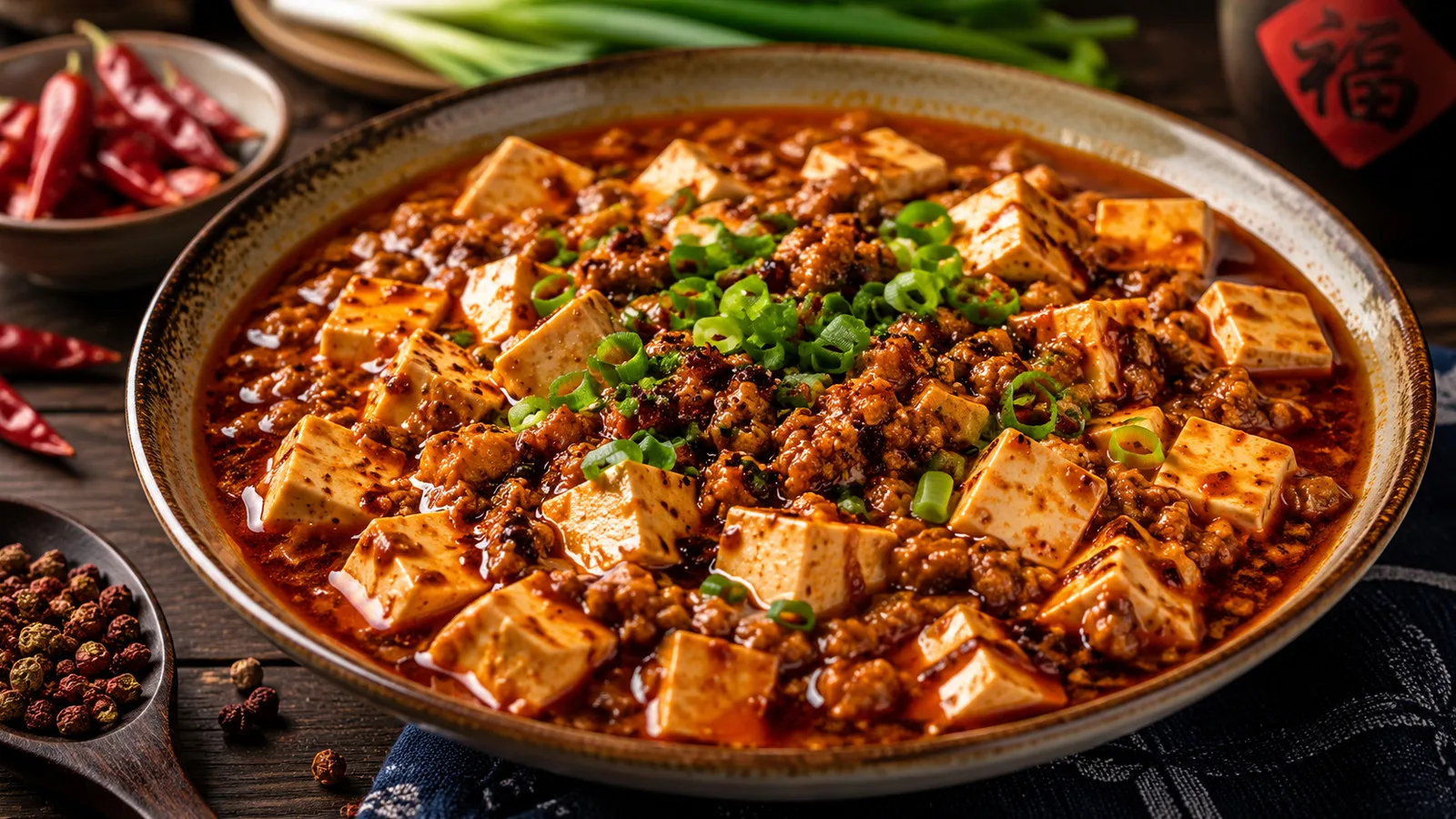
This domestic version preserves the flavor axis of Sichuan mapo tofu: soft tofu, a small portion of meat, doubanjiang, Sichuan pepper and a red sauce that is bright without turning into a thick cream. The most important point is to fry the condiments in the oil without burning them and stir the tofu gently.
Ingredients
For the mapo tofu
• 500 g soft tofu or silken tofu of medium firmness, cut into cubes of approximately 2 cm
• 120 g of ground beef
• 3 tablespoons of neutral oil, such as canola or peanut
• 2 tablespoons of doubanjiang, preferably the Pixian type, chopped if there are large pieces
• 2 teaspoons of douchi, fermented black beans, coarsely chopped
• 1 teaspoon red pepper flakes or ground Chinese pepper, adjusting to desired heat
• 2 cloves of garlic, finely chopped or grated
• 1 teaspoon of grated fresh ginger
• 1 tablespoon of Shaoxing wine
• 240 ml chicken broth without much salt or water
• 1 teaspoon light soy sauce, only if necessary to adjust the flavor
• 1/2 teaspoon of sugar, optional, to round off the salt and heat
• 1 tablespoon cornstarch
• 2 tablespoons of cold water, to dissolve the starch
• 2 teaspoons of Sichuan peppercorns
• 3 sliced chive stalks, white and green parts separated
• 1 tablespoon of chili oil, optional, to finish
Preparation method
1. Roast and grind the Sichuan pepper
Heat a dry frying pan over low to medium heat. Add the Sichuan peppercorns and stir for about 1 minute, just until very fragrant. Don't let it get dark. Cool, grind and reserve half for the sauce and half for finishing.
2. Heat the tofu
Bring a pan of water to a gentle boil. Slide the tofu cubes into the water and cook for 1 minute. Drain carefully. This heating helps the tofu reach the wok already hot and a little more stable, without having to brown it.
3. Brown the meat
Heat a wok or large frying pan over medium-high heat. Add 1 tablespoon of the oil and the meat. Break up the lumps and cook until it loses its raw color and starts to brown. If using a thermometer, the ground beef should reach at least 71°C. Remove the meat and set aside.
4. Develop aromatic red oil
Reduce heat to medium and add the remaining 2 tablespoons of oil. Add the doubanjiang and fry for 60 to 90 seconds, stirring, until the oil turns reddish and very aromatic. Add the douchi, chili flakes, garlic, ginger and the white part of the scallion. Cook for another 20 to 30 seconds. If the bottom starts to darken quickly, reduce the heat: burnt doubanjiang leaves bitterness.
5. Form the sauce
Return the meat to the pan. Add Shaoxing wine and stir for a few seconds. Add the broth or water, half the ground Sichuan peppercorns and sugar, if using. Let it boil gently for 2 minutes. Taste before adding soy sauce, because doubanjiang and douchi are already salty.
6. Add the tofu and gradually thicken.
Add the tofu and move the pan or fold the cubes into the sauce with a wide spatula; avoid stirring vigorously. Cook for 2 to 3 minutes at a gentle boil. Mix the starch with cold water again and first pour in about two-thirds. Wait for the sauce to boil for 30 seconds. Add the rest only if necessary: the sauce should adhere to the tofu, but still run slowly between the cubes.
7. Finish and serve
Turn off the heat. Mix the green part of the chives and, if you want a redder and brighter surface, the chili oil. Transfer to a bowl and sprinkle with the remaining ground Sichuan pepper. Serve immediately.
Right spot / how to know it’s ready
The tofu should be hot to the center, soft and mostly whole. The sauce is red, shiny and slightly thick, covering the cubes without forming a gelatinous paste. Small pools of red oil may appear on the surface. The aroma of doubanjiang should be deep and fermented, and the Sichuan pepper should bring a citrus scent and a slightly numb sensation, without a burnt taste.
Tips for the recipe to work out
Use soft tofu, but not the most fragile available
Medium-firm silken tofu or soft tofu works best because it maintains the delicate texture. Ultra-soft tofu tends to fall apart; Firm tofu holds up better, but delivers a denser result.
Fry the doubanjiang in oil before adding liquid
It is this step that disperses pigments and aromas in the oil. If the broth comes in too soon, the sauce may become more opaque and taste like raw pasta.
Thicken in stages
The starch continues to work when the sauce returns to a boil. Adding everything at once increases the risk of a thick, sticky sauce, which hides the tofu and emulsifies the oil.
Grind the Sichuan pepper close to the time of use
The scent and characteristic sensation weaken over time. Lightly roasting and freshly grinding gives a livelier finish.
Substitutions and variations
Tofu
Firm tofu is a functional substitution when soft tofu is unavailable, but the dish loses some of its silky texture. Avoid extra-firm tofu if you want to reproduce the classic sensation of sauce involving delicate cubes.
Meat
Ground pork is a plausible and common variation in domestic versions. Ground chicken also cooks well in the sauce, but makes the flavor more distant from the beef-based reference profile.
Doubanjiang
Another Chinese fermented bean and pepper paste may work, with salt and heat adjustment. Gochujang, sriracha, regular chili sauce, or isolated miso are not equivalent: they may produce flavorful spicy tofu, but they undermine the fermented, salty core of Sichuan mapo tofu.
Sichuan Pepper
There is no direct substitute for the aroma and the bad, slightly numb feeling. Black pepper or white pepper add heat, but do not reproduce this effect; if there is no Sichuan pepper, it is more accurate to assume that the result will be an adaptation.
Douchi and Shaoxing wine
The douchi can be omitted if the doubanjiang is very flavorful, although the sauce will lose depth. Shaoxing wine can be exchanged for dry sherry; without alcohol, use the same amount of broth and accept a less aromatic finish.
How to store
Refrigerate leftovers in a shallow, closed container within 2 hours of preparation. Keep at 4°C or below and consume within 3 to 4 days. To reheat, bring the center of the food to 74°C. The texture of tofu changes after being frozen and thawed, becoming more porous, so freezing is not the best option when the priority is to preserve the soft texture.
How to serve / side dishes
Serve with medium or long grain white rice, which helps balance the intense sauce. Sautéed Chinese greens, seasoned cucumber, or a simple plate of leafy greens work well alongside without competing with the flavor.
Common mistakes
Why did my tofu fall apart?
The tofu may be too soft or may have been stir-fried. Use cubes of about 2 cm, heat them quickly in water and use a folding motion or shake the pan instead of scraping and turning.
Why was the sauce mushy?
There was probably too much starch or it was added without the sauce returning to a boil. Use the suspension little by little and stop as soon as the sauce lightly coats a spoon and drains slowly.
Why was it too salty?
Doubanjiang, douchi and soy sauce add salt. Taste the sauce after the broth boils and only then decide if soy sauce is necessary.
Why was it spicy but without the typical Sichuan sensation?
Red pepper delivers heat, while Sichuan pepper delivers the bad sensation and citrus aroma. Use fresh beans, roast just until fragrant and finish with a freshly ground part.