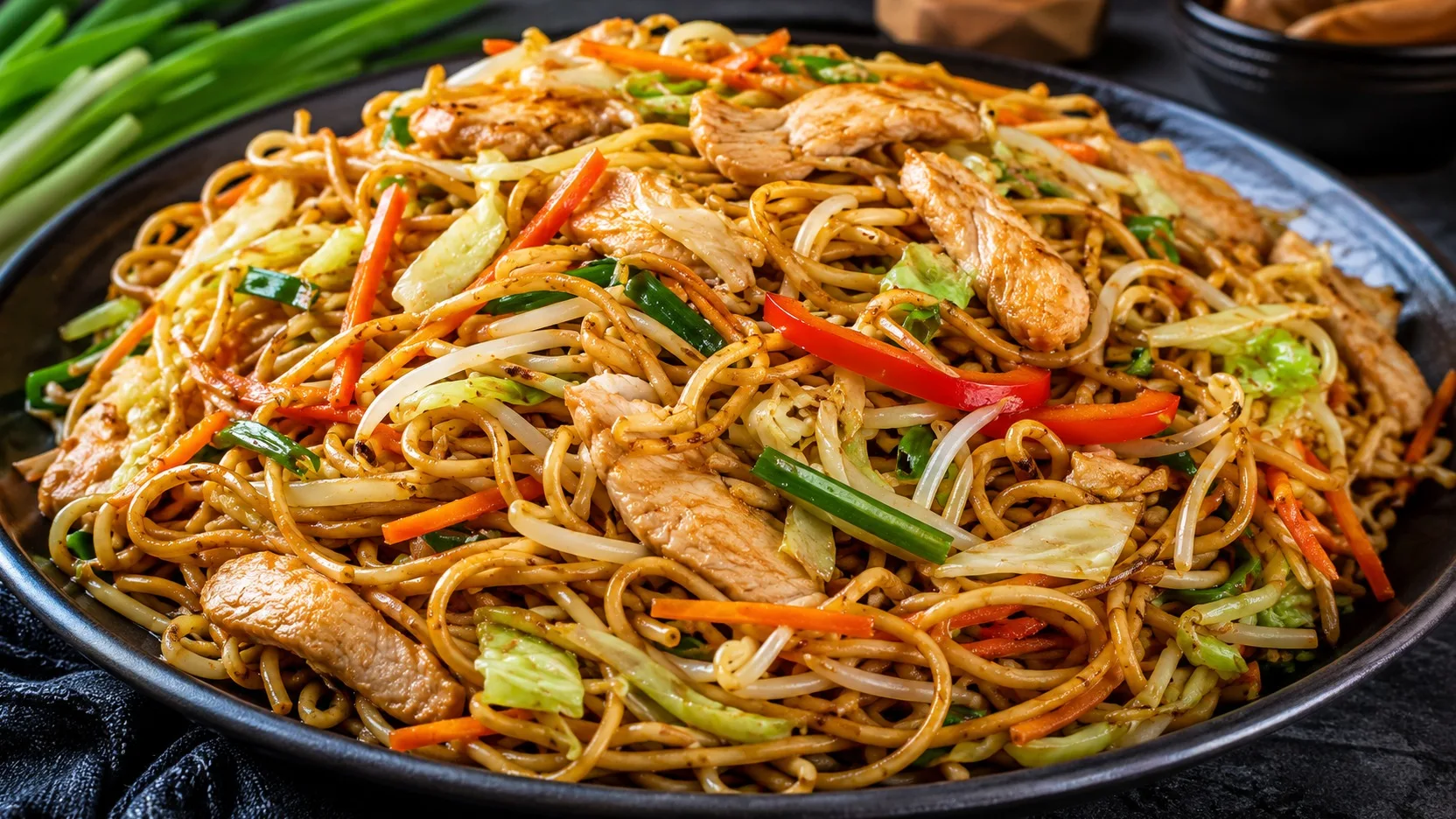
Chow mein is a family of Chinese preparations of sautéed or pan-fried noodles. In this domestic version, the threads are pre-cooked just until they are flexible and then come into direct contact with the wok to brown before receiving chicken, vegetables and a short sauce. The goal is to end up with noodles that are shiny and flavorful, but without the broth pooling at the bottom.
Ingredients
For the chicken
• 350 g skinless, boneless chicken breast or thigh, cut into thin strips
• 2 teaspoons light soy sauce (shoyu)
• 2 teaspoons cornstarch
• 1 tablespoon of water
• 1 teaspoon of neutral oil
• 1 pinch of white pepper or black pepper
For the sauce
• 2 tablespoons oyster sauce
• 2 tablespoons light soy sauce (shoyu)
• 1 teaspoon dark soy sauce, optional, for color
• 1 teaspoon of sugar
• 2 tablespoons of water
• 1 teaspoon toasted sesame oil
For the pasta and vegetables
• 300 g Chinese wheat noodles with egg, dried, suitable for sautéing
• 3 tablespoons of neutral oil, approximately, for the wok
• 200 g of cabbage, in strips of approximately 1 cm
• 1 medium carrot, about 80 g, in thin strips
• 1/2 red pepper, about 80 g, in thin strips
• 120 g of bean sprouts
• 4 spring onions, cut into 4 to 5 cm pieces
• 2 cloves of garlic, chopped
Preparation method
1. Organize mise en place
Mix all sauce ingredients in a small bowl. Keep vegetables, garlic, chicken and pasta measured and within reach of the stove. Sautéing happens quickly, so it's not a good step to stop and chop ingredients.
2. Season the chicken
Mix the chicken with the soy sauce, starch, water, oil and pepper until the strips are evenly coated. Let sit for 10 minutes while the pasta water heats.
3. Pre-cook the pasta
Cook the pasta in boiling water for the shortest time indicated on the package, removing it about 1 minute before the end point. The wires should be flexible but still firm. Drain very well, spread on a platter and let the steam escape for 2 to 3 minutes. If the product is fresh or already pre-cooked, just loosen the threads according to the packaging; do not cook it like dry pasta.
4. Seal the chicken
Heat a large wok or large frying pan over high heat. Add about 1 tablespoon of oil and spread the chicken in one layer. Let it brown without stirring for 30 to 40 seconds, then sauté for another 1 to 2 minutes, until almost cooked. Transfer to a clean plate. If the pan is smaller than 30 cm, do it in two batches to avoid adding liquid.
5. Sauté the vegetables
Return the wok to high heat and, if it is dry, add a little more oil. Add the garlic first for about 15 seconds, then carrots, peppers and cabbage. Saute for 1 to 2 minutes: the vegetables should lose their raw appearance, but remain firm. Remove and reserve with the chicken.
6. Brown the pasta
Add the rest of the oil to the wok and spread the well-drained noodles. Leave part of the wires in contact with the surface for about 1 minute before stirring. Turn and sauté for another 1 to 2 minutes, looking for golden spots without burning. This direct contact with the pan is what differentiates this proposal from pasta that is just cooked and mixed with sauce.
7. Finish with sauce and side dishes
Stir the reserved sauce and pour it down the sides of the wok. Sauté for 30 to 45 seconds to coat the strands. Return with chicken and vegetables, add the bean sprouts and chives and sauté for another 1 to 2 minutes, just until everything is hot and the sprouts lose their completely raw appearance without wilting too much. At the end, the thickest part of the chicken should reach 74°C. Serve immediately.
Right spot / how to know it’s ready
The chow mein should come out of the wok without a pool of sauce at the bottom. The strands are separated, shiny and with some golden or slightly toasted points. Cabbage, carrots and peppers remain firm to the bite, while bean sprouts still retain their crunch. The chicken should be opaque inside and reach 74°C in the center when measured with a culinary thermometer.
Tips for the recipe to work out
Dry the pasta well before sautéing
Water stuck to the wires turns the wok into a steam pan. Drain, spread and let excess moisture evaporate before browning.
Do not crowd the pan
Chicken and vegetables release water. In a small frying pan, work in batches and only bring everything together at the end; this way the surface remains hot enough to brown.
Leave the sauce ready before turning on the heat to high
Shoyu, oyster sauce and sugar are added in a few seconds. Mixing beforehand prevents part of the pasta from becoming salty while the other remains unseasoned.
Give the wires contact time
Do not stir continuously as soon as the noodles enter the wok. A short period in contact with the hot surface creates golden spots and a texture more characteristic of chow mein.
Control the fire, don't chase smoke
The wok must be very hot, but the threads do not need to burn to gain flavor. If the bottom darkens too quickly, reduce the heat for a few seconds and continue.
Substitutions and variations
Which pasta to use
Look for Chinese wheat noodles with egg suitable for stir-frying or chow mein. In Brazil, noodles sold as “for yakisoba” can work as a practical substitute, but some brands are thicker and softer; in this case, reduce the pre-cooking and concentrate the browning in the wok. Spaghetti only works as an emergency resource and provides a less elastic texture.
Other proteins
Striped pork can follow the same logic as sealing and reserving. Shrimp cooks faster and should be cooked for less time to avoid becoming rubbery. For a meatless version, very dry firm tofu can be browned separately; Use mushroom sauce in place of oyster sauce if you want to avoid animal ingredients.
Other vegetables
Chinese chard, snow peas, mushrooms or nirá work well. Choose thin cuts and vegetables that tolerate quick sautéing. Very delicate leaves tend to release water and wilt before the pasta browns.
Chow mein, yakisoba and lo mein: what's the difference?
Chow mein is a Chinese name linked to fried or sautéed noodles; Here the threads are given time directly in the pan to brown and the dish ends up relatively dry. Lo mein tends to prioritize softer, moister strands, cooked and then mixed with the sauce and accompaniments, with less intention of creating toasted areas. Yakisoba is a Japanese stir-fry noodle preparation that also uses Chinese-style wheat noodles, but usually follows its own Japanese sauce profile. Names vary between regions and restaurants, so the most useful difference in home cooking is to note the method and final texture.
How to store
Refrigerate leftovers in a shallow, closed container within 2 hours of preparation. Keep refrigerated at 4°C or below and consume within 3 to 4 days. To reheat, heat portions until the center reaches 74°C again; a hot frying pan usually preserves the texture better than long heating. Freezing is possible, but cabbage, sprouts and noodles lose their crunch and elasticity, so this recipe is best eaten fresh or refrigerated for a few days.
How to serve / side dishes
Serve as soon as it comes out of the wok. Pepper oil or fresh pepper can go on the table for those who want more heat. A simple side dish of seasoned cucumber or sautéed green vegetables contrasts well with the noodles without making the meal heavy.
Common mistakes
Why is my chow mein watery?
The most common causes are poorly drained pasta, a pan that is too small or vegetables that have been cooked for too long. Drain better, sauté in batches and reserve the ingredients before they release too much water.
Why did the noodles stick together and turn into a block?
It may have been overcooked during pre-cooking or wet in a pan that was still cold. Cook less, let the steam escape and only add the strands when the surface is well heated and with a thin film of oil.
Why was the sauce too salty?
Oyster sauce and soy sauce already contain a lot of salt, and different brands vary. Avoid adding salt before the end and, if your soy sauce is very intense, use 1 tablespoon less and top up with water.