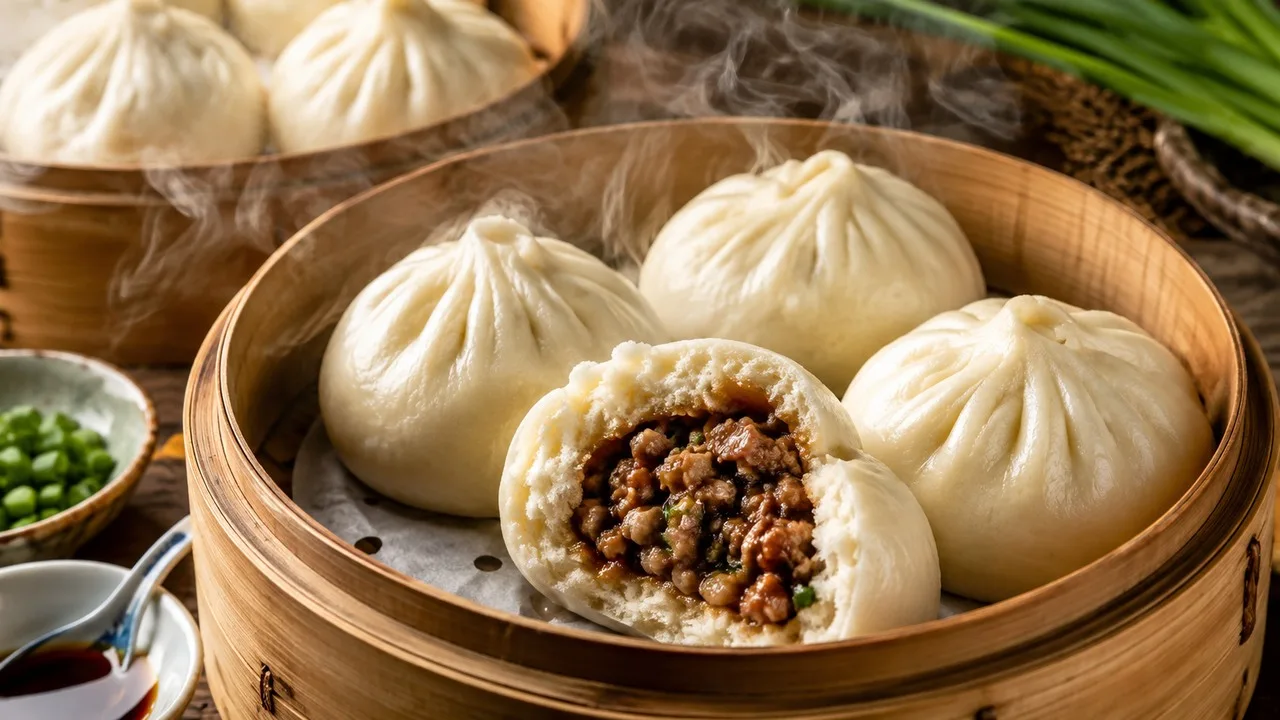
Baozi is a fermented and steamed Chinese bread, which can be filled with many fillings. In this home version, the dough is divided by weight so the units cook evenly, and the pork filling is pre-cooked and cooled before assembly. This makes it easier to get the meat right, reduces excess liquid inside the bread and makes the closing more predictable.
Ingredients
For the dough
• 300 g of plain wheat flour, plus a little more for the counter if necessary
• 165 g of warm water, between 28 °C and 32 °C
• 18 g of sugar
• 4 g of instant dry yeast
• 12 g of neutral vegetable oil
• 2 g of salt
For the pork filling
• 350 g of ground pork, preferably not very lean
• 70 g finely chopped onion
• 12 g of fresh ginger, grated or finely chopped
• 2 spring onions, about 25 g, finely sliced
• 15 ml light soy sauce
• 15 ml oyster sauce
• 10 ml of Shaoxing rice wine
• 8 ml toasted sesame oil
• 8 g of sugar
• 1 g of ground white pepper
• 15 ml of neutral vegetable oil
• 20 ml of water
• 8 g of cornstarch mixed with 15 ml of cold water
Preparation method
1. Mix and knead the dough
Mix the warm water, sugar and yeast. Add the flour and salt and stir until there is no dry flour left. Add the oil and knead for 8 to 10 minutes by hand, or for 6 to 8 minutes with a mixer fitted with a hook on low speed, until you obtain a smooth, soft and slightly sticky dough. If the flour absorbs less water, sprinkle only as much as necessary to make it knead; a very dry dough produces denser baozi.
2. Make the first fermentation
Form a ball, place in a bowl and cover. Let it ferment in a warm place for 60 to 90 minutes, until it clearly increases in volume, close to double. Use the dough's rise as the main reference: in a cold kitchen, fermentation may take longer.
3. Cook the filling
While the dough is fermenting, heat a large frying pan over medium-high heat and add the vegetable oil. Sauté the onion and ginger for 2 to 3 minutes, until the onion softens without browning too much. Add the pork and break up the pieces with a spatula. Cook until no pink remains and until the center of the ground meat reaches 71 °C, measured with a culinary thermometer.
4. Season and combine
Add soy sauce, oyster sauce, Shaoxing wine, sesame oil, sugar, white pepper and 20 ml of water. Mix for about 1 minute. Add the starch dissolved in water and cook for another 30 to 60 seconds, stirring, until the filling is shiny and moist, but with no liquid left at the bottom of the pan. Transfer to a plate or shallow container and let it lose the heat. When cold, stir in the chives. If the dough still takes time to prepare, keep the filling refrigerated and only remove it when shaping.
5. Remove excess gas and divide
Pour the fermented dough onto the counter and knead for 1 to 2 minutes, just to expel large bubbles and leave the texture uniform. Weigh the dough and divide into 10 portions of approximately 50 g. Keep the portions covered to prevent them from drying out.
6. Open the discs
Shape each portion into a ball. Flatten and roll out until you form a disc measuring 10 to 11 cm.. Work the edges more and keep the center approximately twice the thickness of the edge. This thicker center helps support the filling without leaving the base fragile.
7. Stuff and close
Place about 38 to 40 g of cold filling in the center of each disc. Hold the bao in one hand and, with the other, make small successive pleats on the edge, rotating the bread until the top is closed. Pinch the end joint to seal. If you prefer a simpler closure, bring the edges together, pinch well and turn the seam downwards. Keep your fingers and the edge of the dough dry: grease or sauce in the closing area makes sealing difficult.
8. Make the final fermentation
Place each baozi on an individual square of parchment paper. Place in the basket leaving at least 3 cm of space between them. Cover and let rest for 15 to 25 minutes, until visibly fluffier and lighter. They do not need to double in volume at this stage.
9. Prepare the steam
Put enough water in the pan to produce steam throughout the cooking process, without the water touching the bottom of the basket. Bring to a boil. If using a metal basket, make sure the support is above the water level and use paper squares instead of a solid plate, so the steam circulates and the base doesn't get soggy.
10. Cook without opening the lid
Place the basket over the boiling water, cover and maintain constant steam over medium to medium-high heat for 14 minutes. Do not lift the lid to check during cooking. If the equipment only holds part of the loaves, cook in batches and keep the raw baozi covered while waiting.
11. Turn off and wait before opening
Turn off the heat and keep the basket closed for 5 minutes. Then, open the lid slowly and tilt it away from the bread, so that the condensation runs off the lid instead of falling onto the dough. Remove the baozi and serve hot.
Right spot / how to know it’s ready
The finished baozi is fuller than before steaming, with a light, soft surface and dough that springs back slowly when pressed lightly. When opening a unit, the crumb must be cooked and fluffy, with no damp band or raw dough next to the filling. The filling should be hot and set, with no juice running out. As the meat in this recipe is cooked before assembly, the meat is ready for safe cooking in the frying pan, when the ground pork reaches 71°C.
Tips for the recipe to work out
Use weight to standardize units
Dividing the dough into portions of about 50 g and using 38 to 40 g of filling per loaf prevents some units from being too heavy or cooking unevenly.
Wait for the filling to cool
Hot filling softens the dough, increases humidity in the closing region and can accelerate the fermentation of already shaped bread too much. Use the filling cold or at cool room temperature.
Don't just rely on the clock during fermentation
The kitchen temperature changes the weather. In the first fermentation, expect growth close to double; in the second, look for baozi that are noticeably lighter and fluffier, but not overly inflated.
Do not open the lid while steaming
A sudden drop in temperature can wrinkle or wilt the fermented dough. Resting for 5 minutes with the heat off softens this transition before opening.
Control water and condensation
The water should not touch the bread. Use baking paper in individual squares and, when finished, open the lid at an angle so that accumulated drops do not fall onto the surface.
Substitutions and variations
Can I exchange Shaoxing wine?
Yes. Use the same amount of dry sherry. If you prefer not to use alcohol, replace it with water; the filling loses part of its aroma, but the structure does not change significantly.
Can I use stronger wheat flour?
You can, but flours with more protein tend to make the dough more elastic and chewy. With regular flour, the result is softer. If changing the flour, adjust the water in small amounts as absorption may change.
Do I need a bamboo basket?
No. A metal basket or steamer pan works, as long as the bread is above the water, there is space for the steam to circulate and the lid closes tightly. The bamboo basket tends to deal with some of the condensation better, but it is not mandatory.
How to store
Baozi with meat is a perishable food. If you have leftovers, refrigerate or freeze within 2 hours of cooking; There is no need to let it cool completely on the counter. In a closed container, keep in the refrigerator for up to 3 to 4 days. To store them for longer, freeze the already cooked baozi, preferably separated first on a baking tray and then transferred to a well-sealed packaging; for best quality, consume in about 2 months.
To reheat, steam the chilled baozi for about 5 to 7 minutes. Frozen foods can be steamed directly for about 8 to 10 minutes. In any case, the center should reach 74°C when reheating leftovers with meat.
How to serve / side dishes
Serve the baozi while still hot, alone or with a simple mixture of soy sauce and Chinese black vinegar. Pepper oil can be added separately for those who want spice. As they are filling and hearty breads, they also work as a snack, savory breakfast or part of a meal with other dim sum dishes.
Common mistakes
Why is my baozi dense?
The most common causes are dry dough, insufficient kneading or short first fermentation. The dough needs to be smooth and soft and rise clearly before dividing. Avoid adding excess flour to the counter.
Why did the bread wrinkle or deflate after steaming?
Opening the lid immediately, subfermenting or letting the second fermentation go too far can cause loss of volume. When finished, turn off the heat and wait 5 minutes before opening; in the final fermentation, stop when the breads are fluffy and light, without waiting for them to double.
Why did the lock open?
Usually there was too much stuffing, the edge was wet or greasy, or the seam was not compressed at the end. Start with about 38 g of filling per disc, keep your hands dry and seal the last pleat firmly.
Why did the base get wet?
This happens when water touches the basket, when the bread rests on a solid surface that retains condensation or when drops from the lid fall directly onto it. Keep the water level below the basket, use squares of baking paper and open the lid at an angle after resting.