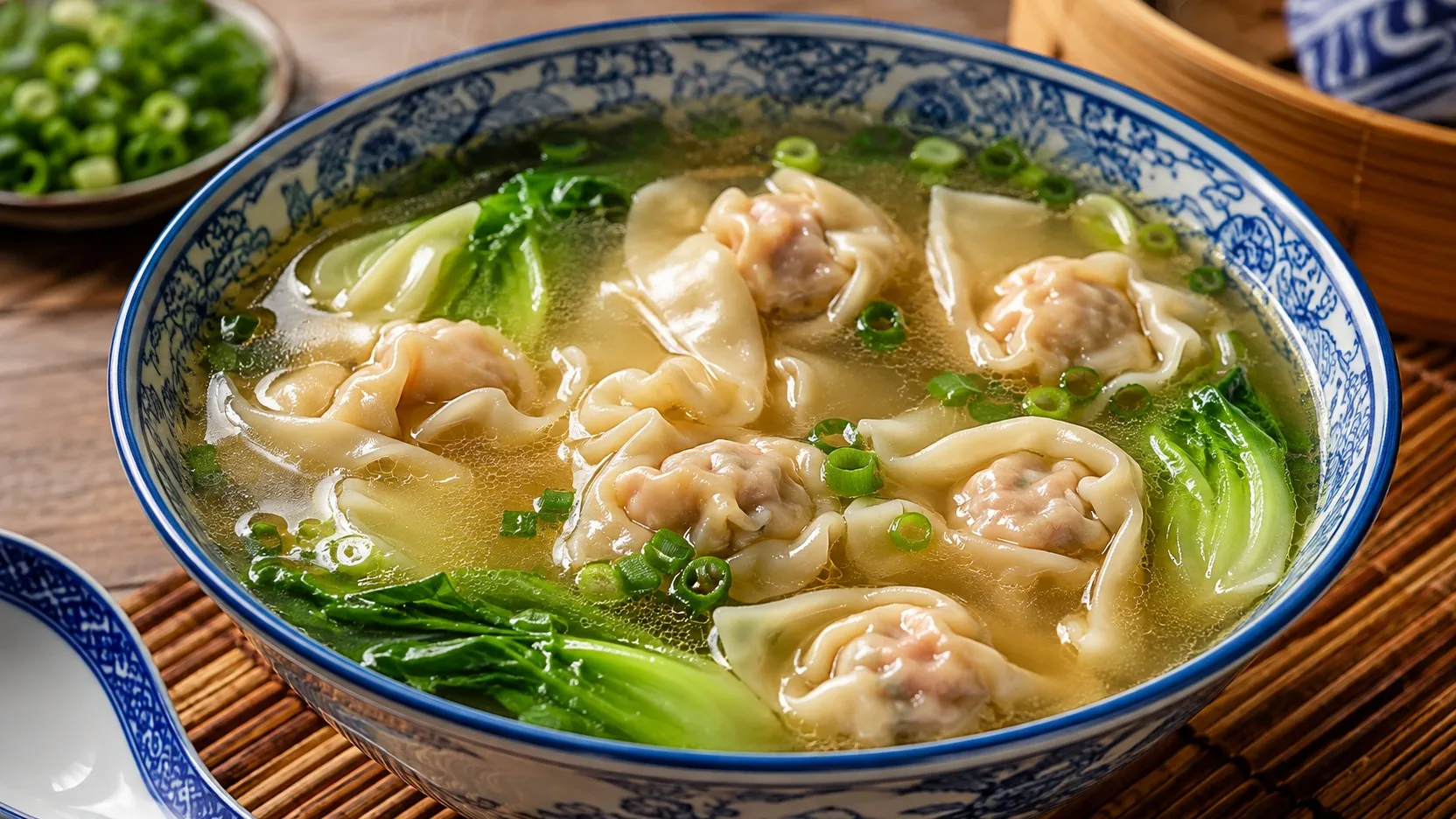
Wonton soup made from scratch, with thin dough, well-bound pork filling and clear chicken broth. The preparation separates the cooking of the wontons from the final broth to reduce the release of starch into the soup and preserve the clear appearance.
Ingredients
For the clear broth
• 800 g chicken wings, neck or carcass, with bones
• 2 liters of cold water, plus water for the initial boil
• 25 g fresh ginger, thickly sliced
• 3 stalks of chives, cut into 7 to 8 cm pieces
• 2 teaspoons of light soy sauce, about 10 ml
• 1 level teaspoon of salt, or to taste
• 1 pinch of ground white pepper
For the wonton dough
• 250 g of wheat flour
• 125 ml of water at room temperature, added little by little
• 30 g of cornstarch, to open and separate the dough
For the pork filling
• 300 g of ground pork, preferably not very lean
• 2 small chives, finely chopped
• 10 g fresh ginger, finely grated
• 1 tablespoon light soy sauce, about 15 ml
• 1 tablespoon of Shaoxing wine, about 15 ml
• 1 teaspoon of toasted sesame oil, about 5 ml
• 1 teaspoon of cornstarch
• 1/2 teaspoon salt
• 1/4 teaspoon of sugar
• 1 generous pinch of ground white pepper
• 45 ml of cold chicken broth or ice water
To finish
• 4 small pieces of bok choy, cut in half lengthwise
• 2 chives, finely sliced
• Toasted sesame oil to taste, optional
Preparation method
1. Clean the chicken initially
Place the chicken pieces in a pan, cover with cold water and place over high heat. As soon as it boils, count 1 to 2 minutes. Drain, rinse the chicken and wash the pan to remove foam and residue that could make the broth opaque.
2. Cook the broth over very low heat
Return the cleaned chicken to the pan and add the 2 liters of cold water, the sliced ginger and the chive pieces. Heat until it starts to boil and immediately reduce to the lowest heat possible. The liquid should only show slow, spaced bubbles. Cook for about 1 hour and 30 minutes, with the pan covered or almost covered, without stirring. If foam appears on the surface, gently remove it with a slotted spoon.
3. Strain and season without clouding
Pour the broth through a fine sieve into another pan, without pressing the chicken and aromatics. Discard the solids. Season with light soy sauce, salt and white pepper. Keep the broth warm over low heat, without boiling hard. Separate 45 ml and let it cool to use in the filling.
4. Mix the dough
Put the flour in a bowl and add the water little by little, stirring until moist lumps form. Gather with your hands and knead for about 5 minutes. The dough should be firm and a little rough, not sticky. Cover tightly and rest for 30 minutes.
5. Knead again and let the dough relax
After the first rest, knead for another 2 to 3 minutes, until it becomes smoother. Cover again and let rest for another 30 minutes. This second rest makes it easier to roll out the dough very thinly without it shrinking or tearing at the edges.
6. Prepare the filling
Mix the pork, scallions, ginger, soy sauce, Shaoxing wine, sesame oil, starch, salt, sugar and white pepper. Stir vigorously in the same direction for 2 to 3 minutes. Add the 45 ml of cold broth in three additions, waiting for the meat to absorb each portion before adding the next. Stop when the filling is sticky, holds together and is slightly shiny. Keep refrigerated while rolling out the dough.
7. Roll out the dough very thinly
Divide the dough into 4 parts and keep the parts you are not using covered. Roll out one portion at a time with a rolling pin or cylinder. Sprinkle cornstarch on both sides as needed. The goal is a nearly translucent blade with uniform thickness. Cut squares of approximately 9 cm. Gather the shavings only once, let them sit for a few minutes, and open them again. The expected yield is about 28 squares.
8. Stuff and close the wontons
Work with a few squares at a time and keep the rest covered so they don't dry out. Place about 1 heaped teaspoon of filling in the center, without overdoing it. Lightly moisten two adjacent edges, fold the square into a triangle and press from the center to the ends, expelling the air. Moisten one of the long ends of the triangle, bring the two ends together and press to form the wonton. Leave them ready on a baking tray sprinkled with starch and keep covered.
9. Cook the bok choy
Bring the seasoned broth to a very gentle boil. Add the bok choy and cook for 1 to 2 minutes, just until the leaves are wilted and the stems are bright green and still slightly firm. Remove and distribute among bowls.
10. Cook the wontons in separate water
In another large pan, heat plenty of water to a moderate boil. Cook the wontons in 2 or 3 batches, stirring gently once at the beginning so they don't stick to the bottom. When they rise to the surface, continue cooking for another 1 to 2 minutes. In general, fresh wontons of this size take about 4 to 5 minutes total. To be safe, the center of the pork stuffing should reach 71°C; Check a test wonton with a culinary thermometer or cut it in half if necessary.
11. Assemble and serve immediately
Remove the wontons with a slotted spoon, let the water drain for a few seconds and distribute about 7 units per bowl. Add the bok choy, cover with the hot broth and finish with sliced chives. If desired, add just a few drops of sesame oil to avoid overpowering the flavor of the broth.
Right spot / how to know it’s ready
The broth should be light golden and visually clear, with no persistent foam or suspended flour particles. The wonton dough is soft, thin and slightly translucent, but still intact. Wontons tend to float when the dough and filling are heated; after they rise, cook for another 1 to 2 minutes and confirm 71°C in the center of a test wonton. The finished filling is uniform and firm, with no pink or raw areas in the center.
Tips for the recipe to work out
Keep the broth boiling almost imperceptibly
Heavy boiling and constant stirring break down proteins and solids into smaller particles, leaving the broth opaque. Once it starts to boil, immediately reduce the heat and avoid stirring.
Cook the wontons out of the final broth
The dough releases flour and starch during cooking. Using a separate pan of water keeps this starch out of the broth that will be served.
Cover dough, squares and assembled wontons
Thin wonton dough loses moisture quickly. Dry edges crack and seal poorly. Work in small batches and cover the rest with a clean, slightly damp cloth or covered container.
Don't skimp on resting the dough
A firm dough may feel hard right after mixing. Resting hydrates the flour and relaxes the gluten, allowing it to roll out much thinner sheets with less shrinkage.
Mix the filling until it's really sticky
The sticky texture indicates that the meat is well bound and has managed to absorb the added liquid. If the filling is loose and granular, the interior tends to be less juicy and more crumbly after cooking.
Substitutions and variations
Can I use ready-made wonton dough?
Yes. Use about 28 to 30 thin wonton squares and skip the dough steps. Always keep the leaves covered and take the same care not to overload them with filling.
What to use instead of Shaoxing wine?
Dry sherry is the closest replacement for this culinary function. If you don't have either one, omit it; Do not replace it with vinegar in the same quantity, because the acidity alters the profile of the filling.
Can I use leaner meat?
You can, but the filling tends to be less juicy. If using very lean pork, do not reduce the added liquid and avoid prolonging cooking longer than necessary.
Can I swap the bok choy?
Chicken chard, bok choy or spinach work. More delicate leaves need less time in the broth to avoid losing texture.
How to store
Assembled raw wontons have a filling of ground pork and a very thin dough. For best texture, cook immediately after assembling or freeze immediately in a single layer until firm, then transfer to airtight packaging. If you need to refrigerate before cooking, keep at 4°C or below and use within 1 day; Raw ground pork should generally only stay in the refrigerator for 1 to 2 days.
Already cooked leftovers should be refrigerated in shallow containers within 2 hours. To better preserve the dough, store broth and wontons in separate containers when possible. Consume within 3 to 4 days and reheat to 74°C or until completely steaming. The texture of cooked wontons worsens with freezing; To freeze, prefer raw wontons and broth separately.
How to serve / side dishes
Serve as a hearty starter or light meal. For a more complete bowl, add fine wheat noodles cooked separately, always avoiding cooking them in the final broth to avoid releasing starch. Chili oil can go on the table for those who want heat without altering the entire pan.
Common mistakes
Why does the dough tear when opening or closing?
The most common cause is the dough being under-rested, dry or unevenly opened. Always cover the waiting portions, respect the two rest periods and sprinkle cornstarch to prevent the leaves from sticking. If the edges are dry, they may crack even with water when closing.
Why does the wonton open in water?
Normally there is too much stuffing, air trapped inside the fold, dry edge or aggressive boiling. Use a heaping teaspoon, press the air out before sealing, and keep the water at a moderate, not turbulent, boil.
Why was the broth cloudy?
The most likely causes are boiling the broth too hard, stirring or pressing the solids when straining, or cooking the wontons directly in it. Strain gently and use separate water to cook the wontons.
Why was the filling dry?
Excessively lean meat, little incorporated liquid or cooking too long are common causes. Use meat with some fat, gradually add the cold broth until the mixture is sticky and remove the wontons as soon as they are completely cooked.