Ingredients
For the thin dough
• 150 g of common wheat flour
• 235 ml of water at room temperature, plus up to 15 ml if necessary
• 1/4 teaspoon salt
For the filling
• 250 g of ground pork
• 220 g Chinese cabbage (napa) or regular cabbage, sliced very thin
• 80 g carrot, cut into thin strips
• 70 g fresh shiitake mushrooms, thinly sliced
• 2 chives, sliced
• 2 cloves of garlic, chopped
• 10 g fresh ginger, grated
• 1 tablespoon of neutral oil
• 1 1/2 tablespoons light soy sauce
• 1 tablespoon oyster sauce
• 1 tablespoon of Shaoxing wine or culinary sake, optional
• 1 teaspoon of toasted sesame oil
• 1 teaspoon of cornstarch
• 1/4 teaspoon ground white pepper
To seal and fry
• 1 tablespoon of wheat flour
• 1 1/2 tablespoon of water
• Enough neutral oil to form a 4 to 5 cm layer in the pan
• Sweet and sour sauce or sweet chili to serve, optional
Preparation method
1. Make the leaf dough
Mix the flour and salt. Add 235 ml of water little by little, stirring until you obtain a smooth liquid dough, similar to thin crepe dough. Let it rest for 10 minutes and pass through a sieve. If it is too thick to spread into an almost transparent layer, add water 1 teaspoon at a time, without exceeding the extra 15 ml.
2. Cook very thin leaves
Heat a 18 to 20 cm non-stick frying pan over the lowest heat. Using a culinary brush, spread a very thin layer of dough over the entire bottom. Increase the heat slightly just until the sheet is opaque, firm and begins to loosen at the edges, about 15 to 30 seconds. Remove with a spatula. Let each sheet cool separately before stacking and keep the finished ones covered to prevent them from drying out. Make 16 sheets and reserve a few extra sheets if the dough yields more.
3. Brown the pork
Heat 1 tablespoon of oil in a large frying pan or wok over medium-high heat. Add the pork and break up the lumps. Cook until it reaches at least 160°F in the center and there is no raw liquid left in the pan, about 5 to 7 minutes.
4. Dry the filling
Add the garlic, ginger and shiitake and sauté for 1 minute. Add the cabbage and carrot and cook over high heat, stirring, until they wilt without losing all their firmness and until the released water evaporates, about 3 to 5 minutes. Mix soy sauce, oyster sauce, Shaoxing wine, sesame oil, starch and white pepper. Cook for another 1 to 2 minutes, until the seasoning coats the ingredients and the bottom of the pan is free of pools of liquid. Turn off and mix the chives.
5. Cool completely
Spread the filling on a baking sheet or large plate to lose heat quickly. Refrigerate for about 20 minutes, or until cold to the touch. Hot or humid filling softens the foil and increases the risk of the roll opening during frying.
6. Assemble the rolls
Mix the flour and sealing water until it forms a paste. Place a sheet on the counter and distribute about 30 g of filling in a strip 4 cm from the nearest edge. Fold this edge over the filling, compress lightly to expel air pockets and fold the sides inwards. Roll tightly, but not so tight that it tears. Apply a thin layer of paste to the final edge and finish rolling. Keep the finished rolls covered while you assemble the others.
7. Heat the oil to the correct range
Heat the oil to 170 °C. During frying, try to keep it between 165 and 175 °C. Work in small batches so the temperature doesn't drop too much.
8. Fry until golden and dry
Fry 3 or 4 rolls at a time, turning when necessary, for about 3 to 5 minutes, until they are evenly golden and the surface is firm and crispy. Remove to a wire rack, without stacking. Wait for the oil to return to the 165 to 175 °C range before the next batch. For an even drier shell, you can do a quick finish for 10 to 15 seconds at 190°C, watching closely to ensure it doesn't darken too much.
Right spot / how to know it’s ready
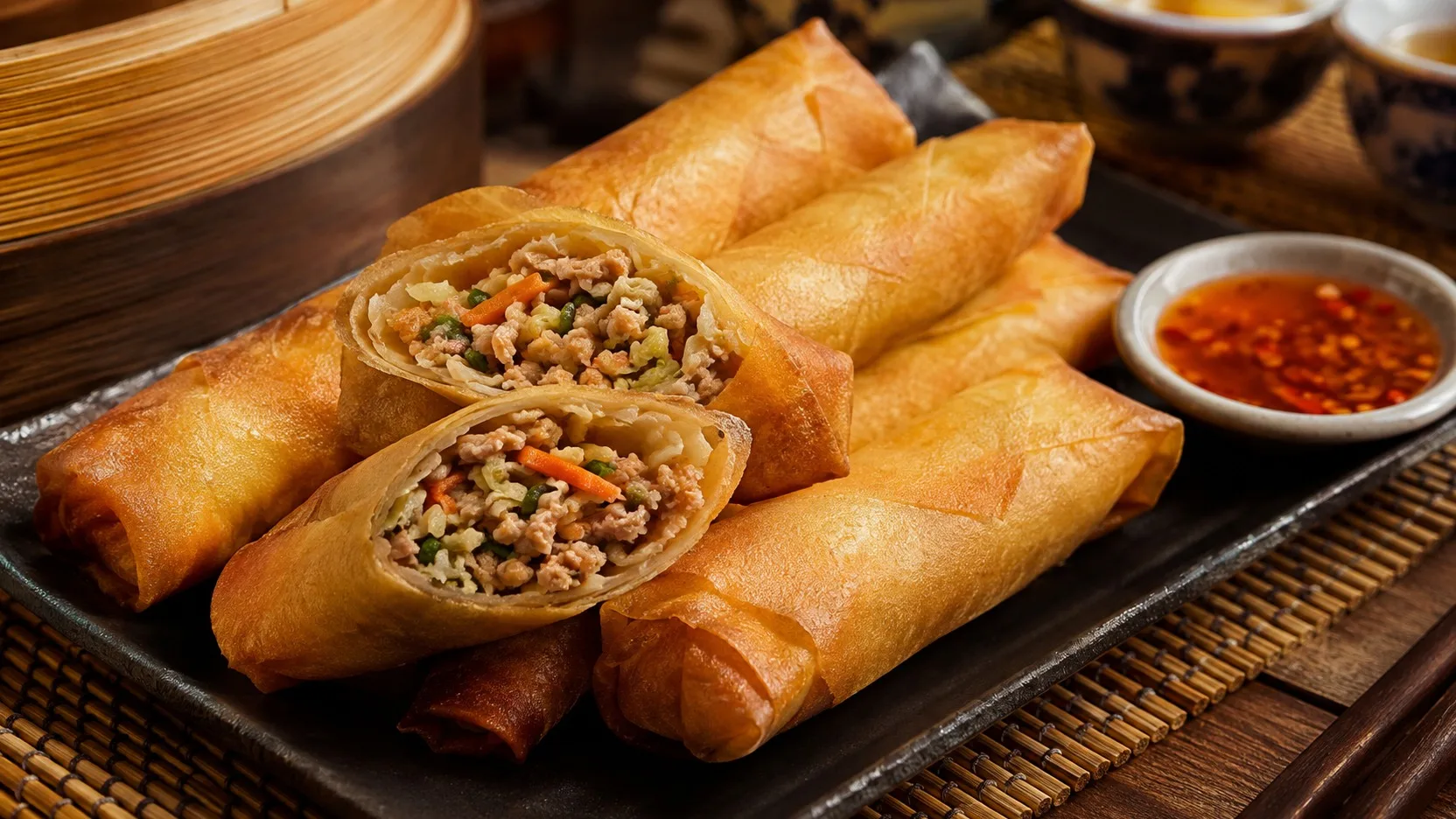
The stuffing is done before assembly when there is no liquid accumulated at the bottom of the pan and the pork has reached at least 71°C. The foil should be thin and flexible, but firm enough to come out of the pan in one piece. After frying, the roll should be evenly browned, rigid to the touch of tongs and with a skin that crackles when cut, without pale or soft areas. When resting on the rack, there should not be a noticeable puddle of oil.
Tips for the recipe to work out
Keep the filling cold and dry
Spreading the filling in a wide layer speeds up cooling and prevents steam from being trapped inside the roll. If there is still broth at the bottom of the container, drain or return the filling to the pan for a few minutes before assembling.
Don't make rolls that are too full
Around 30 g of filling per unit is enough for an 18 to 20 cm roll. Excess filling makes sealing difficult and creates pressure when the interior heats up.
Control the leaf pan
The frying pan needs to be low enough to give you time to brush the dough before it coagulates. If the dough hardens on first contact, remove the pan from the heat for a few seconds and start again.
Prefer a rack to drain
The grill allows steam to escape from the bottom as well. Absorbent paper can be used for a short time, but leaving the rolls resting on it for several minutes favors a less crispy base.
Fractionize the frying
Frying a few at a time makes it easier to keep the oil in the right range and gives you room to turn the rolls without breaking the skin.
Substitutions and variations
Can I use ready-made dough?
Yes. Use 16 to 18 spring roll sheets, approximately 20 cm, and skip the sheet preparation steps. Commercial sheets tend to be more uniform and make assembly quicker.
Can I swap Chinese cabbage?
Regular cabbage works, but is firmer. Cut it as thinly as possible and allow 1 to 2 extra minutes of sautéing, always letting the moisture evaporate before cooling the filling.
Can I use ground chicken instead of pork?
You can, keeping the same amount. The flavor is milder and the filling tends to be less greasy. To be safe, cook ground chicken to at least 165°F before assembling.
Can I change the shiitake?
Paris or shimeji mushrooms work. As they can release a lot of water, sauté until this moisture evaporates before adding the sauces.
How to store
Fried rolls are better when cooked. If you have leftovers, refrigerate in a shallow container within 2 hours and consume within 3 to 4 days. To regain crispiness, heat in the oven or air fryer at 190 to 200 °C until the center reaches 74 °C; avoid the microwave when the priority is to keep the shell dry.
Assembled and not yet fried rolls can be frozen first on a baking sheet, without touching each other, and then transferred to tightly sealed packaging. For best texture, use within about 2 months. Fry directly from the freezer, removing visible ice crystals and making sure the center reaches 74°C.
How to serve / side dishes
Serve immediately with sweet and sour sauce, sweet chili or a simple mixture of soy sauce and rice vinegar. For a complete snack, pair with hot tea, seasoned cucumber or other dim sum with lighter flavors.
Common mistakes
Why was the roll soggy?
The most common causes are filling with excess moisture, filling that is still hot or oil below the indicated range. Dry the filling over the heat, let it cool completely and wait for the oil to regain temperature between batches.
Why did the roll open or burst?
There is usually too much stuffing, trapped air, torn foil or insufficient sealing. Make a firm cylinder, without over-tightening, spread the sealing paste to the ends and leave the seam facing down before frying.
Why was the homemade dough thick?
The layer of dough was excessive or the mixture was too thick. Brush just enough to cover the pan and adjust the consistency with small additions of the reserved water.
Why did the rolls darken before becoming crispy?
The oil was too hot or the foil was thick. Return to the range of 165 to 175 °C and fry in small batches; finishing at 190°C should only take a few seconds.