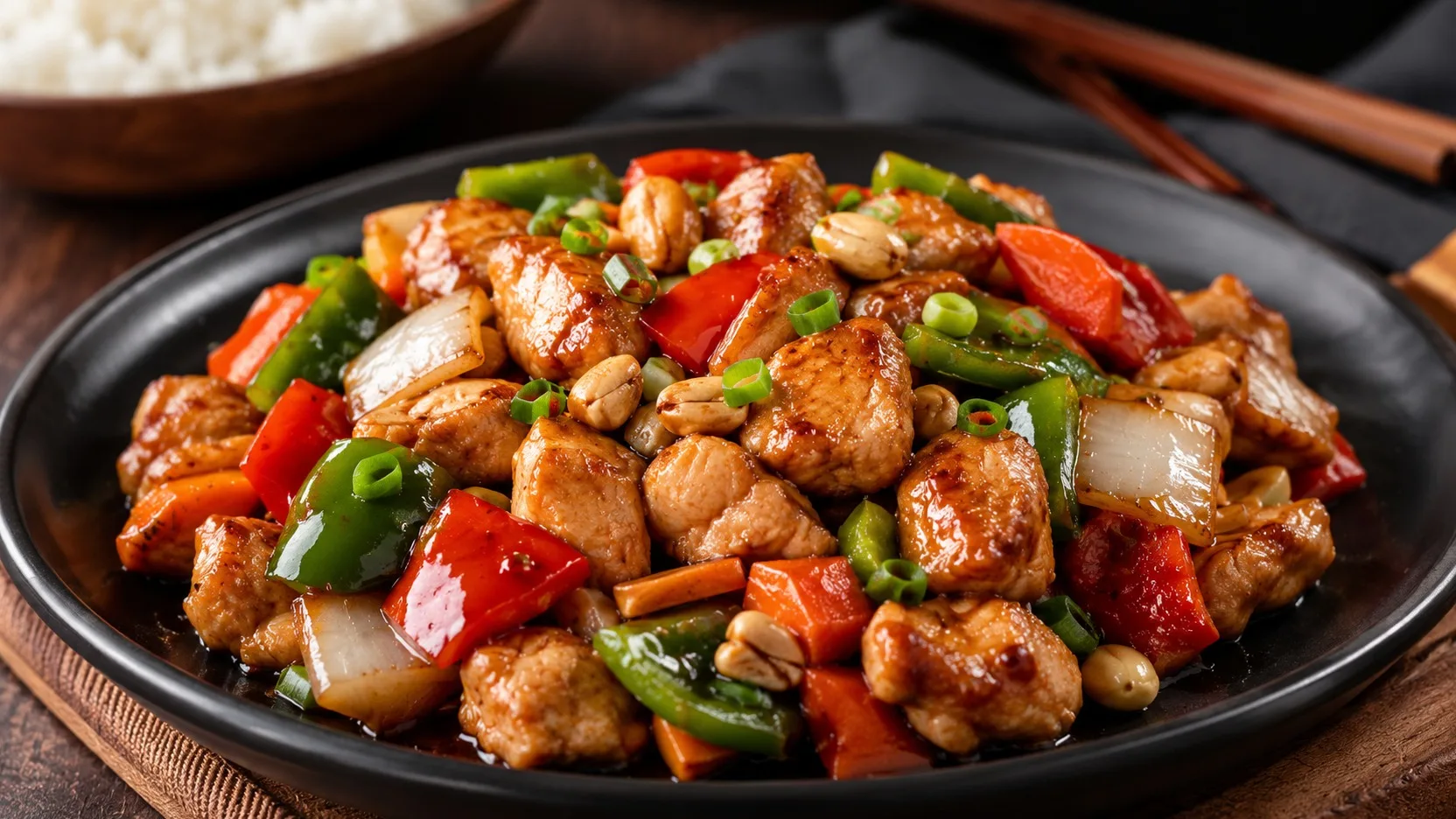
This version of checkered chicken was prepared for the domestic stove: the breast goes through a simple velveting process with water, starch and oil, is sealed in small portions and only returns to the wok at the end. This way, the vegetables don't have to wait for the chicken to cook and the sauce comes in last, in just enough quantity to coat everything.
Ingredients
For the chicken and velveting
• 600 g skinless, boneless chicken breast, cut into cubes of approximately 2.5 cm
• 2 tablespoons (30 ml) cold water
• 1 tablespoon (15 ml) soy sauce
• 2 teaspoons (6 g) cornstarch
• 2 teaspoons (10 ml) neutral vegetable oil
For the sauce
• 100 ml of water or unsalted chicken broth
• 3 tablespoons (45 ml) soy sauce
• 1 tablespoon (15 ml) oyster sauce
• 1 tablespoon (15 ml) rice vinegar
• 1 teaspoon (5 g) of sugar
• 2 teaspoons (6 g) cornstarch
For the sautéing and finishing
• 2 tablespoons (30 ml) neutral vegetable oil, divided
• 1 medium onion, cut into squares of approximately 2.5 cm
• 1/2 large red pepper, cut into squares of about 2.5 cm
• 1/2 large green pepper, cut into squares of about 2.5 cm
• 1 small carrot, cut into thin half-moons
• 2 cloves of garlic, chopped
• 1 teaspoon of grated fresh ginger
• 50 g of skinless, unsalted roasted peanuts
• 2 chives, sliced
• 1 teaspoon (5 ml) toasted sesame oil
Preparation method
1. Get everything ready before heating the wok
Cut chicken and vegetables and separate garlic, ginger, peanuts and green onions. In quick stir-fries, the high heat doesn't give you time to stop and measure ingredients without losing the point.
2. Velvet the chicken
Place the chicken in a bowl and add the water and soy sauce. Mix for about 1 minute, until the liquid is almost completely absorbed. Add the starch and velveting oil and wrap each cube. Refrigerate for 15 minutes while you finish preparing the vegetables and sauce.
3. Mix the sauce
In a small bowl, mix the water or broth, soy sauce, oyster sauce, vinegar, sugar and cornstarch until there are no lumps left. Set aside and stir again immediately before using, as the starch settles to the bottom.
4. Heat the pan well
Use a wok or a wide frying pan measuring at least 30 cm. Heat over high heat until the surface is very hot and starts to smoke lightly. Open the window or turn on the exhaust fan. Add half of the sautéing oil and spread quickly.
5. Seal the chicken in portions
Place half the chicken in a single layer, without crowding. Leave for 45 to 60 seconds without stirring to start to brown, then sauté for another 1 to 2 minutes, just until the cubes are opaque on the outside and not yet fully cooked in the center. Transfer to a plate and repeat with the other half, using a little more oil if necessary.
6. Saute the vegetables in the right order
With the wok very hot again, add the rest of the oil. Add the carrot and onion first and sauté for about 1 minute. Add the peppers and cook for another 1 to 2 minutes, stirring or shaking the pan. They should earn toasty points, but remain firm. Add garlic and ginger and stir for 20 to 30 seconds, just until fragrant.
7. Finish with the short sauce
Return the chicken and any accumulated juices to the wok. Stir the reserved sauce and pour it down the hot sides of the pan. Saute for 1 to 2 minutes, until the sauce boils, thickens and forms a glossy film around the chicken and vegetables. The center of the thickest piece of chicken should reach 74°C. If it hasn't reached it yet, cook for a few more moments, without prolonging it longer than necessary.
8. Finish and serve
Turn off the heat. Mix the peanuts, chives and sesame oil. Serve immediately, before the residual heat softens the peppers.
Right spot / how to know it’s ready
The chicken should be browned in spots, tender and completely cooked, with an internal temperature of 74°C in the thickest piece. The onion becomes translucent around the edges, but still offers a slight resistance, and the peppers maintain a bright color and crunchy texture. The correct sauce is shiny and sticks to the cubes; When tilting the wok, there should not be a large pool of liquid at the bottom.
Tips for the recipe to work out
Use a large pan and cook the chicken in batches
If too many cold cubes enter at once, the temperature of the pan drops and the water released by the chicken starts to steam the meat. Two small portions usually work best on a home stove.
Dry the vegetables well after washing
Water on the surface reduces the temperature of the wok and creates steam. This is especially noticeable with peppers, which can soften before gaining any char.
Do not use the sauce to cook the vegetables from the beginning
The sauce only comes in when the chicken returns to the pan. If added too soon, the vegetables become submerged, cook longer and lose their crunchy texture.
Adjust the salt with soy sauce, not with additional salt
Shoyu and oyster sauce already provide a lot of salt. Brands vary greatly; If your soy sauce is especially intense, reduce the sauce to 2 tablespoons and top up with 1 tablespoon of water.
Mix the starch again before pouring in the sauce
Corn starch sets quickly. Reincorporating it avoids a watery part at the beginning and a thick block at the end of the bowl.
Substitutions and variations
Can I use boneless thighs?
Yes. Cut to the same size and keep the velveting. The drumstick tends to remain juicy more easily, but may require a little more time in the final stage. The safety reference remains 74°C at the center.
Can I make it without oyster sauce?
You can. Swap the spoonful of oyster sauce for 1 tablespoon of water and 1 extra teaspoon of soy sauce. The sauce will be less full-bodied and with less depth of flavor; taste before adding any salt.
Can I change the peanuts?
Roasted cashews work well and make the dish a little more buttery. For a nut-free version, simply omit the crunchy finish, respecting possible allergies and cross-contamination of other ingredients.
Do I need a wok?
No. A wide stainless steel or cast iron skillet works as long as it is well preheated and the chicken is done in batches. Small, deep pans retain more steam and make sealing difficult.
How to store
Transfer leftovers to shallow containers and refrigerate within 2 hours of preparation. Keep at 4°C or below and consume within 3 to 4 days. When reheating, bring the chicken and sauce back to 74°C. The dish can be frozen, but the peppers and onions are softer once thawed; For best texture, use within about 2 months.
How to serve / side dishes
Serve with hot white rice, which absorbs the little sauce without competing with the stir-fry. For a meal with more vegetables, accompany it with broccoli or chard, quickly sautéed and lightly seasoned.
Common mistakes
Why did my checkered chicken turn into soy sauce chicken?
The most common causes are an insufficiently hot pan, too much chicken at once and sauce added too soon. Preheat well, seal in portions and only add the sauce when the meat and vegetables are practically done.
Why were the peppers soft?
They probably stayed on the heat too long or went in before the carrots and onions. Cut into large pieces, add later and remove from the heat as soon as they are hot, toasted in some spots and still firm.
Why was the sauce too thick or clumped?
There may have been too much starch, the sauce boiled for too long, or the mixture was not stirred before entering the wok. If it becomes thicker than desired, add 1 to 2 tablespoons of hot water and sauté quickly.
Do you need to use baking soda when velveting?
Not in this version. Water, starch and oil already help protect the surface and retain moisture in the chicken breast. Bicarbonate is used in some techniques, but it alters the texture and, in excess, can leave a residual flavor; so it is not necessary here.