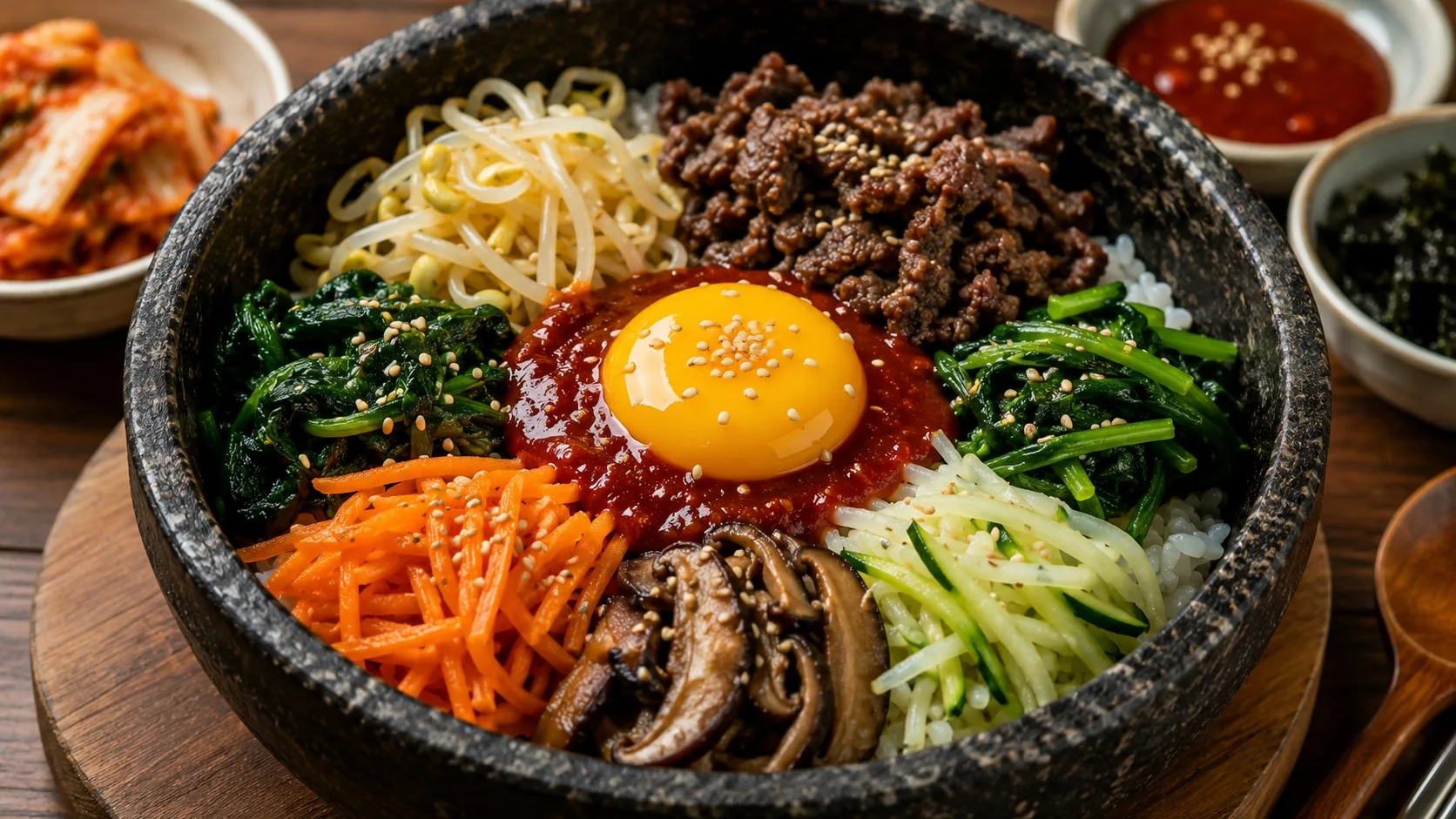
The bibimbap is assembled with rice on the bottom and toppings prepared separately, so that each ingredient maintains texture and color before everything is mixed with the sauce. In this domestic version, the meat is sliced and the vegetables are sautéed or blanched in small portions; Those who want the contrast of toasted rice can finish the assembly in a frying pan or heavy pot.
Ingredients
For the rice
• 300 g Korean rice or short-grain white rice
• 360 ml of water, or the amount indicated for the rice used
For the meat
• 250 g sirloin or rump in thin strips against the fibers
• 1 1/2 tablespoon soy sauce, about 22 ml
• 2 teaspoons of brown sugar, about 8 g
• 2 teaspoons of toasted sesame oil, 10 ml
• 1 small clove of grated garlic
• 1 pinch of black pepper
For the vegetables
• 200 g mung bean sprouts
• 150 g of spinach
• 1 medium carrot, approximately 120 g, cut into thin strips
• 1 small zucchini, approximately 180 g, cut into thin strips
• 150 g fresh shiitake mushrooms or paris mushrooms, sliced
• 1 tablespoon of neutral oil, divided between the stir-fries
• 2 teaspoons toasted sesame oil, divided
• 1 small clove of grated garlic
• 3/4 teaspoon salt, divided and adjusted to taste
• 1 tablespoon of toasted sesame seeds
For the gochujang sauce
• 60 g of gochujang, about 4 tablespoons
• 1 tablespoon of rice vinegar, 15 ml
• 1 tablespoon of toasted sesame oil, 15 ml
• 1 level tablespoon of sugar or honey, about 12 g
• 1 tablespoon of water, 15 ml
• 1 teaspoon of soy sauce, 5 ml
To finish
• 4 eggs
• 2 teaspoons of neutral oil to fry the eggs
• 1 tablespoon of neutral oil, only if you use the crispy bottom option
Preparation method
1. Wash and cook the rice
Wash the rice in cold water, changing the water several times, until it is only slightly cloudy. Let the rice drain for 10 minutes. Place in the pan with water, heat over medium heat until it starts to boil, cover and cook over low heat for about 12 minutes. Turn off and keep covered for another 10 minutes. Gently loosen with a spatula without crushing the grains.
2. Marinate the meat
Mix the meat with soy sauce, brown sugar, sesame oil, garlic and pepper. Let it rest for 15 minutes while you prepare the other components.
3. Prepare the gochujang sauce
Mix the gochujang, rice vinegar, sesame oil, sugar or honey, water and soy sauce until it forms a smooth, thick sauce that is easy to spread. Book.
4. Cook the sprouts and spinach
Put a pan of water on the fire. When it boils, cook the mung bean sprouts for about 1 minute and drain very well. In the same water, dip the spinach for 30 seconds, remove, rinse under cold water and squeeze with your hands to remove excess liquid. Season the sprout with a small pinch of salt and part of the sesame oil. Season the spinach with a small pinch of salt, part of the sesame oil and half of the garlic reserved for the vegetables.
5. Sauté carrots, zucchini and mushrooms separately
Heat a large frying pan over medium-high heat.. Use small portions of neutral oil and first sauté the carrot for 2 to 3 minutes, then the zucchini for about 2 minutes and, finally, the mushrooms for 3 to 4 minutes. Season each component with a small pinch of salt. The carrots and zucchini should soften without completely losing their firmness; the mushrooms should brown and lose excess water. Reserve each ingredient separately.
6. Brown the meat
Increase the heat and heat the frying pan well. Place the meat without crowding; If the pan is small, do it in two batches. Sauté for 3 to 5 minutes, stirring only as necessary, until the strips are completely cooked, with golden brown spots and no liquid accumulated at the bottom. Book.
7. Fry the eggs
Heat the oil in a non-stick frying pan and fry the eggs over medium heat until the whites are completely firm. Leave the yolk at your preferred point; For pregnant women, the elderly, young children, immunosuppressed people or anyone who prefers a greater margin of safety, also cook the yolk until firm.
8. Assemble the bowls
Divide the hot rice between four bowls. Distribute sprouts, spinach, carrots, zucchini, mushrooms and meat in strips or small mounds, keeping the colors separate. Place an egg in the center of each serving, sprinkle sesame seeds and serve the gochujang sauce separately or add a spoonful to each bowl. Mix well only when eating.
9. Make the bottom crispy without dolsot if you like
For one serving at a time, heat a heavy 8-inch frying pan over medium heat with 1 teaspoon of the oil. Spread a quarter of the cooked rice, press lightly and leave without stirring for 5 to 8 minutes, until you hear crackling and a golden crust appears underneath. Top with toppings and serve in the pan or carefully transfer to a bowl. This step adds a few minutes to the total time.
Right spot / how to know it’s ready
The rice should be soft and moist, but not soggy. The vegetables need to maintain their vibrant color and texture, without releasing water to the bottom of the bowl. The meat should be cooked through and golden on the edges. The gochujang sauce should be thick enough to stick to the pan.
ingredients when everything is mixed. In the crispy version, the rice base should form a golden layer that comes off in thin sheets and makes a slight crackle when scraped with a spoon.
Tips for the recipe to work out
Prepare everything before turning on the frying pan
Bibimbap is more organized when the ingredients are already cut, seasonings measured and containers separated. This way, each component passes quickly through the pan and maintains the right texture.
Remove the water from the vegetables well
Very moist spinach, sprouts and mushrooms dilute the sauce and leave the rice soggy. Squeeze the spinach and let the sprouts drain well before seasoning.
Do not sauté all the vegetables together
Carrots, zucchini and mushrooms have different times and water contents. Cooking separately prevents the zucchini from softening too much while the carrot is still raw and helps preserve the colors when assembled.
Adjust the sauce before serving
Gochujang varies in heat, saltiness and sweetness depending on the brand. Taste the sauce and, if it is too intense, add water in small quantities; If you want more acidity, add a few drops of rice vinegar.
For rice crust, do not stir
The base only browns if it remains in continuous contact with the hot pan. After spreading the rice, press lightly and wait for it to crackle before checking the bottom.
Substitutions and variations
Short-grain rice gives the most cohesive texture for mixing with side dishes. Medium grain rice works, but tends to be a little less sticky; Avoid very loose and dry rice if you want a more uniform mixture.
The beef can be replaced with 250 g of well-dried and browned firm tofu. The bowl is less rich in meat flavor, so it's worth seasoning the tofu with part of the same mixture of soy sauce, garlic and sesame oil.
Shiitake and paris mushroom can be interchanged. If you use dried mushrooms, hydrate them first, squeeze them well and adjust the frying time as they will already be soft.
If there is a gluten restriction, check the labels of gochujang and soy sauce: some formulations contain wheat. Use only versions compatible with the stated restriction.
How to store
Store rice, meat, vegetables and sauce in closed containers, preferably separately, and refrigerate within 2 hours after preparation. Consume refrigerated leftovers within 3 to 4 days. Prepare fresh egg when possible. When reheating rice, meat and vegetables, heat until steaming throughout; For a measurable benchmark of safety, reheated leftovers should reach 74°C in the center. Do not leave the finished bowl for long periods at room temperature.
The assembled set does not freeze well because the vegetables lose texture. If you need to freeze, prefer to separate rice and meat from vegetables and eggs.
How to serve / side dishes
Serve the bibimbap immediately, with the gochujang sauce on the side so each person can control the intensity. The way to eat it is to mix the rice, egg, meat, vegetables and sauce until everything is well distributed. Kimchi or a light soup can be served without having to dig into the bowl.
Common mistakes
Why is my rice soggy?
Excess water or lack of final rest leaves the grain heavy and brittle. Measure the water, cook over low heat with the pan covered and let the rice rest before releasing it.
Why is the bottom of the bowl watery?
The vegetables were probably still wet or sautéed in an overfilled pan. Drain and squeeze the blanched ingredients well and cook the vegetables in stages.
Why did the meat cook in its own liquid instead of browning?
The frying pan was not hot enough or there was too much meat in it at once. Heat well and make two batches if necessary, leaving room for the moisture to evaporate quickly.
Why did the sauce dominate all the flavors?
Gochujang is concentrated. Start with about 1 tablespoon of sauce per serving, mix and then add more. This preserves the individual flavor of the vegetables, meat and rice.