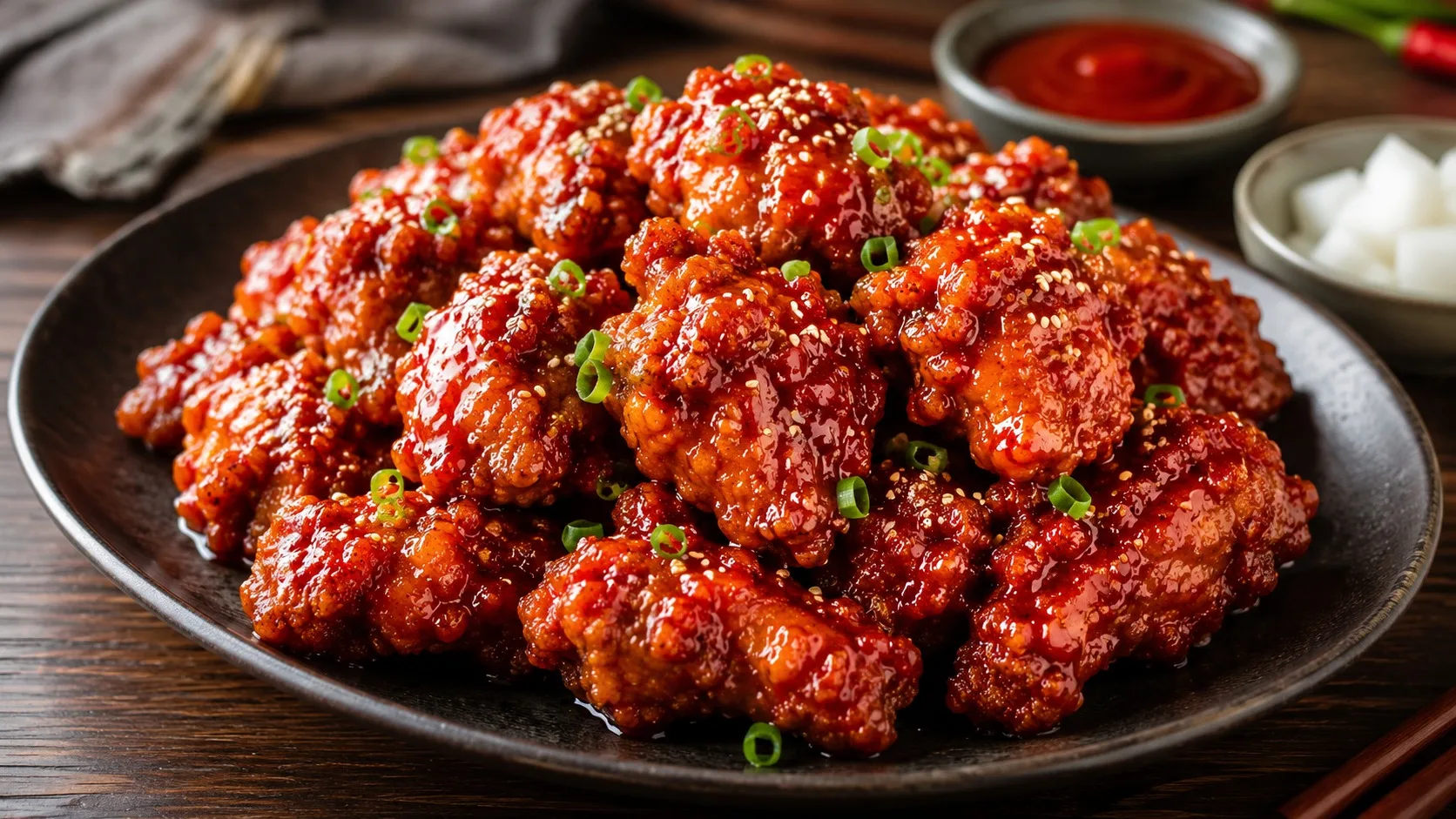
Korean fried chicken with spicy sauce, inspired by the yangnyeom chicken style, combines a thin, crispy crust with a sweet and sour gochujang sauce. The secret to texture is to control the size of the pieces, use a light coating, fry at two temperatures and only coat in the sauce immediately before serving.
Ingredients
For the chicken
• 800 g boneless, skinless chicken thighs, cut into approximately 4 cm pieces
• 1 level teaspoon of salt (5 g)
• 1/2 teaspoon ground black pepper
• 2 teaspoons of grated fresh ginger (8 g)
• 120 g of wheat flour
• 60 g potato starch
• 1 teaspoon of chemical yeast powder (4 g)
• 160 ml of very cold water
• About 1.5 liters of neutral vegetable oil for frying, or enough to form a 4 to 5 cm layer in the pan
For the hot sauce
• 1 teaspoon of neutral vegetable oil (5 ml)
• 3 finely chopped garlic cloves (about 10 g)
• 3 tablespoons of gochujang (45 g)
• 2 tablespoons of ketchup (30 g)
• 2 and 1/2 tablespoons of honey or rice syrup (about 50 g)
• 1 tablespoon of soy sauce (15 ml)
• 1 tablespoon of rice vinegar (15 ml)
• 2 tablespoons of water (30 ml)
• 1/2 teaspoon of gochugaru, optional, to increase the heat
To finish
• 1 tablespoon of toasted sesame seeds
• 2 tablespoons of sliced chives
Preparation method
1. Cut, dry and season the chicken
Dry the chicken well with paper towel and cut into pieces of similar size, approximately 4 cm. Mix with salt, pepper and ginger. Cover and let rest for 20 minutes in the refrigerator; Do not marinate at room temperature.
2. Prepare the sauce
Heat 1 teaspoon of oil in a small frying pan over medium-low heat. Add the garlic and stir for about 30 seconds, without letting it darken. Add gochujang, ketchup, honey or rice syrup, soy sauce, vinegar, water and gochugaru, if using. Cook for 2 to 3 minutes, stirring, until glossy and slightly thickened. As you run the spatula across the bottom, the path should remain visible for about 1 second before the sauce comes together again. Turn off and set aside.
3. Heat the oil and prepare the grill
Put the oil in a deep, heavy-bottomed pan, no more than half the height of the container. Heat to 165°C. Position a rack over a baking tray or tray to receive the chicken; air circulation prevents the steam from softening the bottom of the cone.
4. Make a thin covering
Mix the flour, potato starch and yeast. Add the very cold water and stir just until no large pockets of flour remain; small lumps are acceptable. The batter should cover the chicken in a thin layer and drip slowly from the spoon. Dip the pieces into the batter and let the excess drip off before placing them in the oil.
5. Make the first frying at 165 °C
Fry in 2 or 3 batches, placing the pieces one by one so they don't stick together. Try to keep the oil between 160°C and 165°C; if it drops too much, reduce the amount of chicken per batch. Fry for 5 to 6 minutes, turning when necessary, until the topping is set and lightly golden. Remove to the wire rack and let rest for 5 minutes while the internal steam escapes.
6. Do the second frying at 180 °C
Raise the oil to 180 °C. Fry the pieces again, in batches if necessary, for 2 to 3 minutes, until they are golden and very crispy. The internal temperature of the thickest piece must reach at least 74 °C. Remove to the grill and wait about 1 minute before applying the sauce.
7. Add the sauce at the right time
Reheat the sauce just until it is fluid and hot, without letting it boil vigorously. Place the chicken in a large bowl and first add about two-thirds of the sauce. Mix for just 15 to 20 seconds, enough to create a thin, shiny film. Add more sauce only if necessary. For maximum crunch, brush a thin layer of sauce instead of dipping the pieces. Finish with sesame seeds and chives and serve immediately.
Right spot / how to know it’s ready
The cone must be golden, rigid and with small bubbles on the surface, without pasty areas. When you lightly tap a piece on the wire rack, the frosting should sound dry and firm. The chicken needs to reach at least 74°C in the center of the thickest piece. Once glazed, the sauce should form a thin, sticky layer, with no puddles at the bottom of the bowl.
Tips for the recipe to work out
Standardize the cut
Pieces of about 4 cm cook more evenly. If some are much larger, the cone may darken before the center reaches a safe temperature.
Control the oil temperature
Thermometer is especially useful in this recipe. Cold oil leaves the frosting heavy and oily; Too hot oil will darken the outside before cooking the center. When frying for the first time, maintain 160°C to 165°C; in the second, work close to 180 °C.
Use a wire rack, not a stack of paper towels
The grill lets steam escape from all sides. Paper towels in direct contact with the cone can retain moisture and accelerate the loss of crispiness.
Don't make the sauce watery
If the sauce is very fluid, it penetrates the coating faster. Reduce until slightly thick and apply in a thin layer.
Glace only when serving
The second frying must be completed before the sauce returns to the heat. Only wrap the chicken when taking it to the table; The longer the cone is in contact with the sauce, the more it softens.
Substitutions and variations
Can I change the potato starch?
Yes. Use the same amount of cornstarch. The crust remains crunchy, but tends to become a little more delicate and less firm after receiving the sauce.
Can I use chicken breast?
You can. Cut into pieces of the same size and start checking for doneness early on the first frying to reduce the risk of drying out. Safety continues to be defined by a minimum internal temperature of 74°C.
Can I swap honey for rice syrup?
Yes. Rice syrup makes the sauce more neutral and bright; honey adds its own aroma and can make the sauce a little more striking.
What to use instead of gochujang?
There is no direct replacement without significantly changing the profile of the dish. Regular chili pastes can provide heat, but they don't replicate gochujang's combination of fermentation, sweetness, and body. If you make an adaptation, adjust sugar, salt and acidity little by little and treat the result as a variation.
How to store
Chicken is best immediately after being glazed. If there are leftovers, place in a shallow container and refrigerate for up to 2 hours, keeping at 4°C or below. Consume within 3 to 4 days. To reheat, prefer oven or air fryer to recover some of the crispiness and heat until the center reaches 74 °C. Freezing is possible, but sauce and moisture greatly reduce the quality of the cone after thawing.
How to serve / side dishes
Serve immediately with white rice and chicken-mu style pickled radish, which helps balance the sweet and spicy sauce. A simple coleslaw also works well for freshness and texture.
Common mistakes
Why was the cone soggy?
The most common causes are oil below temperature, a crowded pan, resting on a surface that traps steam or excess sauce. Fry in batches, use a wire rack and apply just a film of sauce at the end.
Why did the coating come off the chicken?
Very wet chicken or very thick batter will result in coatings that come off. Dry the meat well before seasoning and allow excess batter to drain before frying.
Why did the chicken darken on the outside and still be raw in the center?
The pieces were probably too big or the oil was too hot from the first frying. Standardize the cut, keep the first stage close to 165 °C and confirm 74 °C in the center with a thermometer.
Why did the sauce burn?
Gochujang, honey and sugar burn easily on high heat. Cook the sauce over medium-low heat and remove once it is shiny and slightly thickened; it will continue to thicken a little off the heat.