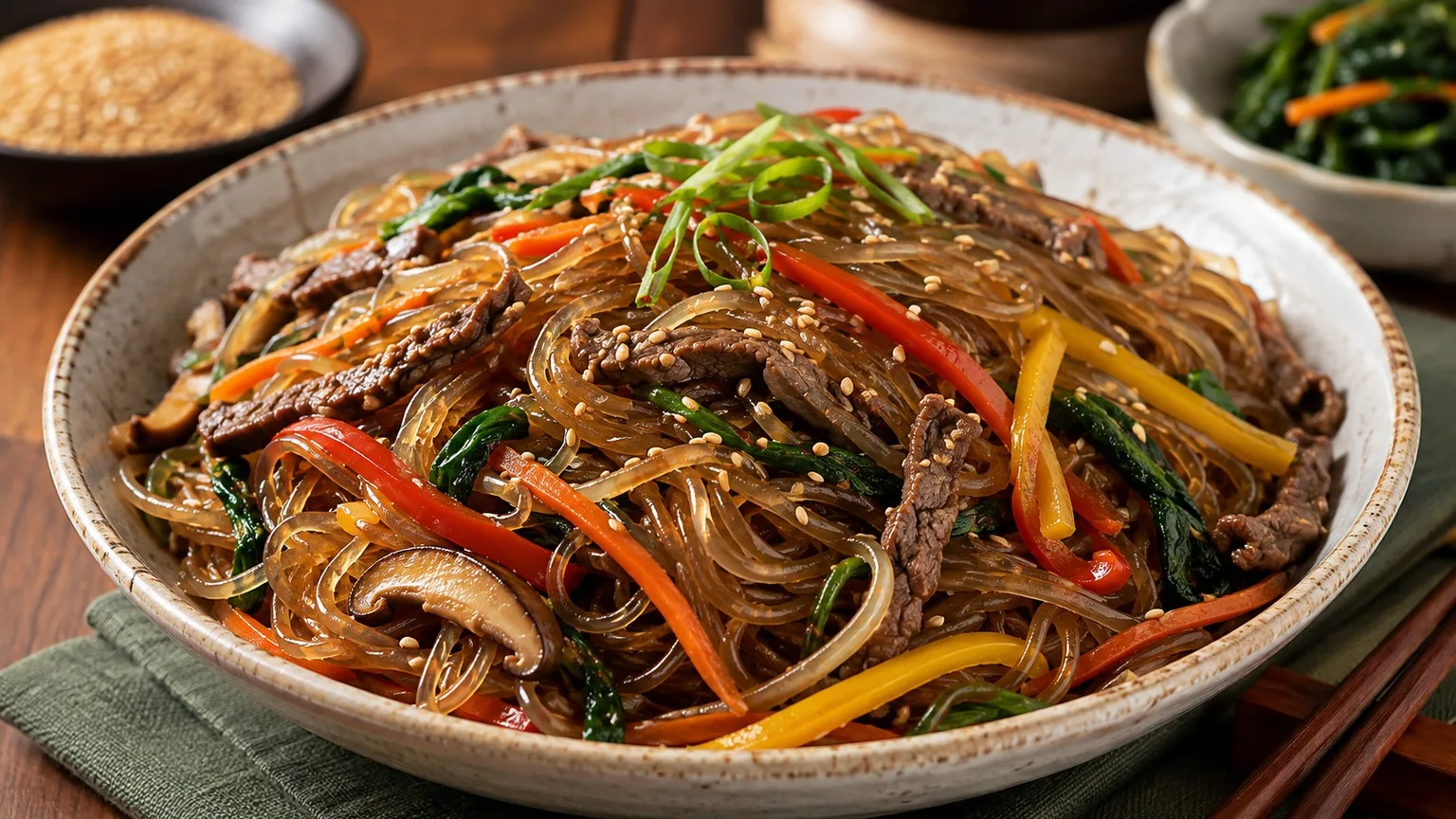
This version of japchae uses sweet potato starch dangmyeon, beef, and vegetables cut into thin strips. The point depends on cooking the components in stages, draining the pasta very well and bringing them together only at the end, to preserve the elasticity of the threads and the texture of the vegetables.
Ingredients
For the japchae
• 200 g dangmyeon (Korean sweet potato starch noodles)
• 120 g of rump or sirloin without excess fat, in thin strips of approximately 5 cm
• 150 g of spinach
• 100 g fresh shiitake, sliced
• 1 medium carrot (about 100 g), in thin sticks
• 1/2 medium onion (about 100 g), sliced
• 1/2 red pepper (about 70 g), in thin strips
• 1/2 yellow pepper (about 70 g), in thin strips
• 2 spring onions, in pieces of about 5 cm
• 2 tablespoons of neutral vegetable oil, for sautéing
• 1/4 teaspoon salt, or enough to lightly season the vegetables
For the sauce
• 3 tablespoons (45 ml) soy sauce
• 1 1/2 tablespoon (about 18 g) brown or demerara sugar
• 1 1/2 tablespoon (about 22 ml) toasted sesame oil
• 2 cloves of garlic, grated or finely chopped
• 1/2 teaspoon ground black pepper
• 1 1/2 tablespoon of toasted sesame seeds, 1 tablespoon for the sauce and 1/2 tablespoon for finishing
Preparation method
1. Mix the sauce and arrange the cuts
Mix the soy sauce, sugar, sesame oil, garlic, black pepper and 1 tablespoon of the sesame until the sugar dissolves. Reserve the remaining 1/2 tablespoon of sesame for finishing. Leave all the vegetables already cut before turning on the heat: sautéing is quick, and strips of similar thickness cook more evenly.
2. Season the meat
Mix the meat with 1 tablespoon of the prepared sauce and leave it in the fridge for 10 minutes while you take care of the spinach and pasta. Do not marinate the meat at room temperature.
3. Blanch and dry the spinach
Boil water in a large pot. Add the spinach and cook for 30 to 45 seconds, just until wilted. Remove, rinse under cold water, drain and squeeze gently to remove as much water as possible. Cut two or three times and mix with 1 teaspoon of the prepared sauce.
4. Cook the dangmyeon until translucent and elastic.
Return the water to the boil and add the dangmyeon. Cook for about 6 to 8 minutes, stirring after the first minute to loosen the threads, or adjust the time according to the mark. The noodles should be completely translucent, soft to the bite and still elastic, without a hard core. Drain immediately, rinse in cold water and leave in the colander for 2 to 3 minutes, until it stops dripping. Cut the threads two or three times with culinary scissors and mix with 2 tablespoons of the prepared sauce.
5. Saute the pasta to firm up the texture
Heat a large frying pan over medium-high heat with about 1 teaspoon of vegetable oil. Add the pasta and sauté for 3 to 4 minutes, stirring frequently. It should be shiny and slightly sticky to the touch, but without forming a block and without loose liquid at the bottom. Transfer to a large bowl.
6. Saute the vegetables in stages
In the same frying pan, use small portions of the remaining oil. Saute onion and chives for about 1 minute and 30 seconds; book. Saute the shiitake for about 2 minutes, until softened and lightly browned; book. Finally, sauté carrots and peppers for 1 minute and 30 seconds to 2 minutes. Season the vegetables with small pinches of salt. Keep the heat on medium-high and don't overcrowd the pan: the vegetables should be cooked, colored and still firm.
7. Cook the meat
Heat the frying pan again over medium-high heat, add the little oil that remains and spread the meat strips without crowding them. Saute for about 2 to 3 minutes, turning to brown evenly. For safety, whole beef cuts should reach 63°C at the thickest point and rest for 3 minutes; Set the meat aside for this amount of time before assembling.
8. Mix and adjust humidity
Add the spinach, vegetables and meat to the pasta. Add all the remaining sauce and mix gently until the strands are uniformly shiny. If any ingredients are too cold, return everything to the pan for 1 to 2 minutes over medium heat, just to heat through, without overcooking the vegetables. Finish with the reserved 1/2 tablespoon of sesame seeds.
Right spot / how to know it’s ready
The dangmyeon should be completely translucent and flexible, with no opaque or hard part in the center. When lifting a portion with tweezers, the strands should separate easily after a slight shake, maintaining elastic strength rather than unraveling. The frying pan and bowl should not have a puddle of sauce. The vegetables should be soft around the edges but still offer slight resistance when biting into them. The meat must have reached the safe temperature indicated when preparing it.
Tips for the recipe to work out
Drain the real pasta
After rinsing, wait for the hair to stop dripping before seasoning. Residual water dilutes the sauce and leads to a watery japchae that is more likely to stick together when it cools.
Use a wide frying pan and work in batches
A pan that is too full loses temperature and starts to steam the vegetables. Sautéing each group for a short time better preserves the color, texture and individual flavor of the ingredients.
Don't look for al dente point at dangmyeon
Unlike many wheat noodles, dangmyeon for japchae should cook until completely translucent and soft. The elasticity comes from the sweet potato starch and the subsequent sautéing, not from leaving a hard center.
To advance preparation, finish the recipe and cool quickly
Reheated japchae regains much of its softness and elasticity. To serve later, place in shallow containers, refrigerate within the safe period and reheat in a frying pan with 1 to 2 tablespoons of water or in the microwave covered, mixing halfway through heating.
Substitutions and variations
Can I change the shiitake?
Yes. Shimeji, Paris mushroom, or oyster mushroom work well. Dried shiitake can also be used after it has been hydrated and well squeezed; it delivers a more concentrated flavor and firmer texture.
Can I make it without meat?
You can. Replace the meat with 180 to 200 g of well-dried and browned firm tofu in cubes or strips. The dish is less intense in meat flavor, so it's worth reserving some of the sauce to coat the tofu after it's browned.
Are other glass noodles suitable?
Mung bean starch glass noodles can be used as an adaptation, but they do not provide the same elasticity as dangmyeon and tend to be more delicate. Follow the time on the package and reduce the sautéing to prevent the strands from breaking.
Are peppers mandatory?
No. They help with color and crunch, but can be omitted. Compensate with a little more carrots, mushrooms or spinach, keeping the total volume of vegetables close to what is indicated.
How to store
As it contains meat and cooked ingredients, do not leave japchae unrefrigerated for more than 2 hours; if the environment is above 32°C, the limit drops to 1 hour. To store, place in shallow containers and refrigerate at 4°C or below.
In the refrigerator, consume within 3 to 4 days. To safely reheat leftovers, heat to 74°C. A small amount of water during reheating helps the hair regain softness. Freezing is possible, but it is not the best option for texture: the noodles tend to become softer and the vegetables lose their crunch.
How to serve / side dishes
Serve the japchae hot or warm, immediately after finishing, as a light main dish or side dish. Toasted sesame and chives reinforce the aroma; kimchi or other Korean side dishes can be served separately, without mixing with the noodles.
Common mistakes
Why did my japchae turn into a block?
The most common reasons are poorly drained pasta, lack of seasoning in the threads right after draining or waiting too long before mixing. Rinse, drain well, toss in the sauce and sauté for a short time before setting aside.
Why were the noodles too soft?
It probably stayed in the hot water too long or continued cooking after it was ready. Remove as soon as it is translucent and soft, rinse immediately in cold water and do not prolong the final sauté.
Why was it watery?
Spinach that is barely squeezed, vegetables sautéed in a full pan or pasta that is still dripping adds water to the dish. Dry each component and use medium-high heat in batches to evaporate moisture quickly.
Why were the vegetables mushy and discolored?
When they all go in together, the more delicate ones are overcooked before the firmer ones are cooked. Respect the order and short times for each group and only mix everything at the end.