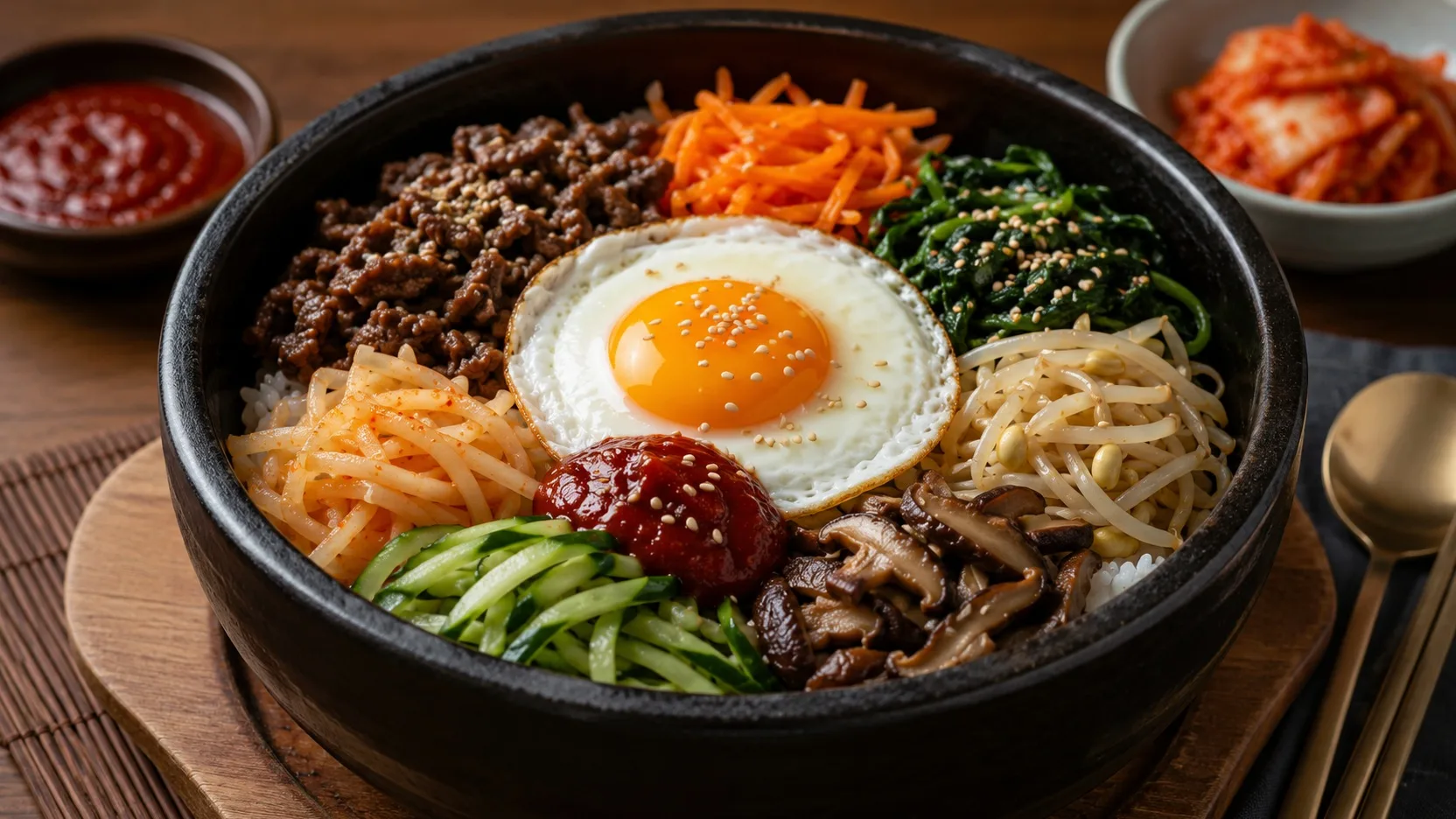
Ingredients
For the rice
• 2 cups (tea) of short-grain white rice, about 360 g
• 2 cups (tea) of water, approximately 480 ml, or the amount indicated for your rice
For the meat
• 250 g of rump, sirloin or other tender beef, cut into very thin strips
• 1 tablespoon soy sauce
• 1 teaspoon of sugar
• 1 teaspoon of toasted sesame oil
• 1 teaspoon of mirin or culinary sake, optional
• 1 small clove of garlic, grated or finely chopped
• Black pepper to taste
For the vegetables
• 200 g of bean sprouts or soybean sprouts
• 180 g spinach, without very thick stalks
• 1 medium carrot, approximately 120 g, cut into thin strips
• 150 g fresh shiitake mushrooms or Paris mushrooms, sliced
• 1 small Japanese cucumber, about 120 g, cut into thin strips
• 1 small clove of garlic, grated or finely chopped
• 2 teaspoons of toasted sesame oil
• 2 teaspoons of toasted sesame seeds
• Approximately 1 teaspoon of salt, divided between the vegetables
• 2 teaspoons of neutral oil for sautéing
For the gochujang sauce
• 4 tablespoons of gochujang
• 1 tablespoon of water
• 2 teaspoons of rice vinegar
• 2 teaspoons of toasted sesame oil
• 1 teaspoon of sugar
To finish
• 4 large eggs, pasteurized if served with runny yolks
• 1 teaspoon of neutral oil for frying the eggs
• 1 teaspoon of toasted sesame seeds
• Kimchi to accompany, optional
Preparation method
1. Cook the rice
Wash the rice in cold water until the water is less cloudy. Drain, add water and let rest for 20 minutes. Cook in a covered pan: heat over medium-high heat until it starts to boil, turn it down to low and cook for about 10 minutes. Turn off and let it rest, still covered, for another 10 minutes. Loosen the grains with a spatula. The rice should be soft, but slightly drier than very moist rice, to accommodate the accompaniments without turning into dough.
2. Marinate the meat and mix the sauce
Mix the meat with soy sauce, sugar, sesame oil, mirin, garlic and pepper. Let it marinate in the fridge for 20 minutes. In another bowl, mix gochujang, water, rice vinegar, sesame oil and sugar until it forms a thick but spreadable sauce. If your paste is very thick, add 1 more teaspoon of water at a time.
3. Season the cucumber
Mix the cucumber with 1/4 teaspoon of salt and let it rest for 10 minutes. Squeeze gently to remove excess liquid. Season with 1/2 teaspoon of sesame oil and 1/2 teaspoon of sesame seeds. Book.
4. Blanch the sprouts and spinach
Boil a medium pot of water. Blanch the sprouts for about 1 minute, remove with a slotted spoon and rinse quickly under cold water. In the same water, blanch the spinach for 30 to 45 seconds, until it wilts without losing its bright color. Drain both very well. Season the sprouts with 1/4 teaspoon of salt, half of the garlic, 1/2 teaspoon of sesame oil and 1/2 teaspoon of sesame seeds. Repeat with the spinach using the same amounts.
5. Saute the carrots and mushrooms
Heat a large frying pan over medium-high heat.. Add half the neutral oil and sauté the carrot for 1 to 2 minutes, just until it becomes more flexible, still with a slight crunch. Remove. Add the rest of the oil and sauté the mushrooms for 2 to 3 minutes, until they lose their raw appearance and start to brown. Divide the remaining 1/4 teaspoon of salt between them and season the mushrooms with the remaining 1/2 teaspoon of sesame oil and the remaining 1/2 teaspoon of sesame seeds. Keep the components covered to prevent them from getting too cold.
6. Brown the meat
Increase the heat and heat the same frying pan well. Just drain the excess marinade and spread the meat in one layer. Sauté for about 2 to 3 minutes, stirring as needed to brown without cooking in the liquid itself. For whole-cut beef strips, the safety reference is 63°C in the center, followed by 3 minutes of rest. If making the variation with ground beef, cook until 71°C.
7. Fry the eggs last
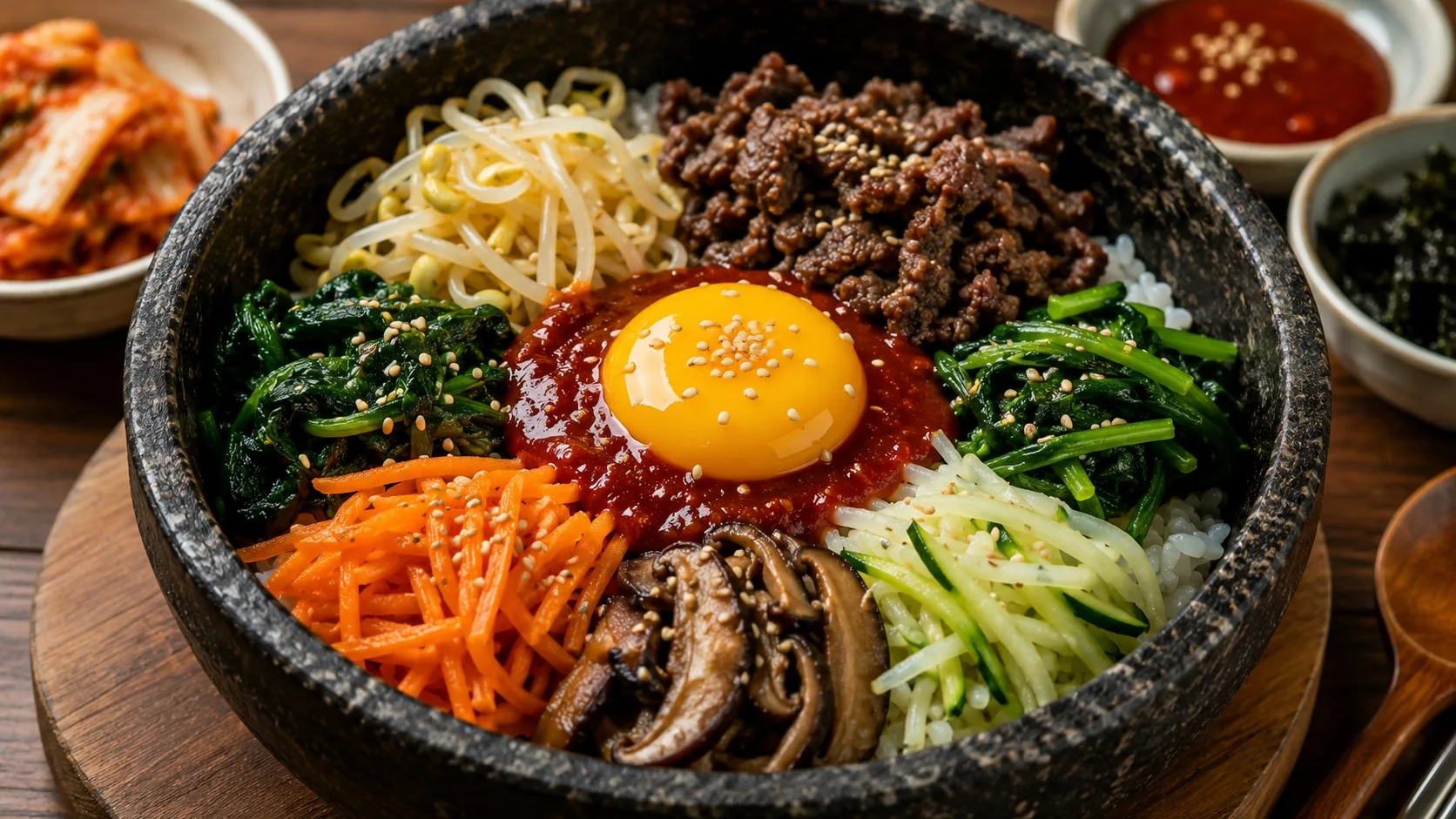
Heat the oil in a non-stick frying pan and fry the eggs. For preparation with regular eggs, the safest option is to cook until the white and yolk are firm. If you want a runny yolk as shown on the cover, use pasteurized eggs and take extra precautions for people at higher risk of foodborne illness.
8. Heat the bowls if you want the dolsot effect
To create a lightly toasted rice base, brush a heat-safe bowl, small iron pan or frying pan with a few drops of sesame oil. Add a portion of rice and heat over medium heat for 3 to 5 minutes, until you hear soft crackling sounds. If you are using regular bowls, just heat them with hot water, dry and proceed to assembly.
9. Assemble without letting the components cool
Divide the rice between four bowls. Arrange carrots, mushrooms, spinach, sprouts and cucumber in separate portions around the rice. Add the meat, place the egg in the center and finish with sesame seeds. Serve with about 1 tablespoon of gochujang sauce per bowl and leave the rest at the table. Mix everything only when eating.
Right spot / how to know it’s ready
The rice must be cooked and soft, but without excess water. Vegetables need to maintain bright colors and different textures: sprouts still firm, spinach just wilted, carrots supple and mushrooms golden. The meat must be browned on the outside and reach the safe temperature indicated for the cut used. In the dolsot effect, the bottom of the rice begins to crackle and forms golden spots without a burnt smell. The sauce should fall slowly from the spoon and distribute easily when the bibimbap is mixed.
Tips for the recipe to work out
Dry the vegetables well
Sprouts, spinach and cucumber carry a lot of water. Drain and squeeze carefully before seasoning; This detail prevents the sauce from becoming diluted and the rice at the bottom from softening.
Season each component sparingly
The soy sauce, gochujang and sesame oil come in at different times and add to the dish. If each vegetable is too salty, the final result will lose balance after mixing.
Work in sequence in the same frying pan
Start with the mildest-tasting vegetables and leave meat and eggs for last. This way, you reduce dishes and can take the hot components for assembly without mixing flavors ahead of time.
Make the sauce before adjusting the heat
Gochujang varies in salt, sweetness and heat depending on the brand. Mix the base completely before deciding whether you need more water, sugar or paste; Tasting the puree paste can give a misleading impression of the final sauce.
Organize everything before lighting the fire
Each topping takes a short time to cook. Have vegetables cut, spices measured, and bowls ready so no component is overcooked while you prepare the next.
Substitutions and variations
No beef
Use 300 g of well-drained firm tofu, cut into cubes or slices and browned until crusty. Season with part of the meat marinade. The dish is lighter and less juicy; Also omit the egg if you want a version without ingredients of animal origin and check the labels of the sauces used.
No bean sprouts
Use zucchini cut into strips and sautéed quickly. It does not reproduce the crunchiness of sprouts, but maintains the contrast between vegetables and rice.
No shiitake
Paris mushroom or cremini works well, with a milder flavor. Brown over high heat and avoid crowding the pan to avoid releasing excess water.
With other rice
Medium- or long-grain white rice works, but the result is less cohesive and has a different chewiness. Avoid very moist or freshly cooked rice with excess water.
No gochujang
Ordinary chili sauces are not an equivalent substitute for gochujang because they lack the fermentation, sweetness, and texture of the Korean paste. If gochujang is not available, it is best to treat the preparation as a bibimbap-inspired variation and adjust the sauce to suit your taste.
How to store
Cooked rice, meat, eggs and vegetables are perishable. Refrigerate components in shallow, tightly closed containers within 2 hours of preparation and keep the refrigerator at 4°C or below. For better texture, keep the sauce separate and, if possible, add the egg when serving. Consume refrigerated components within 3 to 4 days. When reheating leftovers, bring to 74°C. Do not leave the assembled bibimbap at room temperature for more than 2 hours.
How to serve / side dishes
Serve immediately, with extra gochujang sauce at the table. Kimchi can be served as a garnish. To preserve the contrast of colors and textures, take the assembled bowl to the table and mix the rice, vegetables, meat, egg and sauce just before eating.
Common mistakes
Why is my bibimbap watery?
The problem usually comes from poorly drained vegetables, unjuiced cucumbers or mushrooms cooked in a cold, crowded pan. Remove excess liquid from each component and use high heat for the mushrooms.
Why did the rice turn into dough after mixing?
Rice with too much water or very moist coverings loses structure quickly. Cook the rice a little drier than usual and let the steam escape before assembling.
Why did the vegetables lose color and crunch?
They probably spent too long in the water or in the frying pan. Bibimbap works best when each vegetable is cooked just enough to be tender but still recognizable in texture and color.
Why did everything arrive cold at the table?
The order of preparation is decisive. Make the rice first, have the sauce ready and the vegetables prepared, cook meat and eggs last, and use warmed bowls. If you have a dolsot or iron frying pan, heat the rice in the bowl before assembling.