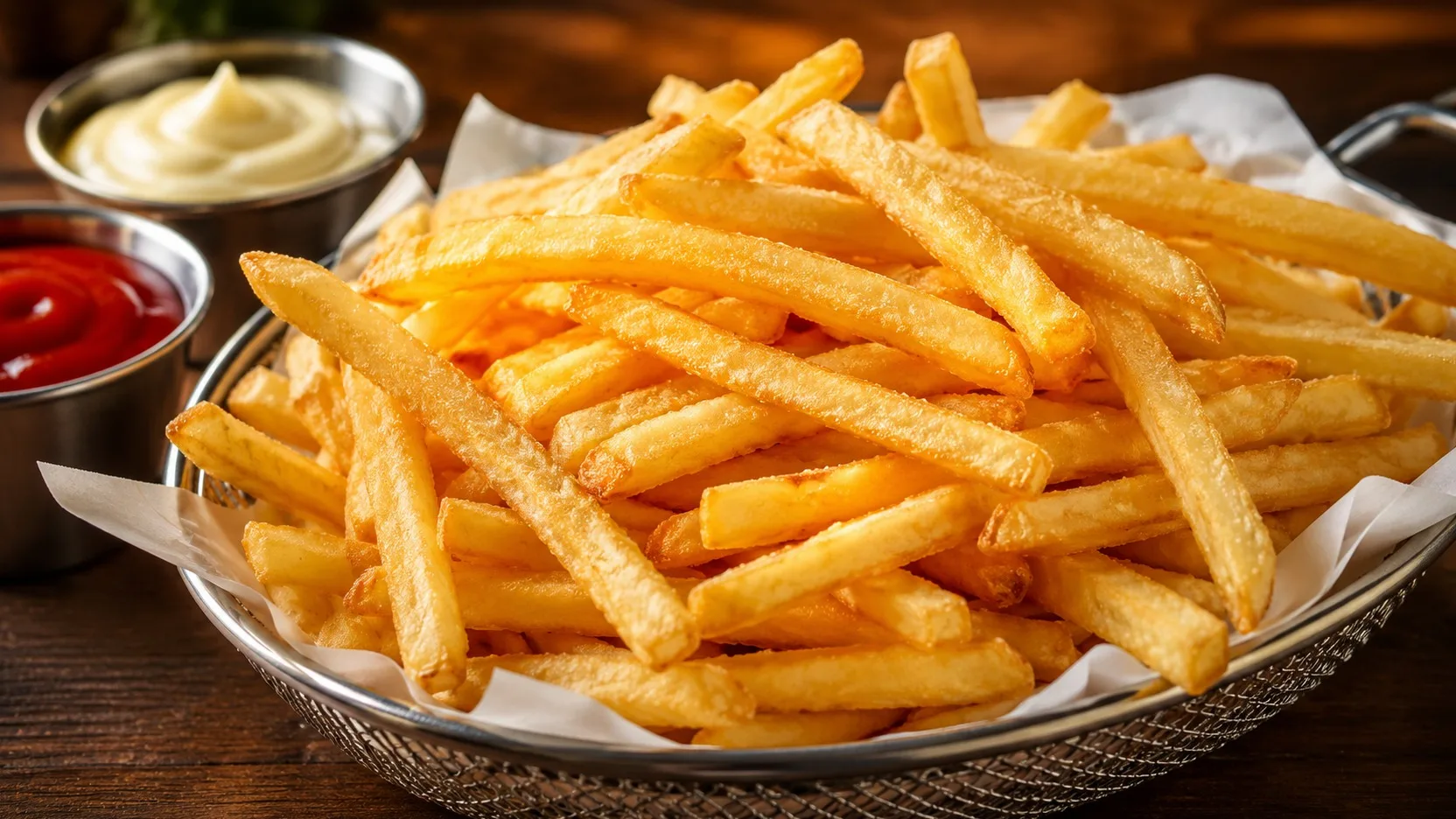
Double frying separates two functions: the first cooks and structures the inside of the stick; the second, in hotter oil, dries and browns the surface. For a cafeteria-quality result, even cutting, thorough drying, and batch size matter as much as the temperature of the oil.
Ingredients
• 1 kg of Asterix potatoes, preferably large, firm tubers
• 1.5 to 2 liters of neutral refined oil, such as soy, canola or sunflower, in sufficient quantity for deep frying
• 10 g of fine salt, or to taste
Preparation method
1. Cut the potatoes
Wash and peel the potatoes, if desired. Cut first into plates and then into sticks 8 mm to 1 cm thick. Keep the cut as uniform as possible so everyone cooks at the same rate.
2. Wash and soak
Place the sticks in a bowl with plenty of cold water, stir and change the water two or three times, until it becomes much less cloudy. Cover again with cold water and leave to soak for 20 minutes. Drain completely.
3. Dry without leaving surface moisture
Spread the potatoes on clean cloths or paper towels and dry very well, including between the sticks. The surface must be free of visible drops before entering the hot oil.
4. Make the first frying
Heat the oil to 155 to 160°C in a deep, stable pan, leaving space for the oil to bubble safely. Divide the potatoes into four batches of around 250 g. Fry one batch at a time for 5 to 6 minutes, keeping the oil close to this range. Remove when the sticks are cooked and flexible, but still pale, without an intense golden crust.
5. Let the toothpicks rest
Transfer each batch to a wire rack or lined baking sheet without crowding. Let it rest for at least 10 minutes after the first frying, until the surface loses excess steam and becomes drier to the touch. Complete the first frying of all batches while the previous batches rest.
6. Make the second frying
Raise the oil to 185 to 190 °C. Return to working in batches, without overcrowding the pan. Fry each portion for about 2 to 3 minutes, stirring gently once, until the sticks are golden brown, firm and crispy. Between batches, wait for the oil to return to the indicated range.
7. Drain and season
Remove the potatoes with a slotted spoon or basket, let the excess oil drain for a few seconds and transfer to a wire rack or absorbent paper. Season with salt while they are still hot and serve immediately.
Right spot / how to know it’s ready
When frying for the first time, the stick should be soft in the center and slightly flexible, but still clear and without a hard crust. In the second, the surface must have a uniform golden color, small areas that are more toasted and a firm texture when touched with tweezers. When breaking down a potato, the skin should be dry and crispy, while the inside remains soft and without a raw core.
Tips for the recipe to work out
Use a potato suitable for frying
Asterix is a consistent choice because it tends to have higher dry matter and a shape that is favorable for cutting into sticks. If the potato is too moist or too sweet, the frying tends to darken before becoming crispy.
Control the quantity per batch
For 1 kg of potatoes, four batches of approximately 250 g avoid a sudden drop in temperature. If the pan is smaller, reduce each batch further rather than compensating for more time.
Dry before first frying
Surface water causes splashing and delays crust formation. After soaking, dry until no visible drops remain on the sticks.
Use a thermometer when possible
Double frying depends on two distinct ranges. The first one cooks without browning too much; the second must be hot enough to dry and firm the surface quickly.
Season only at the end
The salt adheres better when the potato comes out of the second frying and prevents the raw sticks from releasing moisture before they go into the oil.
Substitutions and variations
If you can't find Asterix potatoes, use another variety suitable for frying or a potato with a flourier texture and higher dry matter content. Waxy or very moist potatoes may produce a less fluffy interior and less persistent crunch.
Refined soybean, canola, and sunflower oil work well. Choose a neutral oil suitable for intense heating and do not exceed the safe capacity of the pan.
For thinner sticks, reduce the times and observe the color; for sticks longer than 1 cm, especially prolong the first frying to cook the center before it browns.
How to store
French fries have better texture right after the second frying. If you have leftover ready-made potatoes, let the strong steam dissipate, place in a shallow container and refrigerate without delay. Consume within 3 days. To recover some of the crispiness, reheat in the oven or air fryer at around 200°C until hot and dry on the outside; the microwave tends to soften the crust.
How to serve / side dishes
Serve as a portion with ketchup, seasoned mayonnaise or mustard sauce, or as an accompaniment to burgers, sandwiches and grilled meats. To preserve the crispiness, bring it to the table as soon as each second round of frying is finished.
Common mistakes
Why did the potato become soft and soggy?
The most common cause is an excessive drop in oil temperature due to too much potato in the same batch, combined with a short or cold second frying. Work in smaller batches, wait for the oil to regain temperature and only remove it when the surface is firm and golden.
Why did the potato darken before it became crispy?
The temperature may be too high, or the potato may contain more reducing sugars, something that favors rapid browning. Use potatoes suitable for frying and keep the second frying below 190°C.
Why did the center feel hard or raw?
The cut may be too thick for the time used, or the first frying was short. In the first step, the goal is to cook the interior completely before seeking color.
Why did the sticks stick together?
Excess surface starch and an overcrowded pan promote adhesion. Wash the sticks well, dry them completely and gently drop them into the oil in small batches.