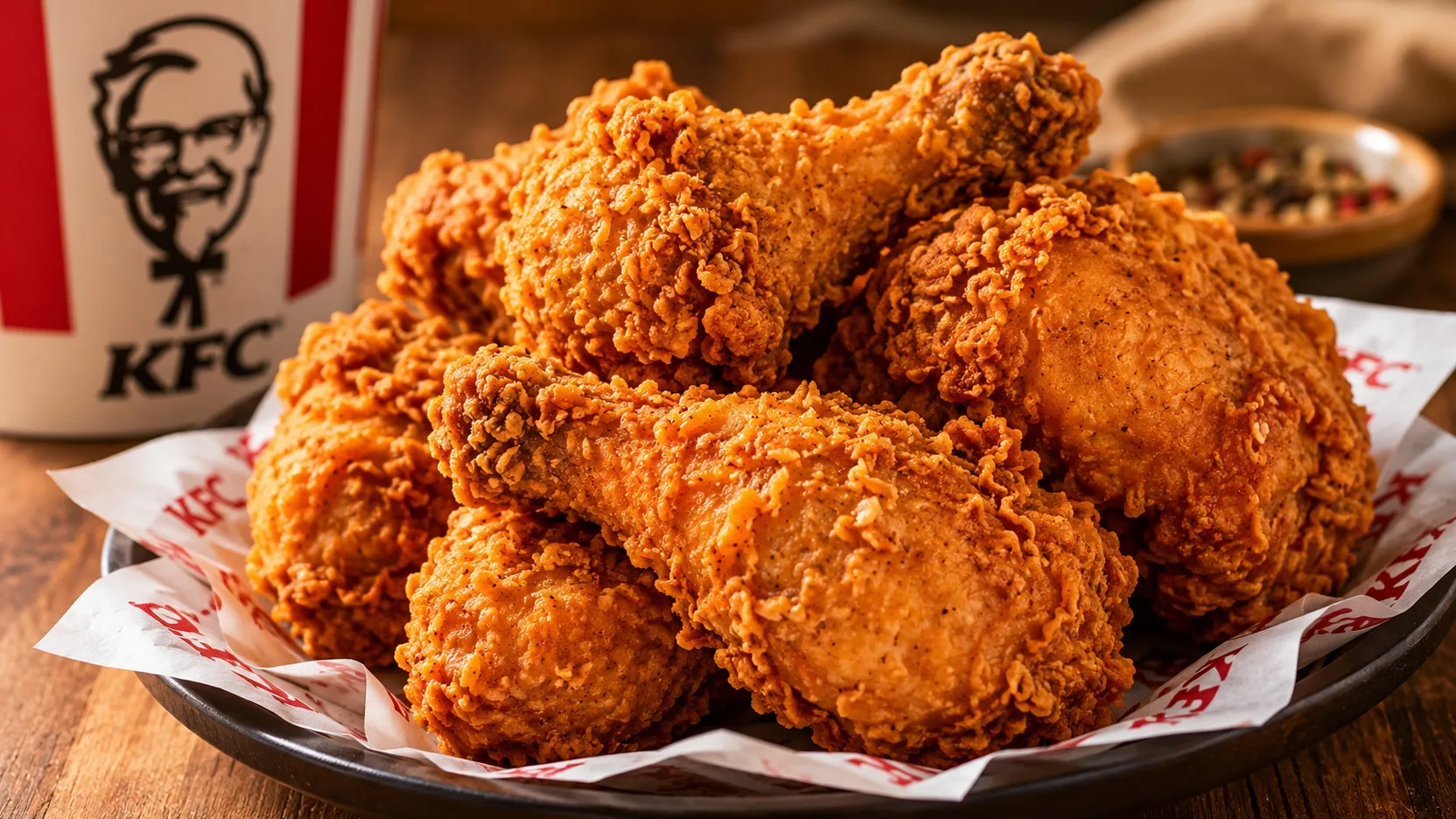
This domestic version aims for the thick, lumpy crunch associated with fast-food fried chicken without claiming to replicate a proprietary formula. The result depends on three controls: pieces of similar size, breading with small flakes and oil maintained in the correct range throughout frying.
Ingredients
For the chicken and marinade
• 1.4 kg of bone-in, skin-on chicken, preferably 4 thighs and 4 small drumsticks, weighing around 150 to 190 g per piece
• 400 ml of whole milk
• 100 g of unsweetened whole natural yogurt
• 12 g of refined salt
• 1 teaspoon sweet paprika
• 1 teaspoon of garlic powder
• 1/2 teaspoon ground black pepper
For the breading
• 320 g of wheat flour
• 80 g corn starch
• 8 g of refined salt
• 2 teaspoons sweet paprika
• 2 teaspoons of garlic powder
• 2 teaspoons of onion powder
• 1 teaspoon of ground white pepper
• 1 teaspoon of ground black pepper
• 1 teaspoon of dried oregano, rubbed between your fingers
• 1/2 teaspoon dried thyme
• 1/2 teaspoon mustard powder
• 1 teaspoon of chemical baking powder
For frying
• 1.5 to 2 liters of neutral oil with a high smoke point, such as soy, canola, corn or sunflower, or enough to form about 4 to 5 cm deep in the pan without exceeding 1/3 of the height of the container
Equipment
Use a tall, heavy pan for frying in oil, a culinary thermometer capable of monitoring the temperature of the oil and an instant-read thermometer to check the center of the pieces. Also have long tongs and a rack placed over a baking tray to drain the chicken without smothering the crust.
Preparation method
1. Make the marinade
Mix the milk, yogurt, salt, paprika, garlic powder and black pepper until uniform. Before adding the chicken, reserve 60 ml of this mixture in a clean container and refrigerate; it will be used to form the breading flakes.
2. Marinate the chicken under refrigeration
Place the thighs and thighs in the remaining marinade, mix well, cover and keep in the fridge for at least 4 hours and a maximum of 12 hours for this recipe. Do not leave the chicken marinating on the counter. When finished, discard the marinade that was in contact with the raw chicken.
3. Prepare the flaky breading
In a wide bowl, combine flour, starch, salt, paprika, garlic, onion, peppers, oregano, thyme, mustard powder and yeast. Gradually add 60 ml of the reserved clean mixture and rub with your fingertips, forming irregular lumps the approximate size of lentils and peas. These little lumps stick to the chicken and create the crispy, rough surface.
4. Dust and let set
Remove one piece of chicken at a time from the marinade and let the excess drain off for 20 to 30 seconds. Place it in the seasoned flour, coat completely, and press the breading against the skin and folds of the piece. Press some of the flakes onto the surface, shake off just the loose excess and place on a wire rack. Repeat with all the pieces and let the breading rest for 10 minutes.
5. Heat the oil with temperature control
Use a tall, heavy, open pan; do not use a pressure cooker for this frying. Heat the oil gradually to 175°C, measuring with a culinary thermometer. Work with 2 or 3 pieces at a time so the oil circulates and the temperature doesn't drop. When adding the chicken, try to keep the oil between 165 and 175 °C.
6. Fry until golden and reaches the internal point
Lower each piece into the oil with tongs, moving it away from the body. Fry the thighs for around 12 to 15 minutes and the small thighs for around 14 to 18 minutes, turning every 3 or 4 minutes to brown evenly. The times are a reference: confirm the point with a thermometer in the center of the thickest part, without touching the bone. The chicken must reach at least 74°C. If the cone darkens before then, reduce the oil to around 160 to 165 °C and finish cooking without increasing the heat.
7. Drain without smothering the crust
Remove the chicken when it is golden, firm and at a safe internal point. Place on a rack over a baking tray, without covering it and without placing paper towel in direct contact with the entire base. Wait 5 to 8 minutes before serving. Between batches, let the oil return to approximately 175°C.
Right spot / how to know it’s ready
The cone must be golden, dry and irregular, with well-fixed flakes and no areas of raw flour. When lightly touched with tongs, the topping feels stiff and crunchy, not pasty. For safety reasons, the color of the meat and juice does not replace measurement: insert a thermometer into the thickest part of each type of piece, without touching the bone, and confirm that it is at least 74 °C.
Tips for the recipe to work out
Use pieces of similar size
Thighs and drumsticks between about 150 and 190 g cook in a similar window. Much larger pieces may darken on the outside before reaching the inside.
Do not flatten the flour
The wet lumps in the dry mix are intentional. Press them onto the chicken instead of straining or crumbling them; It is this irregularity that creates the crunchy flakes.
Check the oil after each batch
Too much food at once drops the temperature and leads to heavy, oily breading. If the oil falls outside the 165 to 175°C range, adjust the heat before continuing.
Avoid water near hot oil
Let excess marinade drain off before breading and do not pour water, ice or marinade into the oil. If the oil starts to smoke, turn off the heat and let it cool; Never pour water over burning oil or fat.
Prefer a grill to rest
The grill allows steam to escape from below. Paper in contact with the entire surface holds steam and tends to soften the bottom of the crust.
Substitutions and variations
Can I use ready-made buttermilk?
Yes. Use 500 ml of buttermilk instead of milk and yogurt. The acidity and viscosity are suitable for the marinade; keep the other seasonings and reserve 60 ml before adding the raw chicken.
Can I change the cornstarch?
Potato starch can replace cornstarch in the same amount and tends to produce a light and crumbly crust. Using only wheat flour also works, but the crust is less delicate and a little denser.
Can I use breast or skinless pieces?
It can, but the weather changes and the margin for drying out increases. Choose pieces of similar thickness, monitor the internal temperature early and remove as soon as they reach a safe point. The skin helps protect the meat and changes the grip of the breading.
How to store
If you have leftovers, refrigerate the chicken within 2 hours of preparation, in a shallow, closed container, and keep at 4°C or below for 3 to 4 days. For longer periods, freeze for up to about 2 to 6 months for best quality. When reheating, bring the center back to 74°C. To recover some of the crispiness, choose oven or air fryer instead of microwave.
How to serve / side dishes
Serve after the brief rest, still hot, with cabbage salad, corn, pickles, mashed potatoes or soft bread. Sauces should be kept separately so as not to moisten the cone prematurely.
Common mistakes
Why did the breading come off the chicken?
This usually happens when the piece enters the oil still dripping with marinade, when the flour has not been pressed or when the chicken is moved too much in the first few minutes. Let it drain, compact the flakes and wait for the crust to set before turning.
Why was it dark on the outside and raw near the bone?
The oil was too hot for the size of the piece or the pieces were large and uneven. Work within the indicated range, reduce the heat if the browning progresses quickly and use the internal thermometer as a final criterion.
Why was it oily and not very crunchy?
The most common cause is an excessive drop in temperature due to placing too many pieces together. Fry in small batches and wait for the oil to return to normal before starting the next batch.