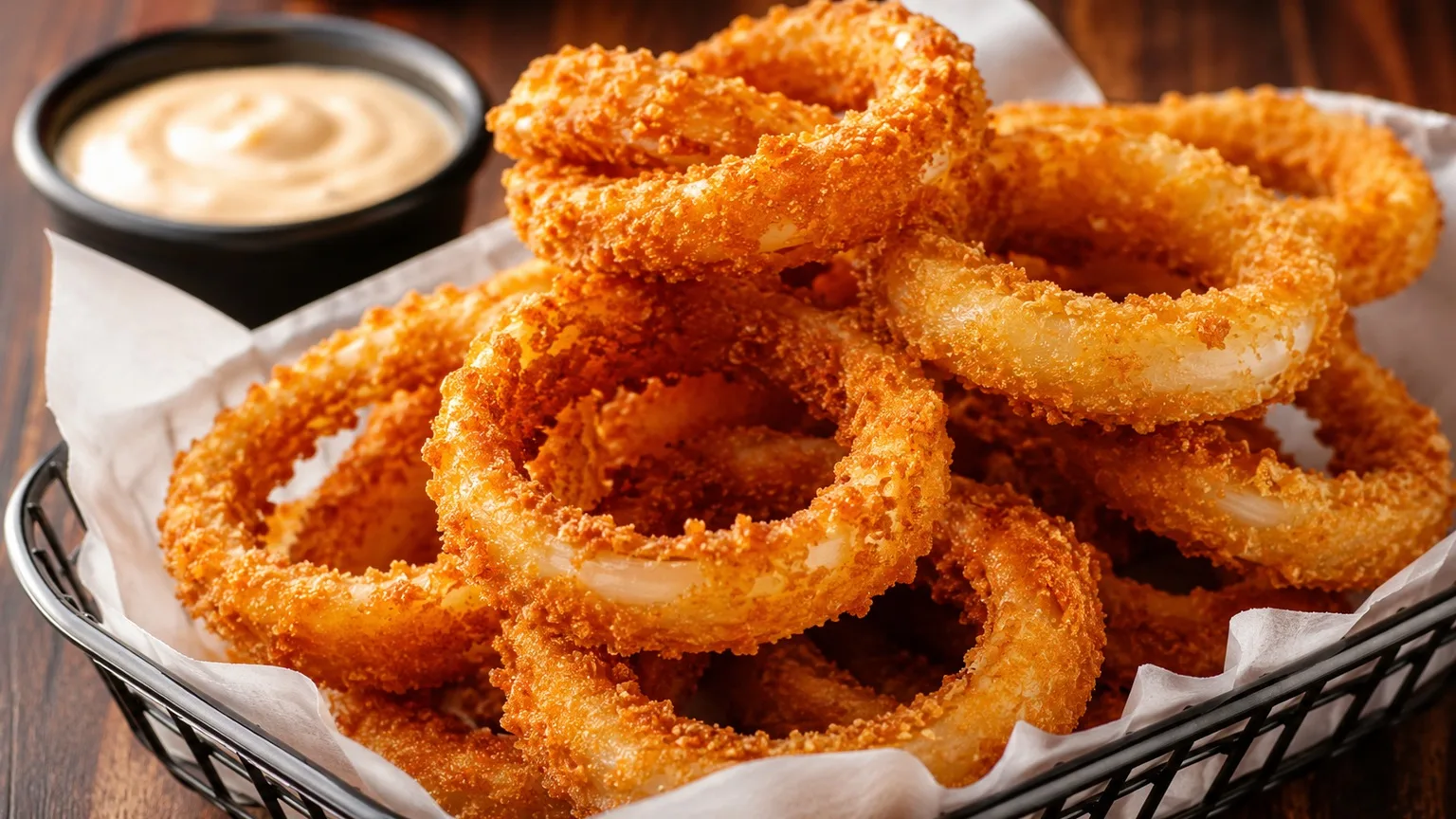
This version aims for the diner texture shown on the cover: thick rings, soft onion in the center and a lumpy panko crust that stays firm without forming a heavy layer. Controlling the moisture content of the onion, the consistency of the batter and the temperature of the oil is more important than frying for a fixed time.
Ingredients
For the onion rings
• 2 large yellow or white onions, about 500 g in total
• 120 g of wheat flour
• 50 g corn starch
• 1 teaspoon of chemical yeast, about 4 g
• 1 level teaspoon of salt, about 5 g, plus a little to finish
• 1/2 teaspoon sweet paprika
• 1 large egg
• 140 ml of very cold sparkling water, plus 10 to 20 ml if necessary
• 150 g panko flour
• Enough neutral oil to form a layer of about 5 cm in the pan, approximately 1.2 to 1.5 liters
For the optional creamy sauce
• 120 g mayonnaise
• 1 teaspoon of lemon juice
• 1/2 teaspoon sweet or smoked paprika
• 1 pinch of salt
Preparation method
1. Cut and dry the onion
Peel the onions and cut crosswise into slices of approximately 1.2 cm. Separate the layers into rings and reserve the very small crumbs for another preparation. Dry each ring very well with a paper towel or clean cloth; Wet surface is one of the main causes of slipping roofing.
2. Prepare the dry mix
In a bowl, mix the wheat flour, starch, yeast, salt and paprika. Set aside about 60 g of this mixture in a shallow dish to pre-coat. Place the panko in another shallow dish.
3. Make the chilled dough
In the bowl with the rest of the dry mixture, add the egg and 140 ml of very cold sparkling water. Mix just until no large pockets of flour remain; small lumps are acceptable. The dough should slowly flow from the whisk and cover the ring without forming a thick layer. If it is too thick, add the remaining water little by little. Keep the dough cold and do not overmix.
4. Heat the oil and set up the frying station
Heat the oil in a deep, heavy pan to 175 to 180 °C. Leave a rack on the baking tray next to it to drain the rings after they are fried. If using paper towels, do not stack the hot units as the steam will soften the crust.
5. Bread a few rings at a time
Dip 4 or 5 rings in the reserved dry mixture and remove the excess. Dip each ring in the cold dough, let it drain for 2 or 3 seconds and cover with panko, pressing lightly just to set. Place in oil immediately after breading, without letting the dough rest on the onion for too long.
time.
6. Fry in batches
Fry 4 or 5 rings at a time, keeping the oil between 175 and 180 °C. Turn once and remove when they are evenly browned and the crust appears dry and firm, generally after 2 to 3 minutes. Wait for the oil to return to the temperature range before adding the next batch.
7. Drain and season
Transfer the onion rings to the wire rack and sprinkle with a little salt while they are still hot. To keep several batches warm for a few minutes, place the rack in a low oven, at around 100°C, without covering.
8. Mix the sauce, if desired
Mix the mayonnaise, lemon, paprika and salt until smooth. Serve separately to preserve the crispiness of the rings.
Right spot / how to know it’s ready
The onion ring is done when the topping is golden, dry to the touch of tongs and the panko is visibly crispy, with no clear areas of raw dough. The bubbles around the ring become less intense towards the end of frying. When you bite into it, the onion should be soft and translucent enough to break apart with the crust, but still maintain its shape and slight strength.
Tips for the recipe to work out
Dry the onion before covering it
The pre-coating flour needs to adhere to the onion, not the water. If the rings are wet, the entire coating may slide off during frying.
Keep the dough cold and mix gently
Very cold water and brief mixing help to avoid a dense dough. Over-stirring develops more gluten and tends to make the frosting elastic and heavy rather than crumbly.
Do not turn the panko into a compressed layer
Dip the ring in the panko and press just enough to secure it. A crust that is too thick traps more steam and oil and may separate from the onion.
Work in small batches
Filling the pan lowers the temperature of the oil. With 4 or 5 rings at a time, the crust firms up faster and absorbs less oil than with congested frying.
Use a thermometer whenever possible
The appearance of the oil does not accurately show the temperature. If it drops below about 170°C, expect to recover before the next batch; If it exceeds 180°C, reduce the heat to avoid browning the panko before the onion softens.
Substitutions and variations
The panko flour can be replaced with coarse breadcrumbs, but the crust tends to be less airy and more uniform. Still water also works if it is very cold, but the result is usually less light. Cornstarch can be exchanged for potato starch in a similar proportion; the texture changes a little, but remains crunchy. White onions tend to be more pungent, while yellow onions tend to be sweeter after frying.
How to store
Onion rings are best right after frying. Once cool, store leftovers in an airtight container in the refrigerator for up to 3 to 4 days. To recover some of the crunchiness, heat in the oven or air fryer at 200 °C until they are very hot and firm again; the microwave tends to soften the coating. To freeze, cool completely, freeze first in a single layer, then transfer to airtight packaging for up to 1 month for best quality. Reheat directly from the freezer in the oven or air fryer.
How to serve / side dishes
Serve immediately as a portion, accompaniment to a burger or sandwich, or alongside fried chicken. Creamy, barbecue and mustard sauces go well together; Keep the sauce separate so it doesn't moisten the crust.
Common mistakes
Why did the breading come off the onion?
The most common cause is damp onion, lack of pre-coating or too thin dough. Dry the rings well, dip them in the dry mixture first and let the excess dough drain before adding the panko. Avoid moving the ring during the first few seconds of frying, when the crust is still setting.
Why did the onion rings become oily?
Usually the oil was cold or the pan received too many rings at once. Work in small batches and wait for the temperature to return to 175 to 180 °C before the next batch.
Why was the coverage heavy or massive?
Batter that is too thick, water that is not too cold or excessive mixing can form a dense layer. Adjust the consistency with small amounts of ice water and stop mixing once the dough is combined.
Why did they brown before the onion softened?
The oil may be too hot or the rings may have been cut too thick. Keep frying within the recommended range and standardize the slices at approximately 1.2 cm so that the crust and onion reach the point at almost the same time.