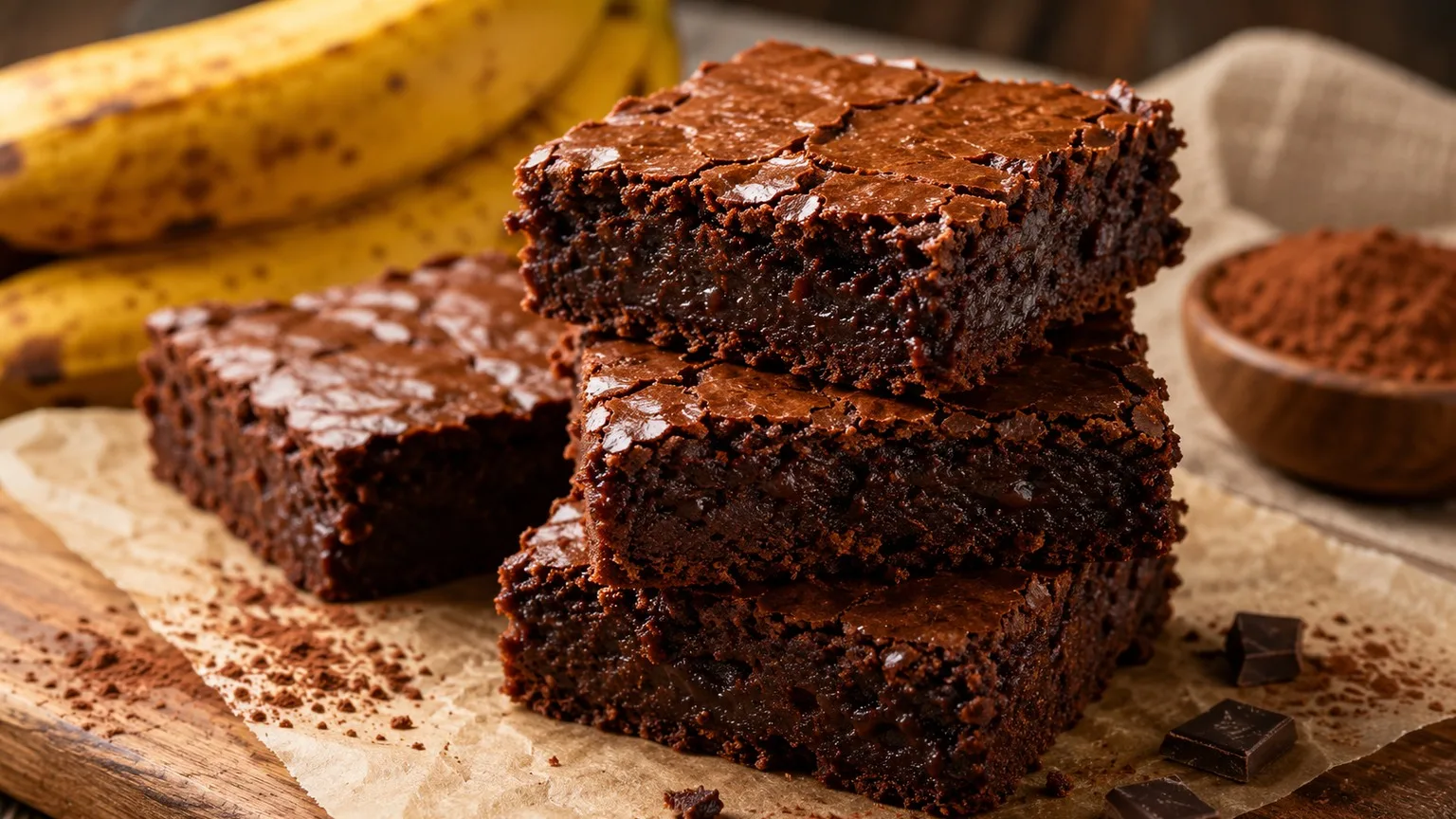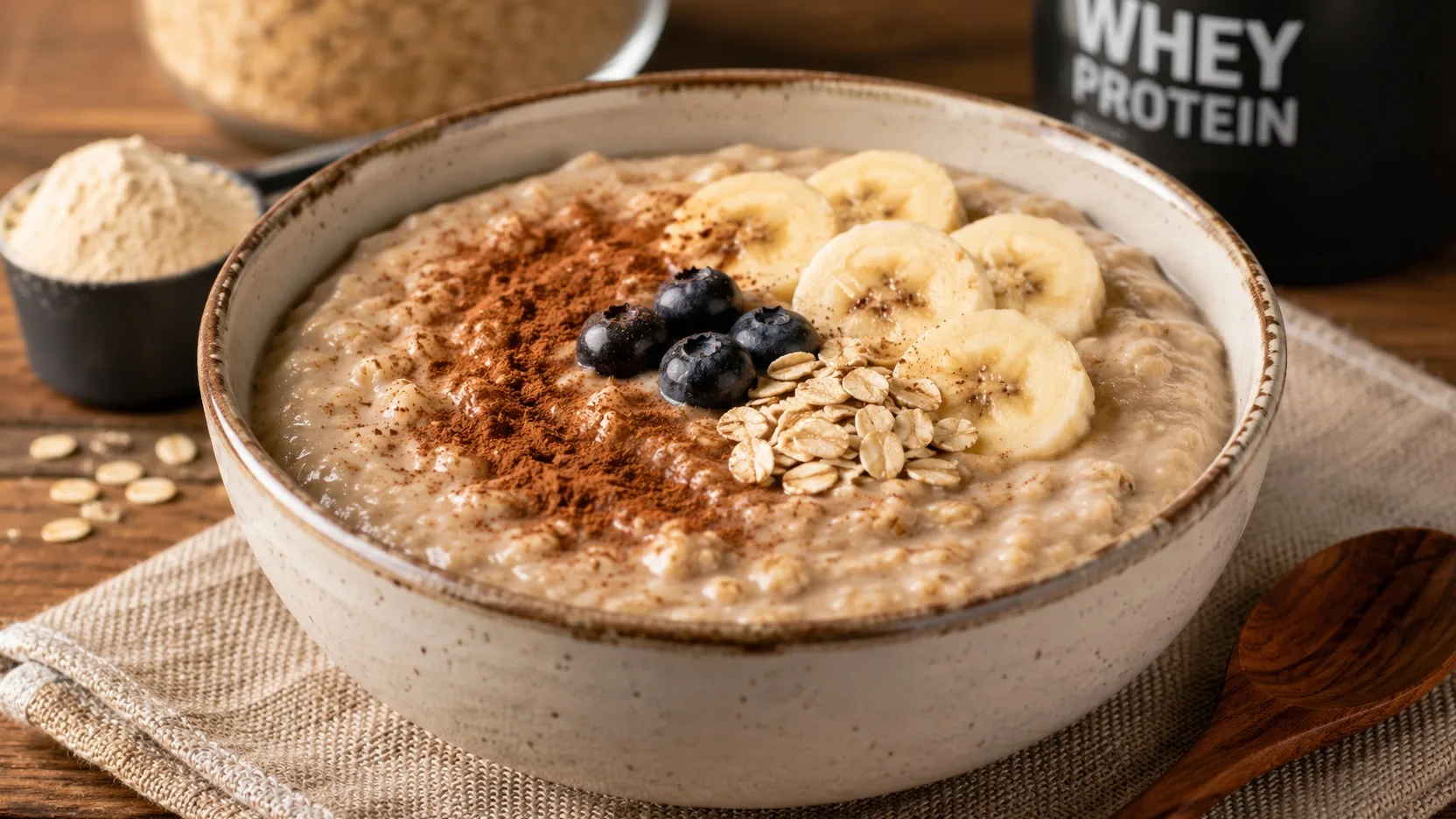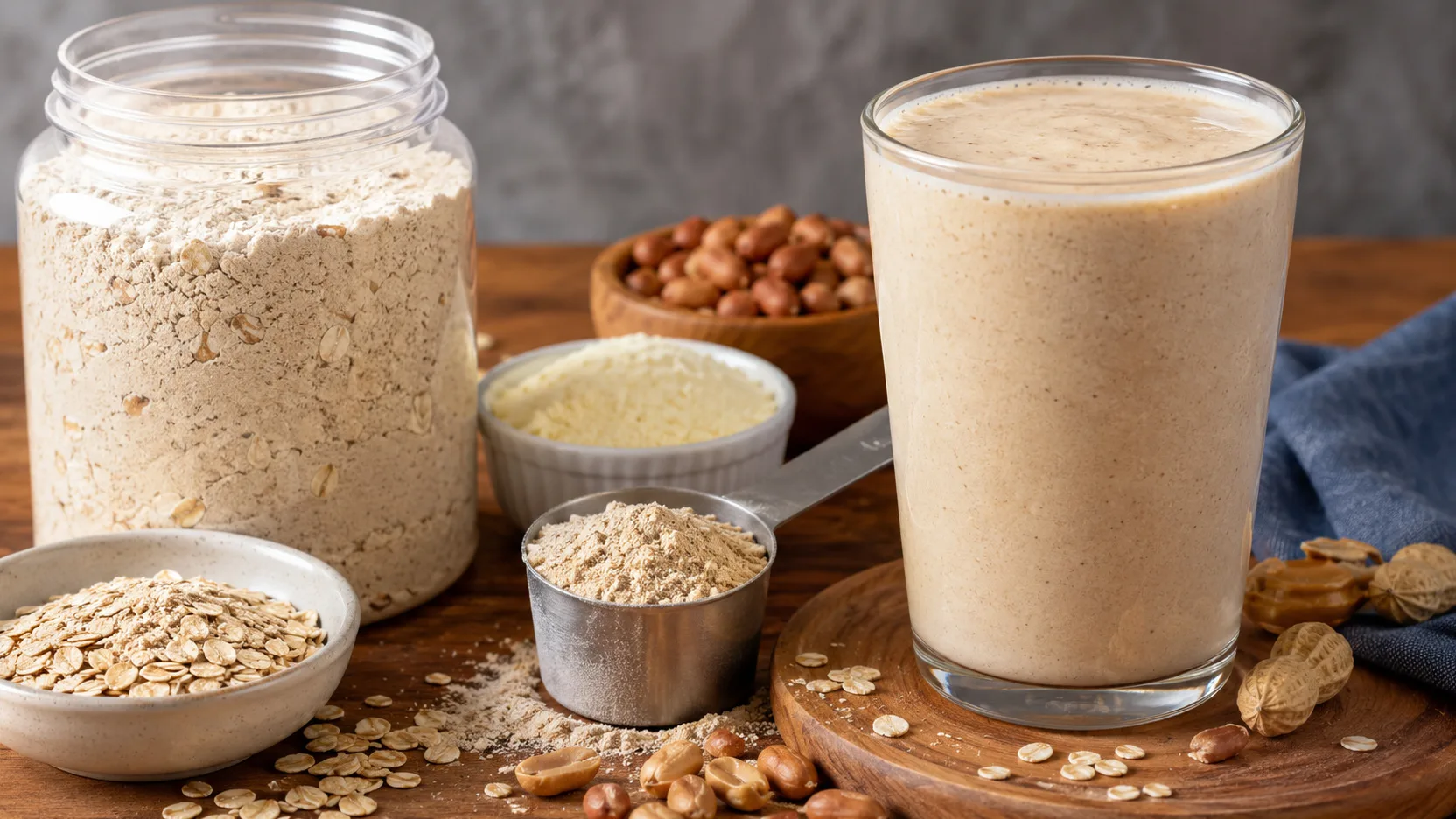
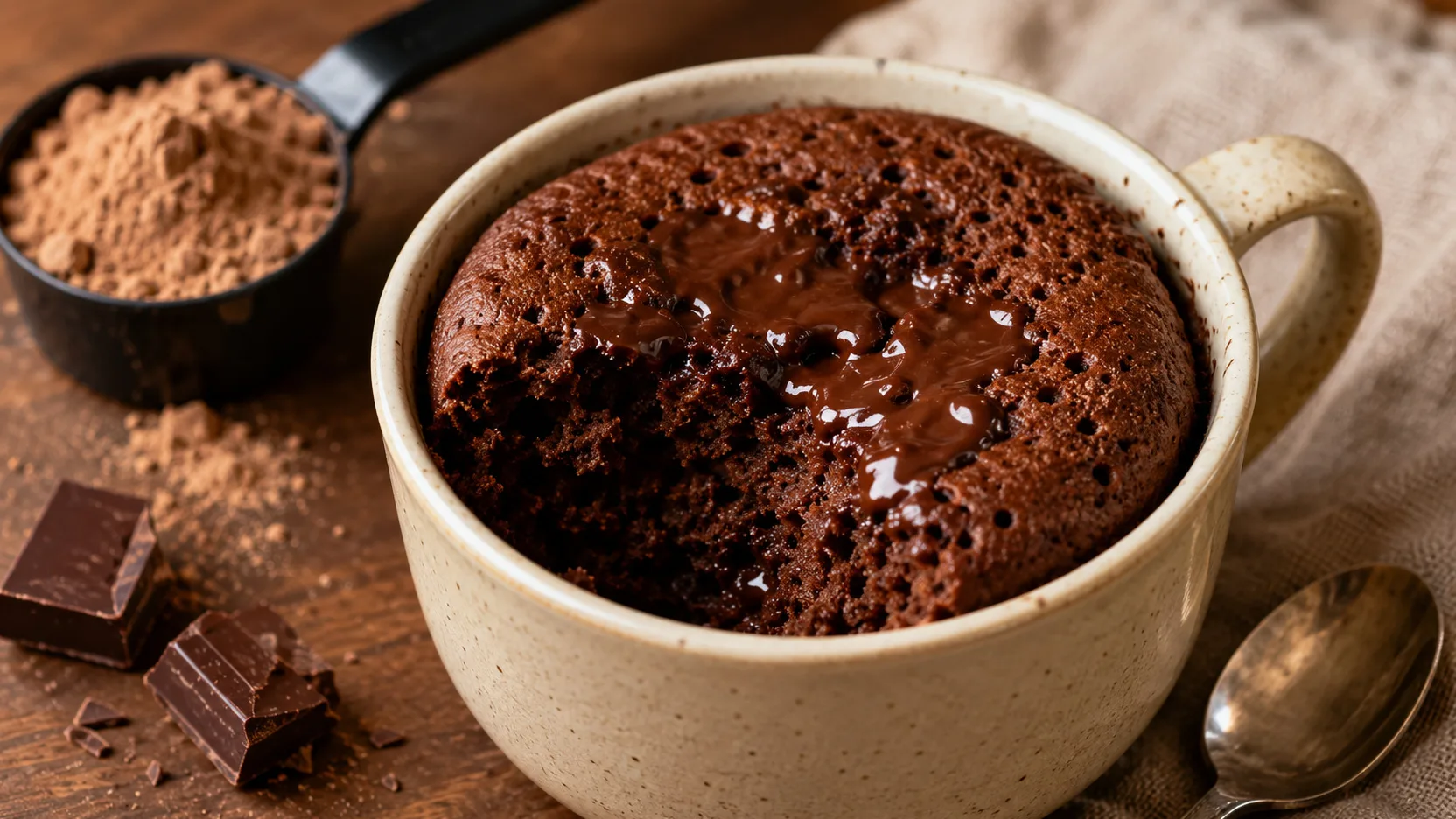
Individual chocolate cake with whey designed to be soft, not rubbery: the recipe limits the amount of protein powder, uses oats and yogurt to provide structure and moisture and finishes cooking in short pulses.
Ingredients
For the cake
• 1 large egg, about 50 g without shell
• 20 g of chocolate flavored whey protein
• 15 g oat flour or finely crushed oat flakes
• 5 g of 100% cocoa powder
• 30 g of unsweetened natural Greek yogurt
• 20 ml of milk
• 2 g of chemical baking powder, about 1/2 level teaspoon
• 1 pinch of salt
• Culinary sweetener to taste, only if the whey does not make the dough sweet enough
Finally, optional
• 5 g chopped 70% chocolate
Preparation method
1. Choose the right mug
Use a microwave-safe mug with a minimum capacity of 350 ml; 400 ml is even more comfortable. The raw dough should occupy a maximum of about a third of the mug, leaving room to rise without overflowing.
2. Mix the wet ingredients
Break the egg into the mug and beat well with a fork until the egg white and yolk are completely mixed. Add the yogurt and exactly 20 ml of milk and stir until uniform.
3. Add dry ingredients
Add the whey, oat flour, cocoa, salt and sweetener, if using. Mix just until no pockets of powder remain. The dough should be thick, but still fall off the spoon. If your whey is exceptionally absorbent and the dough becomes a firm paste, add 5 ml of milk, no more than that at one time. Lastly, add the yeast with little stirring.
4. Cook according to power
Place the mug in the center of the turntable. Always start with the shortest time on the range and observe the center before prolonging the cooking. If there is still liquid batter or the center has not reached the safe point, return to the microwave in 10 to 15 second pulses.
700W
Cook for 90 to 105 seconds.
800W
Cook for 80 to 95 seconds.
900W
Cook for 70 to 85 seconds.
1000W
Cook for 65 to 80 seconds.
1200W
Cook for 55 to 70 seconds.
5. Rest and finish
Let the mug rest for 1 minute. For a simple topping, spread the 5 g of chopped chocolate over the still hot top and wait a few seconds for it to melt before stirring lightly.
Right spot / how to know it’s ready
The cake is done when it rises, the edges are firm and the top loses its raw dough appearance. The center may still be visibly moist, but there should not be a pool of liquid. A toothpick inserted into the center should come out with moist crumbs, not covered in raw dough.
As the formula contains egg, the center must reach at least 71 °C. If it is still below that temperature, cook for another 10 to 15 seconds and check again. Avoid continuing to heat after the center is cooked: the residual heat from the minute of rest will finish firming the crumb.
Tips for the recipe to work out
Do not increase whey without rebalancing the mass
Using a large 30 to 40 g scoop instead of the 20 g of this formula greatly increases the amount of protein that firms up in the heat and favors a dry or elastic texture. If you want more protein, it is better to also adjust liquid and structural ingredients in your own formulation.
Weigh whey when you can
Scoops vary in size between brands. Twenty grams measured on a scale makes the liquid proportion much more predictable.
Prefer a wide mug to a very tall and narrow one
A wider mug distributes the dough in a shallower layer and tends to reduce the contrast between dry edges and raw center.
Stop early and top up in pulses
In the microwave, an extra 15 seconds can greatly change the texture of a small portion. Starting at the lower end of the range and completing in pulses is more reliable than programming a long time at once.
Observe the type of whey
Isolated whey and blends can absorb water differently. If the batter is too thick before cooking, use the 5 ml milk setting; do not pour liquid without measuring.
Substitutions and variations
Greek yogurt can be replaced with firm natural yogurt in the same quantity. If the product is very liquid, use 15 ml of milk instead of 20 ml to avoid thinning the dough too much.
Cow's milk can be exchanged for a sugar-free vegetable drink in the same quantity. The flavor and macronutrients change depending on the product chosen.
Oat flour can be replaced with 15 g of wheat flour. The cake tends to be a little lighter and less marked by the oat flavor.
Casein and vegetable protein are not direct replacements for whey in this formula: they normally absorb more liquid and may require another proportion to avoid making the cake dense.
How to store
The texture is better right after preparation. If you have leftovers, refrigerate in a covered container within 2 hours and consume within 3 days. If you prefer to reheat, heat until the center is hot; for leftover safety reference, 74°C. As this tends to firm up the whey more, the best texture remains that of the freshly prepared cake.
How to serve / side dishes
Serve in the mug, plain, with a spoonful of natural yogurt, fresh strawberries or the small portion of melted chocolate indicated in the recipe. Additional toppings change the macros.
Common mistakes
Why was my cake rubbery?
The most likely causes are too much whey, too little moisture or too much time in the microwave. Return to 20 g of whey, measure the 20 ml of milk and finish cooking in pulses of 10 to 15 seconds.
Why did the cake overflow?
The mug was too small or too full. Use at least a 350 ml capacity and let the raw dough occupy a maximum of about a third of the volume.
Why are the edges dry and the center raw?
This happens more easily in narrow mugs, high powers and long times. Use a wider mug, start with the shortest time indicated for the power and complete in short pulses until the center reaches the point.
Nutritional information
Portion: 1 whole cake, without optional chocolate. Estimated values: around 240 kcal, 29 g of protein, 16 g of carbohydrates and 8 g of fat.
The calculation uses the weights from the recipe itself and, for whey, a reference of 24 g of protein per 31 g serving. Brands and flavors of whey, yogurt and milk vary; For accurate tracking, recalculate with product labels used at home.