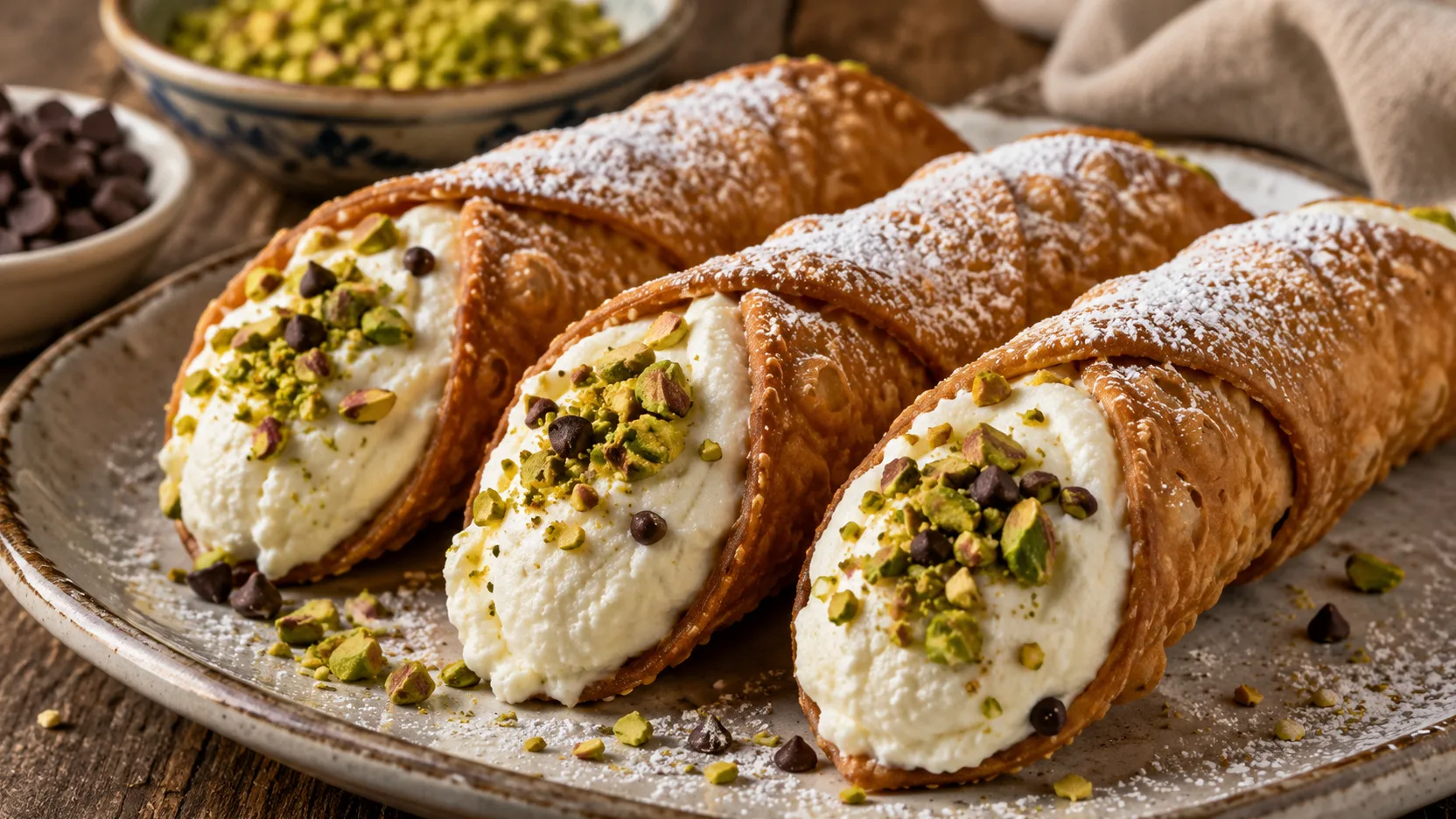
Well-made cannoli depend on two separate controls: a thin, dry, crisp shell and a ricotta filling with little free water. The ricotta must be cold and well drained, while the shells must cool completely before storing or filling. To preserve the texture, only assemble close to serving.
Key equipment: 4 to 6 metal cylinders suitable for cannoli, rolling pin or dough rolling machine, culinary thermometer, deep pan, slotted spoon, fine sieve and pastry bag. Do not improvise molds with cardboard or materials that are not suitable for contact with hot oil.
Ingredients
For the shells
• 250 g of type 00 wheat flour or common unleavened wheat flour
• 30 g of refined sugar
• 30 g of culinary lard, at room temperature
• 2 g of cinnamon powder
• 2 g of fine salt
• 1 teaspoon of fine orange zest
• 1 medium egg, approximately 50 g without shell
• 50 ml dry Marsala wine
• 10 ml white wine vinegar
• 1 small egg white, lightly beaten, to seal
• 1 liter of neutral vegetable oil for frying, such as sunflower, canola or soy
For the ricotta cream
• 600 g of well-drained whole-wheat ricotta, preferably sheep or beef; weigh after draining
• 180 g fine caster sugar
• 60 g of small semi-sweet chocolate chips
To finish
• 50 g shelled pistachios, chopped
• 20 g of icing sugar
Preparation method
1. Drain the ricotta
If the ricotta is still damp, place it in a fine sieve lined with a clean cloth or food grade filter, place it over a bowl, cover and refrigerate for 8 to 12 hours. Then, discard the whey and weigh 600 g. The ricotta must be cold, firm and without liquid accumulated on the surface.
2. Prepare the shell dough
Mix the flour, sugar, cinnamon, salt and orange zest. Add the lard and rub with your fingertips until you get a fine crumb. Add the egg, Marsala and vinegar and mix until a firm dough forms. Knead for 5 to 7 minutes, until smooth, elastic and uniform. It should be firmer than bread dough and not stick to the counter.
3. Let the dough rest
Flatten the dough into a disc, wrap well and refrigerate for 2 hours. This rest reduces the resistance when opening and helps to obtain thin sheets without the dough shrinking as much.
4. Make the ricotta cream
Mix the drained ricotta with the sugar using a spatula, without mixing at high speed. Pass the mixture through a fine sieve to make it smooth and incorporate the chocolate drops. Cover and keep in the fridge until ready to fill. The finished cream must hold the spatula mark and not release serum at the bottom of the bowl.
5. Open, cut and close the shells
Divide the dough into 3 parts and keep the rest covered. Roll out one part at a time, preferably using a pasta machine, gradually reducing the thickness to around 1 to 1.5 mm. Cut discs of approximately 10 cm and slightly elongate them into an oval shape. Wrap each oval around the cylinder without pressing too tightly, overlapping the ends by about 1 cm and brushing the egg white just between the two layers of dough. Press the seam to seal, without letting the light run onto the metal.
6. Fry without lowering the temperature
Heat the oil to 175-180 °C in a deep pan. Fry 2 to 3 shells at a time, still in the cylinders, for about 1 to 2 minutes, turning if necessary to brown evenly. Remove when they are golden and full of small bubbles.. Drain on a wire rack or absorbent paper. Wait a few minutes until the shell sets and the cylinder can be handled with protection, and then slide the mold in carefully. Repeat, waiting for the oil to return to temperature range before the next batch.
7. Cool the shells completely
Let the empty shells cool on a rack, without stacking them. Only store them when they are completely cold; any steam trapped in the container reduces crispiness.
8. Fill only when serving
Transfer the cold cream to a pastry bag with a wide nozzle. Fill each cannolo from one end to the center, turn and fill from the other end to avoid air pockets. Touch the ends to the chopped pistachios, distribute a few drops of chocolate if you want to reinforce the finish and sprinkle with icing sugar. Serve immediately after assembling.
Right spot / how to know it’s ready
The rolled dough should be approximately 1 to 1.5 mm: thin enough to be delicate, but without tearing when wrapping the cylinder. When frying, the surface should form small bubbles quickly and reach a uniform golden color without darkening too much.
After cold, the shell should be rigid, light and break with a dry snap. If it doubles or feels heavy, it was insufficiently fried or the oil was cold.
The ricotta cream must remain thick in the piping bag, maintain the nozzle design and not form a pool of whey. If it is soft before assembling, return it to a sieve in the refrigerator for longer rather than trying to thicken it with more sugar.
Tips for the recipe to work out
Roll out the dough in stages
Reducing the thickness gradually on the machine prevents tearing and creates a uniform sheet. A very thick dough produces a hard shell with few bubbles; Too thin and it may break during frying.
Check the frying with a thermometer
The 175-180°C range helps the skin firm up and brown quickly. Adding too many pieces at once lowers the temperature and favors a more oily shell.
Do not overbeat the ricotta
Mix with a spatula and use a sieve to smooth it out. Processor or intense beating can break down the structure of the ricotta too much and make the cream more fluid.
Cool before closing the container
Shells that are still warm release steam. If covered in this state, moisture is trapped and softens the surface.
Stuff at the last moment
Contact with the ricotta transfers moisture to the dough. To maintain the contrast between crispy shell and soft cream, fill just a few minutes before serving.
Substitutions and variations
Sheep's ricotta has a more pronounced flavor and is a common choice for Sicilian cannoli. Whole cow ricotta works, but it tends to be softer and, if it's wet, may require more draining time.
Without Marsala, use the same amount of dry white wine. The dough remains functional, but loses part of the characteristic aroma of fortified wine.
The lard can be replaced with 30 g of unsalted butter. The skin tends to be a little less dry and may blister differently, but it can still be crispy if opened thin and fried at the correct temperature.
For finishing, pistachios can be replaced with chopped candied orange peel or semi-sweet chocolate. These changes alter flavor and presentation, not the structure of the rind.
How to store
Store the ricotta cream covered in the refrigerator at 4°C or below and preferably use within 2 days. Keep the empty shells completely cold in a tightly closed container at room temperature for up to 2 to 3 days.
Stuffed cannoli loses its crunch quickly. If you have leftovers, refrigerate immediately and consume within 24 hours for quality.. Ricotta foods should not remain at room temperature for more than 2 hours; after this period, discard.
How to serve / side dishes
Serve the cannoli right after filling, as a dessert, accompanied by espresso or filtered coffee without much sugar. The bitter drink balances the sweet filling and does not interfere with the crunchiness of the shell.
Common mistakes
Why was the ricotta cream watery?
The most common cause is using ricotta with too much whey. Drain before weighing and keep everything cold. If the cream is already ready and soft, leave it in a sieve again in the refrigerator; Adding extra sugar tends to increase sweetness and does not reliably address excess water.
Why did the shell open in the oil?
The splice may have little overlap or not be pressed in enough. Overlap by about 1 cm and use just a film of egg white between the two ends. Avoid letting the light touch the cylinder, as it can stick the dough to the metal.
Why did the peel become heavy and oily?
The oil was probably below the working range or received too many parts at once. Fry in small batches and wait for it to return to 175-180°C before continuing.
Why was the shell hard and without bubbles?
Thick open dough, little rest or inadequate frying reduce surface expansion. Respect the 2 hours of rest and roll out the dough to approximately 1 to 1.5 mm.
Why did the cannoli lose its crunch after cooking?
The ricotta moistens the shell as soon as it comes into contact with it. Keep shells and cream separate and fill only when ready to serve.