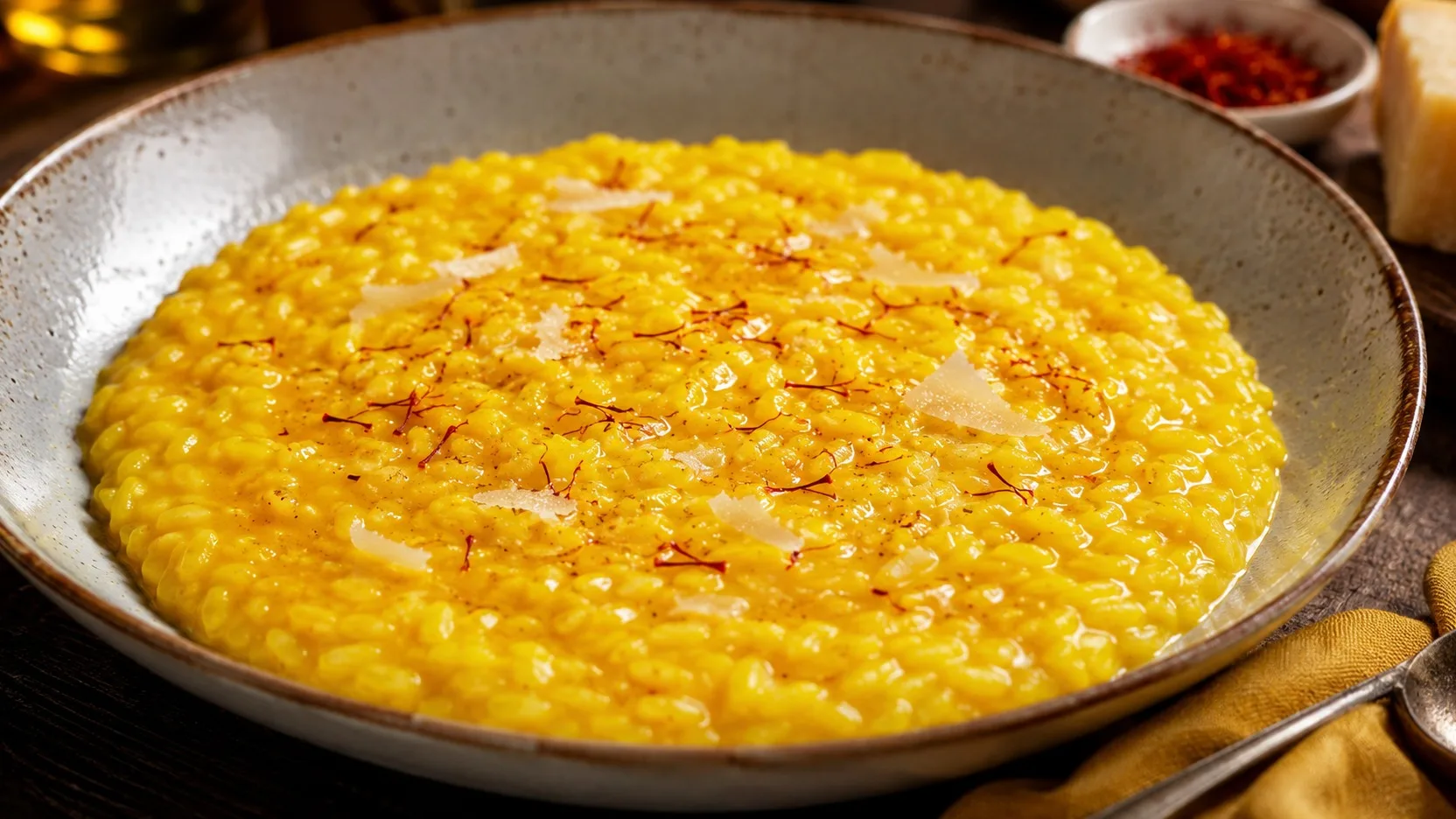
The risotto alla milanese in this recipe uses Carnaroli rice, meat broth, marrow, butter, cheese and real saffron threads. The objective is to achieve a fluid risotto, but not liquid, with al dente grains surrounded by a creamy emulsion. True saffron comes from the stigmas of Crocus sativus; Turmeric or saffron comes from the rhizome of Curcuma longa and can color the rice, but it does not reproduce the aroma or profile of the Milanese dish.
Ingredients
• 0.2 g of real saffron threads, made from Crocus sativus stigmas
• 1.2 liters of light, slightly salty beef broth, kept hot; remove 80 ml of this total for the infusion
• 320 g of Carnaroli rice
• 30 g of beef marrow removed from the bone
• 35 g white onion, chopped as finely as possible
• 50 g of unsalted butter, divided into 25 g for the base and 25 g very cold for the finish
• 60 g Grana Padano or Parmigiano Reggiano, finely grated
• salt, only if necessary
Preparation method
1. Make saffron infusion
Place the saffron threads in a cup and cover with 80 ml of the hot broth, without letting the liquid boil in the cup. Cover and leave to infuse for about 30 minutes. Use both the liquid and the threads; the infusion should be yellow-orange and very aromatic.
2. Keep the broth warm
Take the rest of the broth to a small pan and keep it at a very gentle boil next to the risotto pan. The cold broth interrupts the cooking rhythm and makes it difficult to control the texture of the grain.
3. Make the onion and marrow base
In a wide, thick-bottomed pan, heat 25 g of butter with the marrow over low heat. Add the onion and cook for 5 to 7 minutes, stirring, until very soft and translucent, without browning. The marrow must melt and integrate with the fat.
4. Make the Carnaroli toast
Add the unwashed rice. Increase heat to medium-high and stir for 2 to 3 minutes, until the beans are very hot, shiny, and slightly translucent around the edges. They must remain intact and loose, without darkening.
5. Cook with the broth little by little
Add two ladles of hot broth and stir. Maintain a moderate boil and continue cooking for around 16 to 18 minutes, adding more broth whenever the previous portion is almost absorbed. Stir frequently, but there is no need to constantly beat the rice. In the final minutes, use smaller shells so you don't end up with excess liquid.
6. Add saffron towards the end
When the rice has been cooking for approximately 11 to 12 minutes, add the saffron infusion with the threads. Mix and continue cooking until the grain is al dente: soft on the outside, with a little resistance in the center, but without a hard or mealy core. Before turning off, leave the risotto a little looser than you intend to serve, as the butter and the few moments before serving thicken the preparation.
7. Make the butter out of the heat
Turn off the heat and move the pan away from the hot burner. Add the 25 g of very cold butter and the grated cheese. Stir vigorously for 1 to 2 minutes, causing the risotto dough to move and emulsify. If it is thick, add 30 to 60 ml of hot broth, little by little, until it reaches the correct fluidity. Adjust the salt only at the end.
8. Serve immediately
Divide the risotto between warmed shallow plates. Lightly tap the bottom of the dish or tilt it gently: the risotto should spread slowly, without forming a hard mound and without running like soup. Serve as soon as it reaches the point.
Right spot / how to know it’s ready
The all’onda test is visual and movement. As you rock the pan back and forth, the risotto should form a smooth, continuous wave. On the inclined plate, it moves slowly as a creamy mass, keeping the grains visible within the emulsion. If it sits like puree or polenta, it's too dry; if a puddle of broth appears around it, it is too liquid.
The grain must offer slight resistance in the center without feeling raw. The surface is shiny and creamy, but the creaminess comes from the starch and butter, not the cream. The color should be golden yellow and the aroma of saffron noticeable, without the earthy profile typical of turmeric.
Tips for the recipe to work out
Do not wash Carnaroli
Washing removes some of the surface starch that helps build the creamy texture. Use the rice directly from the package and toast it carefully.
Control the salt from the broth
Very salty broth concentrates during cooking and still contains cheese at the end. Choose a light broth and adjust the salt only after cooking.
Preserve saffron
Previous infusion helps extract color and aroma from the hair. Avoid letting the saffron boil from the beginning; in this recipe it comes in the final minutes to better preserve the perfume.
Finish looser than seems necessary
The rice continues to absorb liquid after the heat is turned off. To get the all’onda on the plate, the pan should appear slightly more fluid before the butter and cheese.
Use a wide pan
A wide base facilitates controlled evaporation and allows stirring and curling without crushing the grains. A narrow pan tends to cook in a very deep layer and makes it difficult to see the point.
Substitutions and variations
Can I use Arborio or Vialone Nano?
Yes. Arborio tends to release creaminess easily, but it can overcook more quickly. The Vialone Nano produces very creamy risottos and cooks in less time. With any substitution, follow the point of the grain rather than relying solely on the clock.
What if I don't find marrow?
Make the base with another 15 g of butter. The risotto remains functional, but loses some of the bovine depth that pairs especially well with osso buco.
Can I use vegetable broth?
You can. The result is lighter and less linked to the meat profile of the Milanese preparation with marrow. It is a good alternative when the risotto will be served alone.
Can I use turmeric powder?
If it is real, pure saffron, made from Crocus sativus, use about the same amount and dissolve in a little broth before adding in the final minutes. Do not use turmeric or saffron as a substitute if the intention is to reproduce the flavor of risotto alla milanese; it changes the aroma and character of the dish, although it also gives it a yellow color.
What about white wine?
There are established versions that use dry white wine after toasting. This formulation follows a Lombard line without wine, to leave marrow, broth and saffron in the foreground. If you prefer to use it, add 50 ml of dry white wine after toasting and let it evaporate completely before adding the broth.
How to store
The risotto is best served immediately, as the rice continues to absorb liquid and quickly loses its all’onda point. If there is any leftovers, transfer to a shallow, covered container, refrigerate for up to 2 hours and keep below 5°C. For best quality, consume within 1 to 2 days.
To reheat, add a little broth and heat until hot throughout. The texture may become creamy again, but it will hardly have the same wave as the freshly made risotto. Freezing is not recommended when the priority is to preserve the texture of the grains and the emulsion.
How to serve / side dishes
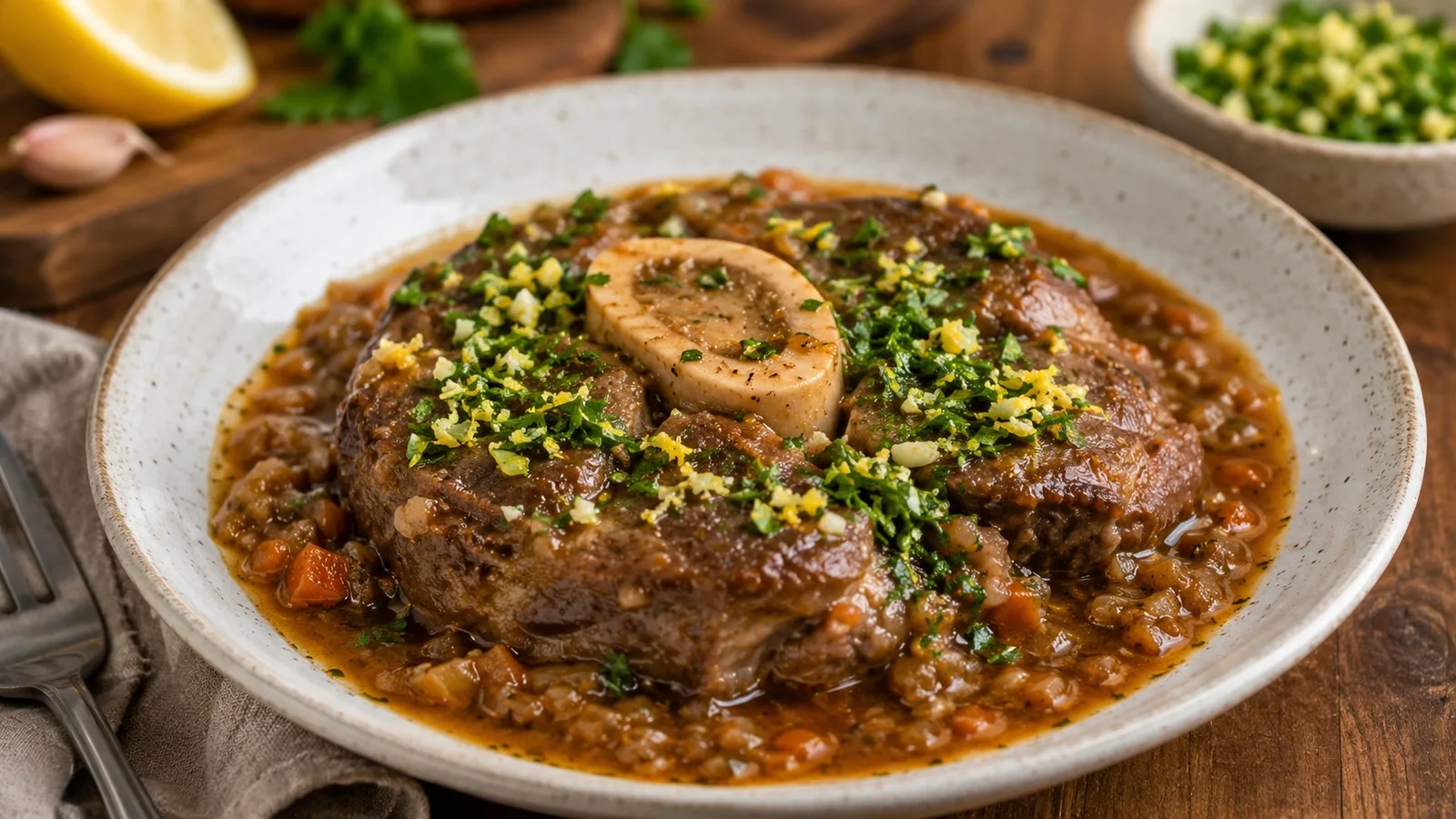
Serve as a first course or as an accompaniment to ossobuco. The combination works especially well because the creamy risotto absorbs the meat sauce without having to be dry. If serving with ossobuco, keep the risotto a little more fluid and place the meat on the side, not on the entire surface, to preserve the all’onda point reading.
Common mistakes
Why was my risotto dry and heavy?
There was probably a lack of liquid in the final minutes or the pan was left standing for too long before serving. Still off the heat, add small amounts of hot broth, stirring until the wave movement recovers.
Why does the butter separate and the risotto looks greasy?
The base may have arrived too dry or the pan was too hot. Remove from heat, add a small amount of hot broth and stir vigorously to help emulsify the fat and starch.
Why was the rice soft on the outside and still hard in the center?
This usually happens when cooking is aggressive or when the broth is added cold, causing boiling cycles and a drop in temperature. Keep the broth always hot and at a moderate, constant boil.
Why did it turn yellow but without saffron aroma?
Turmeric, low-quality saffron or real saffron cooked for too long may have been used. Choose Crocus sativus strands, infuse it and add it towards the end of cooking.