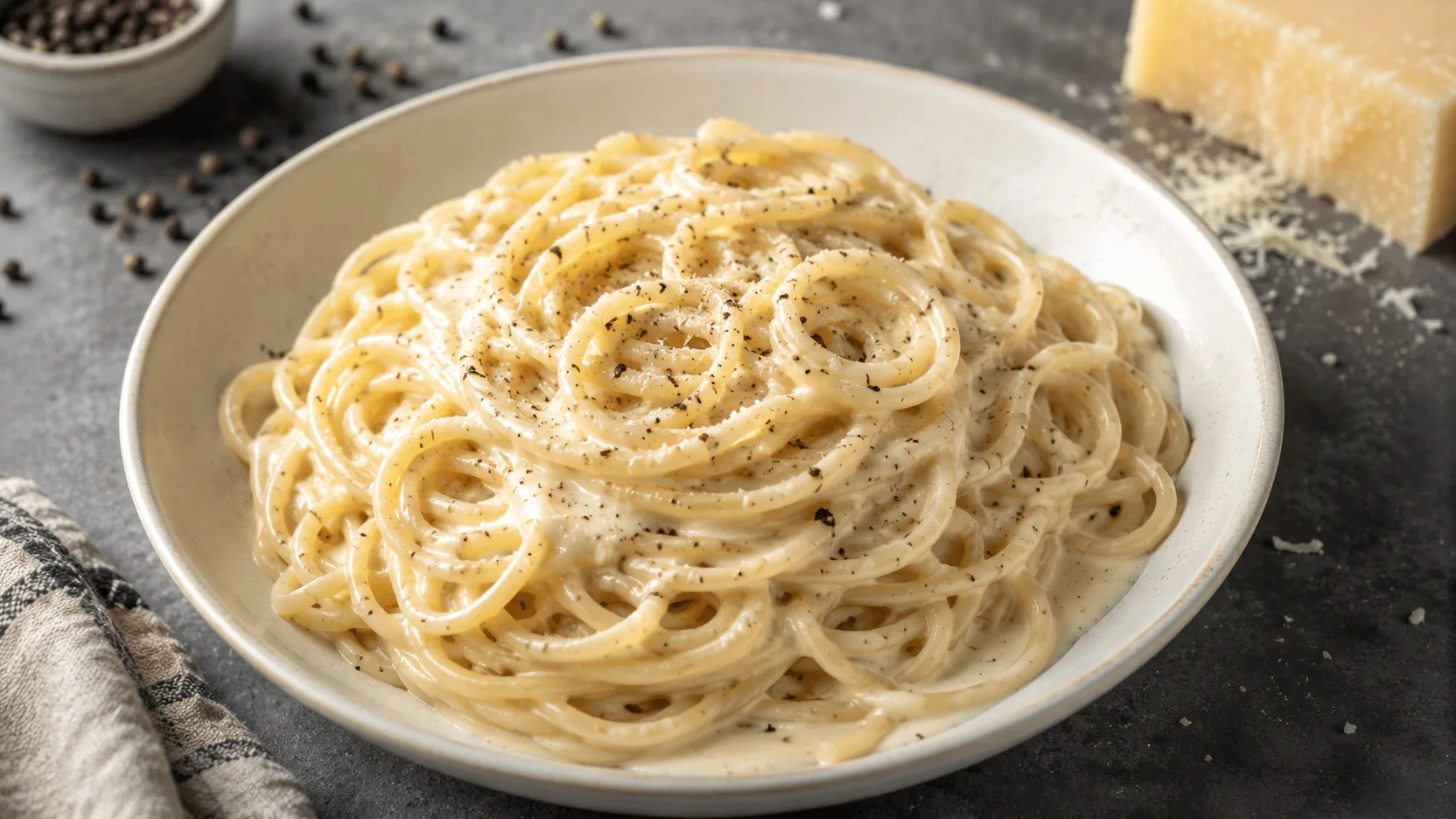
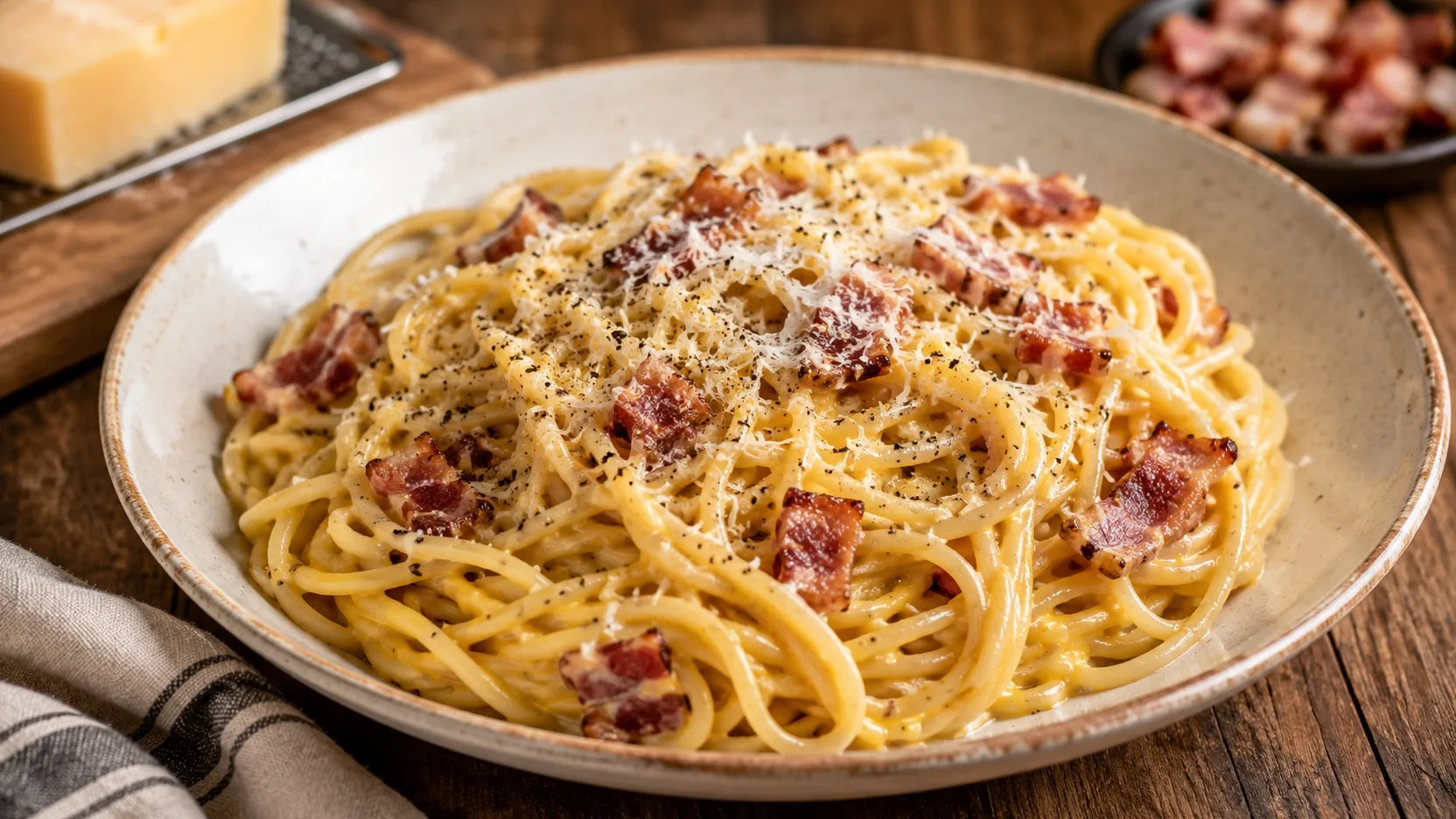
Spaghetti carbonara depends on few ingredients and heat control. In this version, the creaminess comes from egg yolks, Pecorino Romano, guanciale fat and starchy water; no cream is included.
Ingredients
• 320 g of dry spaghetti
• 150 g of guanciale, without skin, cut into strips of approximately 1 cm
• 100 g of egg yolks, about 5 to 6 large egg yolks
• 70 g finely grated Pecorino Romano, plus a little more for serving
• 2 g freshly ground black pepper, about 1 teaspoon
• Salt for cooking water, used sparingly
• 120 ml of pasta cooking water, reserved; It may not be necessary to use everything
Preparation method
1. Prepare the egg yolk and cheese mixture
Place the egg yolks in a large, heatproof bowl. Add 60 g of Pecorino Romano and most of the black pepper. Mix until it forms a thick and homogeneous paste. Reserve the remaining 10 g of cheese to adjust and finish.
2. Render the fat from the guanciale
Place the guanciale in a frying pan that is still cold and place over medium-low heat. Cook for 7 to 10 minutes, stirring occasionally, until the fat is translucent and the edges are golden brown. The center should remain soft, without becoming dry or dark. Remove about half of the guanciale with a slotted spoon and set aside to finish.
3. Cook the spaghetti
While the guanciale is browning, cook the spaghetti in lightly salted boiling water. As the guanciale and Pecorino are already salty, the water should not be salty like other pastas. Cook until al dente and reserve at least 120 ml of the cooking water before draining or transferring the pasta.
4. Cover the dough with fat
Turn off the heat on the frying pan. Transfer the hot spaghetti to the guanciale fat and toss for about 30 seconds. Wait another 30 to 60 seconds, until the strong sizzling subsides: this interval reduces the risk of the heat from the pan curdling the yolks once they are added.
5. Make the emulsion off the heat
Transfer the spaghetti, the fat from the pan and the guanciale that remained in it to the bowl with egg yolks and Pecorino. Add 30 ml of the hot cooking water and mix vigorously with tongs for about 1 minute. Add more water, 15 ml at a time, just until the sauce is shiny, fluid and adherent. If it is too loose and the bowl has cooled down, rest it for 10 to 15 seconds on the still steaming pan, without touching the water, always stirring; remove as soon as the sauce thickens. Do not return the mixture to a direct flame.
6. Finish and serve
Mix half of the reserved guanciale. Immediately divide between plates and top with the remaining guanciale, reserved Pecorino and more black pepper. Serve without waiting, as the emulsion thickens quickly as it cools.
Right spot / how to know it’s ready
The sauce should form a shiny film on each spaghetti strand, with no pool of liquid at the bottom and no egg lumps. When stirring, it should appear creamy and slightly fluid as it will still thicken in the dish. If the mixture makes a strong frying sound when you add the egg yolks, the pan is too hot; wait a few seconds before emulsifying.
For food safety, the creamy carbonara technique may leave the egg below the recommended full cooking level for egg dishes. For pregnant women, young children, the elderly, and immunocompromised people, or when there is concern about undercooked eggs, use pasteurized egg yolks or a pasteurized yolk product.
Tips for the recipe to work out
Grate the Pecorino very finely
Very thick cheese melts unevenly and increases the risk of lumps. A fine grater helps the cheese to disperse into the egg yolks and pasta water.
Control the salt from the pan
Guanciale and Pecorino Romano already contain a lot of salt. Use less salt in the spaghetti water and only adjust it at the end if really necessary.
Reserve real pasta water
The water used in the emulsion must come from the spaghetti pan, because the starch helps to unite fat, cheese and yolk. Add little by little: too much water makes the sauce thin, and too little water makes a heavy carbonara.
Work outside the flame
The greatest risk of curdling occurs when the egg mixture touches an excessively hot frying pan. Make the emulsion in the bowl and use only residual heat or gentle steam as a correction.
Serve immediately
Carbonara is not waiting well. The sauce continues to thicken from the residual heat and loses fluidity as it cools.
Substitutions and variations
Can I replace the guanciale?
Cured, unsmoked pancetta is the closest adaptation, but it tends to be less fatty and changes the texture of the sauce. Smoked bacon only works as an adaptation of availability and adds a smoky flavor that is not part of the profile of this version.
Can I mix Pecorino and Parmigiano?
Yes. Swapping up to half the Pecorino for Parmigiano Reggiano makes the sauce smoother and less salty. It is an adaptation, not the main formulation of this recipe.
Can I use whole eggs?
You can, but the egg white increases the amount of water and makes the sauce lighter and less concentrated. To maintain this proportion, choose the recommended yolks.
How to store
The best quality is right after preparation. If there is any leftovers, place in a shallow container and refrigerate for up to 2 hours. Consume within 3 to 4 days and reheat completely before eating; the texture will become firmer and the emulsion may separate. This is not a recipe that freezes well, as the egg and cheese sauce tends to become grainy after thawing and reheating.
How to serve / side dishes
Serve as a main dish, in moderate portions, with an acidic seasoning leaf salad to balance the fat and salt. There is no need to add extra cream, olive oil or sauce to the dish.
Common mistakes
Why did my carbonara turn into scrambled eggs?
The frying pan was too hot when the egg yolks went in. Make the emulsion off the flame and wait for the strong sizzle to subside before adding the hot mixture to the egg mixture.
Why was the sauce dry or pasty?
There was no cooking water or the emulsion remained hot for too long. Add pasta water in small quantities and mix vigorously until it regains fluidity.
Why did it become oily?
The fat from the guanciale was not incorporated into the aqueous phase. Add 1 tablespoon of pasta water at a time and mix vigorously off the heat until the sauce becomes uniform and shiny again.
Why was it too salty?
The combination of very salty water, Pecorino and guanciale can overdo it. Salt the water sparingly and do not adjust the dish before tasting the finished sauce.