Ingredients
For the ragù
• 500 g of ground beef, preferably chuck or shoulder
• 150 g fresh unsmoked pancetta, finely chopped, or fresh pork belly
• 70 g onion, finely chopped
• 70 g carrot, finely chopped
• 70 g of celery, finely chopped
• 30 ml extra virgin olive oil
• 150 ml dry red or white wine
• 250 g tomato passata
• 20 g of tomato paste
• 300 ml light meat or vegetable broth, hot, more if necessary
• 150 ml of whole milk
• 6 g of salt, plus as needed to adjust at the end
• Freshly ground black pepper to taste
For besciamella
• 1 liter of whole milk
• 80 g unsalted butter
• 80 g of wheat flour
• 8 g of salt
• Freshly grated nutmeg, to taste
For assembly
• 250 g dry oven-baked lasagna pasta, about 15 sheets
• 150 g of Parmigiano Reggiano or good quality parmesan, finely grated
• 10 g of butter to grease the baking tray
Preparation method
1. Start with ragù
Heat a heavy 9- to 10-inch pan over medium-low heat. Add the pancetta and olive oil and cook for 4 to 5 minutes, until the fat begins to melt. Add onion, carrot and celery and cook for 8 to 10 minutes, stirring, until vegetables are soft without burning.
2. Brown the meat and evaporate the wine
Increase heat to medium-high, add ground beef and spread well. Cook for 8 to 10 minutes, breaking up the pieces, until the released moisture evaporates and the meat begins to sizzle and brown. Add the wine and let it reduce completely, without a strong alcohol smell.
3. Cook the ragù slowly
Mix the passata and extract, add about 200 ml of the hot broth and lower the heat. Cook at a very gentle boil for about 2 hours, with the pan partially covered, stirring from time to time. Top up with small amounts of the remaining broth only when the bottom threatens to dry out. After 1 hour, add the milk and continue cooking until it combines and reduces. Adjust salt and pepper at the end. The ragù should be thick and creamy, with no loose liquid. If you already have about 1.1 kg of Bolognese ragù ready, you can start with the besciamella.
4. Make the besciamella
Heat the milk until it is very hot, without boiling. In another pan, melt the butter over low heat, add the flour and stir for 2 minutes, without letting it darken. Add the milk little by little, beating with a whisk to avoid lumps. Cook for 5 to 7 minutes after it starts to thicken, stirring constantly. Season with salt and nutmeg. The correct texture is creamy and fluid: it lightly coats the back of a spoon, but still flows easily.
5. Prepare the baking tray and oven
Heat the oven to 180°C, static heat. Grease a baking tray measuring approximately 22 x 33 cm and at least 5 cm high with butter. If the ragù or besciamella are cold, heat them until warm before assembling; This helps the dry dough to hydrate more evenly.
6. Assemble in five layers of dough
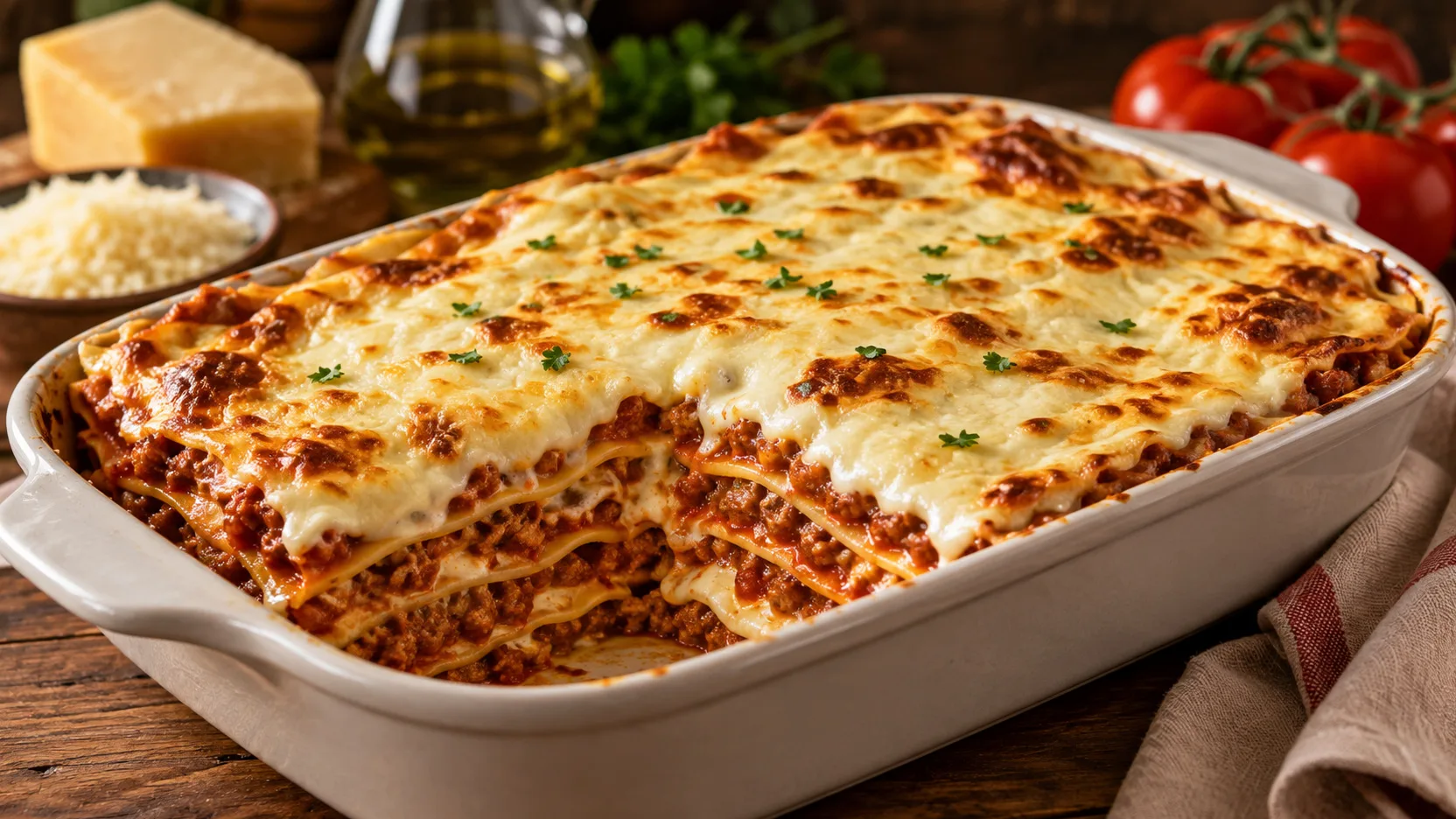
Spread about 80 g of ragù and 100 g of besciamella on the bottom. Cover with the first layer of dough, without leaving large overlaps. On each of the four inner layers, distribute approximately 180 g of ragù, 150 g of besciamella and 25 g of Parmigiano. Bring the sauce to the edges and cover the entire surface of the dough, especially the corners and ends.. After the fifth and final layer of pasta, distribute the remaining ragù and besciamella and finish with the remaining 50 g of Parmigiano. No end of dough should be left dry and exposed.
7. Bake covered and then brown
Cover the baking tray loosely with aluminum foil and bake for 30 minutes. Remove the paper and bake for another 15 to 20 minutes, until the sauce is bubbling around the edges and the surface is golden brown in several spots. If the lasagna was assembled and refrigerated before baking, the center should reach 165°F and may require an additional 10 to 15 minutes in the oven.
8. Let it rest before cutting
Remove from the oven and let the lasagna rest for 15 minutes. This time allows the sauces to settle and the layers to gain structure. Cut with a sharp knife and remove portions with a wide spatula.
Right spot / how to know it’s ready
The finished ragù is thick, shiny and free from puddles; when you pass the spoon along the bottom of the pan, the path appears for a moment before the sauce settles again. The besciamella should spread effortlessly but not look like thickened milk. In the oven, look for three signs together: constant bubbling around the edges, golden topping, and soft dough when you insert a knife into the center. After resting, the slice should maintain recognizable layers without becoming dry or spilling sauce onto the plate.
Tips for the recipe to work out
Completely cover the dry dough
Direct oven dough needs contact with moisture. If the ragù is so reduced that it does not spread, loosen only the portion that will be used for assembly with 50 to 100 ml of hot broth. This is different from making the ragù watery.
Do not use excessively liquid sauces
Ragù with loose water and too thin besciamella accumulate liquid between the layers. Reduce the ragù until creamy and cook the besciamella until it lightly coats the spoon.
Respect the size of the baking dish
In a much larger pan, the sauces are too thin and the pasta tends to dry out. In too small a pan, the layers become thick and may heat unevenly.
Bake covered part of the time
The aluminum foil reduces moisture loss while the dough hydrates. Uncovering only at the end allows for browning without hardening the surface too soon.
Don't skip rest
Cutting immediately after baking causes sauces that are still very fluid to escape the layers. Fifteen minutes improves the cut without leaving the lasagna cold.
Substitutions and variations
Thin fresh pasta can replace dry pasta: use about 350 g, do not cook it beforehand if it is suitable for lasagna and reduce the covered time by approximately 5 to 10 minutes. As it requires less hydration, keep sauces creamy, but don't loosen them. If regular dry pasta requires pre-cooking according to the package, cook it for 2 to 3 minutes less than the indicated time, drain and pat dry before assembling. In this case, the lasagna usually needs less time covered in the oven. Fresh pancetta can be substituted for fresh pork belly. Smoked bacon technically works, but it adds smoky flavor and changes the profile of the ragù. Parmigiano Reggiano can be exchanged for Grana Padano; the result tends to be a little softer and less intense.
How to store
After serving, do not leave the lasagna at room temperature for more than 2 hours. Divide leftovers into shallow containers or smaller portions, cover and refrigerate. Consume within 3 to 4 days. To freeze, package already cold portions and preferably use within 2 to 3 months to better preserve the texture. Defrost in the refrigerator when there is time. When reheating leftovers, heat the center to 74°C. The lasagna can also be assembled in advance and kept covered in the refrigerator for up to 24 hours before baking. Place in the oven, still covered, and add about 10 to 15 minutes to the time, making sure the center is very hot.
How to serve / side dishes
Serve the lasagna warm, after resting, with a simple green salad or roasted vegetables. Fresh, lightly seasoned accompaniments balance the richness of the ragù, besciamella and cheese.
Common mistakes
Why was my lasagna dry?
The most common causes are exposed dough, insufficient sauce, too concentrated ragù without humidity adjustment, too large a baking dish or an uncovered oven from the beginning. Cover the entire pasta with sauce and bake the first part with aluminum foil.
Why is my lasagna watery?
Unreduced Ragù, very thin besciamella or cutting immediately after baking leave free liquid between the layers. Reduce the sauces to the indicated textures and wait 15 minutes before serving.
Why do layers slip when cutting?
This usually happens when there is too much filling between the sheets or when the lasagna is cut too hot. Spread thin, uniform layers, use the approximate amount of sauce indicated and allow it to rest.
Why is the dough hard in the center or at the corners?
In direct oven pasta, the problem is usually lack of contact with the sauce or loss of steam too soon. Cover all sheets to the edges and keep the pan covered during the first stage of baking.